

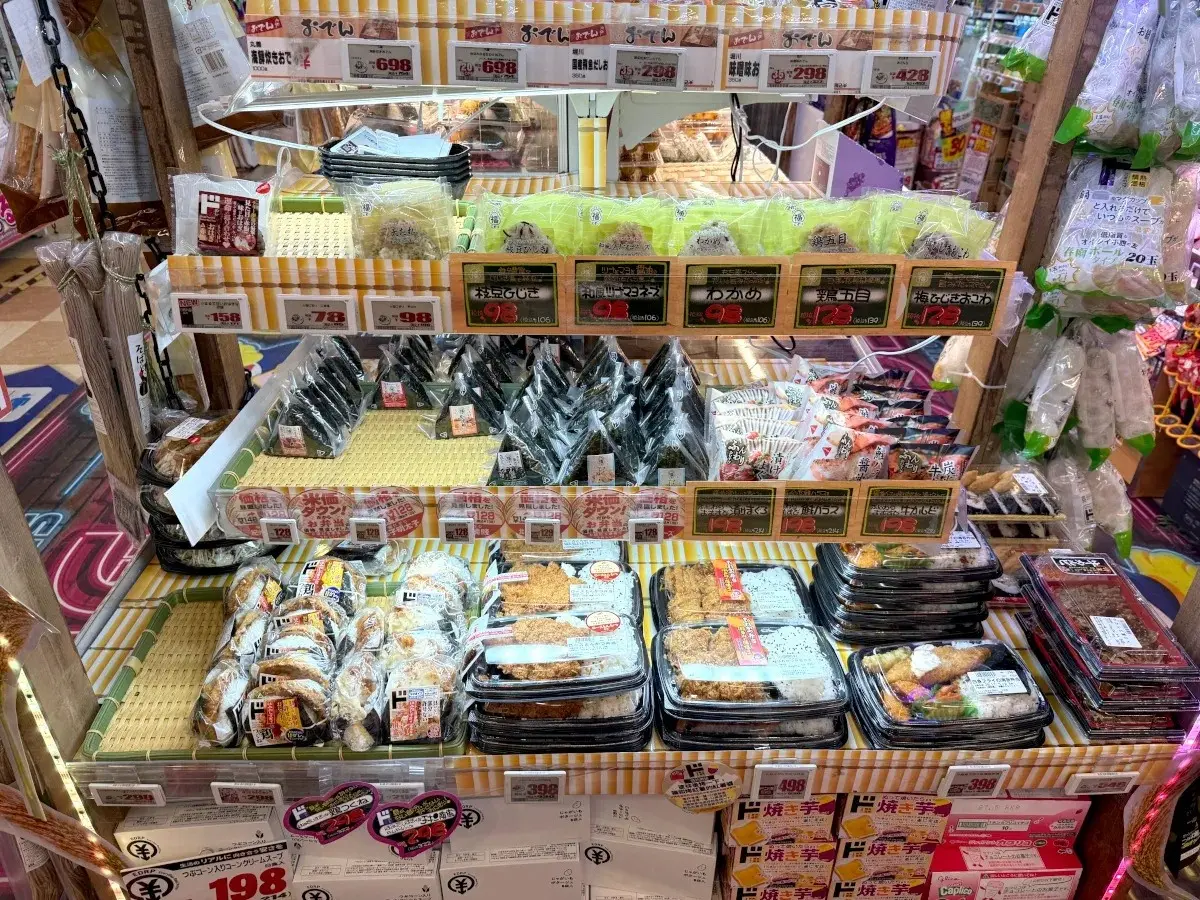
In the pantheon of Japanese convenience culture, few culinary artifacts hold the universal, comforting allure of the tamago sando—the quintessential Japanese egg salad sandwich. Renowned globally by international foodies and relied upon locally by generations of salarymen, students, and travelers, this deceptively simple creation of pillowy shokupan (milk bread) and rich, creamy egg filling is a staple of everyday Japanese life. Yet, even within a market saturated by high-quality iterations found in every neighborhood 7-Eleven, Lawson, and FamilyMart, the discount retail giant Don Quijote has managed to upend expectations.
Known affectionately by locals and tourists alike as "Donki," the labyrinthine discount chain is internationally famous for offering everything from eclectic souvenirs and deeply discounted cosmetics to electronics and groceries. However, domestic shoppers know that Don Quijote harbors an eccentric, fiercely experimental culinary soul: the Henai Meshi (translated roughly as "Peculiar Preference Food") line.
Designed not for the blandly agreeable middle of the road, but rather to court passionate fanaticism, the Henai Meshi product philosophy champions a radical culinary ethos. As company developers describe it, the goal is not to craft a meal that earns a safe 75 points out of 100 from every consumer, but rather to engineer dishes that might alienate some while commanding an ecstatic, rapturous 120 points from dedicated enthusiasts. Previous experiments in this mold—such as a bento box consisting entirely of fried chicken skins—have successfully ignited internet culture and captured the public imagination.
Now, Don Quijote has doubled down on its own already-abundant egg sandwich. Ordinarily featuring an over-the-top filling of two and a half soft-boiled eggs, the retailer launched a strictly limited-edition promotional campaign between November 1 and November 10, super-sizing select Henai Meshi items. The crown jewel of this event is the Five Melty Soft-boiled Egg Sandwich—a staggering, carbohydrate-and-protein-heavy monolith packing an unprecedented five whole eggs into a single handheld package. Priced at a modest 430 yen (approximately $2.70 USD), this viral sensation pushes the boundaries of convenience store indulgence, forcing food critics and casual consumers alike to rethink the physical and culinary limits of the humble sandwich.

Detailed Chronology: Anatomy of a Viral Food Phenomenon
To understand how a standard discount retailer managed to capture the culinary zeitgeist with a five-egg behemoth, it is necessary to examine the precise timeline and mechanics behind the creation, release, and evaluation of the Henai Meshi line’s latest triumph.
The Genesis of "Peculiar Preference"
The Henai Meshi initiative was born out of a desire to break away from the homogenization of modern Japanese convenience food. While major convenience store chains rely on widespread appeal—ensuring that a ham-and-cheese or standard egg salad sandwich offends no one and satisfies the average commuter—Don Quijote identified a lucrative sub-market: hyper-fixated food lovers.
Previous iterations under the Henai Meshi banner tested the limits of consumer tolerance and devotion. Items featuring excessive single-ingredient concentrations—most notably the all-skin fried chicken bento—proved that modern consumers, fueled by social media shareability and a desire for novelty, actively sought out unapologetic indulgence. The standard Don Quijote egg sandwich, already packed with a formidable two and a half soft-boiled eggs, was a quiet success within this philosophy, serving as a bridge between accessible comfort food and brazen excess.
The November 1–10 Promotional Window
In late October, Don Quijote announced a sweeping promotional campaign slated to run from November 1 through November 10. The core concept was simple yet disruptive: take the most popular items from the Henai Meshi lineup and literally double their core components.

For the egg sandwich, this meant vaulting past the standard two-and-a-half-egg threshold straight into uncharted territory. By packing five melty soft-boiled eggs between whisper-thin slices of bread, the development team created a product that blurred the line between a sandwich and an unadulterated egg presentation. Released simultaneously across participating Don Quijote locations offering fresh prepared foods, the item immediately drew curious shoppers, local food bloggers, and digital creators looking to document the sheer scale of the release.
The SoraNews24 Investigation and Taste Test
Recognizing the cultural weight and physical absurdity of the release, the editorial team at SoraNews24 dispatch-tested the product. Veteran Japanese-language reporter P.K. Sanjun secured a sample from a local Don Quijote branch, bringing it back to the publication’s official taste-testing center for rigorous physical and culinary analysis.
Before a single bite was taken, the sandwich was subjected to standard journalistic verification. Placed on a digital kitchen scale, the packaging and contents revealed a startling metric: 418 grams (approximately 14.75 ounces). Accounting for the minimal weight of the plastic container, the sandwich tipped the scales at close to a full pound of solid eggs and bread. Visually, the bread strips functioned less as structural containers and more as edible handles—or decorative garnishes—designed merely to keep the consumer’s fingers clean while navigating an avalanche of protein.
Subsequent tasting revealed an unexpected twist in the Henai Meshi philosophy. According to Sanjun’s evaluation, while the product was designed to polarize—scoring either a 120 or a failing grade from average diners—the execution was so flawlessly executed that it defied its own premise. Instead of dividing opinions, the Five Melty Soft-boiled Egg Sandwich achieved near-universal appeal, earning an estimated 95 out of 100 points from the seasoned reviewer.

Supporting Context & Metrics: Nutritional Realities and Economic Impact
When evaluating a culinary artifact weighing nearly a pound and constructed entirely around five distinct eggs, empirical metrics offer a fascinating glimpse into modern consumer economics and dietary indulgence.
Dimensional and Weight Breakdown
- Total Product Weight: 418 grams (~14.75 ounces / nearly 1 pound)
- Core Ingredient Count: 5 whole soft-boiled eggs per package
- Retail Price Point: 430 Japanese Yen (~$2.70 USD)
- Availability Window: Exactly 10 days (November 1 through November 10)
- Target Philosophy: Henai Meshi ("Peculiar Preference Food" – engineered for high-passion consumption)
The Economic Equation
At just 430 yen, the Five Melty Soft-boiled Egg Sandwich represents an extraordinary value proposition within the current economic landscape of Japanese retail. Amid rising global food costs and inflationary pressures affecting staple commodities—including wholesale egg prices—offering five quality soft-boiled eggs encased in fresh bread for under three US dollars is a masterclass in discount retail logistics. Don Quijote leverages its massive supply chain infrastructure to absorb costs, transforming a potentially expensive novelty item into an impulse-buy luxury for bargain-hunting consumers.
Nutritional and Dietary Considerations
From a nutritional standpoint, the sandwich occupies a precarious position. Consuming five eggs in a single sitting delivers an overwhelming payload of high-quality protein, healthy fats, and essential micronutrients, but it also presents a formidable challenge to daily cholesterol intake guidelines.
However, medical and dietary concerns were largely neutralized by the temporal constraints of the product’s release. Running for a strict ten-day window, the promotion prevented habitual, long-term dietary damage, positioning the sandwich as a fleeting, decadent special-occasion treat. As P.K. Sanjun noted following his tasting, the limited-time nature of the event transformed potential health concerns into an urgent, carpe diem invitation to indulge without reservation.

Official Statements and Industry Perspective
While Don Quijote’s corporate headquarters maintains a playful, irreverent approach to marketing its private-label and prepared-food divisions, the rationale behind the Henai Meshi strategy reflects sophisticated consumer psychology.
Industry analysts point out that modern convenience and discount retail sectors rely heavily on "experiential consumption." In an era dominated by social media algorithms, traditional advertising has largely ceded ground to organic, user-generated content driven by shock value, aesthetic novelty, and visceral scale. By explicitly stating that their food items are designed to earn polarized scores rather than bland consumer satisfaction, Don Quijote effectively weaponizes controversy as a marketing tool.
+-----------------------------------------------------------------+
|               THE HENAI MESHI EVALUATION MATRIX                 |
+-----------------------------------------------------------------+
| Standard Convenience Food : Aims for 75/100 (Safe / Universal)  |
| Henai Meshi Intent        : Aims for 75 (Avg) or 120 (Fanatic)  |
| Five-Egg Sandwich Reality : Reaches 95/100 (Universal Delight)    |
+-----------------------------------------------------------------+
In official promotional materials for the broader Henai Meshi campaign, company representatives emphasized that modern shoppers are fatigued by safe, risk-averse product development. By catering unapologetically to hyper-specific cravings—whether for pure fried chicken skin or an ungodly quantity of soft-boiled eggs—the brand fosters a deep, parasocial brand loyalty. Consumers do not merely purchase a meal; they participate in an inside joke, a shared culinary adventure that rewards daring behavior with immediate sensory gratification.
Future Outlook: What the Five-Egg Phenomenon Means for Retail Food Trends
The runaway success of Don Quijote’s limited-time, super-sized Henai Meshi campaign signals a broader shift in how discount and convenience retailers will approach product development in the coming years.

The Death of the Bland Middle
As algorithmic discovery dictates consumer trends across TikTok, Instagram, and X (formerly Twitter), blandly agreeable products risk being ignored. The success of the Five Melty Soft-boiled Egg Sandwich proves that consumers are actively searching for "maximilist" comfort foods—items that push traditional recipes to their absolute structural and conceptual limits. Retailers failing to inject personality, humor, and audacious scale into their private-label offerings may find themselves outpaced by disruptive brands willing to embrace polarization.
Potential for Permanent Menu Integration or Successors
While the five-egg sandwich was explicitly designated as a time-sensitive promotional item running exclusively through November 10, the immense digital traction and rapid sell-through rates reported across multiple Don Quijote branches have sparked speculation within retail circles. Historically, successful limited-time items in Japan frequently return as seasonal staples or inspire permanent lineup expansions.
Whether Don Quijote chooses to bring back the five-egg titan or pivots toward an even more extreme conceptual successor (such as a ten-egg iteration or hybrid protein pairings), one reality remains clear: the discount retail king has redefined the boundaries of the convenience store sandwich. For travelers and locals navigating the neon-lit aisles of Donki in the future, checking the prepared food section will no longer be an afterthought—it will be an essential mission of culinary discovery.






Belum ada komentar. Jadilah yang pertama berkomentar!