

In the decade and a half following the catastrophic Great East Japan Earthquake, tsunami, and subsequent nuclear crisis of March 2011, Fukushima Prefecture has embarked on a profound, multi-layered journey of recovery. While global headlines initially fixated on emergency response and containment, regional stakeholders, local artisans, and tourism boards have quietly engineered a cultural renaissance. Beyond the traditional travel itineraries centered on Japan’s well-worn "Golden Route"—Tokyo, Kyoto, Osaka, and Hiroshima—Fukushima has carved out a distinct identity rooted in its breathtaking natural landscapes, profound historical lineage, and vibrant local traditions.
The latest chapter in this ongoing revitalization effort marries modern pop-culture whimsy with deep-rooted linguistic heritage. Located within the coastal city of Iwaki—renowned for landmarks like the world-class Aquamarine Fukushima aquarium and the historic Spa Resort Hawaiians—a new attraction has debuted at JR Iwaki Station’s S-Pal shopping center. Following the viral success of the prefecture’s original Fukushima dialect T-shirt vending machine at JR Fukushima Station, this coastal installation offers travelers a novel, wearable souvenir.
Priced at an accessible 2,000 yen (approximately US$12.69), these garments do more than offer casual comfort; they serve as an innovative vehicle for regional dialect preservation. Each shirt pairs esoteric local vocabulary with charming, bespoke illustrations highlighting iconic elements of the coastal Hamadori region—ranging from prehistoric marine reptiles and ancient Buddhist temples to deep-sea delicacies and geothermal hot springs. Sold via a mysterious "blind-box" style vending machine, the initiative captures the playful spirit of contemporary Japanese retail while offering domestic and international visitors a tangible, conversation-sparking connection to a resilient prefecture.
Detailed Chronology: From Regional Rebuilding to the Evolution of the Dialect T-Shirt Phenomenon
Phase 1: Post-2011 Infrastructure and Tourism Rehabilitation
The immediate aftermath of the 2011 triple disaster devastated Fukushima’s tourism sector, casting a long shadow over its hospitality industry, agricultural yields, and coastal economies. In the years that followed, prefectural authorities launched concerted campaigns to rebuild consumer confidence and diversify travel offerings. Rather than shying away from its identity, Fukushima leaned into its unique assets: the lush highlands of Bandai, the samurai heritage of Aizu’s Tsuruga Castle, the thatched-roof architecture of Ouchijuku, and the resilient coastal communities of Hamadori.
Iwaki, situated in the southernmost part of Hamadori, played a pivotal role in this narrative. Having historically bounced back from economic restructuring—most notably when its coal mines closed in the mid-1960s, prompting the creation of the town-saving Joban Hawaiian Center (now Spa Resort Hawaiians)—Iwaki possessed an innate institutional resilience. As the region steadily welcomed back travelers seeking authentic, off-the-beaten-path experiences, local entrepreneurs recognized a growing demand for merchandise that reflected authentic local culture rather than generic tourist trinkets.
Phase 2: The Birth of the Fukushima-Ben Vending Machine
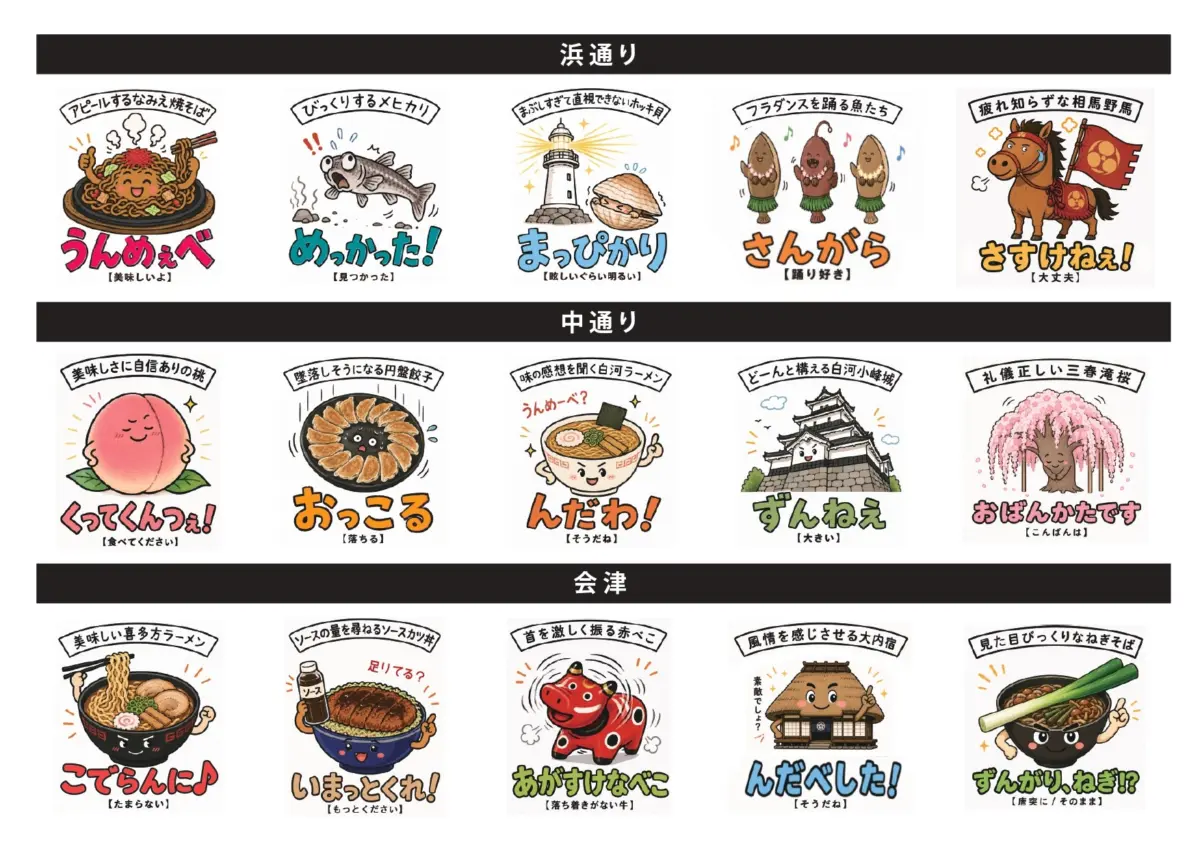
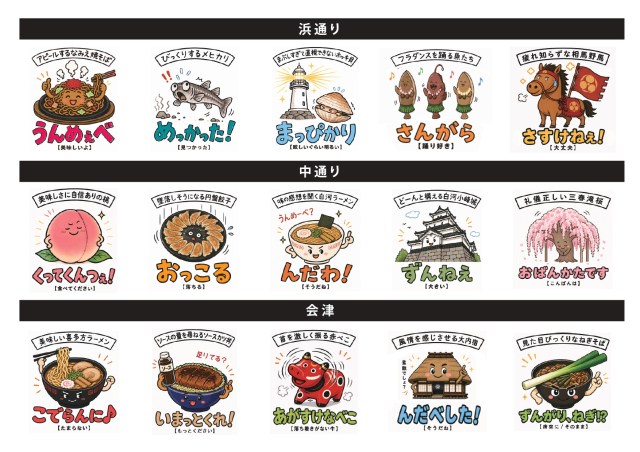
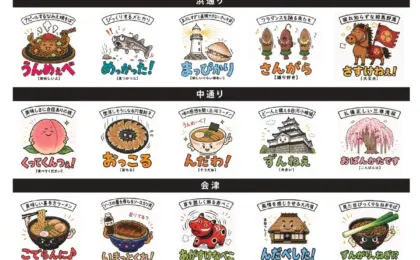
The concept of utilizing unconventional automated retail channels for cultural products took root with the deployment of the original Fukushima dialect T-shirt vending machine at JR Fukushima Station. Designed to showcase the linguistic diversity of the prefecture, that initial installation featured a curated collection of 15 distinct designs divided across Fukushima’s three distinct cultural and linguistic zones: Hamadori (the coast), Nakadori (the central valley), and Aizu (the western mountains).
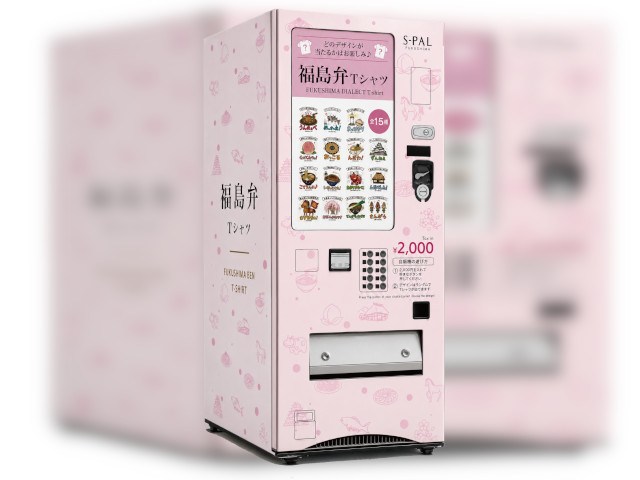
The machine proved to be an instant hit among railway commuters, domestic tourists, and curious passersby. By transforming regional idioms (hogen) into graphic streetwear, the project subverted the conventional souvenir paradigm. Instead of standard keychains or confectionary boxes, visitors could wear linguistic localisms emblazoned with striking artwork, sparking widespread interest across social media platforms and regional news outlets.
Phase 3: Expanding to the Coast – The JR Iwaki Station Launch
Building directly on the momentum generated in Fukushima City, regional developers expanded the initiative to the coastal hub of Iwaki. Installed on the second floor of the S-Pal shopping center directly connected to JR Iwaki Station, the new vending machine was specifically tailored to highlight the distinct culture of the Hamadori coastline.
Unveiled to the public in September 2026, the Iwaki machine introduced a completely new batch of 12 exclusive designs distinct from the 15 available in Fukushima City. Operating on a mystery-capsule mechanic where buyers select their desired size (medium, large, or extra-large) before receiving a randomly dispensed design, the machine transformed a routine retail purchase into an interactive, gamified experience. This strategic rollout not only diversified the merchandise available to travelers exploring the Pacific coast but also reinforced inter-city tourism cooperation within the prefecture.
Supporting Context & Metrics: Linguistic Diversity, Local Icons, and Economic Impact
Decoding Fukushima: A Tapestry of Regional Dialects (Hogen)
When foreign students of Japanese or casual tourists think of regional speech patterns, the energetic, globally recognized Kansai-ben (associated with Osaka, Kyoto, and Kobe) usually takes center stage. However, Japan’s linguistic landscape is deeply fractured into a fascinating array of regional dialects, each preserving centuries of geographic isolation, trade routes, and cultural evolution.
Fukushima Prefecture is a prime linguistic microcosm, neatly divided by rugged mountain ranges into three distinct zones, each sounding remarkably divergent from standard Tokyo Japanese (hyojungo):
- Aizu (Western Mountains): Famed for its historic samurai legacy, picturesque winter snowscapes, and hearty culinary traditions like Kitakata ramen, Aizu speech carries a distinctive cadence and vocabulary shaped by historical isolation.
- Nakadori (Central Valley): Home to prefectural administrative centers like Fukushima City and Koriyama, this bustling corridor bridges eastern and western cultural influences.
- Hamadori (Pacific Coast): Encompassing Iwaki, this maritime zone possesses a distinct coastal flavor, characterized by maritime terminology, relaxed phrasing, and unique idioms that reflect generations of seafaring and fishing communities.
Highlighted Designs: Merging Language with Local Lore
The 12 designs housed within the Iwaki S-Pal vending machine function as wearable cultural encyclopedias. Two standout selections explicitly pair coastal linguistic expressions with iconic regional heritage:
- "Appatoppa" (あっぱとっぱ) and the Futabasaurus: The phrase appatoppa translates colloquially to feeling "confused," "flustered," or "at a loss." To visualize this state of frantic bewilderment, the shirt features a charming illustration of the Futabasaurus suzukii, a prehistoric plesiosaur whose fossilized remains were famously discovered in Iwaki’s Futaba District in 1968. This clever pairing bridges deep geological history with contemporary vernacular.
- "Koderanni" (こでらんない) and Shiramizu Amidado: The expression koderanni translates roughly to "the absolute best," "irresistible," or "can’t get enough of it." This phrase is paired with an artistic depiction of Shiramizu Amidado, one of the oldest and most architecturally significant Buddhist temples in the entire Tohoku region, dating back to the late Heian period and designated as a National Treasure.
Coastal Icons: Celebrating Iwaki’s Maritime and Geothermal Identity
In addition to linguistic idioms, four designs within the 12-shirt collection explicitly celebrate Iwaki’s defining cultural and culinary landmarks:
- Mehikari (Bigeyed Greeneye): A prized local deep-sea fish, the mehikari is celebrated across Iwaki for its delicate, fatty flesh. Whether served raw as sashimi or deep-fried to a golden crisp (karaage), it represents the rich bounty of the Pacific currents off the Hamadori coast.
- Anko (Anglerfish): Famously harvested during the winter months, anglerfish is the star ingredient of anko nabe, a traditional, deeply nourishing hot pot dish that has warmed coastal residents for generations.
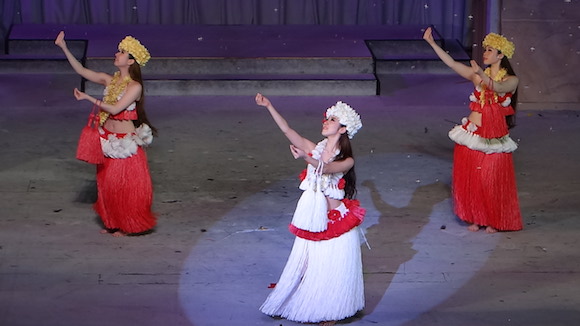
- Hula Dancing: A nod to Iwaki’s remarkable mid-century economic pivot. When the local coal mines closed in the 1960s, threatening the town’s survival, visionary local leaders and residents founded the Joban Hawaiian Center (now Spa Resort Hawaiians), establishing a legacy of hula instruction that famously saved the local economy and inspired acclaimed media projects like the film Hula Girls.
- Iwaki Yumoto Hot Spring: Representing one of Japan’s oldest and most historically celebrated hot spring (onsen) districts, boasting sulfurous waters that have drawn travelers seeking therapeutic relaxation for over a thousand years.
Official Statements and Local Reception
The launch of the Iwaki dialect T-shirt vending machine has generated widespread enthusiasm across municipal tourism boards, regional press outlets, and social media networks. While local administrative bodies have long sought organic methods to promote travel, grassroots retail initiatives driven by regional pride have proven uniquely effective.
In coverage published by regional media leader Fukushima Minpo and syndicated across major news aggregators like Yahoo News and PR Times, representatives emphasized the educational and social value of the project. Rather than relying on top-down advertising campaigns, the initiative empowers visitors to become ambassadors for the region.
A local tourism official commented on the project’s psychological and cultural significance:
"When travelers visit Fukushima, we want them to look beyond the standard parameters of sightseeing. Language is the ultimate living artifact of a community. By translating the unique warmth, humor, and history of Hamadori speech into wearable art, we are giving our guests something far more personal than a standard souvenir. Every time a visitor wears these shirts in Tokyo, Osaka, or even overseas, they open the door to a conversation about Iwaki’s resilience, culinary richness, and vibrant culture."
Retail partners at S-Pal Iwaki have similarly reported robust engagement, noting that international tourists—increasingly venturing off the traditional Golden Route in search of authentic regional experiences—have shown a voracious appetite for the mystery capsule mechanic. The element of chance transforms a simple retail transaction into an engaging, memorable souvenir-hunting experience.
Future Outlook: The Evolution of Experiential Tourism in Regional Japan
The success of the Fukushima and Iwaki dialect vending machines points toward a broader, highly influential trend in Japanese domestic tourism: the rise of hyper-local, experiential, and narrative-driven merchandise. As post-pandemic tourism recovery continues to strain infrastructure in major metropolitan hubs like Tokyo and Kyoto, national and regional government bodies are actively channeling visitor flows into peripheral prefectures through creative placemaking.
Fukushima’s strategy offers a blueprint for other rural and semi-urban prefectures seeking to overcome lingering stigma and showcase their unique cultural capital. By transforming intangible heritage—such as regional dialects, oral histories, and local folklore—into tangible, high-quality consumer goods, regional stakeholders successfully convert passive sightseers into active participants in local culture.
Looking ahead, tourism developers in Fukushima Prefecture are exploring further expansions of the apparel series, with potential pop-up installations planned for major transit hubs outside the prefecture, including Sendai and Tokyo. Additionally, cultural preservationists are investigating digital integration, utilizing QR codes printed on the interior tags of the T-shirts to direct wearers to audio pronunciation guides, historical essays, and culinary itineraries tied to each design.
For travelers planning an extended journey through Japan—whether exploring the samurai legacy of Aizu’s Tsuraga Castle, hiking the pristine volcanic highlands of Bandai, or savoring fresh seafood along the Pacific coastline of Iwaki—a quick detour to an S-Pal station vending machine offers a gateway to lasting memories. For just 2,000 yen, visitors can step away with more than just a piece of clothing; they carry home a wearable slice of Fukushima’s enduring spirit, linguistic charm, and indomitable cultural pride.
Location & Operational Information
Iwaki Vending Machine (Hamadori Collection)
- Japanese 福島弁Tシャツ自動販売機 (Fukushima-ben T-shatsu Jidouhanbaiki)
- Address: 2F S-Pal Iwaki, 1 Tamachi, Taira, Iwaki-shi, Fukushima-ken 970-8026
- Japanese Address: 福島県いわき市平字田町1 エスパルいわき2F
- Operating Hours: 10:00 AM – 7:00 PM
- Pricing: 2,000 yen per mystery capsule (Choice of M, L, XL sizes; random selection from 12 exclusive designs)
- Official Website: S-Pal Iwaki
Fukushima Station Vending Machine (Prefecture-Wide Collection)
- Japanese 福島弁Tシャツ自動販売機 (Fukushima-ben T-shatsu Jidouhanbaiki)
- Address: 1F S-Pal Fukushima, 1-1 Sakae-cho, Fukushima-shi, Fukushima-ken 960-8031
- Japanese Address: 福島県福島市栄町1-1 エスパル福島1F
- Operating Hours: 10:00 AM – 8:00 PM
- Pricing: 2,000 yen per mystery capsule (Random selection from 15 designs)
- Official Website: S-Pal Fukushima







Belum ada komentar. Jadilah yang pertama berkomentar!