

By Investigative Tech Desk
Published: October 2026
Executive Overview
In a landmark legal development that could fundamentally reshape the landscape of digital privacy and law enforcement surveillance in the United States, a federal judge has ruled that a warrantless search utilizing Flock Safety’s automated license plate reader (ALPR) network violated the Fourth Amendment.
The ruling, handed down by U.S. District Judge Sara Hill in Tulsa, Oklahoma, marks one of the first direct judicial rebukes of law enforcement’s reliance on expansive private-public surveillance databases. The case centers on a Tulsa County Sheriff’s deputy who queried the Flock database for a vehicle’s travel history simply because it bore a California license plate—a move the judge characterized as having "no apparent reason" other than out-of-state profiling.
The subsequent search of the vehicle yielded 91 pounds of methamphetamine. However, Judge Hill invoked the landmark "fruit of the poisonous tree" doctrine, ordering that all evidence gathered following the unconstitutional database query be completely suppressed.
Beyond the immediate legal implications for the defendant, Judge Hill’s written opinion serves as a sweeping critique of modern mass surveillance. She targeted the passive, 24/7 cataloging capabilities of network-connected cameras, explicitly comparing the technology to unconstitutional dragnet operations.
This judicial blow arrives amid a cascading crisis for Flock Safety and the broader ALPR industry. Once hailed as a frictionless crime-fighting panacea by municipal leaders, the company is now facing fierce bipartisan pushback, state-level bans, federal legislative threats, and internal structural contraction.
Detailed Chronology: The Case of the Tulsa Traffic Stop
The Out-of-State Profile
The events leading to Judge Hill’s historic ruling began on a routine highway stretch within Tulsa County, Oklahoma. According to court filings, a local sheriff’s deputy initiated an interdiction stop involving a motorist traveling through the region. However, the foundational justification for the deep digital investigation that followed did not stem from erratic driving, a traffic infraction, or an active Amber Alert.
Instead, the deputy’s suspicion was piqued by the vehicle’s point of origin: California.
Lacking any individualized probable cause or reasonable articulable suspicion of a specific crime, the deputy logged into the Flock Safety database. He queried the vehicle’s license plate to pull its historical travel patterns—a capability made possible by Flock’s sweeping network of high-definition, fixed-position cameras that capture, record, and store vehicle metadata (including timestamps, geographic locations, and vehicle characteristics) across thousands of municipalities nationwide.
The Database Query and Subsequent Search
By cross-referencing the vehicle’s historical movements through the automated logs, the deputy attempted to construct a timeline of the driver’s cross-country journey. This digital dossier was subsequently leveraged as part of the legal justification to conduct a physical search of the automobile.
During the ensuing search, law enforcement officers uncovered a massive illicit cargo: 91 pounds of methamphetamine.
The driver was subsequently arrested and faced severe federal drug-trafficking charges. During pretrial motions, the defense moved to suppress the evidence, arguing that the initial database search constituted an unreasonable search and seizure under the Fourth Amendment because it was executed without a search warrant or any emergency exception.
Judge Hill’s Legal Reasoning
In her blistering opinion, Judge Hill dismantled the prosecution’s defense of the deputy’s actions. She emphasized that the Fourth Amendment’s protections against unwarranted government intrusion do not evaporate simply because an individual is driving on public roadways.
Judge Hill wrote that the deputy had "no apparent reason" to query the system "other than the fact that [the woman’s vehicle] had a California license plate."
Crucially, the judge addressed the cascading effect of the unconstitutional digital search on the physical evidence. Because the deputy’s suspicion was materially informed by data retrieved via an illegal query, the physical discovery of the narcotics was legally tainted. Citing the foundational constitutional principle of the "fruit of the poisonous tree," Judge Hill ruled that the 91 pounds of methamphetamine—along with all subsequent evidence and statements—must be suppressed, effectively crippling the prosecution’s case.
Supporting Context & Metrics: The Mechanics of Flock Safety and the Rise of Mass Surveillance
How Flock Safety Operates
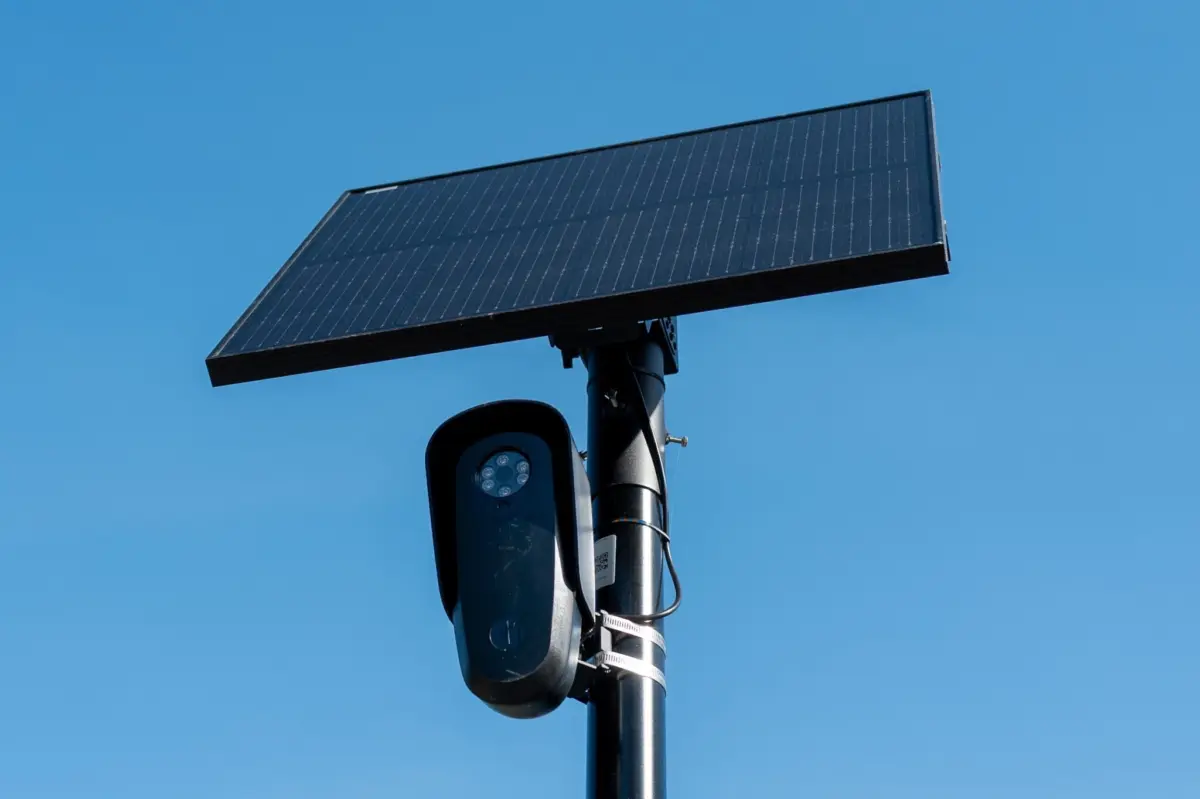
To understand the gravity of Judge Hill’s ruling, one must examine the technological architecture of Flock Safety. Founded in 2017, the company initially marketed itself as a neighborhood security solution, deploying solar-powered, high-definition cameras designed to capture vehicle license plates and physical characteristics (make, model, color, and unique features like bumper stickers or roof racks).
Over the years, Flock expanded aggressively, selling its systems to police departments, sheriff’s offices, and private homeowners associations alike. Today, the company’s network acts as an interconnected, national web of surveillance. Unlike traditional law enforcement cameras that might monitor a specific intersection or bridge, Flock’s system continuously logs millions of vehicles daily.
This data is pooled into a centralized, searchable cloud database accessible to law enforcement agencies across state lines. Officers can run retrospective queries to track where a specific vehicle has been over weeks, months, or even years, effectively establishing a continuous digital tether on unsuspecting citizens.
The "Indiscriminate Mass Surveillance" Paradigm
Judge Hill’s critique directly targeted the passive and indiscriminate nature of this data collection. In her ruling, she explicitly contrasted Flock’s database model with the U.S. Supreme Court’s landmark 2018 ruling in Carpenter v. United States.
In Carpenter, the Supreme Court ruled that law enforcement agencies must obtain a search warrant to access historical cell-site location information (CSLI) from telecommunications providers, recognizing that prolonged location tracking infringes upon reasonable expectations of privacy.
Judge Hill noted that while Carpenter focused on targeted digital trails, Flock Safety represents an evolutionary leap backward for privacy: an automated, omnipresent architecture that vacuums up data indiscriminately.
"This is a type of indiscriminate mass surveillance," Hill wrote. "It is not targeted on a single individual, as in [Carpenter]. It is a tool that collects information about all vehicles that pass by any network-connected camera at all times, and it serves up the information to law enforcement on demand."
Legal scholars and civil liberties organizations, such as the American Civil Liberties Union (ACLU) and the Electronic Frontier Foundation (EFF), have long warned about the constitutional dangers of ALPR networks. They argue that when location tracking is cheap, automated, and permanent, privacy ceases to exist for anyone who travels on public roads. Judge Hill’s decision represents the first significant judicial validation of these systemic concerns at the federal level.
Official Statements and Industry Backlash
Bipartisan Political Pushback
The Tulsa ruling is the latest shockwave in an escalating political and cultural backlash against automated license plate readers. Concerns over government overreach, lack of regulatory oversight, and potential misuse by law enforcement have united politicians across the ideological spectrum.
At the state level, governments are increasingly pushing back against the tech giant. Major states, including Florida and Texas, have introduced or enacted stringent measures to block or restrict the deployment of Flock cameras on public infrastructure, citing profound civil liberties concerns.
The legislative pressure reached the halls of the U.S. Capitol when Senator Bernie Sanders (I-VT) introduced the Block Flock Act. The proposed federal legislation aims to bar all federal agencies from purchasing, deploying, or utilizing automated license plate reader networks like Flock, framing the technology as an unacceptable threat to American privacy rights.
Flock Safety’s Response: Damage Control and Corporate Retrenchment
Faced with mounting regulatory hurdles, canceled municipal contracts, and intense public scrutiny, Flock Safety’s executive leadership has shifted into crisis management mode.
Garretty Langley, CEO of Flock Safety, has attempted to stem the bleeding by publicly calling for a "compromise" between public safety and individual privacy. Langley’s outreach has included direct public apologies, particularly addressing instances where law enforcement officers misused the Flock system to stalk or harass citizens—a horrifying vulnerability inherent in systems that grant sweeping database access with minimal internal auditing.
However, rhetoric has done little to shield the company from the economic realities of its sudden political toxicity. With multiple cities and states canceling existing contracts and freezing new procurement pipelines, industry insiders report that Flock Safety has quietly initiated voluntary employee buyouts in an effort to downsize its workforce and weather the storm.
Future Outlook: What the Tulsa Ruling Means for the Future of ALPRs
Precedent vs. Persuasion
While Judge Sara Hill’s ruling does not create a binding legal precedent across all federal circuits—meaning district judges in other states are not strictly obligated to follow her exact reasoning—legal experts agree that the decision carries enormous persuasive weight.
Defense attorneys across the country are already reviewing past and pending prosecutions that relied on Flock database queries. If other federal and state judges adopt Hill’s interpretation of the Fourth Amendment regarding "indiscriminate mass surveillance," law enforcement agencies nationwide could find themselves legally barred from using ALPR data without first securing a warrant signed by a neutral magistrate.
The Looming Constitutional Showdown
The collision between rapid technological surveillance and constitutional jurisprudence is rapidly heading toward a definitive showdown at the U.S. Supreme Court.
As police departments increasingly substitute traditional, labor-intensive investigative police work with passive algorithmic surveillance, the judiciary is being forced to draw hard lines in the digital sand. Judge Hill’s ruling in Tulsa suggests that the lower courts are beginning to recognize that digital dragnet tools do not bypass the Fourth Amendment simply because they are mounted on poles in public view.
For Flock Safety, the path forward is fraught with existential peril. Whether the company can pivot its business model to satisfy increasingly stringent privacy demands—or whether it will be legislatively regulated out of existence—will depend heavily on how higher courts rule on the constitutionality of mass location tracking. One thing is certain: the era of frictionless, warrant-free digital tracking by law enforcement is facing its most formidable legal challenge to date.









Belum ada komentar. Jadilah yang pertama berkomentar!