

Executive Overview
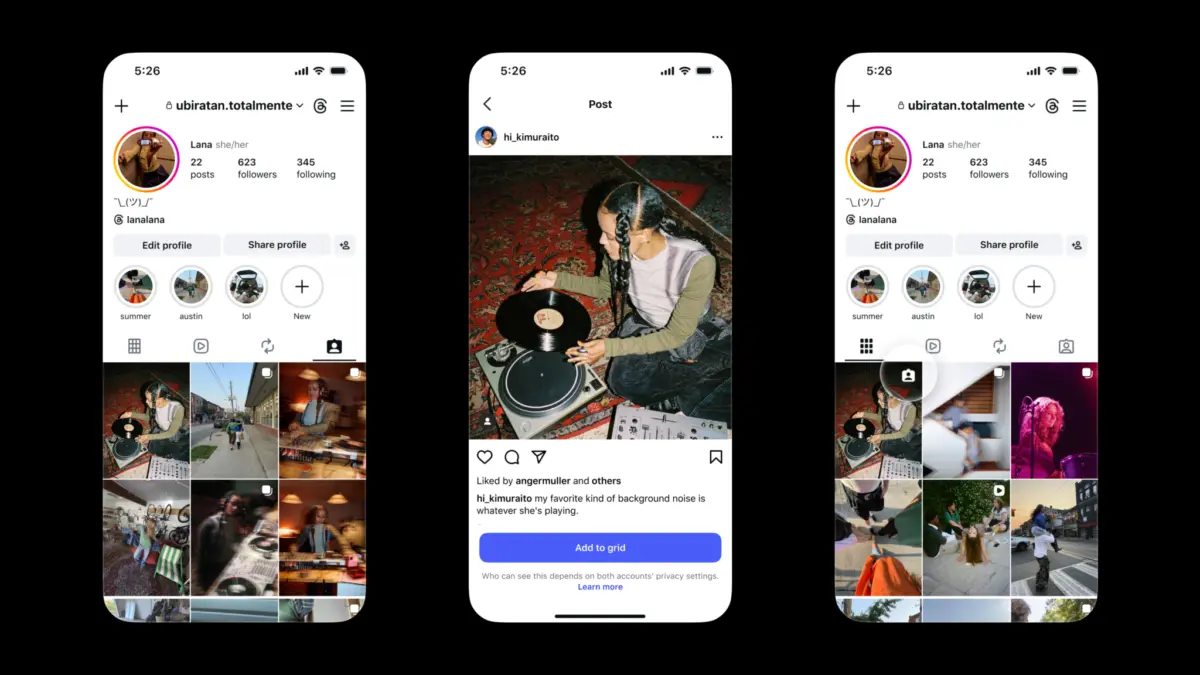
In an era where digital identity is meticulously curated, the boundaries of personal expression on social media are constantly shifting. Instagram, a premier platform within the Meta ecosystem, has officially rolled out a subtle yet highly anticipated feature designed to give users unprecedented control over their profile aesthetics. Starting today, Instagram users can seamlessly add posts in which they have been tagged directly to their main profile grid.
While not a seismic architectural overhaul, this update addresses a long-standing social friction point: the awkwardness of republishing identical group photos or promotional content previously shared by friends, colleagues, or brand partners. By allowing users to seamlessly pin or integrate tagged media directly into their primary grid view with just a few taps, Instagram is redefining how digital memories and collaborative efforts are showcased.
This feature is more than a simple convenience for casual users; it represents a strategic evolution in creator economics, digital marketing, and user agency. Over the past year, Instagram has systematically introduced modular design tools—such as grid reordering, AI-assisted video editing via "First Draft," and audio-swapping capabilities—to transform the profile page from a static chronological feed into a dynamic, highly customizable digital portfolio. This article provides a comprehensive analysis of the new tagged-grid integration, its mechanics, broader implications for creators and brands, and how it fits into Meta’s broader product roadmap.
Detailed Chronology & Functional Mechanics: How the Feature Works
To understand the significance of this update, one must examine the friction it seeks to eliminate. Historically, when a user was tagged in a photo or video by a peer—following a night out, a music concert, a corporate retreat, or a vacation—that piece of media lived exclusively within the dedicated "Tagged" tab on the user’s profile. If an individual wanted that particular high-quality group shot displayed prominently on their primary grid, they faced two suboptimal choices: ask the original poster for the raw file and re-upload it (risking duplicate content dilution in the algorithm), or simply forgo having it on their main grid altogether.
The new Instagram update eliminates this dilemma through an intuitive, multi-entry-point workflow.
Step-by-Step Implementation
- Direct Notification Integration: When a user receives a Direct Message (DM) notification alerting them that they have been tagged in a post, the interface now provides a direct prompt to feature that post on their main profile grid.
- Post-Level Action: Users can navigate directly to the specific post within their feed or discovery channels and execute the addition instantly.
- The Tagged Tab Portal: Alternatively, users can visit their profile’s Tagged tab, select the desired image or video, and choose to elevate it to the primary grid.
Managing and Reverting Changes
Flexibility is a core tenet of this rollout. Instagram has ensured that adding a post to a grid does not create a disruptive duplicate or alter the original creator’s metrics.
- Zero Duplication: The media remains hosted by the original publisher. Adding it to a personal grid acts as a reference pointer rather than a native re-upload, preserving engagement metrics for the original creator while accommodating the tagged user’s curation goals.
- Seamless Removal: If a user’s aesthetic preferences change, or if a relationship dynamics shift, the post can be removed from the main grid at any time. Crucially, removing it from the grid does not delete the post, nor does it remove it from the user’s Tagged tab. It simply reverses the elevation, offering risk-free profile management.
Strategic Implications for Creators and Brand Partnerships
While casual users will undoubtedly appreciate the fix for party photos and vacation albums, the true commercial weight of this update lies within the creator economy and digital marketing landscapes.
Elevating Creator Collaborations
For digital creators, public visibility is currency. Previously, collaborative content often required utilizing the "Invite Collaborators" feature at the exact moment of posting to ensure the content appeared on both creators’ grids simultaneously. If a collaborator forgot this step, or if a partnership evolved organically post-publication, fixing the oversight was cumbersome.
With the new tagged-grid feature, creators can seamlessly cross-pollinate content across profiles after the fact. A beauty influencer featured in a brand’s styling video, for instance, can immediately pull that post onto their own grid without needing to coordinate a complex re-upload schedule or rely exclusively on the ephemeral nature of Instagram Stories.
Streamlining Multi-Creator Brand Campaigns
Public relations agencies, talent managers, and enterprise marketing departments frequently deploy campaigns featuring multiple influencers simultaneously. Under the previous framework, tracking and displaying these collective efforts on individual portfolios required tedious manual sharing or disparate tagging structures.
Brands can now orchestrate campaigns where a central hub post can be selectively integrated into the grids of every participating talent member. This creates a unified visual storefront across multiple accounts, amplifying campaign reach, enhancing social proof, and driving higher conversion rates for e-commerce integrations tied to the posts. By bridging the gap between individual profiles and collective content, Instagram is positioning itself as a more cohesive platform for commercial brand activations.
Supporting Context & Meta’s Modular Profile Strategy
This update does not exist in a vacuum. It is part of a deliberate, multi-year product strategy by Meta to transition Instagram from a rigid, chronological photo-sharing app into a modular, highly customizable digital identity platform.

The Evolution of Profile Customization
For over a decade, Instagram’s core profile grid was immutable: posts appeared strictly in the reverse-order they were published. For perfectionists, aesthetic brands, and artistic creators, this meant a single off-theme post could disrupt a carefully planned grid layout (often referred to as an "Instagram theme" or "puzzle feed").
In June, Instagram took a major step toward addressing this constraint by introducing the "Reorder your grid" feature. This tool gave users the long-awaited ability to rearrange the historical placement of content on their main profile grid, granting unprecedented command over visual storytelling.
The introduction of the tagged-post grid integration builds directly upon this philosophy of user agency. By allowing individuals to curate not just their own original creations, but also the collaborative moments captured by others, Instagram is acknowledging that a modern user’s digital persona is a collective curation rather than a solitary diary.
Recent Content Management Innovations
The rollout of the tagged-grid feature is accompanied by a suite of productivity and editing tools launched over the past two months, highlighting an aggressive development cycle aimed at reducing friction in content creation:
- "First Draft" (August 2026): Aimed at easing the tediousness of video editing, this tool automatically trims selected video clips, strips out awkward pauses, and intelligently compiles the best moments into a polished initial cut for Reels. This lowers the barrier to entry for high-frequency video production.
- "Replace Audio" (July 2026): Addressing the dynamic nature of trending audio and copyright shifts, this feature allows users to swap out the background music on existing, legacy posts whenever they desire, ensuring their content remains relevant and compliant with changing audio licensing agreements.
These tools collectively signal a paradigm shift: Instagram is systematically dismantling the permanence and rigidity of social media publishing, replacing it with a fluid, editable, and highly responsive ecosystem.
Official Statements and Industry Reception
Industry analysts and digital culture commentators have widely praised the update for its pragmatic approach to common user frustrations. While tech media outlets have noted that the feature is evolutionary rather than revolutionary, its high utility score places it among the most welcome quality-of-life updates of the year.
While Meta has kept formal press statements concise, product representatives have emphasized that user feedback remains the primary driver behind these interface refinements. By listening closely to how communities naturally use the platform—such as sharing group memories and executing cross-brand collaborations—Instagram’s product development teams continue to smooth out the rough edges of digital social interaction.
Early reactions from creator communities on the platform have been overwhelmingly positive. Influencers note that the ability to curate user-generated content (UGC) directly onto their main grids without cluttering storage or violating community standards provides a cleaner, more professional look for portfolio-building.
Future Outlook: What Lies Ahead for Profile Architecture?
As Instagram continues to iterate on profile customization, industry experts are looking toward the horizon to predict the next wave of platform enhancements.
The Convergence of Social Graphs and Portfolios
The ability to pull tagged content onto a primary grid blurs the traditional lines between a user’s original output and their social associations. Looking forward, we may see advanced permission layers—such as automated approval queues for specific friends or verified brands, allowing tagged posts to auto-populate onto grids based on pre-set rules. Furthermore, as augmented reality (AR) and spatial media begin to integrate more deeply into Meta’s ecosystem, profile grids may evolve beyond flat 3D or 2D image matrices into interactive spatial galleries.
Algorithmic Implications
From an algorithmic standpoint, allowing users to feature tagged content on their main grids could alter engagement loops. When a post gains visibility across multiple primary grids simultaneously, its algorithmic weight and distribution potential increase organically. Brands and creators will likely monitor how this feature impacts impression velocity, click-through rates on tagged shopping links, and overall profile dwell time.
Conclusion
Instagram’s new tagged-grid feature is a masterclass in solving micro-pain points that deeply affect user satisfaction. By transforming how peer-to-peer memories and collaborative brand campaigns are displayed, Instagram is reinforcing its dominance as the premier platform for digital self-expression. Combined with recent innovations like grid reordering, AI-driven video trimming through "First Draft," and audio-swapping tools, Instagram is successfully equipping its billion-plus users with the professional-grade controls necessary to navigate the modern attention economy. As profiles increasingly become sophisticated digital resumes and brand showcases, features like these ensure that Instagram remains indispensable to both the casual Saturday-night chronicler and the elite digital creator.





Belum ada komentar. Jadilah yang pertama berkomentar!