

Executive Overview
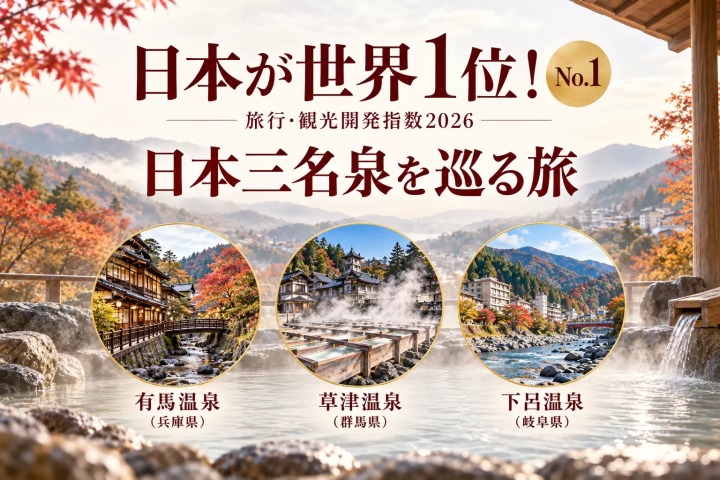
In a milestone achievement for the global travel industry, Japan has officially claimed the Number 1 ranking in the World Economic Forum (WEF) Travel & Tourism Development Index (TTDI) 2026. Surpassing a competitive field of 110 global economies—and climbing steadily from its 3rd-place standing in the 2024 assessment—Japan’s top-tier positioning underscores the nation’s masterful synthesis of robust infrastructure, cultural preservation, and visionary regional tourism policies.
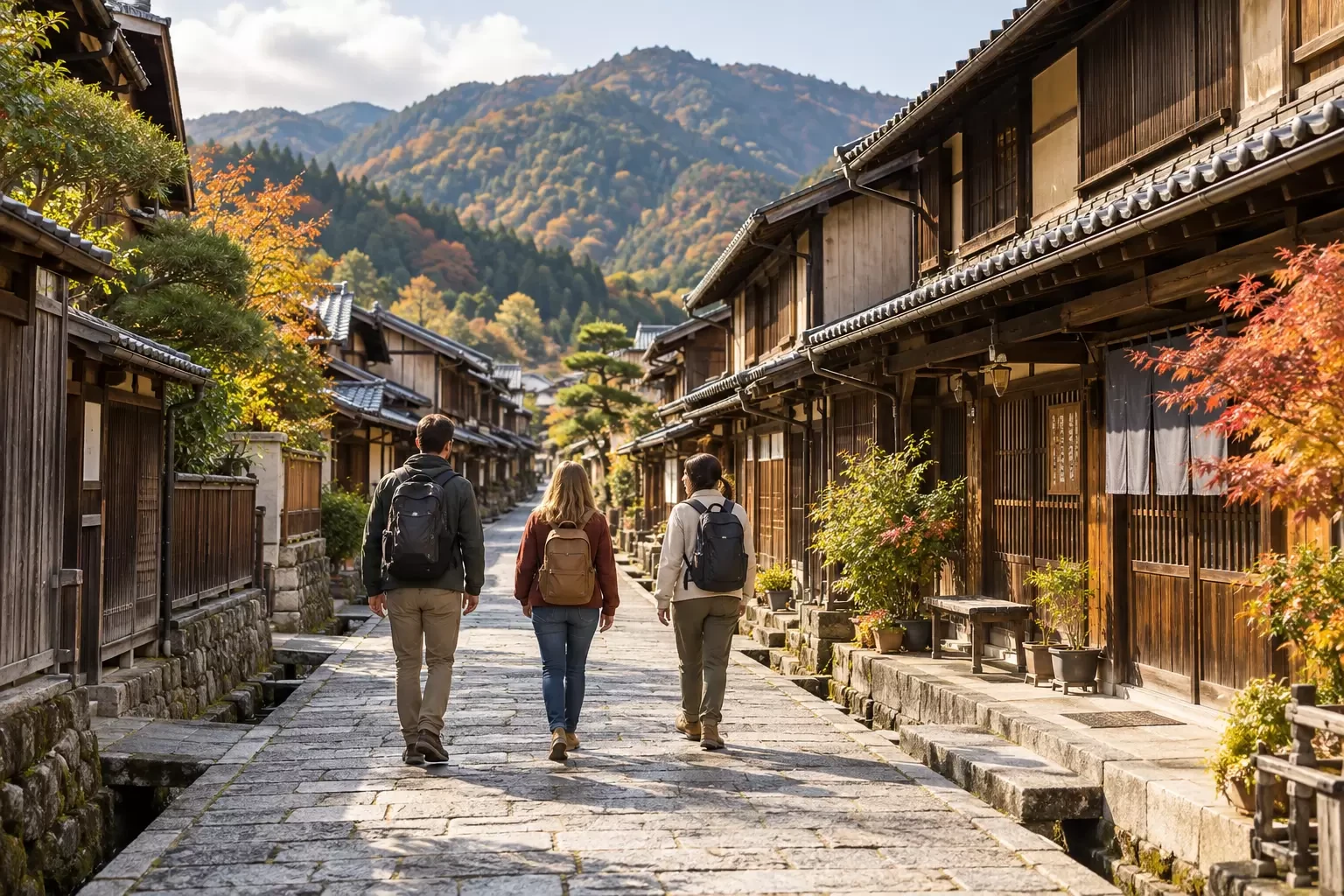
This historic ascension is more than a mere statistical victory; it reflects a profound paradigm shift in modern travel. While metropolitan powerhouses like Tokyo, Kyoto, and Osaka continue to captivate international visitors, Japan’s tourism strategy has successfully diversified the visitor economy. By encouraging exploration into the nation’s interior and rural provinces, authorities have distributed the economic benefits of tourism while offering travelers a deeper, more authentic encounter with Japanese heritage.
At the very heart of this cultural immersion lies the traditional onsen (hot spring)—a cornerstone of Japanese wellness and hospitality. To truly understand the multidimensional appeal driving Japan’s global tourism dominance, one must look beyond the neon-lit urbanscapes and venture into the historic, mineral-rich mountain enclaves that have soothed travelers for centuries. This report provides an exhaustive examination of the factors propelling Japan to the summit of the WEF index, alongside an in-depth exploration of Japan’s legendary Nihon Sanmeisen—the Three Famous Hot Springs: Arima Onsen, Kusatsu Onsen, and Gero Onsen.
Detailed Chronology of Japan’s Tourism Evolution & WEF Ranking
The journey toward Japan’s #1 ranking in the 2026 TTDI is the culmination of decades of strategic infrastructural investment, crisis recovery, and deliberate promotional policy.
- The Post-War Foundations (1950s–1980s): Following the devastation of World War II, Japan systematically rebuilt its domestic transportation networks. The opening of the Tokaido Shinkansen (bullet train) in 1964 not only revolutionized domestic transit but laid the bedrock for high-speed, reliable connectivity that would later become a critical pillar of the WEF infrastructure score.
- The Inbound Tourism Pivot (2000s): Recognizing the limits of a domestic-only tourism model, the Japanese government launched the "Visit Japan Campaign" in 2003. This marked the official pivot toward aggressive international marketing, setting ambitious targets for foreign arrivals.
- The Record-Breaking Influx (2010s): Throughout the 2010s, annual inbound arrivals experienced exponential growth, breaking successive records year-over-year. Visa relaxations for key Asian markets, the proliferation of low-cost carriers (LCCs), and the expansion of tax-free shopping schemes transformed Japan into a global tourism darling.
- The Pandemic Resurgence (2020–2023): Despite the unprecedented global paralysis caused by COVID-19, Japan utilized the downtime to upgrade tourism infrastructure, implement contactless digital systems, and refine regional sustainability frameworks.
- The 2024 WEF Benchmark: In the 2024 Travel & Tourism Development Index, Japan secured a formidable 3rd place globally, signaling that its post-pandemic recovery was not only complete but structurally superior to many Western counterparts.
- The Historic 2025 Milestones: Japan recorded an unprecedented 42.7 million international visitors throughout 2025. This staggering volume proved that the country could absorb massive tourist influxes while maintaining public safety, cleanliness, and operational efficiency.
- The 2026 Pinnacle: Released in October 2026, the World Economic Forum TTDI officially crowned Japan as the Number 1 tourism destination worldwide, outranking the United States (2nd) and Spain (3rd). The milestone validates the concerted efforts of agencies like the Japan National Tourism Organization (JNTO) to drive visitors deep into Japan’s regional prefectures.
Supporting Context & Metrics: Decoding the TTDI 2026
The World Economic Forum’s Travel & Tourism Development Index does not merely measure the raw volume of international arrivals; it is a holistic diagnostic tool. The TTDI comprehensively evaluates the enabling environment, travel and tourism policy, infrastructure, and natural and cultural resources that allow a country to develop its sector sustainably.
Key Pillars of Japan’s #1 Ranking
- World-Class Transportation Infrastructure: Japan’s rail networks, airports, and urban transit systems offer peerless punctuality, safety, and coverage. A foreign traveler can navigate seamlessly from hyper-dense urban centers to remote mountain valleys using integrated digital payment and navigation tools.
- Rich Cultural and Natural Resources: Scoring exceptionally high in intangible cultural heritage, historical sites, and creative industries, Japan offers an unmatched density of preserved traditions juxtaposed with hyper-modern innovations.
- Strategic Regional Promotion: According to the WEF evaluation, a decisive factor in Japan’s ascent to the top spot was the JNTO’s proactive campaigns diverting travelers away from saturated hotspots (Tokyo, Osaka, Kyoto, Hiroshima) and into secondary and tertiary regions. By highlighting local gastronomy, crafts, and nature, Japan mitigated overtourism while enriching the visitor experience.
- Safety, Security, and Hygiene: Consistently ranking among the safest nations on earth, Japan provides an anxiety-free travel environment. Low crime rates, immaculate public spaces, and rigorous food safety standards create an unparalleled foundation for international tourism.
Official Statements and Institutional Perspectives
The release of the 2026 WEF index has elicited widespread acclaim from international trade bodies, economic analysts, and Japanese institutional leaders.
A spokesperson for the World Economic Forum highlighted the structural integrity of Japan’s tourism model:
"Japan’s rise to the top of the 2026 Travel & Tourism Development Index is a testament to long-term strategic planning. By prioritizing infrastructural resilience, public safety, and the equitable distribution of economic benefits across regional prefectures, Japan has established a gold standard for sustainable tourism development in the post-pandemic era."
Domestically, the Japan National Tourism Organization (JNTO) emphasized that the historic milestone belongs to the local communities across Japan’s 47 prefectures:

"Reaching number one in the world is a shared victory for local business owners, artisans, ryokan proprietors, and community leaders throughout Japan. Our goal has always been to share the authentic soul of Japan—its everyday rhythms, deep-rooted traditions, and regional warmth—with the world. This index confirms that international travelers are seeking deeper, more meaningful connections beyond our major metropolitan centers."
Beyond the Metropolises: The Timeless Allure of Onsen Culture
As international travelers increasingly look beyond Tokyo and Osaka, rural Japan offers a treasure trove of sensory experiences. At the pinnacle of these cultural offerings is the onsen (natural hot spring). Steeped in volcanic activity, the Japanese archipelago boasts thousands of thermal springs that have served as sanctuaries of physical and spiritual healing for over a millennium.
Since the Muromachi and Edo periods, scholars and monks—such as the Muromachi monk Banri Shukyu and the Edo-period Confucian scholar Hayashi Razan—have categorized the nation’s finest thermal waters. Their historical designations established the "Three Famous Hot Springs of Japan" (Nihon Sanmeisen): Arima Onsen (Hyogo), Kusatsu Onsen (Gunma), and Gero Onsen (Gifu). Each represents a distinct geological profile, architectural heritage, and regional ecosystem.
1. Arima Onsen (Hyogo Prefecture): Ancient Imperial Waters
Nestled on the northern slopes of Mt. Rokko in Kobe’s Kita Ward, Arima Onsen is widely celebrated as one of Japan’s most ancient thermal enclaves. Its genesis is recorded in the Nihon Shoki (Chronicles of Japan), the nation’s oldest official history. Historically, it served as a favored sanctuary for emperors, nobility, and legendary military commanders such as Toyotomi Hideyoshi, who invested heavily in rebuilding and patronizing the spa town.
Geological Profile & Unique Waters
Arima is geologically anomalous because its thermal waters originate deep within the earth—bypassing standard volcanic heating mechanisms—and emerge laden with heavy minerals. The town is famous for two distinct spring variants:
- Kinsen ("Gold Spring"): A high-iron, sodium-chloride-rich thermal water that emerges clear but oxidizes into a striking, rust-colored hue upon exposure to air. This water is renowned for retaining body heat post-soaking and providing therapeutic relief for muscular aches, joint pain, and skin sensitivities.
- Ginsen ("Silver Spring"): A clear, colorless blend containing carbonated and radium springs, prized for stimulating circulation and metabolic function.
Visitor Experience & Accessibility
Visitors can sample these waters at historic public bathhouses like Kin no Yu (Gold Hot Spring) and Gin no Yu (Silver Hot Spring). The town itself is an architectural labyrinth of steep, winding slopes flanked by traditional wooden ryokan (Japanese inns), artisanal sweet shops, and atmospheric cafes. A quintessential Arima pastime is strolling the narrow alleys while sampling tansan senbei—delicate, carbonated rice crackers baked using local spring water.
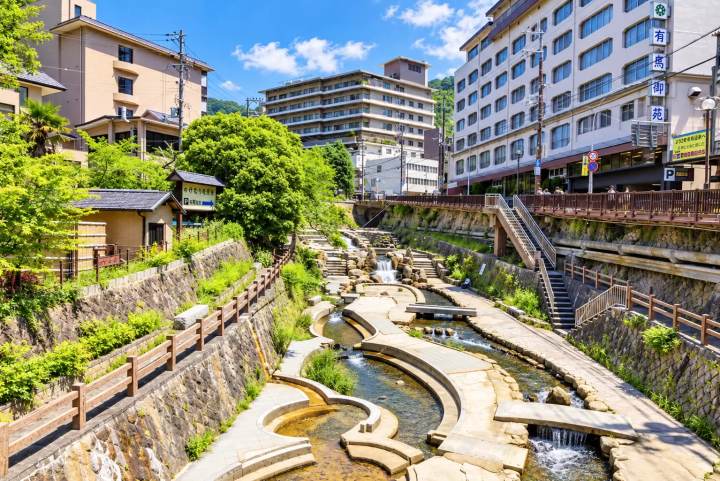
- Logistics: Arima Onsen offers exceptional accessibility, sitting approximately 30 minutes by transit from Sannomiya (Kobe) and roughly one hour by direct highway bus from central Osaka, making it an ideal weekend escape or extended day trip.
2. Kusatsu Onsen (Gunma Prefecture): Alpine Vigor and Volcanic Abundance
Perched high on a volcanic plateau approximately 1,200 meters above sea level in Gunma Prefecture, Kusatsu Onsen commands legendary status within Japanese wellness culture. It boasts the highest volume of naturally flowing, uncirculated thermal water of any hot spring resort in the nation.
The Iconic Yubatake and Yumomi Tradition
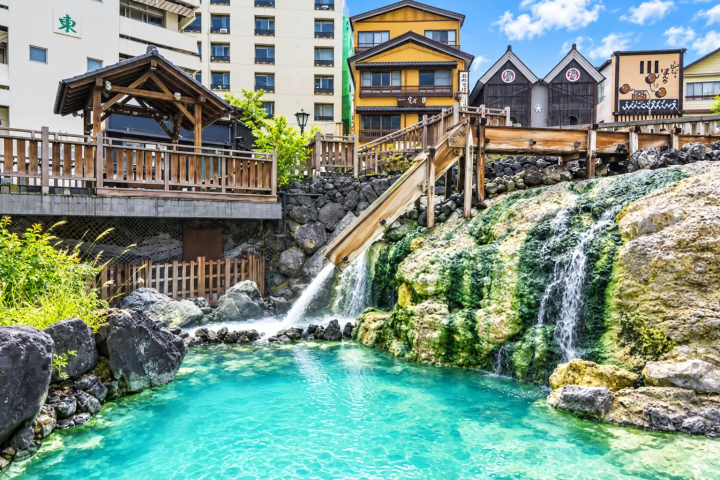
The beating heart of Kusatsu is the "Yubatake" (hot water field), situated directly in the town center. Here, massive volumes of piping-hot, sulfurous mineral water cascade through intricate networks of wooden flumes, allowing the roaring water to cool naturally before distribution to local ryokan and bathhouses. At night, the Yubatake is illuminated, casting an ethereal, steam-draped glow over the cobblestone plaza.
Because Kusatsu’s water is exceptionally acidic and naturally emerges at temperatures too high for immediate bathing (often exceeding 50°C to 60°C), the town developed "yumomi"—a traditional performance art and cooling method practiced at the Netsu no Yu facility. Dressed in traditional attire, local practitioners use long wooden boards to rhythmically churn the thermal waters, singing folk songs to lower the temperature without diluting the potent minerals with cold water.
Visitor Experience & Accessibility
Beyond the Yubatake, visitors can explore Sainokawara Park, a sprawling thermal park featuring open-air baths (rotenburo) set against a backdrop of rugged volcanic rock formations and dense alpine foliage. In the winter months, Kusatsu transitions into a dual-purpose destination, pairing world-class hot spring immersion with nearby alpine skiing.
- Logistics: Accessible from Tokyo in roughly three hours via a combination of limited express trains and dedicated highway buses, Kusatsu offers a complete immersion in traditional Japanese highland culture.
3. Gero Onsen (Gifu Prefecture): The Silky "Bijin no Yu"
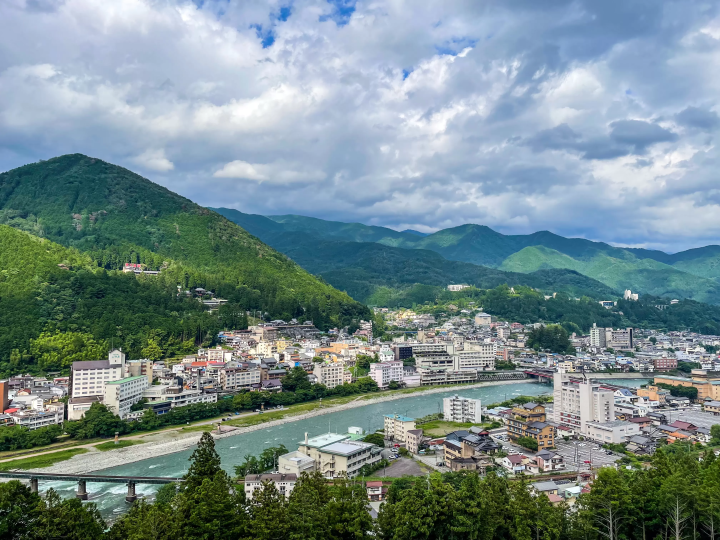
Stretching gracefully along the banks of the crystalline Hida River in Gifu Prefecture, Gero Onsen boasts a lineage exceeding 1,000 years. According to local folklore—the legendary "White Heron Legend"—a wounded white heron appeared to villagers, revealing the exact location where a subterranean thermal spring was bubbling to the surface.
Geological Profile & Skin-Smoothing Properties
Gero’s defining characteristic is its alkaline simple spring water. Devoid of harsh sulfurous odors or heavy mineral staining, the water is remarkably silky to the touch. It is nationally celebrated as a "bijin no yu" (beautifying hot spring), as immersion leaves the skin exceptionally smooth and hydrated. Its gentle chemical profile makes it the ideal introductory hot spring for international visitors unaccustomed to heavily mineralized thermal waters.
Cultural Heritage & Scenic Charm
Gero seamlessly blends wellness with architectural heritage. Free footbaths (ashiayu) are positioned throughout the town, allowing pedestrians to pause and soak their feet mid-stroll. With a regional Yumeguri Tegata (hot spring hopping wooden pass), visitors can sample the baths of multiple participating ryokan.
On the hills overlooking the river sits Onsenji Temple, dedicated to the White Heron Legend. Climbing its historic stone steps rewards travelers with a panoramic vista of the hot spring town cradled by forested peaks. Furthermore, the Gero Onsen Gassho Village showcases relocated, authentic gassho-zukuri (steep thatched-roof) farmhouses, offering a living museum of Japanese rural mountain life.
- Logistics: Gero is easily incorporated into central Japan itineraries, located approximately 1 hour and 30 minutes from Nagoya via the direct Limited Express Hida train line.
Comparative Matrix: Japan’s Three Famous Hot Springs
| Hot Spring Resort | Prefecture | Primary Water Characteristics | Transit Time from Nearest Major Hub | Ideal Traveler Profile |
|---|---|---|---|---|
| Arima Onsen | Hyogo | Iron-rich "Kinsen" & Carbonated "Ginsen" | ~30 mins from Kobe; ~1 hr from Osaka | History enthusiasts, urban travelers seeking a quick historical retreat |
| Kusatsu Onsen | Gunma | Highly acidic, high-volume natural thermal water | ~3 hrs from Tokyo | Those seeking dramatic mountain scenery, traditional yumomi culture, and alpine adventure |
| Gero Onsen | Gifu | Silky, alkaline "bijin no yu" (beautifying water) | ~1 hr 30 mins from Nagoya (Direct Hida Express) | Travelers wanting gentle waters, riverside strolls, and rural mountain village aesthetics |
Future Outlook: Sustaining Global Leadership in Travel
Japan’s coronation as the Number 1 tourism economy in the 2026 World Economic Forum index marks the beginning of a new chapter, rather than a final destination. As global mobility continues to evolve, the core challenge for Japanese tourism stakeholders will be balancing unprecedented international demand with environmental sustainability, local community preservation, and infrastructural equilibrium.
By continuing to champion regional diversification—directing the flow of global travelers away from congested urban corridors and into historical heartlands like Arima, Kusatsu, and Gero—Japan demonstrates that modern mass tourism can coexist with deep cultural preservation.
For the international traveler, the message is clear: the true magic of the world’s top-ranked tourism destination lies just beyond the horizon of the major cities. Whether soaking in the rust-colored mineral waters of Hyogo, marveling at the steam-choked flumes of Gunma, or indulging in the silky beautifying waters of Gifu, a journey through regional Japan offers a profound, restorative encounter with a culture that has mastered the art of hospitality.









Belum ada komentar. Jadilah yang pertama berkomentar!