

Executive Overview
The deployment of Atlus and Studio Zero’s critically acclaimed role-playing game, Metaphor: ReFantazio, onto Nintendo’s next-generation hardware platform, the Nintendo Switch 2, represents a pivotal milestone in the convergence of high-fidelity console role-playing games (RPGs) and portable hardware architecture. Earning a standout 9/10 critical rating, the port successfully translates the sprawling, 80-plus-hour turn-based epic into a mobile format without sacrificing the core artistic vision, narrative scope, or stylistic fluidity that defined its initial launch.
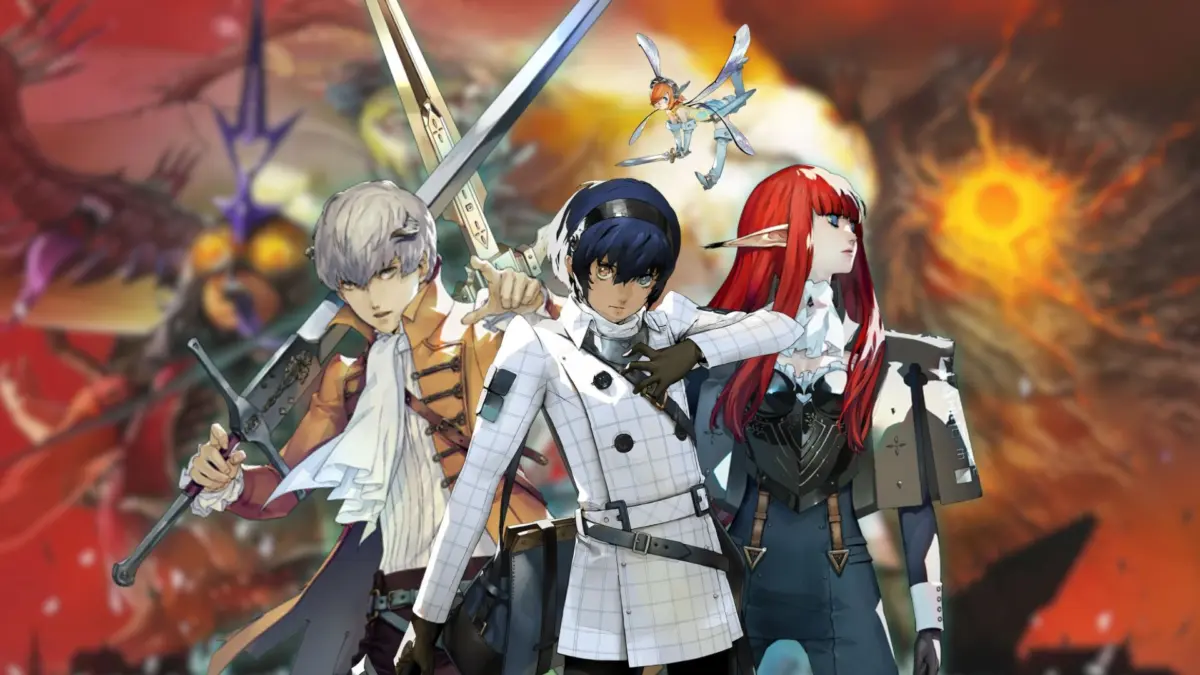
Originally released in October 2024 across PC, Xbox Series X|S, and PlayStation 5, Metaphor: ReFantazio was widely celebrated as a masterclass in modern JRPG design. Created by the core creative team behind Persona 3, Persona 4, and Persona 5—including director Katsura Hashino, character designer Shigenori Soejima, and composer Shoji Meguro—the title marked a bold departure from contemporary urban fantasy into high-concept political fantasy.
The transition to Nintendo Switch 2 demonstrates the elevated processing power and memory bandwidth of Nintendo’s updated hardware ecosystem. While minor graphical compromises—such as localized foliage pop-in and high battery drain during intensive sequences—are present, the title maintains solid framerate stability across its multiple performance profiles. This release reinforces Atlus’s strategic commitment to platform agility, proving that expansive, narrative-heavy JRPGs remain uniquely suited for hybrid portable devices.
Detailed Chronology
[October 2024] -------------------> [Hardware Transition Phase] -------------------> [Switch 2 Platform Launch]
Metaphor: ReFantazio launches      Atlus optimizes Studio Zero engine                Full portable port arrives
on PC, PS5, & Xbox Series X|S      for next-gen hybrid architecture                 with 3 visual modes & 9/10 score
1. Initial Launch and Critical Acclaim (October 2024)
Metaphor: ReFantazio made its debut across mainstream home consoles and PC in October 2024. Serving as the inaugural flagship project for Studio Zero, Atlus’s internal production team formed to explore non-Persona intellectual properties, the game received universal acclaim. Critics praised its complex political narrative, the refinement of the signature "Press Turn" combat system, and its striking UI design. However, its heavy computational reliance on custom visual filters and dense geometry left handheld enthusiasts questioning whether a feature-complete portable version would ever materialize without severe technical compromises.

2. The Portable RPG Evolution
Historically, Atlus has maintained a dual-track release strategy, leveraging portable systems to extend the lifecycle of its massive role-playing titles:
- Persona 4 Golden established handheld devices as the ideal platform for long-form social-simulator RPGs.
- Persona 5 Royal underwent a long optimization process before its successful port to lower-spec hardware, proving that complex UI systems could scale downward.
- Persona 3 Reload demonstrated Atlus’s ability to modernize older engines while maintaining high performance across variable hardware tiers.
The arrival of Metaphor: ReFantazio on the Nintendo Switch 2 completes this operational arc. It brings a modern, demanding current-gen title onto a portable platform near-simultaneously with the hardware’s expansion cycle.
Supporting Context & Metrics
+---------------------------------------------------------------------------------+
|                       METAPHOR: REFANTAZIO PORT METRICS                         |
+--------------------------+------------------------------------------------------+
| Score                    | 9 / 10                                               |
| Primary Platform Tested  | Nintendo Switch 2 (Handheld & Docked)                |
| Average Story Length     | 80 - 100+ Hours                                      |
| Graphics Modes           | Graphics Mode, Balanced Mode, Performance Mode       |
| Notable Performance      | Solid FPS, minimal stutter, localized background     |
| Technical Observations   | texture pop-in, heavy battery consumption            |
+--------------------------+------------------------------------------------------+
Technical Performance and Graphical Modes
Engineers at Studio Zero integrated three primary graphics configurations within the Nintendo Switch 2 system settings: Graphics Mode, Balanced Mode, and Performance Mode.
- Framerate & Stability: Testing reveals near-flawless performance consistency across all three profiles. The game avoids game-breaking frame drops, screen tearing, or dramatic pacing stutters during complex turn-based combat sequences featuring heavy particle effects and elemental overlays.
- Visual Rendering & Artifacts: The primary technical trade-off manifest on the Switch 2 build is minor texture pop-in. Environmental assets—specifically background foliage, distant trees, and secondary city structures—occasionally stream into view late when the player character is sprinting through large hub areas or wilderness zones.
- Aesthetic Filters: To mitigate lower asset resolutions and mask low-polygon geometry in distant models, the game employs an intentional film-grain filter. This stylistic grain integrates seamlessly into the title’s dark fantasy book aesthetic, obscuring potential rendering anomalies without compromising artistic intent.
Visual Profile Comparison Matrix:
+-------------------+----------------------+--------------------+--------------------+
| Feature           | Graphics Mode        | Balanced Mode      | Performance Mode   |
+-------------------+----------------------+--------------------+--------------------+
| Target Resolution | High (Up-scaled)     | Dynamic            | Native Base        |
| Frame Rate Target | 30 FPS Stable        | Variable/Target 45 | 60 FPS Target      |
| Asset Draw Dist.  | Maximum              | Medium             | Optimized          |
| Battery Drain     | High                 | High               | Moderate-High      |
+-------------------+----------------------+--------------------+--------------------+
Mechanics, Narrative, and Interface Parity
The handheld edition retains 100% of the gameplay content featured in the home console releases:

                              [ THE ROYAL RACE ]
                                      |
         +----------------------------+----------------------------+
         |                                                         |
  [COMBAT ENGINE]                                          [SOCIAL & OVERWORLD]
  - Press Turn Variant System                              - Gauntlet Runner Vessel
  - Archetype Awakening Matrix                             - Political Support Ranks
- Real-Time Action Pre-Empt - Town Chores & Exploration- The Protagonist & Companion: Players control a blue-haired youth afflicted with heterochromia, accompanied by the fairy companion Gallica. The duo navigates the United Kingdom of Euchronia following the assassination of the King and the cursing of the Crown Prince.
- The Archetype Awakening Matrix: Similar to the Persona/Demon summoning systems of prior Atlus titles, combat revolves around awakening "Archetypes"—specialized battle roles ranging from frontline Seekers to backline Mages—allowing deep party customization.
- The World and Movement: Long-distance travel relies on the "Gauntlet Runner"—a mechanical land-ship on legs—where players manage time, complete shipboard chores, build party bonds, and plan upcoming dungeon pushes.
- Interface Density on Mobile Screens: The application of Gallica’s Fae Sight, combined with on-screen experience tallies, mini-maps, active party indicators, and stylized dialogue menus, creates a dense visual layout. On the Switch 2’s native screen, the user interface can occasionally feel crowded during busy encounters, though overall readability remains intact.
Battery Draw and Computational Load
Due to the continuous rendering of complex dynamic lighting, heavy visual menus, and extensive voice-acted sequences (complemented by Shoji Meguro’s orchestral and choral soundtrack), energy consumption on the platform is high. Operating the game in any of the three display modes results in significant battery drain over standard portable play sessions, recommending the use of high-output external power banks for long-distance travel.
Official Statements and Technical Analysis
Industry analysts and technical auditing outlets have provided detailed evaluations of Metaphor: ReFantazio’s hardware translation. A benchmark breakdown from Digital Foundry highlighted the precise optimization methods employed by Studio Zero:
"While background geometry displays altered filtering parameters and periodic asset pop-in compared to native 4K console builds, the core rendering pipeline scales down effectively. Atlus has preserved the game’s artistic expression without compromising structural stability."
Editorial feedback from media network partner PCGamesN focused heavily on the game’s narrative weight and thematic scale:

"Metaphor: ReFantazio is an uncompromised epic. The story’s commentary on political corruption, social disparity, and collective anxiety delivers the same emotional power on portable screens as it does on high-end displays."
Reviewers across the board emphasized that while handheld UI clutter represents a minor friction point, the ability to suspend and resume an 80+ hour campaign anywhere fundamentally enhances the accessibility of long-form JRPGs.
Future Outlook
The technical and critical success of Metaphor: ReFantazio on the Nintendo Switch 2 sets an important precedent for both Atlus and parent company SEGA. It confirms that next-generation portable hardware can serve as a primary target for complex, current-gen JRPGs without requiring stripped-down side games or secondary engine reworks.
Future Platform Roadmap Strategy:
+-----------------------------------------------------------------------------------+
| 1. Simultaneous Multi-Platform Day-One Launches for Future Atlus IPs              |
| 2. Back-Porting / Next-Gen Patch Updates (e.g., Persona 5 Royal Switch 2 Edition) |
| 3. High-Density UI Optimization Standards for Portable Displays                   |
+-----------------------------------------------------------------------------------+
Strategic Implications for Atlus Development
- Unified Launch Windows: Moving forward, Atlus is increasingly likely to target day-and-date releases across PC, Sony, Xbox, and Nintendo platforms, eliminating historical multi-year delays for portable versions.
- Legacy Platform Enhancements: The successful deployment of Metaphor creates strong community demand for enhanced native updates to previous-generation titles, such as a potential optimized update for Persona 5 Royal on the Switch 2 platform.
- Engine Optimization Standards: Lessons learned from managing Metaphor’s dense user interface and stylized post-processing on mobile screens will likely inform the graphical architecture of Studio Zero’s and P-Studio’s upcoming titles.
Metaphor: ReFantazio on the Nintendo Switch 2 stands as a major achievement in platform porting. By successfully condensing a massive, mechanically dense JRPG onto portable hardware while maintaining visual integrity and solid performance, Atlus reaffirms its status as a master of the role-playing genre.



Belum ada komentar. Jadilah yang pertama berkomentar!