Tucked away along the intricate ria coastline of Fukui Prefecture, Wakasa Bay remains one of the Sea of Japan’s best-kept secrets. While generations of summer travelers have gravitated toward its shores for swimming and snorkeling, the region’s true depth unfurls long after the peak tourist season subsides. In mid-October 2026, an exploratory journey to Mihama Town revealed a serene landscape where twilight coastal illuminations, crisp autumn air, and world-class culinary mastery converge.
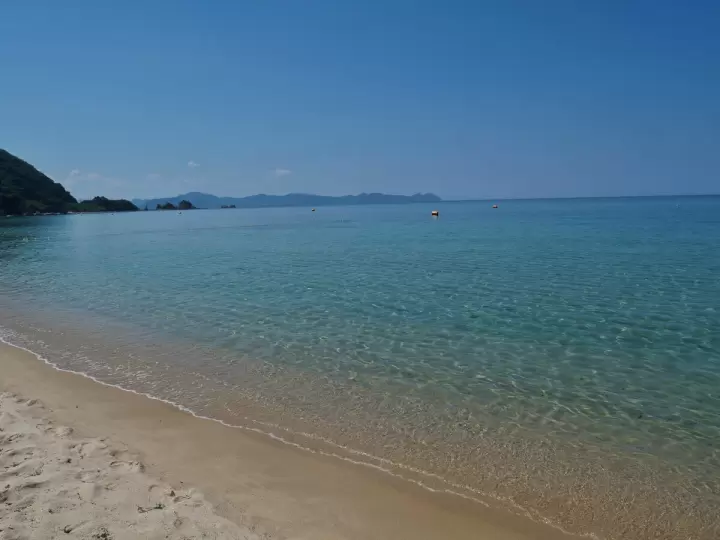
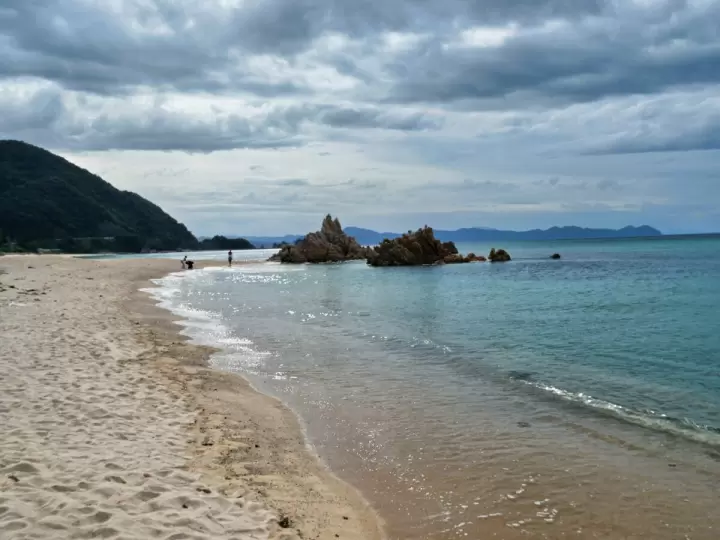
At the heart of this off-season renaissance is Suishohama Beach, celebrated for its blindingly white quartz sand and exceptional water clarity—qualities that earned it a coveted spot among Japan’s "88 Best Beaches" by the Ministry of the Environment. Complementing the natural coastal splendor is Ryokan Katsumiya, a premier gourmet inn located in the quiet fishing hamlet of Nyu. Following a comprehensive room renovation in 2024, Katsumiya pairs sophisticated interior design with an uncompromising dedication to local gastronomy. Sourced directly through family connections at the Tsuruga fish market and prepared by master artisans of Japanese cuisine, the inn offers travelers an immersive taste of Wakasa Bay’s marine bounty.
This report provides an in-depth chronicle of a journey to Mihama Town, examining the intersection of sustainable regional tourism initiatives—such as the NIGHT WAVE illumination project—and high-end ryokan hospitality that shifts the narrative of coastal Japan from a seasonal summer playground to a year-round cultural destination.
Detailed Chronology: An Evening in Mihama Town
16:50 — Arrival at Suishohama Beach and Twilight Illumination
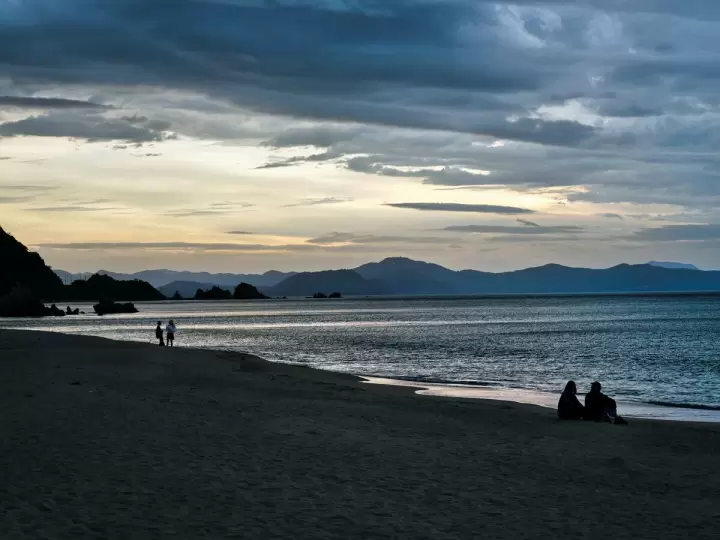
The autumn weather forecast for October 19, 2026, had predicted persistent rain, casting a brief shadow of uncertainty over the final evening of the NIGHT WAVE ~ Light Wave Project in Suishohama. However, defying expectations, the skies cleared just in time, allowing a faint, dramatic patch of sunshine to pierce through the cloud cover as dusk approached.
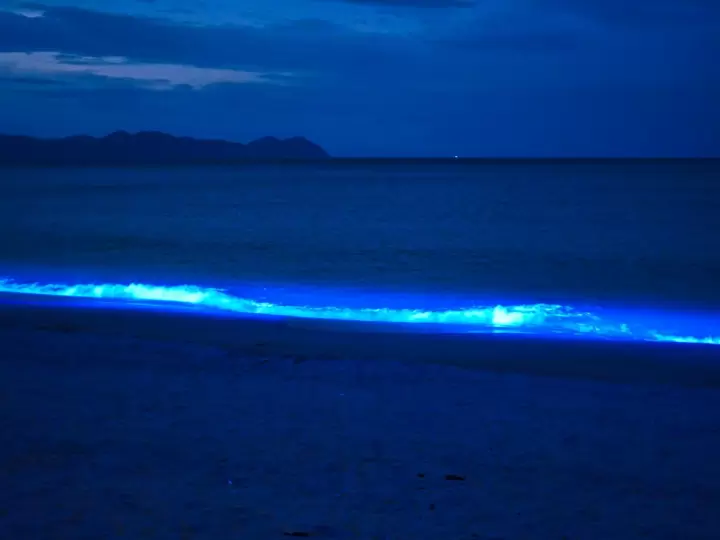
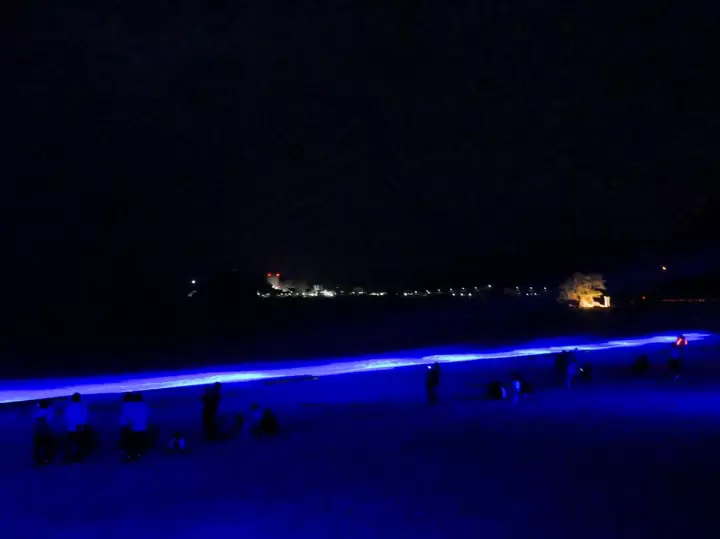
Arriving at Suishohama Beach just ahead of the 5:20 PM sunset, visitors were greeted by an extraordinary sensory transformation. As the natural light faded, the shoreline erupted in a ethereal wash of blue artificial illumination. This three-day event (running from October 17 to October 19, 2026) cast a fantastical glow across the sand, while the nearby coastal torii gate was bathed in warm light, creating a stark, poetic contrast against the darkening horizon.
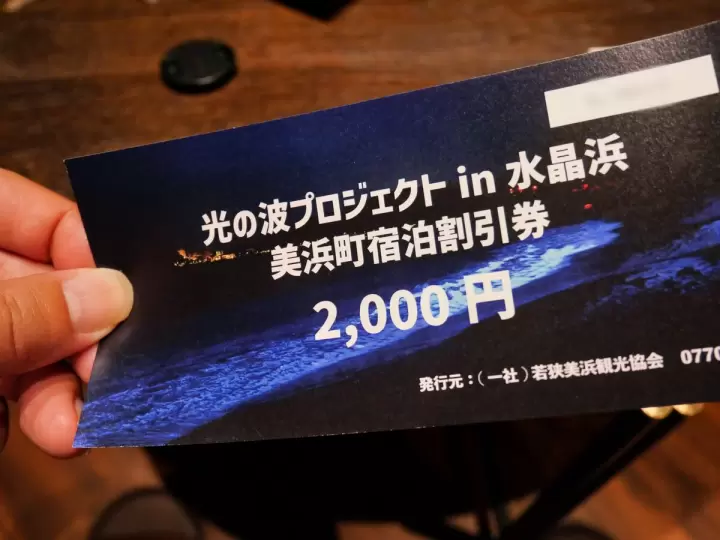
Adding to the welcoming atmosphere, event organizers distributed 2,000-yen Mihama Town accommodation discount vouchers to the first 300 attendees. Food trucks and pop-up dining areas lined the perimeter, offering a lively community gathering space that bridged local residents and out-of-town travelers. Standing on the shore, wrapped in the crisp autumn breeze and the rhythmic, repeating crash of calm waves, guests experienced a tranquil twilight far removed from the frenetic energy of the summer swimming months.
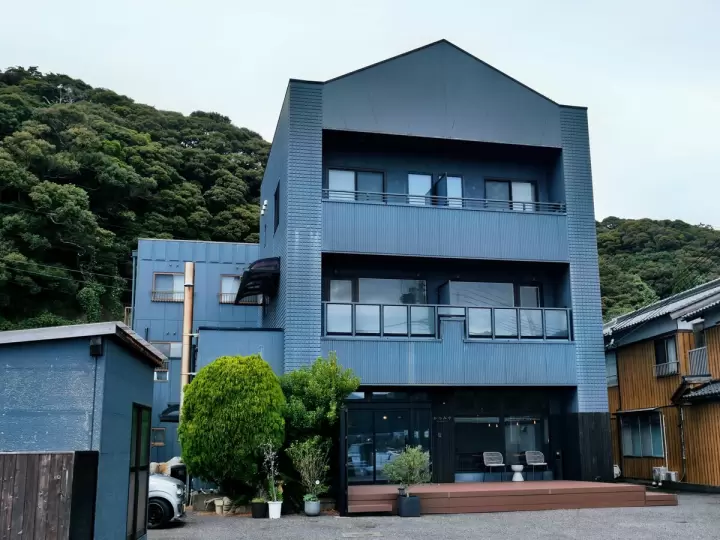
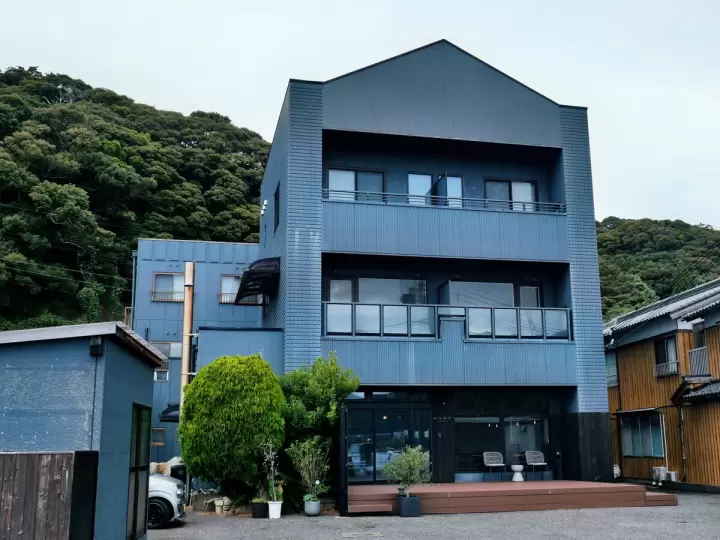
Departing Suishohama Beach at precisely 6:00 PM, a short drive brought travelers to the historic coastal fishing village of Nyu on the western shore of the Tsuruga Peninsula. Here, Ryokan Katsumiya sits quietly along a harbor framed by small, docked fishing vessels. The immediate environment projects an aura of profound tranquility, completely insulated from urban clamor.
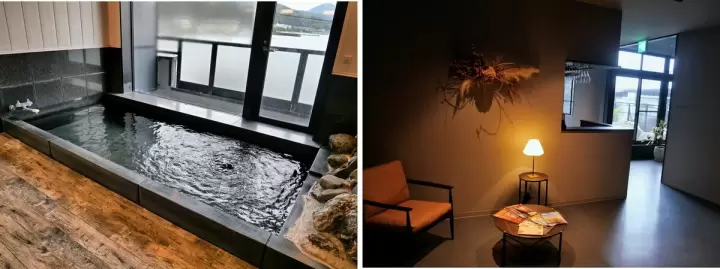
Upon entering the inn, guests are met with a seamless blend of traditional Japanese hospitality and modern, minimalist aesthetics. The ryokan features eight meticulously designed guest rooms across six distinct styles, including modern Japanese-style spaces, Japanese-Western hybrid rooms, and sleek Western twin configurations. Room 203, an ocean-view twin, exemplifies this design philosophy, offering clean lines, muted earth tones, and a sweeping panoramic perspective of the dark, starlit waters of Wakasa Bay.
19:15 — The "Wakasa Full Enjoyment Course" Culinary Experience
Dinner is the undisputed anchor of the Katsumiya experience. For this evening, the chosen menu was the Wakasa Full Enjoyment Course, a sprawling showcase of seasonal land and sea provisions designed by a head chef deeply trained in classical Japanese culinary arts.
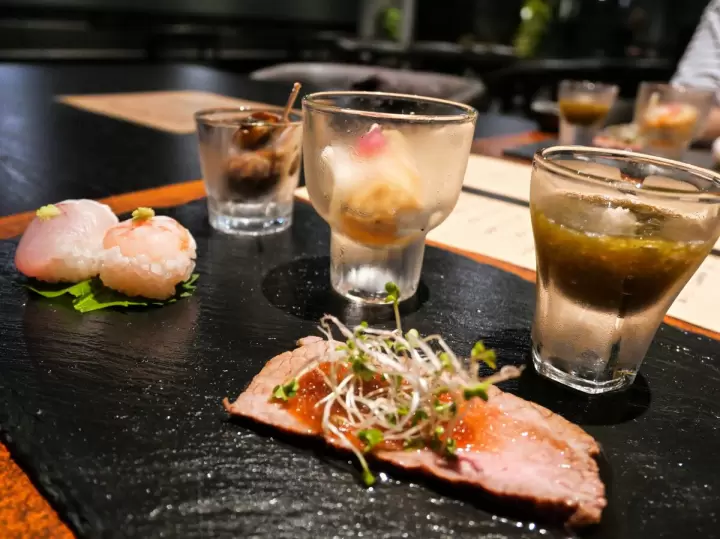
The meal commenced with an intricate appetizer plate: nanbanzuke (marinated fried fish), tender sea snails (whelk), delicate mozuku seaweed, bite-sized temari sushi, and an unexpected yet sensational inclusion—Wakasa beef roast beef. While coastal inns typically focus exclusively on seafood, the rich marbling of the locally raised Wakasa beef, paired with a savory, unctuous reduction sauce, delivered an impact so profound that it challenged the primacy of the seafood courses to follow.
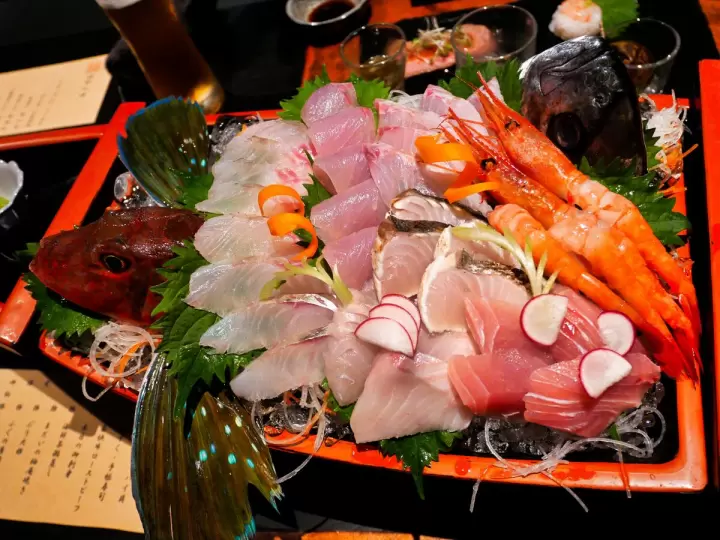
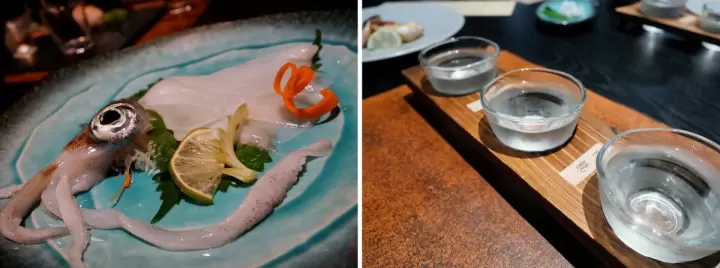
The centerpiece of the meal soon arrived: a magnificent, towering boat-shaped sashimi platter resembling a heavily laden fishing vessel returning from the depths of Wakasa Bay. The visual spectacle was anchored by a gigantic gurnard (kobo-dai), a rare delicacy of imposing scale, accompanied by glistening slices of Spanish mackerel (sawara), amberjack (buri), horse mackerel (aji), marlin, and translucent sweet shrimp (amaebi). A separate plate featured fresh bigfin reef squid (irutsuma), offering a sweet, melt-in-the-mouth texture characteristic of autumn waters.
To complement the feast, a Fukui Local Sake Tasting Set was ordered, featuring three distinct regional expressions:
Hayaseura (Mihama Town): A crisp, clean brew carrying subtle mineral notes born from local coastal brewing traditions.
Bon (Sabae City): A globally acclaimed, richly aromatic daiginjo known for its velvety depth.
Hakuryu (Eiheiji Town): A refined, elegant sake drawing from the pure mountain snowmelt of sacred temple grounds.
Subsequent courses arrived with impeccable pacing:
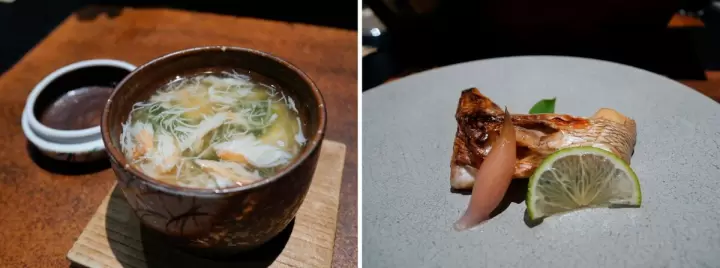
Seafood Chawanmushi: A savory steamed egg custard generously fortified with fresh crab and seasonal seafood, boasting an ultra-silky, refined broth.
Grilled Sea Bream with Yuzu Sauce: Perfectly charred skin yielding to tender, flaky white meat, elevated by the sharp, citrusy brightness of local yuzu.
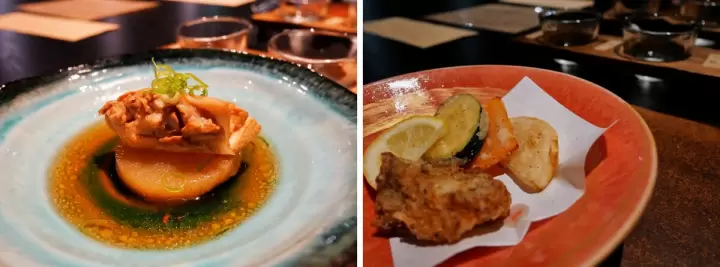
Braised Yellowtail and Daikon Radish: A masterclass in traditional simmering, where the rich fats of the winter yellowtail permeated the fibrous daikon without losing structural elegance.
Deep-Fried Pufferfish (Fugu): Encased in a feather-light, crisp batter, the pufferfish offered a firm, chicken-like elasticity paired with a deeply savory profile.
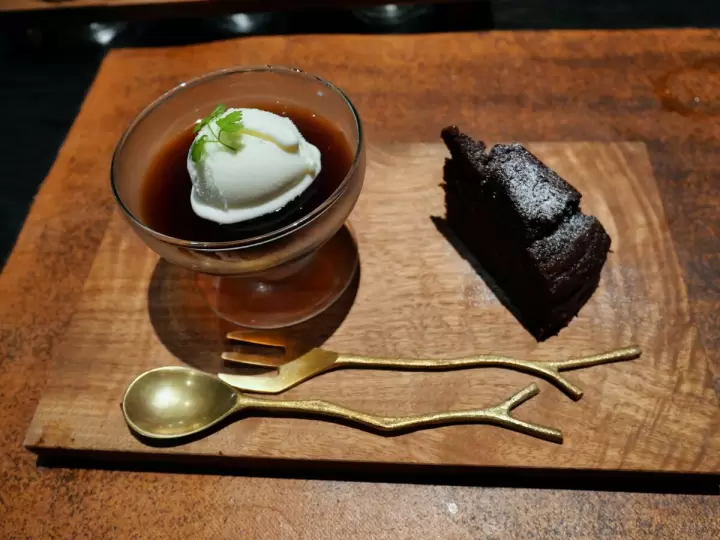
Final Course & Dessert: The savory component concluded with aromatic octopus rice, accompanied by salted komatsuna greens and a deeply restorative fish soup. Dessert arrived as a decadent double-act: a smooth coffee jelly paired with a rich, artisanal gateau chocolat.
08:00 (Next Morning) — Morning Wellness Breakfast at Cafe Agreable
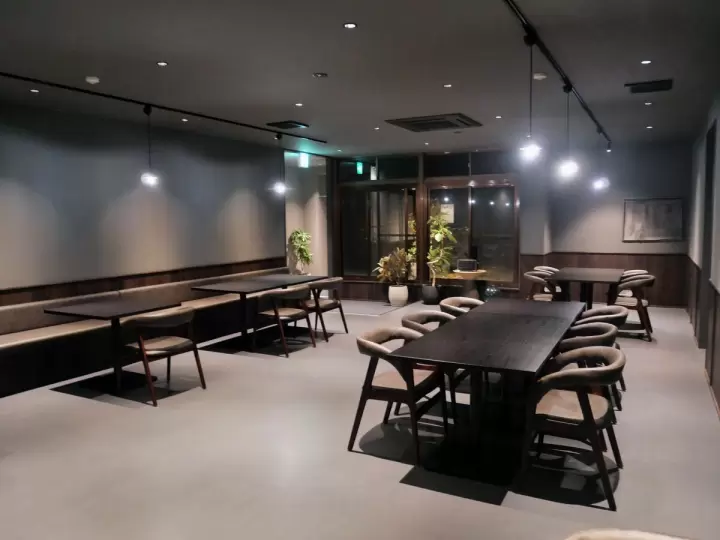
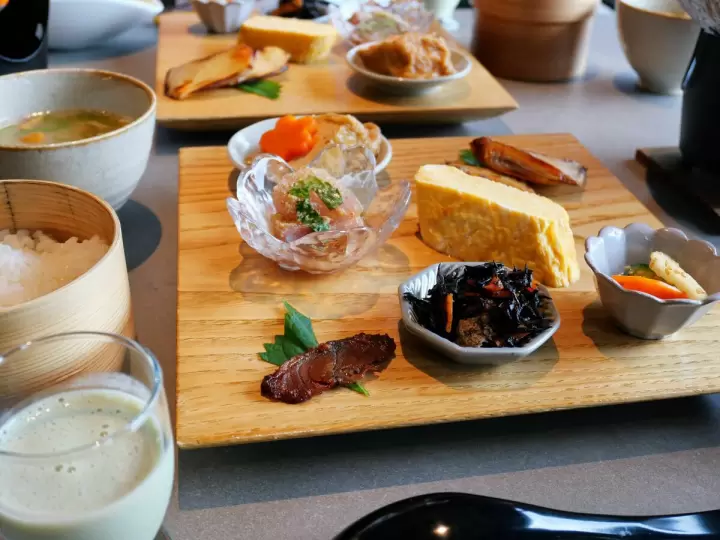
Morning at Katsumiya begins not in a traditional tatami dining hall, but inside Cafe Agreable, a sun-drenched, stylish cafe space overlooking the calm expanse of Wakasa Bay. Billed as "a meal that nourishes your body in the morning," the breakfast breaks away from heavy ryokan traditions in favor of holistic wellness.
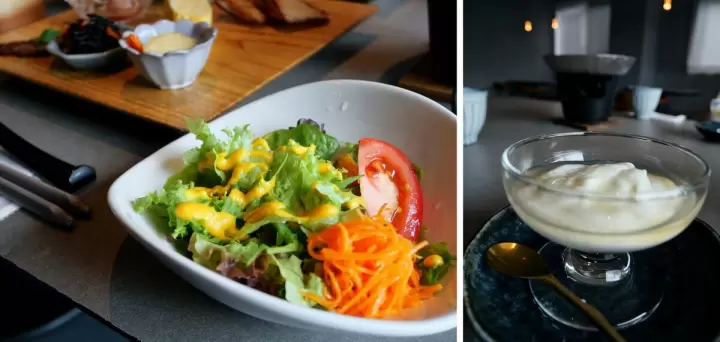
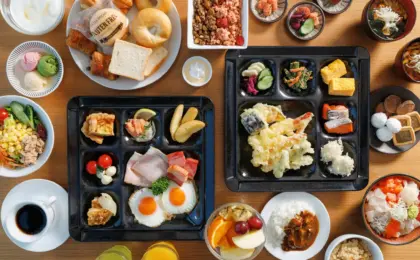
The spread featured lightly grilled seasonal Wakasa fish, a crisp garden salad dressed in a house-made enzyme vinaigrette, traditional grilled heshiko (mackerel fermented in rice bran—a potent local preservation art), a velvety vegetable smoothie, and yogurt topped with a proprietary apple enzyme syrup. Each element was designed to gently awaken the metabolism while celebrating hyper-local terroir.
Supporting Context & Metrics
Geographical and Environmental Profile
Location: Wakasa Bay spans from Cape Echizen Misaki in Echizen Town (Fukui Prefecture) to Cape Kyogamisaki in Kyotango City (Kyoto Prefecture).
Coastline Architecture: Characterized by a complex ria coastline featuring subsidiary bays including Tsuruga Bay, Obama Bay, Maizuru Bay, and Miyazu Bay.
Suishohama Beach Accolades: Officially designated in 2001 by the Ministry of the Environment as one of Japan’s "88 Best Beaches."
Swimming Season Parameters: Typically spans two months annually (July 1 to August 30), with monitored swimming hours from 08:00 to 17:00.
Accommodation & Dining Infrastructure
Ryokan Katsumiya Configuration: 8 total rooms across 6 distinct categories (including modern Japanese, Western-style, and Japanese-Western hybrid rooms), fully renovated in 2024.
Sourcing Network: Direct supply chain integration via family-run fish wholesale operations at the nearby Tsuruga marine market.
Cafe Agreable Operations: Operates as an in-house ryokan breakfast space by morning and an independent public cafe during daytime hours (11:00 – 15:00; closed Wednesdays, Saturdays, and Sundays).
Official Statements & Local Insights
According to local tourism representatives and regional promotion writers, the primary challenge for Wakasa Bay has long been the perception of seasonality—the false notion that the region shuts down once the summer beach umbrellas are packed away.
"While Suishohama is internationally recognized for its summer vibrancy, the true identity of Wakasa Bay reveals itself in the quiet transitions of autumn and winter," notes Yamada, a regional revitalization cooperation team writer specializing in the Tsuruga-Wakasa corridor. "From the ethereal blue glows of the NIGHT WAVE project to the multi-layered culinary depth of inns like Katsumiya, visitors who limit their experience to July and August are only scratching the surface."
The proprietress of Ryokan Katsumiya emphasizes that the region’s culinary calendar is a rolling sequence of marine migrations:
"After the summer crowds disperse, our kitchens transition rapidly. November marks the arrival of prized Echizen crab, followed closely by Wakasa pufferfish. By early December, we enter the territory of the legendary ‘Hiruga winter yellowtail,’ landed directly at Mihama Town’s Hinata fishing port. The depth of Wakasa’s gourmet culture is vast—so deep that a single visit is never enough to comprehend it entirely."
Future Outlook & Traveler Recommendations
As Mihama Town continues to refine its shoulder-season tourism strategy, initiatives like the NIGHT WAVE ~ Light Wave Project are expected to expand in scope. Travelers planning an excursion to the Reinan region of Fukui Prefecture are advised to monitor official channels—such as the Mihama Town Tourism Association website and their active regional Instagram accounts—for advance announcements regarding event schedules, illumination dates, and future accommodation subsidy rollouts.
Practical Booking & Travel Guide:
Access: Ryokan Katsumiya is accessible via a convenient 25-minute taxi ride from Tsuruga Station (connectable via the Hokuriku Shinkansen line).
Reservation Strategy: While summer bookings require months of lead time, autumn and winter visits offer a more contemplative atmosphere paired with elite-tier seasonal seafood (crab, yellowtail, and fugu).
By shifting focus away from conventional beach tourism and embracing the quiet elegance of its off-season tides, Mihama Town offers an authoritative masterclass in sustainable, high-end regional revitalization.









Belum ada komentar. Jadilah yang pertama berkomentar!