

Executive Overview
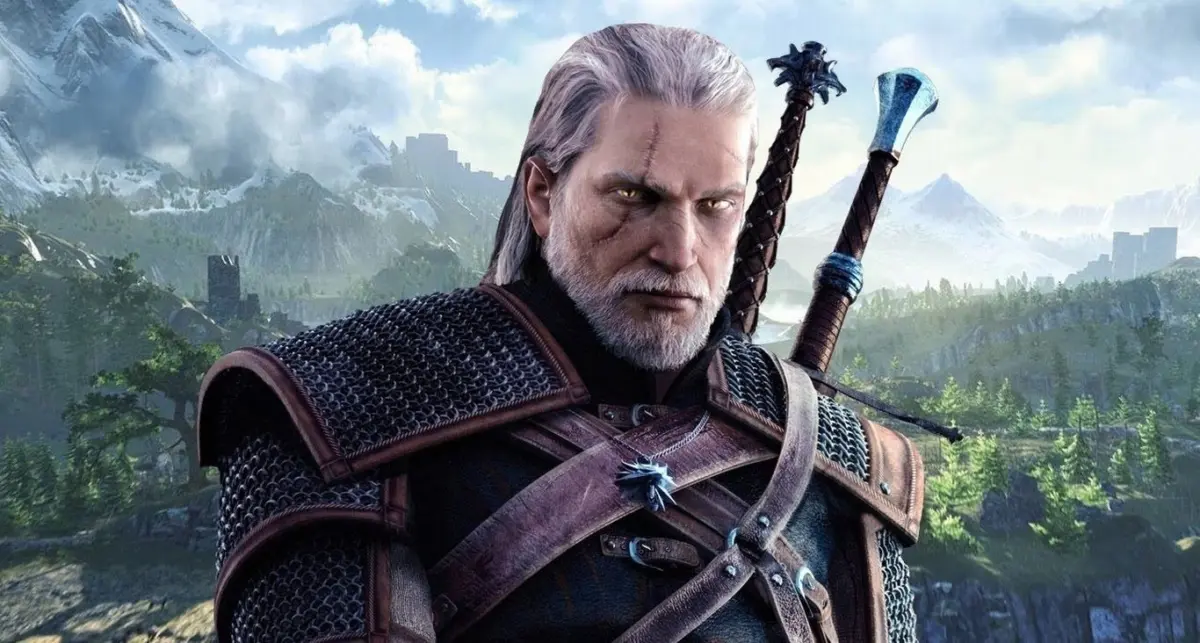
The intersection of artificial intelligence and video game development continues to provoke intense moral, artistic, and legal debates across the entertainment industry. Recent investigative reporting by Game File has brought these tensions into sharp focus, revealing that Polish game development titan CD Projekt Red partnered with synthetic voice firm Respeecher to modify the voice of veteran Polish voice actor Jacek Rozenek. The AI-assisted voice modification is slated for use in Songs of the Past, an upcoming expansion for The Witcher 3: Wild Hunt.
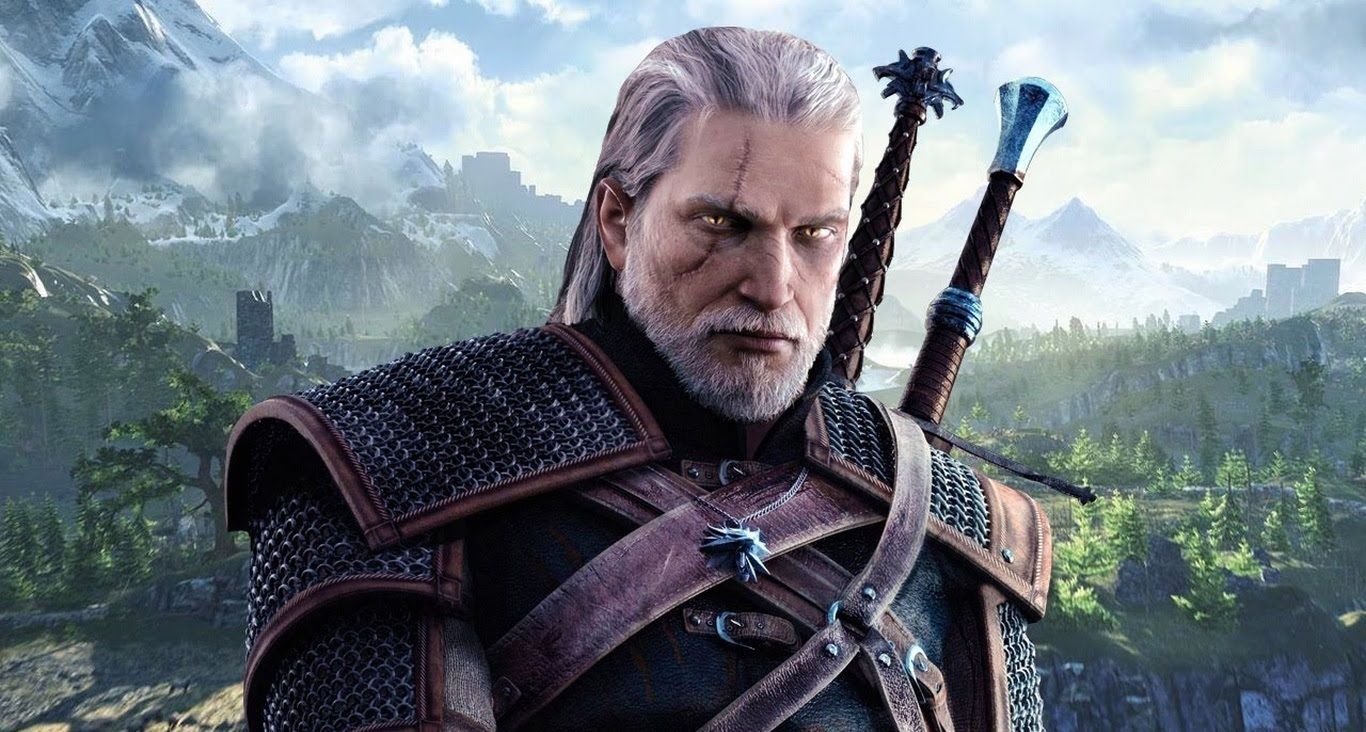
Jacek Rozenek has long been the definitive voice of the iconic monster slayer Geralt of Rivia across the Polish localized editions of The Witcher franchise. However, a severe medical emergency in 2019 left Rozenek temporarily unable to speak. While he has since undergone rigorous rehabilitation to return to the recording booth, the physical toll of his stroke permanently altered the natural pitch, texture, and resonance of his voice.
Because Songs of the Past takes place chronologically within the narrative framework of the original The Witcher 3, CD Projekt Red faced an unprecedented continuity hurdle. Rozenek’s naturally lower, rougher, and more gravelly modern vocal delivery contrasted sharply with archival recordings from a decade prior. To preserve narrative immersion with the actor’s enthusiastic consent, CD Projekt Red utilized Respeecher’s advanced voice-cloning algorithms. This technology adjusts Rozenek’s current performances in real-time, effectively restoring his vocal cords to how they sounded at the height of the franchise’s popularity.
While this case involves the explicit approval and active participation of the original performer—distinguishing it from unauthorized vocal scraping or post-mortem AI generation—it nevertheless reignites complex discussions surrounding labor rights, technological dependency, and the future of creative authenticity in interactive entertainment.
Detailed Chronology: Health Struggles, Recovery, and Technical Innovation
To understand the weight of CD Projekt Red’s decision to utilize synthetic voice replication, one must trace the timeline of Jacek Rozenek’s health and his enduring professional relationship with the Witcher franchise.
The 2019 Turning Point
In 2019, at the height of his career, Jacek Rozenek suffered a debilitating stroke. The medical emergency had an immediate and catastrophic impact on his physical capabilities, temporarily robbing the seasoned actor of his ability to speak. For an artist whose primary professional tool is the human voice, the medical event threatened to permanently end his career.
Rehabilitation and the Next-Gen Update
Demonstrating remarkable resilience, Rozenek embarked on a prolonged and grueling path of physical therapy and vocal rehabilitation. By 2021, his progress allowed him to return to the studio to record fresh dialogue lines for the next-generation technical update of The Witcher 3: Wild Hunt.
While successful, the demanding nature of studio recording left Rozenek visibly exhausted. Furthermore, the biological reality of surviving a stroke—coupled with natural aging—had permanently modified his vocal anatomy. His speaking voice was noticeably deeper, carrying a heavier rasp and gravelly texture that was entirely distinct from his energetic performances in the 2015 base game.
The Development of Songs of the Past
When CD Projekt Red greenlit Songs of the Past, a new story-driven expansion set firmly in the middle years of The Witcher 3, developers encountered a distinct continuity dilemma. Because the expansion narrative runs parallel to or occurs within the timeline of the original game, players would experience stark audio discrepancies if Geralt’s voice shifted dramatically between base-game content and the new expansion chapters.
Faced with this artistic roadblock, CD Projekt Red consulted with Respeecher, a specialized voice-replication firm. Rather than casting a soundalike or attempting to piece together fragments of old archival audio, the studio chose to record Rozenek directly, subsequently passing his modern vocal tracks through Respeecher’s proprietary AI models. The technology meticulously adjusted his pitch, clarity, and resonance to match the timbre of his performances from twelve years prior, keeping Rozenek intimately connected to his career-defining role.
Technical Challenges and Synthetic Speech Engineering
Working with generative AI in professional voice acting is far from a turnkey operation. Dmytro Vasylets, a synthetic speech artist involved in the project, shed light on the immense technical hurdles required to make Rozenek’s AI-assisted performance sound seamless.
"The brief was simple: make Jacek’s voice sound alive, rich and young, like in the original game," Vasylets explained in interviews with Game File. However, executing that brief required hundreds of hours of painstaking post-production labor.
Overcoming AI Artifacts and Emotional Depth
According to Vasylets, the primary challenges of synthetic voice processing extend far beyond reading flat lines of dialogue. While modern AI models can easily replicate a neutral speaking cadence, capturing the expansive dynamic range of a dramatic performance remains extraordinarily difficult.
- The Artifact Problem: Early iterations of synthetic models often introduce robotic warbles, digital phasing, or metallic artifacts that ruin audio fidelity. Eradicating these artifacts required continuous model retraining and exhaustive collaborative reviews with CD Projekt Red’s internal audio engineers.
- Emotional Nuance: Geralt of Rivia is a dynamic character who transitions rapidly between stoic exposition, battle cries, visceral groans of pain, sardonic laughter, and sudden expressions of frustration or fear. Capturing these micro-tones—the half-tones, breath control, and emotional spikes—at studio-grade audio quality pushed the technical boundaries of what voice-conversion software can achieve.
Despite these hurdles, both the studio and the artist express deep satisfaction with the final product. Rozenek himself noted that his profound familiarity with the character allowed him to deliver the right emotional beats naturally, trusting the technology to bridge the physical gap left by his stroke. "The point is that this voice should be as close as possible to my voice from 12 years ago," Rozenek stated. "I have great trust […] for the creators of this game."
Supporting Context & Industry Metrics: A Precedent of Complicated AI Usage
This project marks CD Projekt Red’s second major collaboration with Respeecher, highlighting a growing corporate reliance on synthetic media to solve legacy production challenges.
The Precedent of Cyberpunk 2077: Phantom Liberty
CD Projekt Red previously utilized Respeecher during the development of the Cyberpunk 2077 expansion, Phantom Liberty. In that instance, the studio faced the tragic passing of Miłogost Reczek, a celebrated Polish voice actor who portrayed Viktor Vektor in Cyberpunk 2077 and Vesemir in The Witcher 3.
Reczek passed away in 2021 before recording could take place for the expansion’s new story segments. With the explicit blessing and active cooperation of Reczek’s family, CD Projekt Red deployed Respeecher to synthesize new lines of dialogue in Reczek’s voice, ensuring that the beloved character could return without breaking immersion or resorting to recasting.
The Broader Industry Landscape
The gaming industry’s relationship with generative AI is intensely polarized. On one hand, companies view AI as a pragmatic tool for localization, continuity preservation, and assisting disabled or deceased performers. On the other hand, the labor force views unauthorized AI voice cloning as an existential threat to job security and copyright ownership.
These tensions boiled over globally, culminating in major labor actions such as the historic 11-month SAG-AFTRA video game voice actors’ strike. Performers fought aggressively to secure strict legal guardrails, demanding contractual transparency, informed consent, and fair compensation to prevent studios from training generative models on an actor’s voice without permission or ongoing residuals.
CD Projekt Red has navigated these waters with cautious ambiguity. Localization producer Mikołaj Szwed acknowledged the heavy anxiety surrounding the technology, stating: "As a person working with voice actors over all the regions in the world, this is a big concern." However, Szwed emphasized that Rozenek’s situation represents an isolated, compassionate exception rather than a corporate shift toward automated casting.
Furthermore, CD Projekt Red has publicly confirmed that it is not utilizing generative AI voice tools for major upcoming titles like The Witcher 4 (Project Polaris), citing the legal complexities surrounding intellectual property ownership and ethical boundaries. Szwed clarified that Rozenek’s voice will not be artificially altered in any future franchise entries set later in the timeline, as natural aging and a deeper vocal register would organically fit an older Geralt. The AI modification was strictly necessitated by the chronological anomaly of injecting new voice work directly into a decade-old narrative framework.
Official Statements and Industry Parallels
The conversation surrounding AI-modified human performances expands beyond CD Projekt Red. Just days prior to the disclosure of Rozenek’s involvement in Songs of the Past, veteran voice actor Stephen Russell appeared on a Nightdive Studios podcast to discuss his own return to a legacy role: portraying the master thief Garrett in the upcoming Thief: The Dark Project remaster and its new Tarnished Mirror expansion.
Unlike Rozenek, Russell returned to the recording booth after a hiatus of more than twenty years—his last official outing as Garrett was in 2004’s Thief: Deadly Shadows. Russell noted that while recording equipment and production workflows have evolved dramatically over two decades, the core performance relied entirely on his own organic vocal adjustments, pitch control, and acting stamina.
The contrast between Russell’s natural organic return and Rozenek’s medically necessitated AI enhancement underscores the divergent paths facing aging or recovering industry veterans. While Russell could organically adapt his aging voice to suit the character after a long break, Rozenek’s sudden neurological trauma left a physical barrier that only technological intervention could bridge.
Future Outlook: Where Do We Draw the Line?
As video game technology races forward, the case of Jacek Rozenek and CD Projekt Red serves as a fascinating test case for the ethical deployment of synthetic media.
- The Consent Paradigm: A defining factor separating exploitative AI practices from ethical applications is informed, enthusiastic consent. In both Rozenek’s case and the posthumous recreation of Miłogost Reczek, the artists or their immediate estates were fully consulted, compensated, and directly involved in the decision-making process.
- The Slippery Slope of Continuity: While studios will likely point to The Witcher 3 expansion as a shining example of AI preserving artistic vision, labor advocates worry that exceptions quickly become industry standards. As AI tools grow cheaper and more efficient, studios may increasingly pressure aging or recovering actors to sign away their digital likeness rights in standard employment contracts.
Ultimately, Jacek Rozenek’s return to the role of Geralt of Rivia—augmented by Respeecher’s algorithms—proves that synthetic audio can be used as a tool for healing and continuity rather than mere corporate cost-cutting. However, as the industry continues to draft new legal frameworks and labor protections, developers must tread carefully to ensure that technology serves to elevate human artistry rather than render it obsolete.






Belum ada komentar. Jadilah yang pertama berkomentar!