


Executive Overview
In the volatile landscape of modern live-service video games, few communities rival the passionate, hypersensitive, and profoundly organized player base of Helldivers 2. Developed by Arrowhead Game Studios and published by Sony Interactive Entertainment, the cooperative third-person shooter became an astronomical global phenomenon shortly after its early 2024 launch. However, this meteoric rise has been consistently juxtaposed with severe growing pains, communication missteps, and a unique propensity for community-driven backlash.
The latest storm to hit Super Earth centers on a seemingly administrative infrastructure update: the studio’s decision to swap out its underlying anti-cheat software. By transitioning from GameGuard to Easy Anti-Cheat (EAC), Arrowhead intended to stem a rising tide of disruptive cheaters and unauthorized currency exploiters. Instead, the migration inadvertently decimated the game’s thriving PC modding scene, triggering a fresh avalanche of over 10,000 negative reviews on Steam and plunging the title’s recent user rating into "Mostly Negative" territory.
Beyond the immediate furor over broken cosmetic and gameplay modifications, the incident has reignited broader community grievances regarding missed roadmap deadlines, delayed quality-of-life updates, and a perceived disconnect between developer intentions and player expectations. This report offers an in-depth look at the sequence of events, the underlying technical and economic friction of modding in a live-service ecosystem, official responses from Arrowhead Game Studios, and what the future holds for the Galactic War.
Detailed Chronology: From Anti-Cheat Patch to Steam Review-Bombing
The Catalyst: Swapping the Shield
The trouble began a few weeks ago when Arrowhead Game Studios deployed a routine yet sweeping technical update aimed at fortifying Helldivers 2 against malicious actors. For months, the PC version of the game had utilized GameGuard, a kernel-level anti-cheat solution that, while functional, struggled to curb advanced exploits. To mitigate the issue, Arrowhead opted to replace it with Epic Games’ widely utilized Easy Anti-Cheat system.
While the primary objective was noble—to purge lobbies of malicious griefers ruining cooperative missions—the technical footprint of EAC proved heavy-handed. Immediately upon deployment, players discovered that virtually the entire ecosystem of community-created modifications for the PC version had ceased to function.
The Community Backlash
The Helldivers 2 community is no stranger to dramatic expressions of discontent. Earlier in the game’s lifespan, a mandatory PlayStation Network (PSN) account-linking requirement sparked a historic review-bombing campaign that forced Sony into an unprecedented retreat. Consequently, when the anti-cheat update crippled mods overnight, the community’s response was swift and uncompromising.
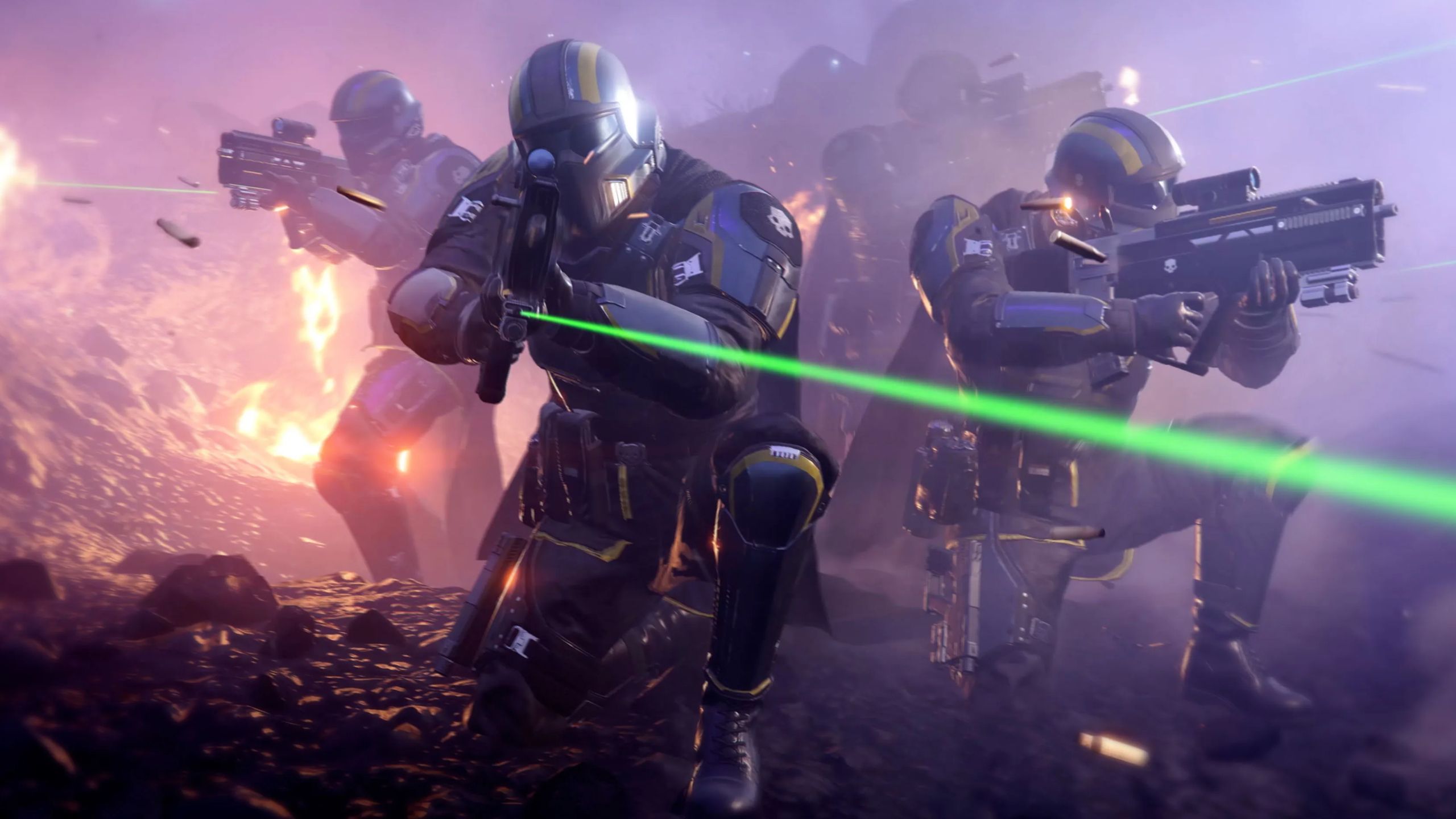
Within days, players flooded the game’s Steam store page with over 10,000 negative reviews, dragging its recent approval rating down to "Mostly Negative." A deep dive into these recent reviews reveals a cocktail of frustrations:
- Broken Modifications: Players mourning the loss of both aesthetic conversions and total-conversion audio/visual overhauls.
- Persistent Bugs: Frustration that core gameplay bugs and stability issues were seemingly playing second fiddle to security upgrades.
- Communication Gaps: A growing sentiment that Arrowhead’s development priorities were misaligned with the day-to-day experiences of the player base.
Supporting Context & Metrics: The Delicate Ecosystem of Modding in a Live-Service Game
To fully understand why the anti-cheat transition turned into a diplomatic disaster, one must examine the complex friction points between modding culture and live-service monetization structures.
The PvE Paradox
Helldivers 2 occupies a unique psychological and architectural space. As a purely Player-versus-Environment (PvE) cooperative game, the standard argument against modding—that it grants unfair competitive advantages over human opponents—does not strictly apply. In a cooperative environment where players work together to spread managed democracy across hostile alien worlds, a custom skin that turns a Helldiver into Master Chief or replaces the standard assault rifle sound effects with classic Halo audio theoretically harms no one.
The Economic Threat: Super Credits and Exploits
However, Helldivers 2 is simultaneously a live-service game underpinned by real-money microtransactions and premium battle passes known as Warbonds. Within the game, a rare premium currency called Super Credits can be discovered organically during missions or purchased outright via the storefront.
This financial layer introduces a darker side to PC modding:
- Currency Farming Exploits: Malicious actors utilized specialized client-side mods to rapidly duplicate, farm, or outright spawn Super Credits, bypassing the intended economy.
- Hostile Gameplay Alterations: Some mods went beyond aesthetics, modifying weapon damage multipliers, altering enemy spawn rates, or spawning unreleased content in public lobbies, frequently resulting in client crashes and ruined sessions for vanilla players.
Arrowhead was ultimately forced into a corner. From a technical and security perspective, distinguishing between an innocent cosmetic texture swap and a malicious memory-injection script is exceptionally difficult for automated anti-cheat systems. By prioritizing ecosystem integrity and economic stability, the studio inadvertently sacrificed the goodwill of its creative PC community.

Official Statements: Arrowhead Addresses the Outcry
Recognizing the severity of the backlash, Arrowhead Game Studios did not retreat into silence. Instead, the developer took to its official Steam developer blog and community channels to address the controversy transparently, offering both justifications and concessions.
Defending the Anti-Cheat Pivot
"We added Easy Anti-Cheat for one reason: to reduce the number of cheaters joining your missions and ruining the experience. On that front, we think we’re taking steps in the right direction," Arrowhead stated in the developer blog.
The studio acknowledged the collateral damage inflicted upon the modding community, noting that the architectural changes inherently locked out fan-made additions. However, the developers drew a hard line regarding gameplay-altering software: such mods, from a technical standpoint, remain indistinguishable from evasion attempts against the anti-cheat framework.
Olive Branches for Cosmetic Modders
Despite standing firm on gameplay integrity, Arrowhead offered a significant concession to fans of purely visual customization. Following an internal review of how the code changes affected non-gameplay mods, the studio announced upcoming adjustments:
"While all mods are not officially supported, we have been reviewing how the code changes disabled cosmetic non-gameplay mods. This has resulted in adjustments that should allow some cosmetic mods to be functional with our next hotfix."
Roadmap Realities and Apologies for Overselling
The developer blog also served as a moment of broader reckoning regarding the studio’s communication strategy and development cadence. Arrowhead candidly copped to several missteps:

- Delayed Mechanics: Promised quality-of-life improvements—such as enhanced hellpod steering and stratagem bouncing—have faced delays because they require substantial, deep-code adjustments to account for endless edge cases.
- Roadmap Slips: The studio admitted to missing internal target dates outlined on its public development roadmap.
- The "Bug Caves" Misstep: Arrowhead formally apologized for over-promising and marketing the introduction of underground bug environments on existing map types as an entirely "new biome," acknowledging that the phrasing set inaccurate expectations.
"Your input matters and we’re sorry this roadmap wasn’t as accurate as it should have been, Helldivers," the studio confessed. "While we aren’t announcing a date for it in this article, our next roadmap will demonstrate the impact of your feedback."
Future Outlook: Looking Toward December and Beyond
As the dust begins to settle on the anti-cheat controversy, Arrowhead is pivoting toward long-term remediation. The immediate priority is the rollout of the upcoming hotfix, which will test whether technical adjustments can successfully re-enable safe cosmetic mods while keeping malicious injectors locked out of the system.
Furthermore, the studio has outlined several key focus areas and quality-of-life adjustments slated for early December. While community managers continue to field feedback with characteristic transparency, the broader challenge for Arrowhead remains balancing the rapid, ambitious content cadence expected of a modern live-service hit with the rigorous stability required for a complex PC and PlayStation infrastructure.
For the soldiers of Super Earth, the war against the Automatons and Terminids continues unabated. Whether Arrowhead’s forthcoming patches will be enough to mend the fractured trust of its PC modding community—and permanently restore the game’s Steam reputation—depends entirely on the execution of these promised updates. Until then, the Helldivers march onward, forever locked in the eternal dance between galactic defense and software optimization.








Belum ada komentar. Jadilah yang pertama berkomentar!