

Executive Overview
In a development that further underscores the volatile and increasingly unforgiving nature of the modern AAA games industry, Sony Interactive Entertainment has officially cancelled Fairgames. The competitive PvP heist shooter, developed by Sony-owned Haven Studios under the leadership of industry veteran Jade Raymond, was first unveiled to the public in 2023. According to an investigative report by Bloomberg, the decision to shutter the project arrived following disappointing results from recent large-scale playtests, which failed to meet internal retention and player-engagement benchmarks.
The cancellation of Fairgames represents yet another casualty in Sony’s ambitious, highly publicized, but ultimately troubled pivot toward live-service multiplayer games. Originally spearheaded by former PlayStation chief Jim Ryan—who famously projected that Sony would launch 12 live-service titles by 2025—this strategic push has faced a series of high-profile roadblocks, cancellations, and catastrophic market failures.
Yet, amidst the gloom that typically accompanies project cancellations in the gaming sector, the Fairgames announcement carries a rare and notable silver lining. A PlayStation representative confirmed that the cancellation will result in zero layoffs at Haven Studios. Instead, the developer will pivot its internal resources, redirecting its skilled workforce to collaborate with other premier teams across the global PlayStation Studios network while investigating fresh creative horizons.
Detailed Chronology: From High Hopes to Sudden Cancellation
The story of Fairgames is deeply intertwined with the broader corporate maneuvers of Sony Interactive Entertainment and the career trajectory of one of gaming’s most recognizable producers, Jade Raymond.
2021: The Birth of Haven Studios
The genesis of the studio behind Fairgames dates back to March 2021. Just months after Google abruptly shuttered its internal Stadia games development division—where Raymond had served as vice president and head of Stadia Games and Entertainment—she wasted little time founding Haven Entertainment Studios. Based in Montreal, Canada, the independent startup announced it was partnering with Sony on an unannounced new intellectual property for PlayStation. Sony clearly saw immense value in Raymond’s pedigree, which included foundational production roles on blockbuster franchises like Assassin’s Creed, Watch Dogs, and Star Wars projects at Electronic Arts.
2022: The Sony Acquisition and the Live-Service Rush
Recognizing the potential of Haven’s early concepts, Sony Interactive Entertainment formally acquired Haven Studios outright in July 2022. The acquisition neatly aligned with Sony’s aggressive corporate strategy of expanding beyond its traditional single-player, narrative-driven fortress. Under Jim Ryan’s direction, PlayStation committed heavily to the games-as-a-service (GaaS) model, aiming to capture recurring revenue streams akin to industry behemoths like Fortnite, Destiny 2, and Apex Legends.
2023: The Grand Reveal
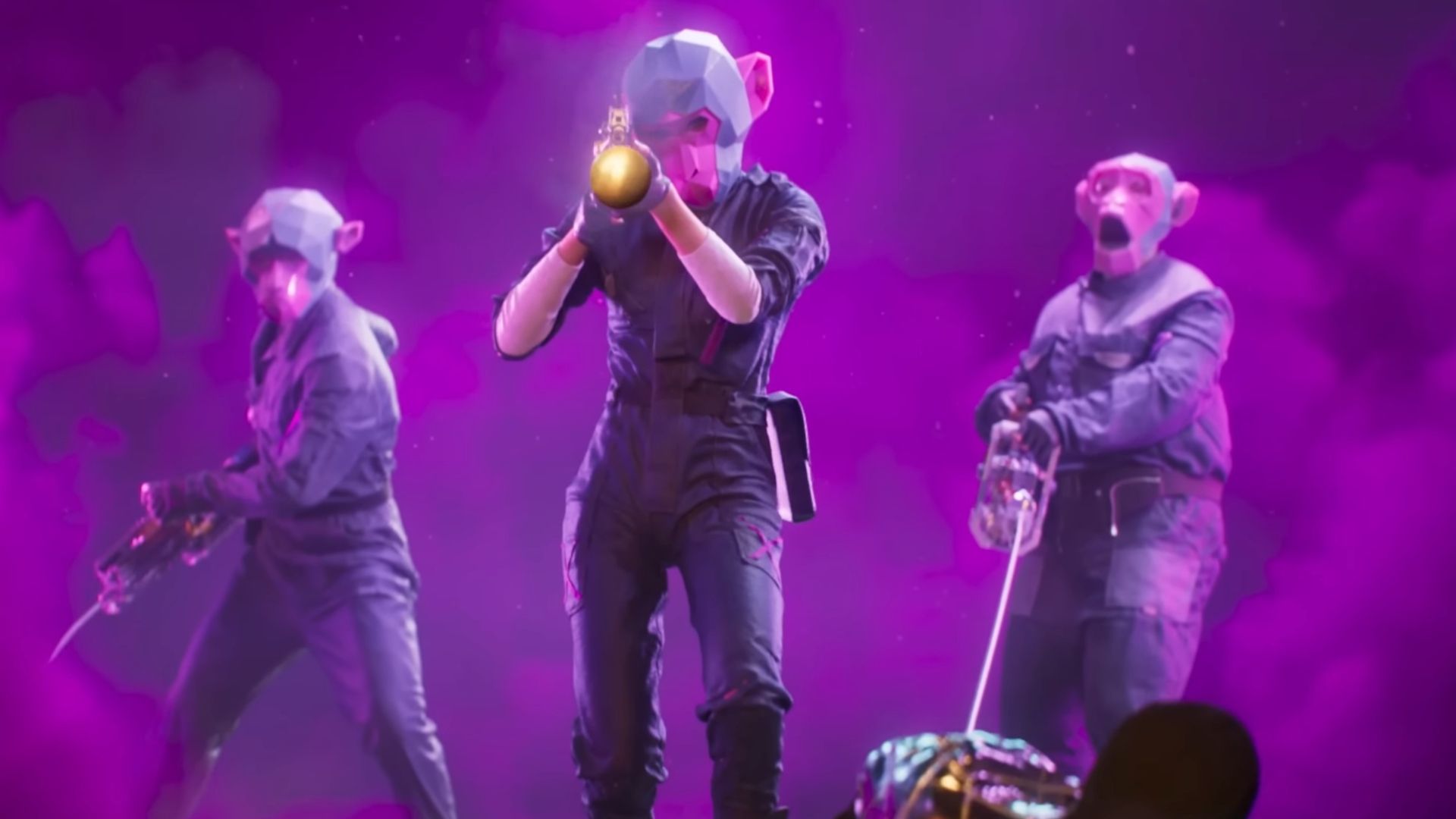
In May 2023, during a PlayStation Showcase broadcast, the world caught its first official glimpse of the studio’s debut project under the title Fairgame$ (stylized with a dollar sign). Pitched as a competitive, open-world sandbox heist game for the PlayStation 5 and PC, the CGI reveal trailer promised emergent gameplay mechanics, tense player-versus-player showdowns, and high-stakes heists targeting the ultra-wealthy. While atmospheric, the reveal left many industry analysts and consumers wondering what actual gameplay would look like, given the notoriously difficult balancing act required for successful extraction-style shooters.
2025: Leadership Departures and Rising Tensions
Cracks in the studio’s foundation began to visibly form in 2025. Rumors and insider reports surfaced indicating that Fairgames was encountering serious developmental friction. The most seismic internal shift occurred when Jade Raymond officially exited Haven Studios. Industry reports indicated that her departure followed an external playtest that left top-tier PlayStation leadership deeply concerned about the game’s overall direction, pacing, and long-term viability in an increasingly crowded market sector.
2026: The Final Playtest and the Axe Falls
The death knell for Fairgames sounded following a subsequent, large-scale playtest conducted internally by Sony. While the technical infrastructure—such as operational excellence, live-operations readiness, and community interface frameworks—performed admirably, the core player metrics told a starkly different story. According to internal communications obtained by the press, player feedback and retention rates fell drastically short of Sony’s stringent corporate targets, sealing the game’s fate.
Supporting Context & Metrics: Sony’s Live-Service Graveyard
To fully grasp why Sony pulled the plug on Fairgames, one must examine the corporate trauma inflicted by previous live-service misfires over the preceding three years. When Jim Ryan set a target of launching 12 live-service games by 2025, the gaming landscape looked markedly different. By the time the dust settled, reality had forced a painful reckoning.
The Great Culling
Of the dozen live-service initiatives originally greenlit or fast-tracked under Sony’s banner, reports indicate that roughly eight were quietly or abruptly cancelled prior to release. PlayStation Studios leadership, faced with mounting development costs and shifting market tastes, realized that quantity was no substitute for quality or distinctiveness. Current PlayStation leadership has since pivoted away from rigid numerical targets, emphasizing instead that individual project merit and diverse player experiences matter far more than corporate output quotas.
The Concord Catastrophe and Its Aftershocks
No single event rattled Sony’s live-service strategy quite like the launch and immediate collapse of Concord. Developed by Firewalk Studios over nearly a decade, the 5v5 hero shooter debuted to an ice-cold reception from the gaming public. Burdened by stiff competition, uninspired character designs, and a crowded hero-shooter market, the game sold an estimated fraction of its projected copies.
In an unprecedented move, Sony pulled Concord offline less than two weeks after its commercial launch, offering full refunds to all buyers. Months later, Sony permanently closed Firewalk Studios, marking one of the most expensive and embarrassing failures in contemporary video game history. The psychological and financial impact of the Concord disaster sent shockwaves through PlayStation Studios, triggering immediate audits of other ongoing multiplayer projects—including rumored live-service adaptations tied to major franchises like God of War and Horizon.
The Exception That Proved the Rule
While titles like Arrowhead Game Studios’ Helldivers 2 proved that Sony could score a historic, viral multiplayer smash hit, it also highlighted the unpredictable nature of the market. Conversely, Bungie’s extraction shooter project Marathon faced severe internal delays, creative overhauls, and missed expectations, further reinforcing management’s fear that mid-tier or late-to-market live-service titles would burn through cash without generating sustainable communities. Even a co-op live-service spinoff set within Guerrilla Games’ Horizon universe reportedly faced extensive reworks and concept reboots following negative player feedback during early playtests.
Official Statements and Internal Communications
The reality of the cancellation was communicated directly to the employees of Haven Studios via an internal email co-authored by PlayStation executives Sean Decker and John Doyle.
Addressing the studio staff, the executives detailed the rationale behind the difficult decision:
"While the test demonstrated strong operational excellence, live ops readiness and community engagement, player feedback and retention results were mixed and fell short of the goals we had set. Combined with challenging market conditions in the PVP shooter genre, we have made the difficult decision to cease development on the game."
The statement speaks volumes about the current economic climate of the games industry. Even when a game functions technically—boasting stable servers, smooth netcode, and reliable back-end operations—the modern games-as-a-service market demands obsessive player retention, continuous content pipelines, and immediate hook mechanics that keep millions of active users engaged day after day. If a game fails to captivate players past the initial trial phase, publishers are increasingly unwilling to throw good money after bad.

Significantly, Sony moved quickly to reassure the Montreal-based development team regarding their job security. A corporate representative emphasized Haven Studios’ enduring value to the broader PlayStation ecosystem:
"Haven Studios will shift its focus to collaborating with other development teams across PlayStation Studios, while also exploring new creative opportunities."
By absorbing the studio’s talent rather than implementing sweeping layoffs—a harsh industry norm that has plagued developers across Activision Blizzard, Microsoft, Electronic Arts, and Sony itself over recent years—PlayStation has preserved a valuable talent pool for future initiatives.
Future Outlook: What Next for Haven Studios and PlayStation?
The cancellation of Fairgames marks the formal end of an era defined by gold-rush ambitions in the live-service sector. For Sony, the lesson learned has been costly, measured in hundreds of millions of dollars written off across cancelled projects, shuttered studios, and public relations missteps.
Moving forward, PlayStation appears to be recalibrating its portfolio balance. While single-player, narrative-driven prestige epics will undoubtedly remain the cornerstone of the brand’s identity, Sony is unlikely to abandon multiplayer games entirely. Instead, future efforts are expected to be more carefully curated, leaning into proven internal strengths or collaborating selectively with external partners whose expertise matches specific genre requirements.
For Jade Raymond’s former team at Haven Studios, the immediate future involves integration and support. As engineers, artists, designers, and producers pivot to assist other internal PlayStation teams—ranging from studios working on first-party blockbusters to ongoing live-service infrastructure projects—their collective experience will not go to waste. Whether Haven will eventually be handed the reins to a new, structurally distinct intellectual property remains to be seen, but for now, the studio lives on to fight another day, escaping the grim fate that befell other fallen PlayStation studios.






Belum ada komentar. Jadilah yang pertama berkomentar!