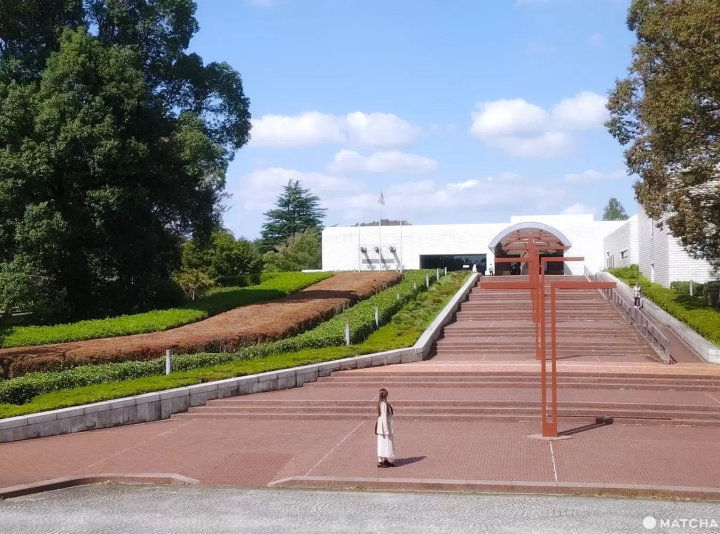
Situated on the historic, verdant grounds of the former Sakura Castle in Chiba Prefecture, the National Museum of Japanese History (affectionately known as Rekihaku to domestic researchers and enthusiasts) stands as Japan’s premier institution for the comprehensive study and exhibition of the nation’s socio-cultural evolution. Established in 1983, the museum spans a vast continuum of human experience, meticulously chronicling Japan’s trajectory from prehistoric hearths to the complexities of the contemporary era.
Unlike conventional institutions that focus narrowly on elite political figures or militaristic milestones, Rekihaku distinguishes itself through an unflinching commitment to the human perspective. By centering its curatorial vision on the everyday lives, labor, beliefs, and struggles of ordinary people, the museum offers visitors a deeply resonant narrative of cultural transformation. Located approximately one hour by direct train from Tokyo Station and a mere 40 minutes from Narita Airport, the facility serves as an ideal, intellectually enriching day trip for international travelers and domestic scholars alike.
Covering six permanent galleries, rotating special exhibitions, a specialized research library, and an extensive historical botanical garden, the museum demands a dedicated exploration of three to four hours. This report provides an exhaustive journalistic breakdown of Rekihaku’s architectural framework, chronological exhibits, cultural relevance, and strategic value for modern travelers.
Detailed Chronology: The Six Permanent Galleries
The museum’s curatorial blueprint is structured chronologically across six major galleries, supplemented by interactive touchpoints and meticulously crafted dioramas that bridge the gap between academic archaeology and public accessibility.
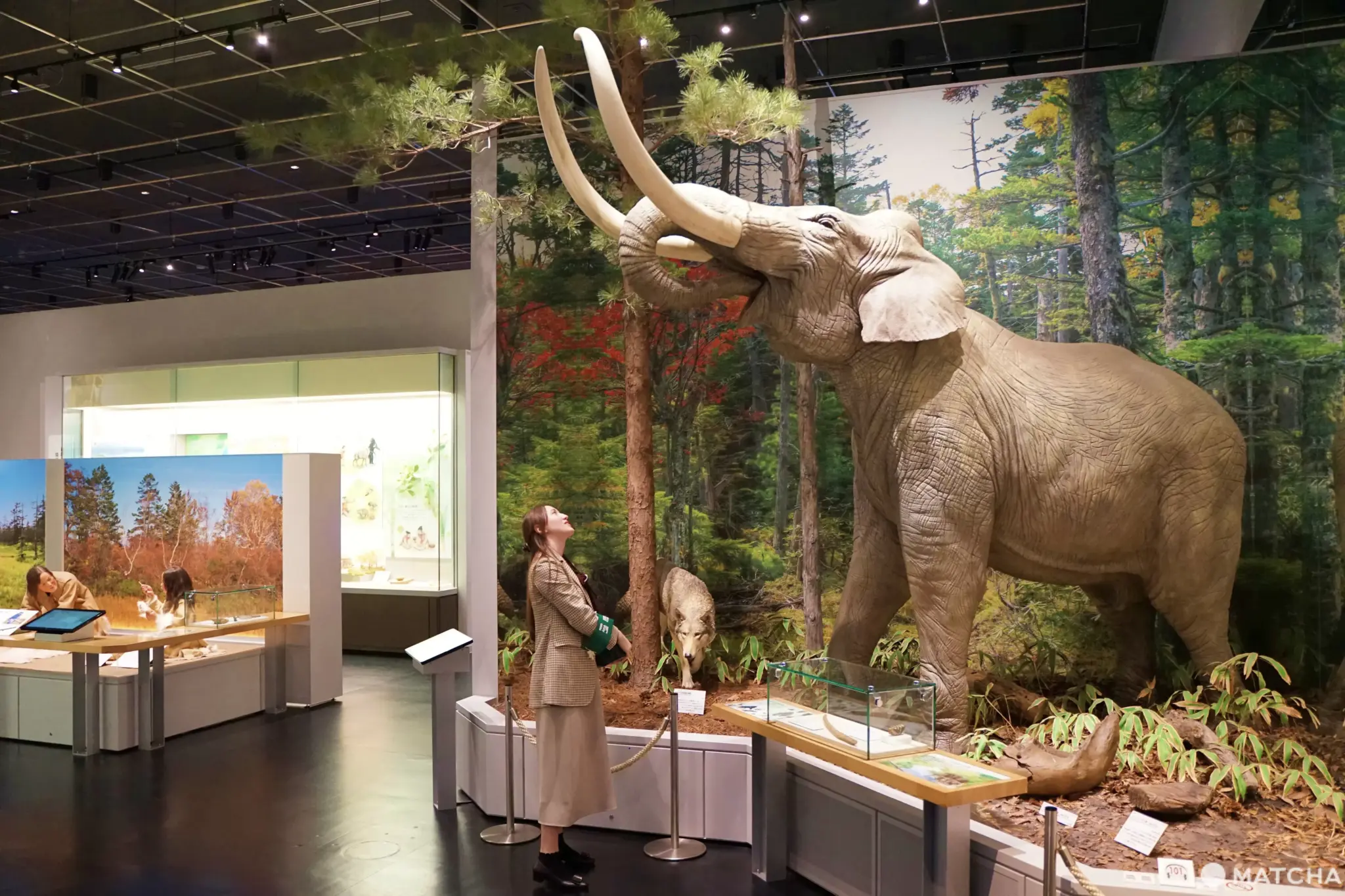
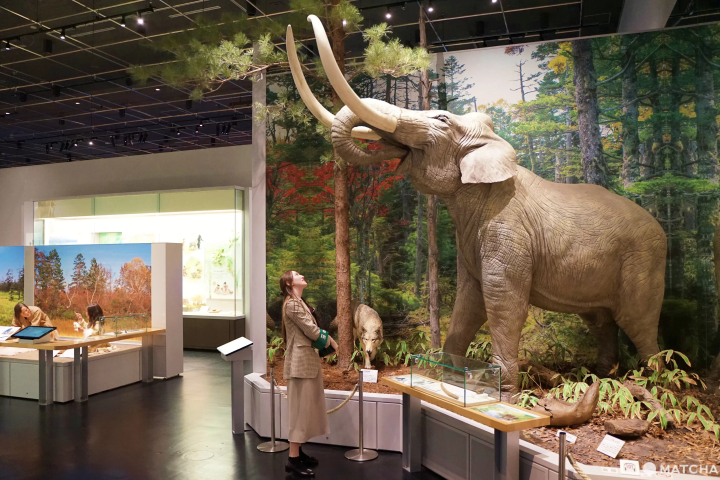
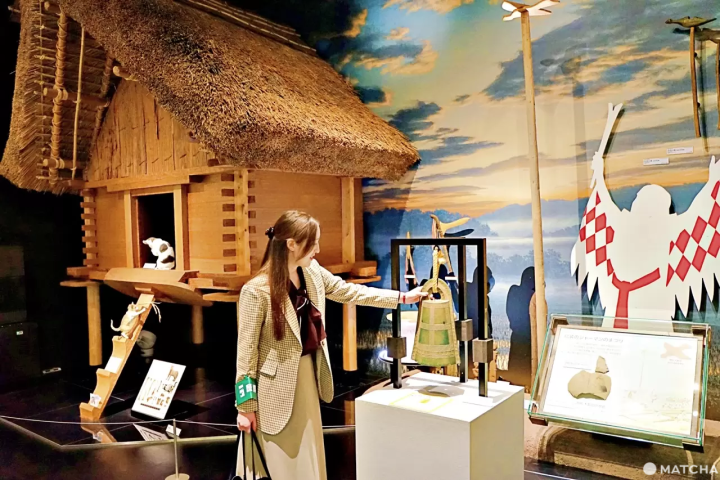
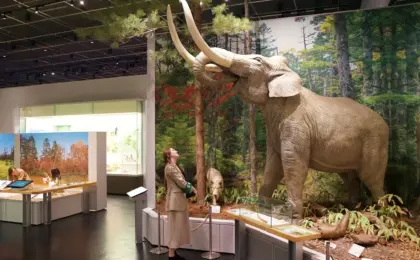
Gallery 1 transports visitors to the earliest chapters of the Japanese archipelago, traversing the Paleolithic, Jomon, Yayoi, and Kofun periods. The gallery utilizes a blend of authentic archaeological finds and precise, peer-reviewed reconstructions to visualize ancient ritual sites, pit-dwelling architecture, and agrarian innovations.
Of particular note for visitors is the exhibit dedicated to the Jomon Dog—the direct genetic ancestor of the modern-day Shiba Inu. These displays reveal not only the antiquity of canine domestication in Japan but also highlight early spiritual connections between humans and animals. Throughout Gallery 1, striking structural and material similarities to contemporary Japanese craftsmanship underscore a profound, unbroken lineage of material culture.
Galleries 2 and 3: Medieval and Early Modern Japan (The Samurai & Urbanization)
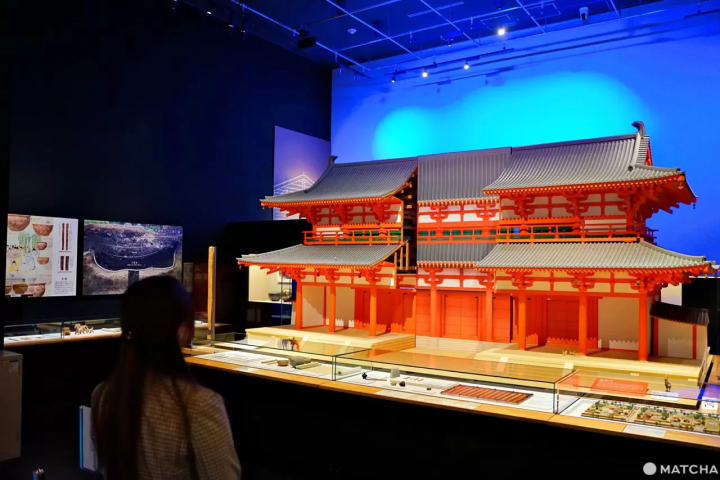
Transitioning into Gallery 2 (Medieval Japan) and Gallery 3 (Early Modern Japan), visitors encounter the classic aesthetic and martial heritage typically associated with historical Japan.
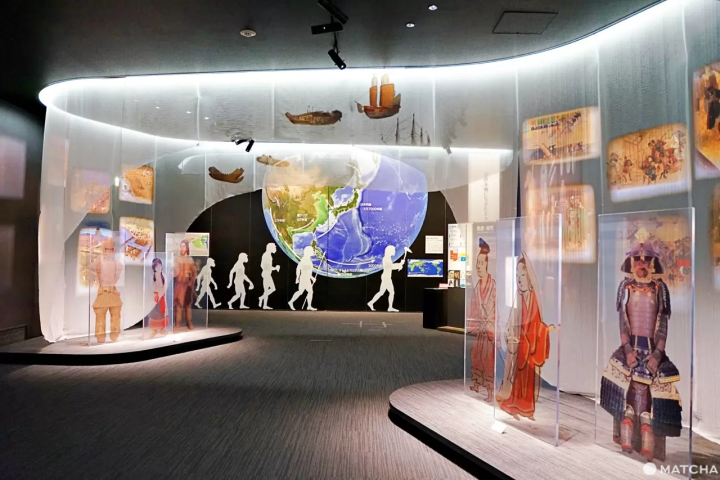
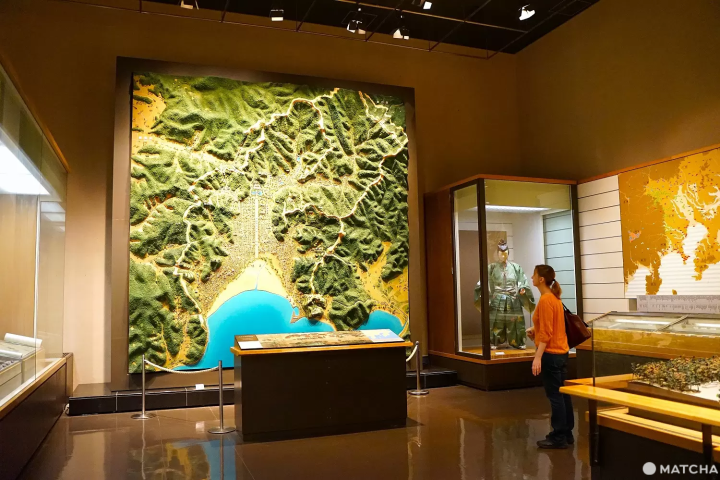
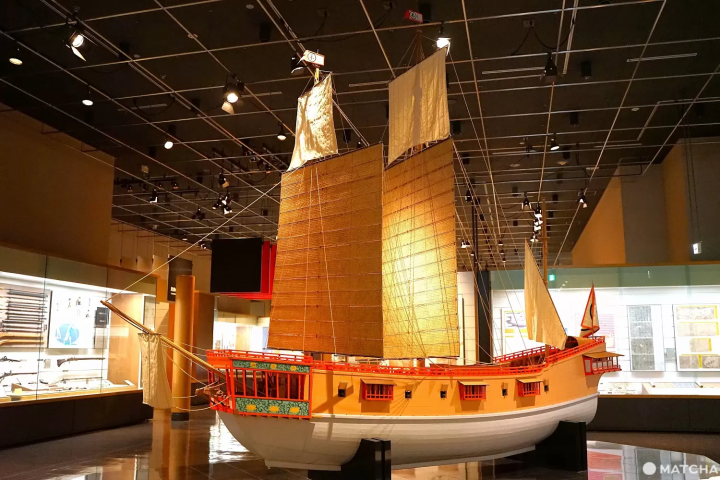
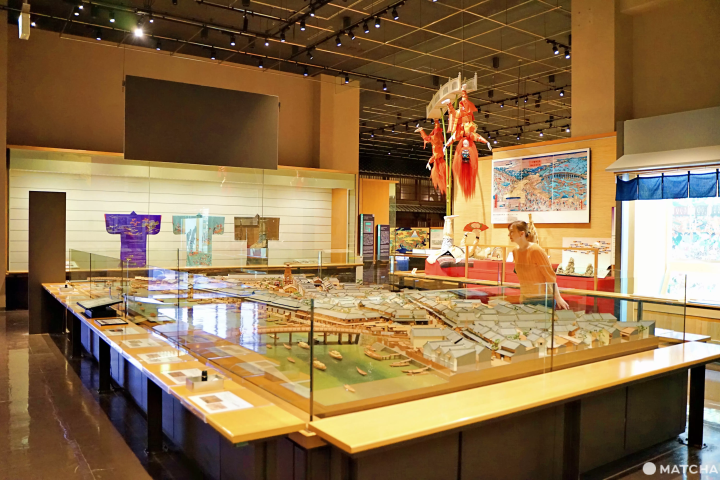
Gallery 2 delves into the Kamakura and Muromachi periods, showcasing early kimonos, masterclass samurai armor, classical arts, and the foundational development of Chanoyu (the Way of Tea). Dioramas and cartographic displays illustrate the rise of Kamakura as the de facto military capital, while trade artifacts document the nascent commercial exchanges between Japanese lords and early European voyagers.
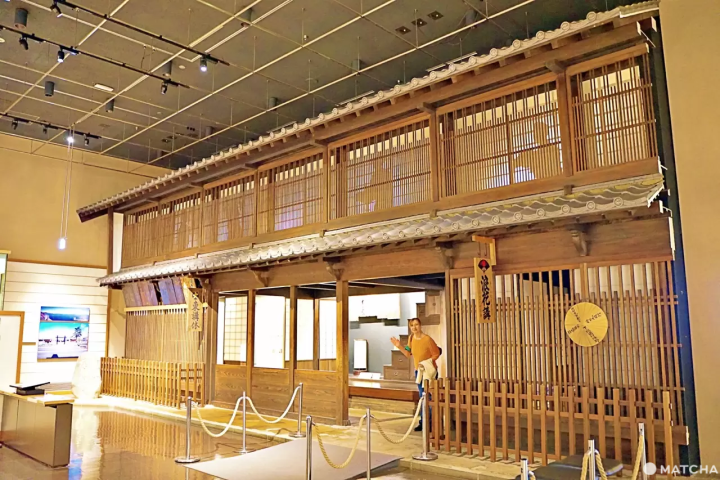
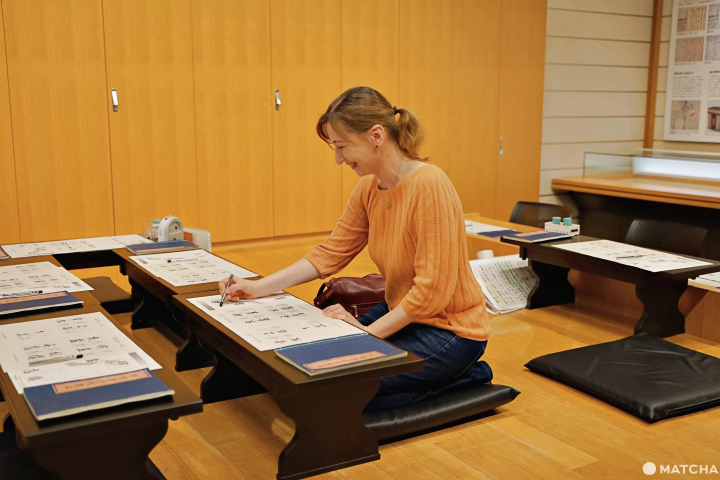
Gallery 3 expands upon this globalization, displaying both imported luxuries and exported Japanese crafts during the Edo period. Visitors can step inside a fully reconstructed historical traveler’s lodge and participate in a hands-on learning experience at the Terakoya corner. Here, guests sit at traditional floor desks to practice writing their names using historical scripts, guided by curators who explain the educational systems of commoner schools in early modern towns.
Gallery 4: Folk Culture and Contemporary Everyday Life
Diverting from political history, Gallery 4 immerses the visitor in the rich tapestry of Japanese folklore, regional traditions, and contemporary everyday customs. This gallery houses a meticulous ethnographic survey of modern Japanese life, featuring displays of historical skincare lines, household cleaning products, and an open refrigerator outfitted with typical grocery items from mid-to-late 20th-century households.
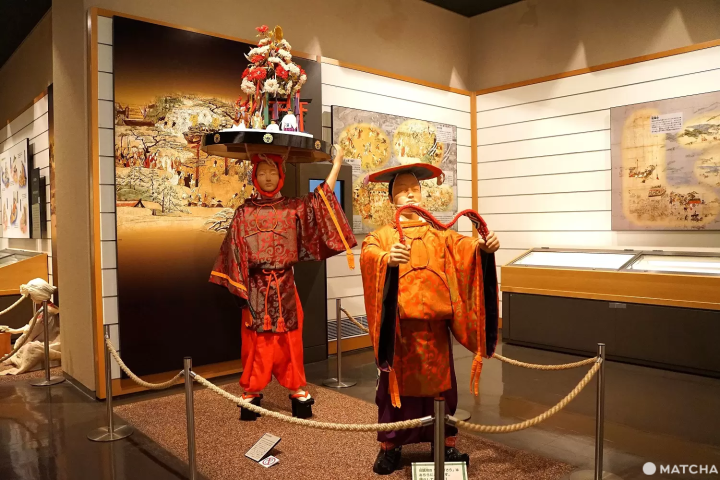
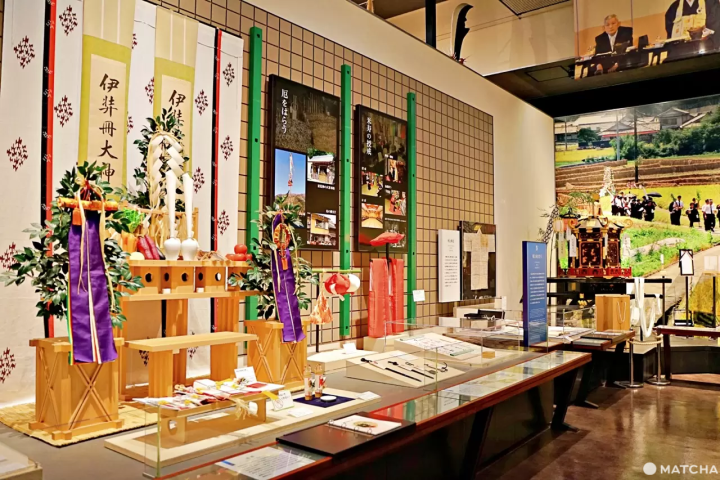
Crucially, Gallery 4 features dedicated zones exploring Ainu culture and Japan’s supernatural heritage (yokai). The display on legendary creatures like the kappa debunks sanitized modern pop-culture tropes, re-contextualizing them through historical folklore. Additionally, the festival (matsuri) exhibit details high-impact celebrations such as the Abare Festival ("Rampage Festival") of Noto, Ishikawa Prefecture, illuminating the ritualistic ways communities purged disease and unified their populations.
Gallery 5: Modern History, Identity, and Inclusion
Gallery 5 tackles the complex transition of the 19th and early 20th centuries, examining how the diverse populations of the archipelago were synthesized—often through administrative force—into a unified nation-state.
This gallery adopts an inclusive, critically conscious approach, addressing themes of institutional discrimination, gender disparity, and marginalized identities. Specialized sections interrogate the modern experiences of the Ainu people, the Ryukyu Kingdom and Okinawa, and other minority groups. By confronting these difficult chapters directly, the museum elevates its educational mission, providing an authoritative framework for understanding modern Japanese social dynamics.
Gallery 6: War, Recovery, and Godzilla (Contemporary History)
The final permanent installation, Gallery 6, covers the tumultuous eras of World War II, post-war devastation, and the subsequent economic miracle of the Showa period (1926–1989).
The wartime exhibits offer a sobering look at military life—displaying actual soldier rations, sleeping quarters, and the domestic hardships on the home front. Following this, the gallery reconstructs a standard post-war apartment, highlighting the sociological shift toward nuclear-family independence. Pop culture enthusiasts will find the entertainment and media section particularly engaging, featuring the behind-the-scenes reconstruction of a mid-century television studio, original props from classic Japanese cinema (such as Floating Clouds), and an iconic early Godzilla statue that reflects post-atomic societal anxieties.
Supporting Context & Metrics: Facilities, Research, and Visitor Data
Operating far beyond the standard scope of a public exhibition space, the National Museum of Japanese History functions as a major inter-university research institute under the Inter-University Research Institute Corporation.
Facility Metric / Detail
Specification
Establishment Year
1983
Site Location
Former Sakura Castle grounds, Chiba Prefecture
Permanent Exhibitions
6 comprehensive galleries spanning prehistory to contemporary times
Special Exhibitions
2 major thematic exhibitions annually (Spring and Autumn)
Recommended Duration
3 to 4 hours (Exhibitions) + 1 hour (Botanical Garden)
General Admission
Adults: 900 JPY | University Students: 500 JPY | High School & Under: Free
Accessibility
Fully wheelchair accessible; strollers and rollators available for rent
Restaurant Sakura and the Museum Shop
To sustain visitors through a comprehensive four-hour tour, Restaurant Sakura operates on the mezzanine level. Featuring expansive floor-to-ceiling windows overlooking the surrounding greenery, the dining hall serves reasonably priced meals, traditional Japanese sweets, and an exclusive culinary offering: dishes integrated with nutrient-rich historic black rice, noted for its distinct, smoky flavor profile.
Adjacent to the dining area, the Museum Shop curates an inventory directly tied to the museum’s collections. Bestselling items include miniature replicas of ancient Haniwa clay figures (indigenous to Chiba archaeological sites), artisan goods produced in collaboration with Ainu craftspeople, botanical apparel, and regional souvenirs.
The Botanical Garden and Research Infrastructure
Situated a short ten-minute walk from the main exhibition building, the museum’s Botanical Garden spans multiple zones dedicated to ethnobotany. Rather than functioning purely as an aesthetic arboretum, the garden cultivates plants historically utilized in Japan for medicinal purposes, textile production, natural dyes, papermaking, and fuel.
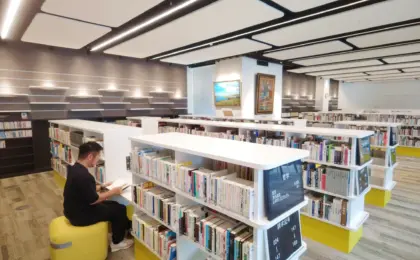
Furthermore, the institution houses an advanced research library, lecture halls, multimedia archival rooms, and interactive learning labs that host academic conferences and public symposia year-round.
Official Statements and Institutional Vision
Curatorial leadership at Rekihaku has consistently emphasized that the museum’s primary objective is not merely the preservation of dead artifacts, but the facilitation of active historical literacy among the public.
"Our mission is to translate centuries of academic historiography into tangible, human-scale experiences," notes a senior museum spokesperson. "When a visitor views an ancient Jomon tool, a samurai’s armor, or an apartment complex from the post-war Showa era, they are not just looking at objects of the past. They are looking at the foundational choices, struggles, and innovations of everyday people that directly built modern society."
This human-centric philosophy drives the museum’s ongoing partnerships with regional archives, international anthropological groups, and indigenous representatives—most notably in the curation of temporary exhibitions that place minority histories at the forefront of national discourse.
Future Outlook: Strategic Integration for International Travelers
As international tourism to Japan continues to surge toward historic highs, regional cultural hubs like Sakura City are positioning themselves as vital destinations for travelers seeking deeper, more sustainable engagement away from overcrowded metropolitan centers.
Strategic Itinerary Planning
For travelers orchestrating a day trip from Tokyo, Rekihaku offers exceptional logistical convenience:
Morning Departure: Board a direct train from Tokyo Station to Keisei Sakura Station (approx. 60 minutes).
Morning Session: Arrive by 10:00 AM to explore Galleries 1 through 3, tracking the trajectory from prehistoric settlements to the height of the Edo period.
Midday Break: Enjoy lunch at Restaurant Sakura, sampling the signature black rice dishes.
Afternoon Session: Tour Galleries 4 through 6, concluding with the current special exhibition and a stroll through the historical botanical garden.
Evening Extension: Prior to departure, explore nearby Sakura cultural landmarks, including the Sakura City Museum of Art, historical samurai residences (Bukeyashiki), or the seasonal cherry blossoms of Sakura Castle Park.
Airport Stopover Optimization
Because Sakura City sits approximately 40 minutes from Narita International Airport, Rekihaku serves as an ideal final-day excursion for outbound travelers with evening flights. By utilizing hotel-to-airport luggage forwarding services in advance, visitors can seamlessly integrate a world-class historical education into their departure itinerary without the burden of heavy baggage.
Ultimately, the National Museum of Japanese History transcends the conventional definition of a museum. It is an immersive intellectual archive, an active research engine, and an invaluable portal into the collective soul of Japan—making it an unmissable cornerstone for any discerning traveler’s itinerary.








Belum ada komentar. Jadilah yang pertama berkomentar!