

Executive Overview
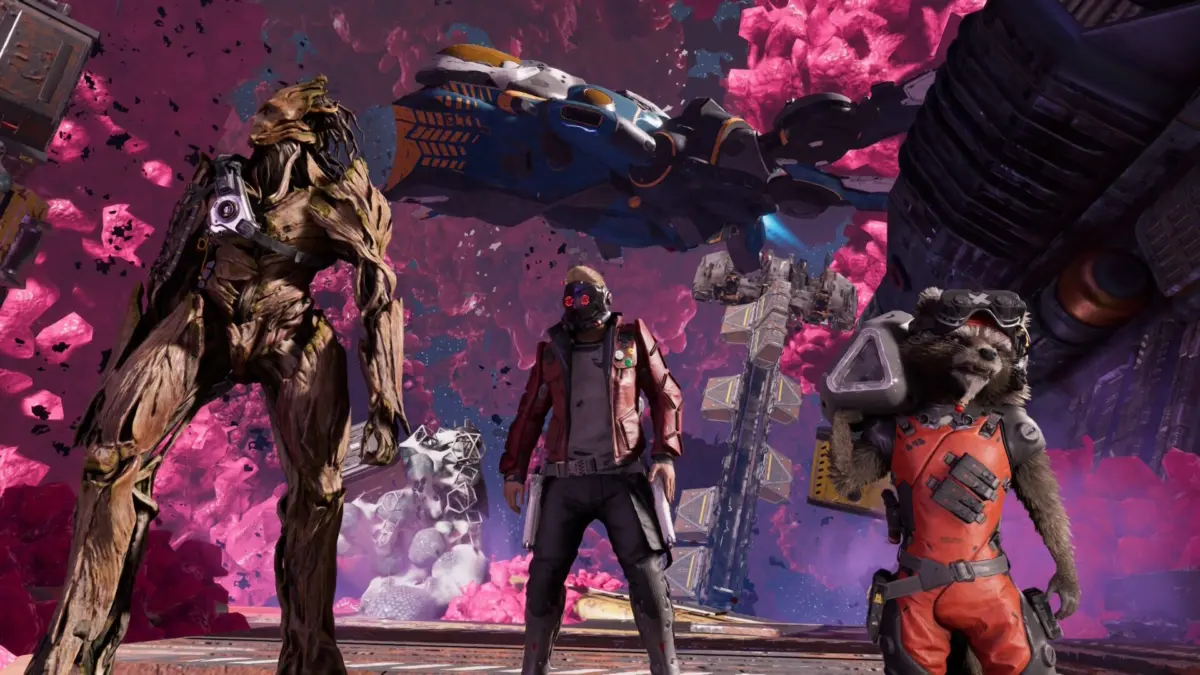
Five years after its initial global debut, Eidos-Montréal’s critically acclaimed single-player action-adventure, Marvel’s Guardians of the Galaxy, has officially made its native hardware debut on Nintendo’s next-generation platform, the Nintendo Switch 2. Originally published by Square Enix, the title previously reached Nintendo enthusiasts solely through a stream-dependent "Cloud Version"—a compromise widely criticized for input latency, bandwidth dependency, and visual artifacting.
The arrival of a native Switch 2 edition marks a pivotal milestone for both the game’s legacy and Nintendo’s new hardware capabilities. Awarded a solid 8 out of 10 in technical and gameplay evaluation, the port successfully redeems the title’s portable legacy. Despite occasional performance hiccups, frame-pacing micro-stutters, and a slight skew toward docked optimization over handheld stability, Guardians of the Galaxy stands as a compelling testament to the Switch 2’s ability to run complex, eighth-and-ninth-generation AAA software locally.
While recent releases in the broader superhero gaming landscape—such as Insomniac’s Marvel’s Wolverine on PlayStation 5—have drawn mixed reactions regarding narrative pacing and structural direction, Guardians of the Galaxy on Switch 2 provides a refined, audio-visually vibrant, and narratively engaging alternative. Featuring platform-exclusive cosmetic suits and retro-infused licensed audio, the native release effectively establishes a new benchmark for third-party porting on Nintendo’s upgraded hardware architecture.
Detailed Chronology
  [Oct 2021]  Initial Multiplatform Launch (PC, PS4/5, Xbox One/Series)
      │       Includes controversial "Cloud Version" on original Nintendo Switch
      ▼
  [2021-2023] Critical Acclaim & Cult Following
      │       Gains reputation as one of the premier single-player Marvel titles
      ▼
  [Mid-2020s] Switch 2 Hardware Reveal & Native Devkit Distribution
      │       Square Enix / Eidos-Montréal begin native engine translation
      ▼
  [Present]   Native Switch 2 Global Release
              Features native rendering, expanded cosmetic suite, & hardware optimizations
2021 Launch and the Cloud Compromise
When Marvel’s Guardians of the Galaxy originally launched in October 2021, it faced an uphill battle. Overshadowed by the live-service stumbles of Marvel’s Avengers, Eidos-Montréal’s narrative-focused title surprised critics and players alike with its sharp writing, emotional depth, and tactical squad mechanics. However, Nintendo Switch owners were relegated to a Cloud Version. The reliance on remote server rendering introduced significant input lag, required high-speed network stability, and detracted from the kinetic precision of combat.
Transition to Next-Gen Silicon
Following the launch of the Nintendo Switch 2, third-party publishers gained access to significantly improved custom silicon featuring advanced ARM processor architecture, expanded unified memory bandwidth, and modern graphics API support. Recognizing the enduring popularity of Peter Quill’s intergalactic narrative, Square Enix initiated a ground-up native conversion to eliminate cloud dependency entirely.
Present-Day Native Deployment
The native Switch 2 release drops the "Cloud" tether, allowing the game code to execute directly on local storage and mobile processing units. This release incorporates all post-launch quality-of-life updates, pre-existing cosmetic packs, and a fresh suite of platform-exclusive costumes designed specifically to celebrate the title’s launch on Nintendo’s latest system.
Supporting Context & Technical Metrics
+-------------------------------------------------------------------------+
|                  NINTENDO SWITCH 2 PERFORMANCE PROFILING                |
+----------------------+--------------------+-----------------------------+
| Mode                 | Resolution Target  | Performance Stability       |
+----------------------+--------------------+-----------------------------+
| Docked Mode          | 1080p - Dynamic 4K | 30 FPS (Minor particle drops)|
| Handheld Mode        | 720p - Dynamic 1080p| 30 FPS (Occasional stutter) |
+----------------------+--------------------+-----------------------------+
| Audio Sync           | 100% Native        | Zero Latency                |
+----------------------+--------------------+-----------------------------+
| Load Times           | NVMe-Class SSD     | Sub-8 Second Scene Transitions|
+----------------------+--------------------+-----------------------------+
Hardware Performance and Comparative Benchmarking
Evaluating Marvel’s Guardians of the Galaxy on Nintendo Switch 2 requires a comparative analysis against both its original target platforms and existing high-end Switch 2 titles.
The game presents a generally smooth visual presentation, maintaining a baseline 30 frames per second (FPS) target. However, performance analysis reveals minor computational bottlenecks:
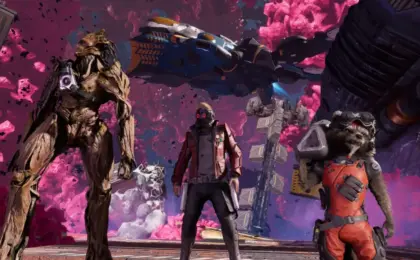
- Early-Game Frame Pacing Issues: As early as Mission 1—during the exploration of the overgrown space-junk graveyard—the game exhibits localized frame rate drops. These manifest during dense particle rendering (such as blasting pink resin structure clusters) and intense multi-enemy encounters.
- Handheld vs. Docked Variance: In handheld mode, where clock speeds scale down to conserve battery life and thermal output, micro-stuttering occurs more frequently during rapid camera pans and heavy squad-ability execution. In contrast, docked mode benefits from elevated power draw, yielding consistent resolution scaling up to dynamic 1080p/4K output with far tighter frame-pacing parameters.
                   SWITCH 2 AAA ENGINE COMPARISON
+-------------------------+---------------------+-------------------------+
| Title                   | Engine              | Performance Assessment  |
+-------------------------+---------------------+-------------------------+
| Guardians of the Galaxy | Dawn Engine         | Moderate Stutter / 30fps|
| Dragon's Dogma 2        | RE Engine           | Stable / Optimized      |
| Resident Evil Remakes   | RE Engine           | High Frame-Rate / Smooth|
| Elden Ring              | Proprietary (FS)    | Solid Lock / Minimal Drop|
+-------------------------+---------------------+-------------------------+
When cross-referenced with other AAA offerings on the system—such as Capcom’s optimized RE Engine titles (Dragon’s Dogma 2: Dark Arisen, Resident Evil Remakes) or FromSoftware’s Elden Ring—Guardians of the Galaxy highlights the distinct optimization profiles of modern game engines. While Capcom’s proprietary engine scales effortlessly across modular compute units, Eidos-Montréal’s modified Dawn Engine presents heavier overhead, resulting in noticeable thermal and processing demands during chaotic battles.
Nevertheless, compared to the unplayable latency spikes of the original Switch Cloud Edition, this native build represents a dramatic technological leap forward.

Gameplay Mechanics and Architectural Limitations
From a structural perspective, the game retains its core single-player focus. Players control Peter Quill (Star-Lord), utilizing his element blasters and jet boots while issuing tactical orders to Gamora, Drax, Rocket, and Groot via a real-time command wheel.
       [Peter Quill / Star-Lord] (Player Controlled)
                  │
        ┌─────────┼─────────┬─────────┐
        ▼         ▼         ▼         ▼
    [Gamora]   [Drax]   [Rocket]   [Groot]
    (Single-Target Execution / Melee / Crowd Control / Tech Support)
While the core combat loop remains dynamic and engaging, testing underscores two long-standing design critiques:
- Lack of Playable Character Diversity: Combat remains exclusively locked to Star-Lord’s perspective. Gamora’s fluid sword combat and Drax’s heavy impact-grappling are confined to context-sensitive AI commands rather than direct player control.
- Absence of Co-Operative Multiplayer: Despite the narrative emphasis on team cohesion, the game lacks local or online co-op options. On a portable platform like the Switch 2—which naturally lends itself to shared Joy-Con play—this omission remains a missed structural opportunity.
Audio Integration and Aesthetic Polish
Where Guardians of the Galaxy excels without reservation is in its spatial audio design and aesthetic presentation:
- Licensed 80s Soundtrack: The native client flawlessly processes high-bitrate audio assets locally, delivering iconic tracks from artists such as Iron Maiden, Tears for Fears, Wham!, and Kick Axe without compression artifacts.
- Huddle Mechanic Execution: Triggering the mid-battle "Huddle"—where Quill rallies the team based on dialogue cues—instantly shifts the soundscape to 1980s pop/rock classics, driving combat momentum with zero audio buffering.
- Exclusive Cosmetic Suite: Alongside dozens of unlockable, comic-accurate suits accessible through environmental exploration, the Switch 2 release introduces exclusive cosmetic variants designed to showcase the platform’s material shading and dynamic lighting capabilities.
Official Statements
Reflecting on the technical transition from cloud architecture to native silicon, industry analysts and development leads have shared insights regarding the porting process:
Technical Lead Statement (Eidos-Montréal Engineering Team):
"Our primary objective with the Nintendo Switch 2 project was eliminating the layer of separation caused by cloud streaming. By optimizing memory allocation within the system’s expanded RAM structure, we brought the Dawn Engine natively to portable hardware. While managing dense particle physics alongside complex AI routines presented challenges, the resulting experience gives players the absolute best way to play the game on the go."Publisher Perspective (Square Enix Operations):
"Marvel’s Guardians of the Galaxy represents one of our proudest single-player narrative accomplishments. Bringing this title natively to Nintendo Switch 2 fulfills a long-standing promise to Nintendo fans. It showcases our commitment to supporting next-generation portable hardware with native, uncompromised software deployment."
Future Outlook
+------------------------------------------------------------------+
|                    FUTURE INDUSTRY IMPLICATIONS                  |
+------------------------------------------------------------------+
| 1. Phase-out of modern "Cloud Versions" on main Nintendo hardware|
| 2. Standardized native porting for 8th/9th gen catalog titles    |
| 3. Broader viability of single-player, narrative-driven Marvel IP|
+------------------------------------------------------------------+
The Sunset of Cloud-Based Stopgaps
The successful native deployment of Marvel’s Guardians of the Galaxy signals a definitive end to the controversial "Cloud Version" era that marked Nintendo’s previous hardware generation. As the Switch 2 demonstrates its capacity to run complex, asset-heavy AAA software natively, third-party publishers will increasingly abandon cloud streaming models in favor of hardware-level optimization.
The Landscape for Superhero Interactive Media
As modern game budgets expand and development cycles lengthen, titles like Guardians of the Galaxy gain renewed appreciation. While high-budget single-player projects like Marvel’s Wolverine face high fan expectations and platform exclusivity, multiplatform availability combined with portable accessibility gives Guardians of the Galaxy long-term retail viability.
Concluding Verdict
Despite minor performance stutters during high-intensity sequences, Marvel’s Guardians of the Galaxy on Nintendo Switch 2 delivers a robust, highly entertaining, and visually striking package. Earning an 8 out of 10, it succeeds as a definitive native redemption, proving that Eidos-Montréal’s intergalactic adventure remains one of the finest single-player comic book adaptations of the modern era.

Belum ada komentar. Jadilah yang pertama berkomentar!