

EXECUTIVE SUMMARY
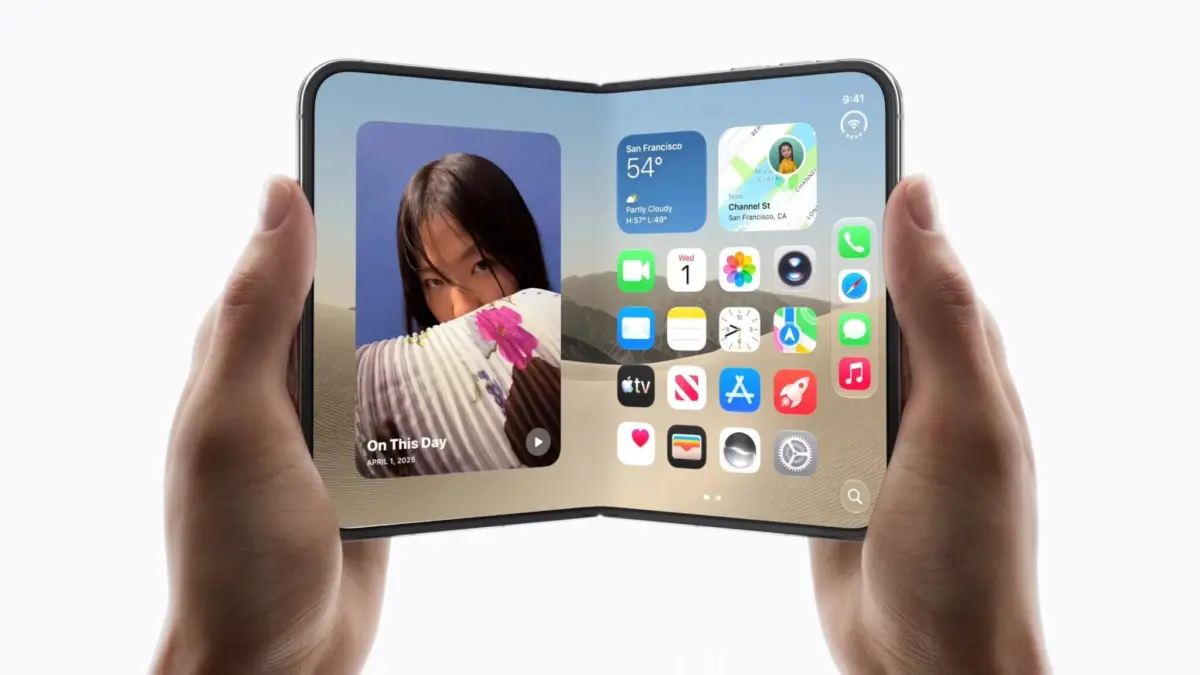
Apple Inc. finds itself grappling with a complex supply chain bottleneck that has severely constrained the rollout of its flagship device, the iPhone Duo. During the company’s fiscal fourth-quarter earnings call on Monday, Chief Operating Officer Sabih Khan addressed mounting customer backlogs and soaring component costs. While Khan reassured investors that the production ramp-up is progressing smoothly, he offered little definitive clarity on when supply and demand equilibrium will be achieved. For millions of consumers worldwide, the enthusiasm surrounding Apple’s revolutionary new hardware has been tempered by delivery estimates that stretch well into the upcoming year.
The shipping delays highlight a broader, systemic challenge confronting the global consumer electronics industry. Driven by an insatiable, exponential surge in demand for artificial intelligence infrastructure, memory chip costs have skyrocketed, placing immense pressure on hardware margins and component availability. For Apple—a company globally renowned for operating one of the most efficient, tightly managed supply chains in corporate history—the current disruptions signal a volatile new era of manufacturing. As component costs climb, Apple executives acknowledged that "reluctant" price increases have become necessary across several product categories.
Despite these macroeconomic hurdles, consumer appetite for the iPhone Duo remains unprecedented. Following its initial market debut, the device sold out on Apple’s official digital storefront within hours, sparking a cascading series of logistical challenges that have reverberated through carrier partners like Verizon. To mitigate these bottlenecks, Apple is actively deepening its strategic partnerships with critical component suppliers—such as titanium producers—while racing to satisfy a market that executives have described as "nothing short of extraordinary."
1. Executive Overview: A High-Stakes Balancing Act
The unveiling of a new Apple flagship device is typically a masterclass in operational precision. Year after year, the Cupertino-based tech giant orchestrates the mass production, global transit, and precise delivery of tens of millions of units with minimal friction. However, the launch of the iPhone Duo has diverged sharply from this well-worn script, testing the limits of even the most sophisticated logistics networks.
During Monday’s high-stakes earnings call, Apple leadership confronted difficult questions regarding surging inventories—which surged by an alarming 15.4%—and persistent fulfillment backlogs. Chief Operating Officer Sabih Khan did not mince words regarding the availability of the company’s latest hardware.
"iPhone Duo is constrained as of today," Khan stated plainly to analysts and investors. "The ramp is going well, and we’re working hard to get this revolutionary new product into the hands of our customers as quickly as possible. But at this time, it’s really hard to predict when supply and demand will be in balance."
This lack of visibility has direct ramifications for consumers. Buyers who bypassed midnight lines at physical Apple Stores or failed to secure units during the initial window of preorders now face an extended wait. Shipping windows on Apple’s website have systematically drifted from weeks into months, with many orders now slated for fulfillment early next year.
The gravity of the situation extends beyond Apple’s direct channels. Major telecommunication partners, including Verizon, have found themselves on the front lines of customer frustration. In an extraordinary measure of customer retention and damage control, Verizon management has resorted to issuing formal apologies accompanied by promotional gift cards to appease anxious subscribers whose upgrade timelines have been indefinitely postponed.
2. Detailed Chronology of the iPhone Duo Rollout and Supply Crunch
To fully understand the gravity of the current inventory crisis, it is necessary to trace the trajectory of the iPhone Duo from its initial announcement to the operational realities revealed during the fourth-quarter financial disclosures.
The October Launch and Immediate Sellout
The warning signs of an impending supply crisis emerged almost immediately upon the device’s market debut. In late October, reports surfaced detailing an instantaneous surge in consumer demand. According to an extensive analysis published by the Financial Times, consumer interest in the iPhone Duo was characterized by Apple insiders as "nothing short of extraordinary."
Within hours of going live on Apple’s digital storefront, the initial allocation of inventory was entirely depleted. Consumers attempting to secure the device found themselves facing rapidly deteriorating delivery estimates. What began as a standard three-to-five-day shipping window rapidly expanded to multiple weeks, eventually pushing delivery dates past the holiday shopping season and deep into the new year.
Carrier Fallout and Mitigating Measures
As direct-order wait times ballooned, secondary retail channels absorbed the shockwaves. Telecommunications carriers, who rely heavily on marquee iPhone launches to drive multi-year subscriber contracts and data plan upgrades, faced a severe inventory drought.
By late October, reports emerged that Verizon—one of the largest distributors of mobile devices in North America—had initiated direct outreach to frustrated customers. Recognizing that delayed preorders risked eroding brand loyalty, Verizon executives authorized customer service representatives to issue formal apologies alongside monetary gift cards. These gestures served as a temporary salve, yet they underscored a systemic industry-wide failure to align consumer expectations with actual hardware availability.
The Q4 Earnings Disclosures
The situation reached a formal corporate reckoning on Monday during Apple’s fiscal fourth-quarter earnings conference call. Wall Street analysts pressed executive leadership on the health of the company’s supply chain, drawing sharp focus to a 15.4% surge in total inventory value.
While Chief Executive Officer John Ternus opened the call by expressing enthusiasm over the positive reception from both reviewers and early adopters, the operational reality painted by Sabih Khan laid bare the severity of the component bottlenecks. Khan’s admission that predicting supply-demand equilibrium was "really hard" shattered any remaining illusions that the backlog would be cleared in the near term.
3. Supporting Context & Metrics: The AI Boom and Component Inflation
While high consumer demand is the most visible catalyst for the iPhone Duo shortage, the underlying mechanics of the crisis are deeply rooted in macroeconomic shifts across the global semiconductor and hardware manufacturing sectors.
The AI Industry’s Insatiable Appetite for Memory Chips
The primary driver behind Apple’s surging inventory costs and constrained component supply is the relentless, multi-trillion-dollar expansion of the artificial intelligence industry. Hyperscale cloud providers, enterprise software developers, and hardware manufacturers are locked in an aggressive race to build and deploy generative AI models. This monumental buildout requires staggering quantities of advanced memory chips—specifically high-bandwidth memory (HBM) and specialized dynamic random-access memory (DRAM).
Because semiconductor fabrication plants (fabs) operate at near-maximum capacity, chipmakers have strategically reallocated production lines to prioritize high-margin AI accelerators and enterprise-grade server memory. Consequently, consumer electronics manufacturers find themselves competing for a shrinking pool of standard memory allocation. This intense competition has driven component spot prices upward across the board.
Rising Costs and "Reluctant" Price Adjustments
The economic pressure of these component price hikes cannot be absorbed indefinitely by corporate balance sheets. During the earnings call, Sabih Khan acknowledged that Apple had been forced to implement price increases across several product categories. Crucially, Khan emphasized that these pricing decisions were made "reluctantly," reflecting a corporate reluctance to alienate consumers in an inflationary environment, weighed against the unavoidable reality of escalating production expenses.
The surge in inventory value—climbing 15.4% year-over-year—further illustrates this dynamic. Rather than representing an abundance of finished, ready-to-ship iPhones, a substantial portion of this capital tied up in inventory reflects higher baseline acquisition costs for raw materials, partially assembled components, and work-in-progress hardware sitting idle in factories awaiting missing chips or specialized chassis parts.
Securing the Supply Chain: The Perryman Partnership
In response to these multi-faceted constraints, Apple is actively aggressively restructuring its supply chain dependencies. A notable revelation during the earnings cycle was Apple’s confirmation that it is "deepening" its strategic partnership with Perryman, a premier titanium producer.
Titanium has become a critical material for Apple’s premium hardware designs, offering an optimal balance of structural rigidity, weight reduction, and sleek aesthetics—particularly for advanced form factors like the foldable iPhone Duo. By cementing deeper ties with metallurgical suppliers like Perryman, Apple aims to secure preferential access to raw materials, hedging against future commodity price volatility and ensuring that material shortages do not compound existing silicon constraints.
4. Official Statements and Leadership Perspectives
The narrative surrounding the iPhone Duo launch has been carefully managed by Apple’s executive suite, balancing corporate optimism with transparent admissions of operational friction.
Opening the fiscal fourth-quarter earnings call, CEO John Ternus struck a note of profound gratitude and validation regarding the product’s market reception:
"We’ve been thrilled with the early response from reviewers and customers, and we are working hard to get iPhone Duo into customers’ hands as quickly as we can."
Ternus’s remarks underscore the unique paradox facing Apple: the company has engineered a product that resonates powerfully with the consumer zeitgeist, yet its success has catalyzed a logistical logjam.
Conversely, COO Sabih Khan provided the necessary operational grounding, stripping away marketing polish to address the structural realities of the manufacturing pipeline. Khan elaborated on the complexities of scaling production for a device as technologically intricate as the Duo:
"iPhone Duo is constrained as of today. The ramp is going well, and we’re working hard to get this revolutionary new product into the hands of our customers as quickly as possible. But at this time, it’s really hard to predict when supply and demand will be in balance."
Khan’s refusal to provide a definitive timeline for normalization speaks volumes. In past product cycles, Apple executives could reliably project inventory stabilization within weeks of a flagship launch. The refusal to commit to a specific date for the iPhone Duo indicates that factors outside Apple’s direct control—specifically foundry allocations and tier-one semiconductor availability—will dictate the pace of recovery.
5. Future Outlook: Navigating the New Normal in Hardware Logistics
As Apple charts its course through the remainder of the fiscal year, the challenges exposed by the iPhone Duo launch will likely redefine how the company approaches hardware forecasting, supply chain diversification, and pricing strategy.
Implications for the Holiday Shopping Season
The immediate horizon presents a formidable test for Apple’s revenue generation during the critical fourth-quarter holiday shopping window. Typically, the final months of the year represent the most lucrative period for consumer technology sales. While demand for the iPhone Duo remains robust, constrained supply means that Apple’s financial ceiling for the quarter may be dictated not by consumer interest, but by physical unit availability.
Consumers hoping to place a Duo under the tree may find themselves empty-handed, potentially driving some frustrated buyers toward alternative models within Apple’s existing ecosystem—such as the standard iPhone lineup—or pushing potential upgrades entirely into the next calendar year.
Long-Term Strategic Adjustments
Looking beyond the immediate holiday bottleneck, the systemic pressures of the AI hardware boom are unlikely to abate anytime soon. As artificial intelligence integration becomes a baseline expectation across personal computing and mobile devices, the competition for advanced memory chips, specialized substrates, and rare earth metals will remain fierce.
For Apple, this environment necessitates a structural evolution in supply chain management. Moving beyond traditional just-in-time manufacturing models, the company is increasingly compelled to adopt deeper, capital-intensive integration models—exemplified by its reinforced partnership with Perryman for titanium sourcing. Similar strategic investments in long-term silicon supply agreements and diversified foundry partnerships will be vital to insulating future product rollouts from external macroeconomic shocks.
Ultimately, the iPhone Duo stands as both a triumph of Apple’s engineering prowess and a cautionary tale of modern hardware logistics. As the company works tirelessly to bridge the chasm between extraordinary consumer demand and constrained component supply, the tech industry at large will be closely watching to see how the world’s most valuable hardware maker navigates the defining manufacturing challenge of the decade.








Belum ada komentar. Jadilah yang pertama berkomentar!