

Executive Overview
The extraordinary expansion of artificial intelligence has introduced a physical bottleneck that Wall Street and Silicon Valley are only beginning to reckon with: water. As hyperscalers and cloud giants pump billions of capital into high-density computing clusters to train next-generation large language models, their hardware is generating unprecedented amounts of heat. To keep these silicon engines from melting down, U.S. data centers currently consume between 17 billion and 19 billion gallons of water annually. According to projections from the Water Foundation, that staggering figure is on course to triple over the next five years.
This escalating reliance on water represents both an environmental liability and a severe financial friction point for investors backing the AI infrastructure boom. Traditionally, managing the health of liquid-cooling loops—preventing microbial blooms, detecting failing valves, and keeping corrosion at bay—has been a sluggish, reactive science. Operators routinely extract fluid samples from their cooling systems and ship them off-site to specialized laboratories, waiting days for results. By the time a lab report flags an anomaly, expensive hardware may already be compromised, or operators may have preemptively dumped millions of gallons of water out of an abundance of caution.
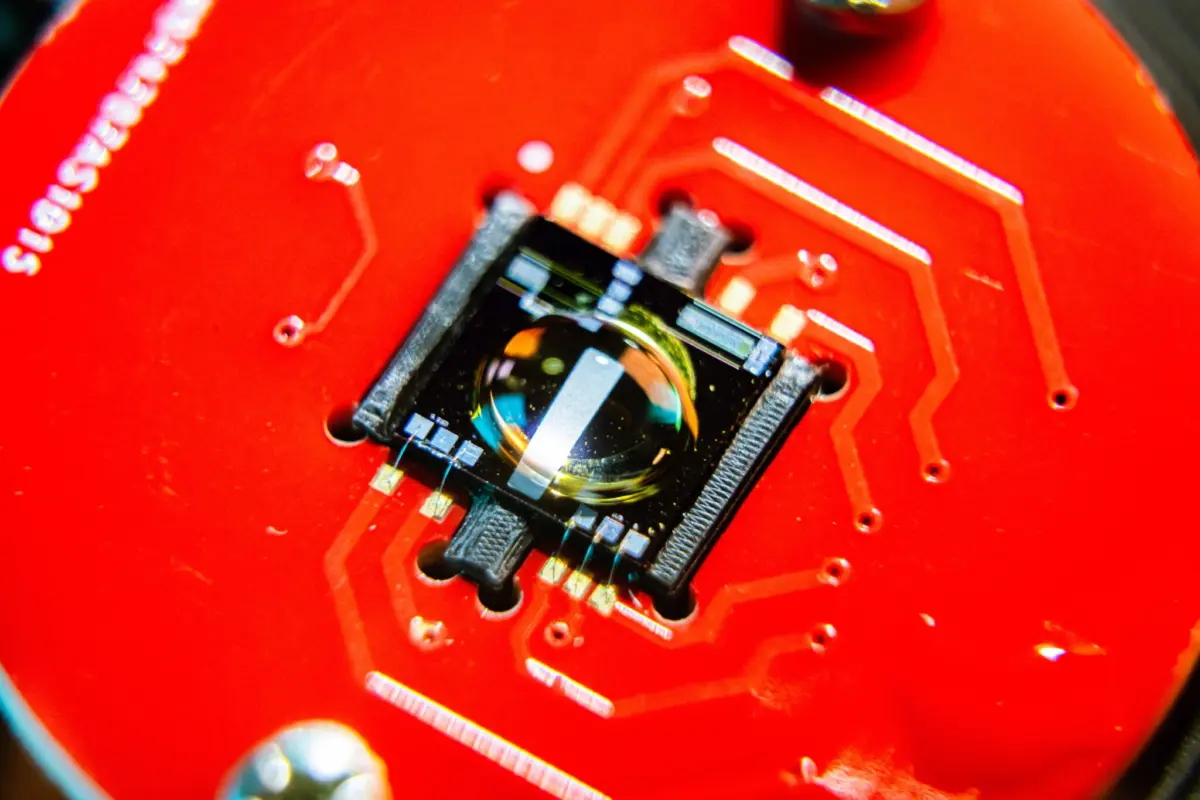
Enter Omen AI. Founded in 2024 to modernize the invisible plumbing of the digital age, the company is building high-speed, real-time diagnostic sensors designed to protect mission-critical data infrastructure. Following a robust $31 million Series A funding round in June, Omen is aggressively scaling its footprint through a $16 million cash-and-stock acquisition of its primary competitor, Aquatic Labs.
By unifying Omen’s elemental detection technology with Aquatic Labs’ proficiency in alkalinity testing, the combined enterprise is building an all-in-one, real-time sensor slated for commercial release early next year. Operating at the intersection of heavy industrial automation and cutting-edge tech, the merged leadership team—comprising high-school-dropout-turned-entrepreneur Zach Laberge and former MIT physicist-turned-researcher Allan Adams—is positioning itself as indispensable infrastructure for the AI revolution, insulated from the shifting tides of market sentiment.
Detailed Chronology: The Making of a Consolidation Deal
The marriage between Omen AI and Aquatic Labs did not originate in a corporate boardroom, but rather through the interconnected web of industrial filtration investors who recognized the redundancy of two startups attacking the exact same problem from slightly different angles.
Zach Laberge, founder and CEO of Omen AI, was introduced to Allan Adams, CEO of Aquatic Labs, via an intermediary in the fluid filtration space. Both early-stage companies had recognized that the current standard of data center fluid management—relying on manual, off-site laboratory testing—was fundamentally incompatible with the hyper-fast processing cycles of modern artificial intelligence hardware.
However, their technological approaches were distinct yet deeply complementary:
- Omen AI engineered sensors focused on tracking specific chemical elements within the circulating cooling fluids.
- Aquatic Labs specialized in continuous measurement of fluid alkalinity, a critical indicator of chemical stability and potential corrosion risks.
Recognizing that neither sensor alone provided a complete diagnostic window into the health of a multi-million-dollar cooling loop, the two executives quickly realized that a merger would short-circuit months of competition and immediately yield a superior product. The resulting $16 million cash-and-stock transaction fuses their intellectual property into a singular, unified platform.
The union also brings together two profoundly different yet mutually reinforcing entrepreneurial archetypes. Laberge’s career is defined by practical, hands-on industrial intuition; he famously dropped out of high school to launch his inaugural venture, which developed specialized fluid analysis systems for massive heavy construction machinery operating under grueling hydraulic conditions. Adams represents the classic academic-turned-innovator: trained as a physicist, he spent decades exploring advanced ocean-sensing technologies as an MIT professor and a researcher at the Woods Hole Oceanographic Institution before pivoting his deep-tech expertise toward commercial markets.
Following the acquisition, Adams has assumed the role of Chief Science Officer at Omen AI. Together, the combined engineering teams are racing to integrate both elemental and alkalinity testing capabilities into a single, cohesive hardware unit. This next-generation sensor is scheduled to hit the market in early 2025.
Simultaneously, Omen’s existing sensor suite is scaling rapidly. Laberge notes that by the end of the year, the company’s technology will be actively monitoring high-performance AI chips drawing between 250 and 300 megawatts (MW) of power—representing roughly $5 billion to $7 billion worth of underlying infrastructure. Looking further ahead, the company has set an ambitious target to have its monitoring technology installed on the equivalent of 1 gigawatt (GW) of compute capacity by the close of 2027.
Supporting Context & Metrics: The Scale of the Fluid Challenge
To understand the strategic importance of Omen AI’s consolidation, one must examine the precarious physics of modern data center cooling. As graphics processing units (GPUs) and specialized AI accelerators push power densities to unprecedented heights, traditional air-cooling systems are hitting their physical limits. Direct-to-chip liquid cooling—where specialized engineered fluids or treated water circulate directly over hot-running silicon—has become the standard engineering paradigm for hyperscale AI deployments.
Yet, liquid cooling introduces an unforgiving margin for error. Within a closed-loop system, subtle shifts in fluid chemistry can spell disaster:
- Bacterial Growth: Organic matter can rapidly proliferate in warm fluid networks, forming bio-films that choke off water flow and trap heat against multi-thousand-dollar chips.
- Valve Failures and Corrosion: Unbalanced alkalinity or stray chemical elements can corrode internal piping and microscopic cooling channels, leading to catastrophic leaks.
When fluid anomalies are detected under legacy testing protocols, data center operators face a grim calculus. Because waiting days for a lab result risks permanent equipment failure, risk-averse operators routinely choose the nuclear option: completely dumping the contaminated water and shutting down operations until the system can be manually flushed, sanitized, and refilled.
The financial toll of these unscheduled downtimes is immense, measured in millions of dollars of lost compute time per incident. By deploying real-time sensors that continuously monitor fluid health, operators can safely extend the lifespan of their cooling liquids, optimize chemical treatment regimens on the fly, and prevent catastrophic clean-ups before they occur.
Beyond the internal economics of the server hall, the external environmental footprint is drawing intense regulatory and public scrutiny. Data centers are massive industrial consumers of municipal water resources. Allan Adams highlights the cyclical nature of this resource utilization, pointing out that water drawn into a data center eventually leaves its cooling towers and flows back into municipal wastewater systems. Ensuring that this discharge process is safe, chemically neutral, and strictly managed requires rigorous, continuous measurement.
Official Statements & Industry Perspectives
The convergence of AI infrastructure investment and environmental resource management has generated a complex dialogue among founders, investors, and scientists.
Reflecting on the technical synergy unlocked by the acquisition, Allan Adams emphasized the qualitative leap in diagnostic precision:
"Putting those two technologies in the same sensor creates a much richer picture of the water and the fluid," Adams told TechCrunch, underscoring their shared mission to automate what has historically been an analog, sluggish workflow.
Adams also stressed the broader ecological imperative of continuous sensing, noting:
"Water goes into data centers, and then it comes out and gets dumped into municipal water, and you want that whole process to happen in a way that’s as safe and responsible as possible — and that means you got to measure stuff."
Meanwhile, macro-level market sentiment regarding the broader AI infrastructure boom has experienced bouts of volatility. Earlier in the investment cycle, analysts projected that cumulative global spending on AI infrastructure could reach an astronomical $4 trillion by 2030. However, recent quarters have seen growing skepticism from investors questioning the immediate return on investment for hyperscale buildouts, sending the stock prices of major cloud providers and hardware manufacturers into intermittent corrections.
Despite these market jitters, Zach Laberge remains entirely unfazed by shifting Wall Street sentiment. He points out a fundamental structural truth about Omen AI’s market positioning: their technology is deployed after a facility has been constructed and capitalized.
"We’re working with customers on stuff they’re building today or have already built, and so it doesn’t really affect us because all of those projects were financed 12 months ago," Laberge explained.
Refusing to be dragged down by macro bearishness, he added a striking perspective on the sheer scale of the addressable market:
"Our view is, if there’s tightness, this is still going to be the biggest market in human history, even if you sliced it in half."
Future Outlook: The Indispensable Role of Infrastructure Diagnostics
As the artificial intelligence sector transitions from a speculative gold rush into a mature industrial reality, the companies that survive and dominate will be those that solve fundamental operational friction points. The physical constraints of cooling high-density compute clusters are not temporary anomalies; they are the permanent operating conditions of the next-generation digital economy.
The integration of Omen AI and Aquatic Labs signals a maturation point for data center hardware monitoring. By replacing archaic, multi-day laboratory sampling with instantaneous, multi-parameter sensor arrays, the company is effectively installing a nervous system into the liquid infrastructure of the AI boom.
Looking toward 2025 and beyond, the roadmap for Omen AI is clear: successfully launch the unified next-generation sensor, capture the monitoring contracts for gigawatt-scale AI chip deployments, and prove that environmental sustainability and hyper-growth operational efficiency are not mutually exclusive. In an era where a single mismanaged fluid loop can jeopardize millions of dollars in compute capacity—and millions of gallons of public water—real-time intelligence is no longer a luxury. It is the absolute bedrock of modern digital infrastructure.








Belum ada komentar. Jadilah yang pertama berkomentar!