

November 1, 2026
By the Tech & Policy Desk
Executive Overview
As artificial intelligence rapidly transitions from a speculative technological frontier into the backbone of global economic infrastructure, the companies driving this revolution face a formidable obstacle: the people who live next door to it.
Data centers—the massive, humming warehouses of high-performance computing required to train and run frontier models—have quickly become one of the most unpopular real estate developments in modern history. Local pushback is mounting, fueled by legitimate anxieties over soaring energy bills, strained municipal water supplies, and the industrial sprawl of server farms encroaching on rural and suburban communities alike. From British Columbia to Manitoba, and across swathes of the American heartland, grassroots opposition is stalling projects, forcing tech giants to rethink their playbook.
Enter OpenAI. According to recent reports, the artificial intelligence titan is gearing up for a major public relations and political strategy offensive in the wake of the United States midterm elections. With Democrats projected to seize control of the House of Representatives—and potentially make waves in the Senate—the political landscape is shifting. OpenAI’s Chief Global Affairs Officer, Chris Lehane, has signaled that the company is preparing a multi-pronged charm offensive designed to shift public perception, influence policy, and reframe the narrative around AI infrastructure.
At the heart of this strategy is a clever piece of corporate rebranding: transforming the toxic moniker "data centers" into the more palatable, forward-looking concept of "AI compute campuses." But behind the lexicon shift lies a deeper political calculation. As Washington prepares for AI to dominate the 2028 presidential cycle, OpenAI is attempting to get ahead of the curve by proposing global standards, localized economic benefits, and even voluntary "speed limits" on AI development. Whether a coat of linguistic paint can mask the very physical, very heavy footprint of the AI revolution, however, remains to be seen.
Detailed Chronology: The Road to the 2026 Political Inflection Point
To understand why OpenAI is launching its post-midterm PR blitz, one must look at how rapidly public sentiment toward big tech and infrastructure has soured over the past few years.
Early 2026: The Grassroots Backlash Erupts
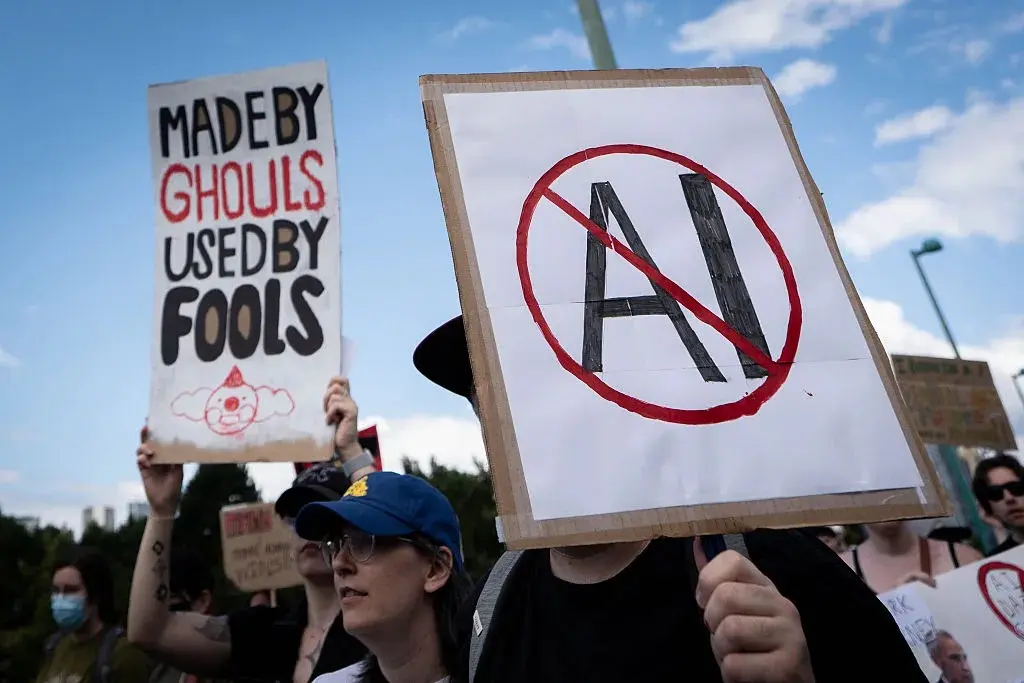
By the first half of 2026, the friction between local communities and hyperscalers reached a boiling point. In Canada, traditionally viewed as a friendly haven for tech innovation, early signs of fierce protest emerged against proposed server farms in British Columbia and Manitoba. Citizens took to the streets holding anti-AI banners, raising concerns over sovereign compute initiatives and the massive draw these facilities place on local electrical grids.
Summer 2026: The Transparency Crisis
As summer turned to fall, public pressure mounted over the secretive nature of corporate negotiations. For years, tech giants like Amazon, Microsoft, and Google routinely utilized non-disclosure agreements (NDAs) with local governments, locking municipal leaders into closed-door deals that left residents in the dark regarding resource consumption and environmental impact. The backlash became so intense that tech leaders were forced to pivot; notably, Amazon and Microsoft announced they would no longer use NDAs in their negotiations with local municipalities, bowing to demands for public transparency.
September 2026: Pacing and Accountability
By September, industry leaders began acknowledging the public relations crisis. Anthropic CEO Dario Amodei publicly outlined plans to "pace the frontier," suggesting that slowing down or carefully managing the deployment of advanced models might alleviate societal shocks. Meanwhile, public discourse crystallized around a central theme: everyone, it seemed, could find a reason to dislike data center construction.
November 1, 2026: The Midterm Pivot
Now, standing at the precipice of the November 2026 midterm elections—where Democrats are favored to capture the House and potentially challenge the balance of power in the Senate—OpenAI is executing its master plan. Chris Lehane revealed to media outlets that the company views the midterms not just as an election, but as "a bit of a movie trailer for what you’re going to see in 2028." OpenAI is positioning 2028 as the watershed moment where artificial intelligence will no longer be just a policy sub-topic, but the defining issue of the presidential election.
Supporting Context & Metrics: The Anatomy of the Infrastructure Backlash
The urgency behind OpenAI’s rebranding effort is rooted in hard data and mounting logistical hurdles. The physical footprint of artificial intelligence is staggering, and the public is bearing the immediate externalized costs.
The Power Hunger of Frontier Models
Training large language models and running real-time inference queries for millions of users requires unprecedented amounts of electricity. Modern data centers consume as much power as mid-sized cities. According to energy sector analysts, utilities across the United States are scrambling to keep pace, leading to fears that residential ratepayers will shoulder the financial burden of grid upgrades necessitated by private tech companies. Furthermore, the massive cooling systems required to prevent servers from overheating draw millions of gallons of water daily, sparking acute worries in drought-prone regions.

The Geography of Discontent
The backlash is no longer confined to blue-state tech hubs or progressive enclaves. Rural counties, suburban townships, and industrial rust-belt towns are increasingly pushing back against rezoning requests. Residents are asking a fundamental question: What’s in it for us? While a data center creates thousands of construction jobs temporarily, it typically leaves behind only a handful of permanent maintenance and engineering roles while permanently altering the local landscape, generating acoustic noise pollution, and straining public infrastructure.
The Linguistic Shift: From Warehouses to Campuses
Recognizing that public relations disasters can sink capital expenditures worth billions of dollars, OpenAI is deploying a classic corporate strategy: changing the vocabulary.
A "data center" sounds cold, utilitarian, and extractive—a windowless concrete box sucking up local electricity to enrich distant software conglomerates. An "AI compute campuses," on the other hand, evokes images of innovation, green energy integration, architectural harmony, and high-tech educational symbiosis. By framing these facilities as "campuses," companies hope to align the infrastructure with the positive connotations of university grounds or corporate research parks.
Official Statements and Industry Perspectives
OpenAI’s leadership has adopted a surprisingly pragmatic—if politically calculated—stance regarding the public friction. Rather than dismissing local activists as anti-progress luddites, executives are leaning into the language of community accountability.
Speaking on the shifting political dynamics, Chris Lehane characterized the fierce debates surrounding data center construction as a "good and healthy" phenomenon.
"Communities should hold companies responsible and accountable so they really and truly get a transformative benefit from these projects," Lehane noted in recent briefings.
This cooperative rhetoric is designed to disarm critics and position OpenAI as a "good corporate citizen" compared to its peers. The company’s post-midterm legislative and public relations roadmap includes several core pillars:
- Voluntary "Speed Limits": Exploring frameworks for AI safety and pacing development to assure regulators that the technology is not outpacing societal guardrails.
- Empowerment Narratives: Shifting marketing campaigns to highlight how AI directly empowers everyday citizens in their professional and personal lives, rather than displacing them.
- Global Standards Leadership: Pushing the United States government to take an aggressive role in establishing international standards for AI deployment and infrastructure governance.
- Infrastructure Reframing: Rebranding physical compute facilities to emphasize community integration and shared economic value.
Yet, independent observers and civil society watchdogs remain skeptical. Critics argue that no amount of semantic engineering can alter the thermodynamic and grid realities of running hyperscale computing infrastructure. Unless these "campuses" come bundled with dedicated, off-grid renewable energy generation and legally binding community benefit agreements, the skepticism is unlikely to fade.
Future Outlook: The Road to 2028
As the dust settles on the 2026 midterm elections, the battle lines for the future of artificial intelligence have been drawn. The debate is no longer confined to computer science labs, venture capital boardrooms, or ethics committees; it has spilled over into zoning boards, state legislatures, and federal election campaigns.
OpenAI’s preemptive strike is an acknowledgment that the political tolerance for unfettered tech expansion is running thin. By attempting to shape the debate now, the company hopes to avoid heavy-handed federal regulation while placating local communities through a combination of better PR, localized economic promises, and policy concessions like safety "speed limits."
However, the true test of this strategy will occur on the ground. When the bulldozers roll into the next municipality to carve out the foundation for an "AI compute campus," local residents will care very little about what the facility is called. They will care about their lights staying on, their water bills remaining stable, and whether the digital future being built in their backyard offers a tangible, equitable return on investment.
If OpenAI and its industry peers cannot deliver on those fronts, no "movie trailer" or corporate rebranding campaign will prevent 2028 from becoming a referendum on the physical cost of the artificial intelligence revolution.









Belum ada komentar. Jadilah yang pertama berkomentar!