

Executive Overview
As the United States hurtles toward the midterm elections, political analysts have traditionally fixed their lenses on inflation, healthcare, immigration, and housing costs. However, beneath the familiar hum of campaign rhetoric, a seismic new wedge issue has violently forced its way onto the ballot: artificial intelligence and the physical infrastructure powering it.
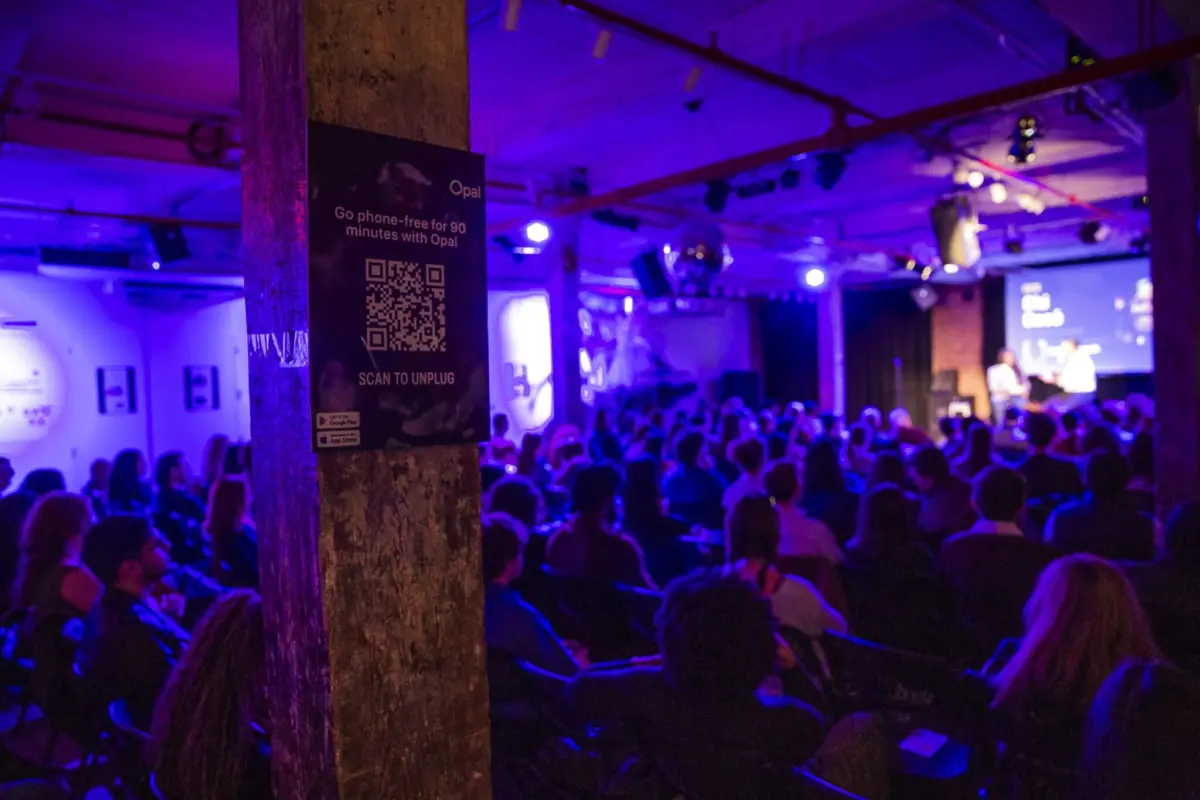
On a crisp Thursday evening in late October 2026, a dimly blue-lit Brooklyn warehouse played host to "Midterm Madness," an eclectic political and media gathering organized by the digital news outlet Newsreel. Attended by an assortment of tech founders, policy advocates, journalists, and political strategists, the event was ostensibly designed to encourage attendees to unplug from their devices and discuss the impending congressional races just five days out. Yet, despite the diverse lineup of panels addressing everything from campaign management software to screen addiction, one monolithic topic completely dominated the room: the rapid, unchecked expansion of AI data centers and a burgeoning popular backlash against the modern technocracy.
This cultural and political friction highlights a profound chasm. Inside the insular bubble of Silicon Valley and metropolitan tech hubs, artificial intelligence is still widely framed as an unalloyed triumph of human ambition—an optimistic march toward boundless productivity. But outside that bubble, for millions of everyday Americans, data centers have transformed into the physical embodiment of corporate overreach, environmental anxiety, and economic displacement.
Recent data underscores the sheer scale of this friction. According to figures compiled by Data Center Watch, nearly $200 billion worth of data center projects were delayed, stalled, or outright blocked in the first half of 2026 alone, caught in the crossfires of fierce political friction and grassroots community opposition. Across states like Pennsylvania, Georgia, Texas, New York, and Virginia—the latter famously dubbed the "data center capital of the world"—legislators are scrambling to institute stricter guardrails, zoning transparency, and environmental accountability.
This article explores how an esoteric piece of computing infrastructure morphed into a potent, ballot-box-moving issue, examining the political alignments, socioeconomic anxieties, and cultural fatigue defining the 2026 midterms.
Detailed Chronology: An Evening in Brooklyn
The evening’s programmatic trajectory served as a microcosm of the national conversation, repeatedly dragging high-level political discourse back to the physical realities of the digital age.
Setting the Tone: Accountability and the Technocracy
The event kicked off with a fireside chat featuring Kenneth Schlenker, co-founder of the focus app Opal, who discussed "the state of attention," followed by a midterm forecast from Aryan Banjan, creator of campaign software Barza. However, the ideological tone of the night was truly crystallized by New York City Council member Chi Ossé.

When the conversation inevitably drifted toward artificial intelligence near the end of his session, Ossé admitted that he rarely uses AI tools himself. He carefully avoided adopting a simplistic pro- or anti-tech stance, choosing instead to focus his critique on accountability. Ossé, identifying as a "law and order" democratic socialist, argued that when tech executives openly speculate about technologies potent enough to radically disrupt or jeopardize human civilization, those leaders must be hauled before Congress to testify under oath. Furthermore, he emphasized the pressing need to heavily tax multi-trillionaires like Elon Musk, setting a populist, accountability-focused tone for the rest of the evening.
The Panel: Direct Confrontation with the Crowd
Next came the data center panel, moderated from the stage amidst neon heels and floral prints, featuring Maia Woluchem, a technology and human rights researcher, and Hilary Flint, an environmental and public health advocate. Seeking to test the room’s temperature immediately, the moderator posed a direct question to the crowd: “Who here is pro-AI data center?”
The response was swift and unequivocal: a chorus of boos rippled through the warehouse.
The discussion that followed tapped into a deep well of public frustration. Attendees and panelists voiced profound anger over reports that Big Tech companies have routinely bypassed public scrutiny by cutting clandestine, non-disclosure-agreement-bound deals with local municipal officials. In numerous jurisdictions across the country, arcane and outdated zoning laws mean that massive, multi-billion-dollar industrial facilities are approved and constructed before local residents even realize what is being built in their backyards.
The Political Future: Labor, Promises, and Broken Trust
The final panel of the night featured prominent media figures and strategists, including NewsNation host Batya Ungar-Sargon, political strategist Morris Katz (who worked on Zohran Mamdani’s campaign), and Vox journalist Astead Herndon. Though scheduled to dissect the future of the Democratic Party, the gravitational pull of the data center debate hijacked the stage once more.
Ungar-Sargon pointed out a complex political paradox: certain labor unions actively support data center construction projects because of the lucrative, high-paying union jobs generated during the initial building phase. However, independent economic studies have consistently shown that these employment numbers are transient; once construction concludes, the permanent job footprint of a data center is remarkably small.
Drawing a vivid historical parallel, Ungar-Sargon noted:

"There used to be a lot of pride in a community in the Rust Belt about very ugly, enormous buildings in their communities because everybody worked there. And they knew that building represented prosperity for themselves, stability for their children, and a future and a piece of the American dream."
Herndon interjected, referencing a recent campaign stop where Republican figure Vivek Ramaswamy faced immediate pushback in Ohio for trying to frame data centers as economic wins. Herndon emphasized a core theme underlying the entire debate: "I just want to reinforce the lack of consent happening, because that’s true among Republicans in those places and I’ve watched it."
Katz echoed this populist skepticism, framing the current wave of infrastructure development as a continuation of historical economic exploitation:
"It’s the same people who have taken so many union jobs away. The same institutional powers that have robbed labor and working people of jobs and profit. Now coming back to essentially finish the job and take whatever scraps remain."
Supporting Context & Metrics: The Scale of the Backlash
To understand why data centers have transformed into electoral flashpoints, one must examine the staggering physical and environmental footprint they impose on local communities.
[National Data Center Friction - H1 2026]
---------------------------------------------------------
Total Value of Stalled/Blocked Projects:  ~$200 Billion
Primary Drivers of Delay:                 Zoning, Power/Water Stress, Community Opposition
Top Impacted States:                      Virginia, Pennsylvania, Georgia, Texas, New York
The Resource Drain and Environmental Toll
Data centers are ravenous consumers of electricity and water. To train and run massive large language models (LLMs), server farms require continuous, uninterrupted power grids—frequently forcing utility companies to keep aging fossil-fuel plants online or push for new energy infrastructure that local ratepayers ultimately subsidize. Simultaneously, the cooling systems required to prevent thousands of servers from overheating draw millions of gallons of water daily from local municipal supplies.
In rural communities and suburban peripheries alike, residents look at these windowless, humming fortresses and see an industrialized imposition that yields minimal local economic benefit while degrading local natural resources. When tech leaders casually pontificate about artificial intelligence replacing entire white-collar workforces or altering the trajectory of civilization, local populations living next to these sprawling grids feel a profound sense of alienation and powerlessness.

As Hilary Flint starkly noted during the environmental panel when asked about the financial perks some local governments accept to host these facilities:
"What is a life worth? People still protest because they value their lives a little bit more than a temporary check."
Cultural Fatigue and the Aesthetic Counter-Revolution
This deep-seated fatigue is not restricted to industrial zones or rural towns; it is bleeding into cultural aesthetics as well. Conversations along the warehouse walls in Brooklyn revealed a growing cultural backlash against generative AI-generated media.
Several attendees noted that AI-generated imagery and art are rapidly acquiring a connotation of cheapness and hollow fabrication. In a fascinating market correction, elite luxury brands are deliberately pivoting away from digital automation to emphasize human craftsmanship. Prada’s recent holiday campaign leaned heavily into hand-drawn illustrations as a deliberate anti-AI luxury strategy, while Hermès has increasingly spotlighted handmade artist creations on its social channels.
Even within tech circles, the omnipresence of AI hyper-fixation is drawing weary smiles. When attendees were asked to name the craziest thing they had witnessed in tech over the past year, responses ranged from the relentless hype surrounding AI assistant startups like Instinct to casual remarks about figures like Sam Altman. One software engineer even recounted a humorous anecdote about a Halloween manicure prompting jokes about the Anthropic IPO, proving that the culture of Silicon Valley has permeated everyday social life—often as the butt of the joke.
Official Statements & Grassroots Resistance
The disconnect between corporate boardrooms and local neighborhoods is perhaps best illustrated by the changing nature of grassroots activism.
When Newsreel founder Jack Brewster reflected on the evening’s pervasive theme, he noted that the anxieties manifested differently depending on geography:

"In rural communities, the backlash is about feeling replaced. In a place like Brooklyn, it’s more about who gets rich from it."
This sentiment is echoed in unexpected corners of the country. The software engineer interviewed after the panels shared that data center proposals are now actively encroaching upon her Southern California hometown—a tight-knit Chinese immigrant community where neighbors have resorted to erecting yard signs featuring graphic imagery of dragons choking data center buildings. These warning signs, originally printed in English, have since been translated into multiple languages to mobilize the entire neighborhood against zoning boards.
These localized protests reflect a loss of democratic agency. Sticky notes plastered along the warehouse walls at the event asked poignant questions, such as, "Will we ever be able to get Big Money out of politics?"—with one handwritten response aptly summarizing the room’s collective mood: "God, I hope so."
Future Outlook: What the 2026 Midterms Mean for Tech
As voters head to the polls on November 3, 2026, the intersection of technology, infrastructure, and politics has crossed a permanent Rubicon. No longer can the tech sector operate under the Silicon Valley mantra of "move fast and break things" without encountering fierce, organized political resistance in the physical world.
The $200 billion in stalled infrastructure projects serves as a clear warning shot to venture capitalists, hyperscalers, and policymakers alike. Future technological growth will be inextricably bound to local consent, environmental oversight, and strict regulatory accountability.
Whether progressive lawmakers pushing for wealth redistribution and corporate accountability or conservative populists defending working-class communities against institutional displacement, politicians from across the ideological spectrum are realizing that opposing unchecked technocratic expansion is a winning message. The data center—once an invisible, sterile box humming quietly in an industrial park—has stepped out of the shadows, and it will shape the American political landscape for years to come.






Belum ada komentar. Jadilah yang pertama berkomentar!