

Executive Overview
The artificial intelligence landscape has spent the better part of the last half-decade locked in a breathless, high-stakes arms race. Competitors across Silicon Valley have rushed to flood the market with generative models, chatbot interfaces, and automated features designed to upend how humans interact with technology. Yet, amidst this chaotic gold rush, one tech titan has consistently faced a chorus of external skepticism: Apple.
For years, critics and industry analysts have accused Apple of lagging behind its peers in the artificial intelligence domain. These narratives gained momentum as the company grappled with notable delays in rolling out a more powerful, contextual iteration of its voice assistant, Siri—an overhaul that finally saw the light of day in the summer of 2026. However, a significant shift in leadership and narrative is now underway.
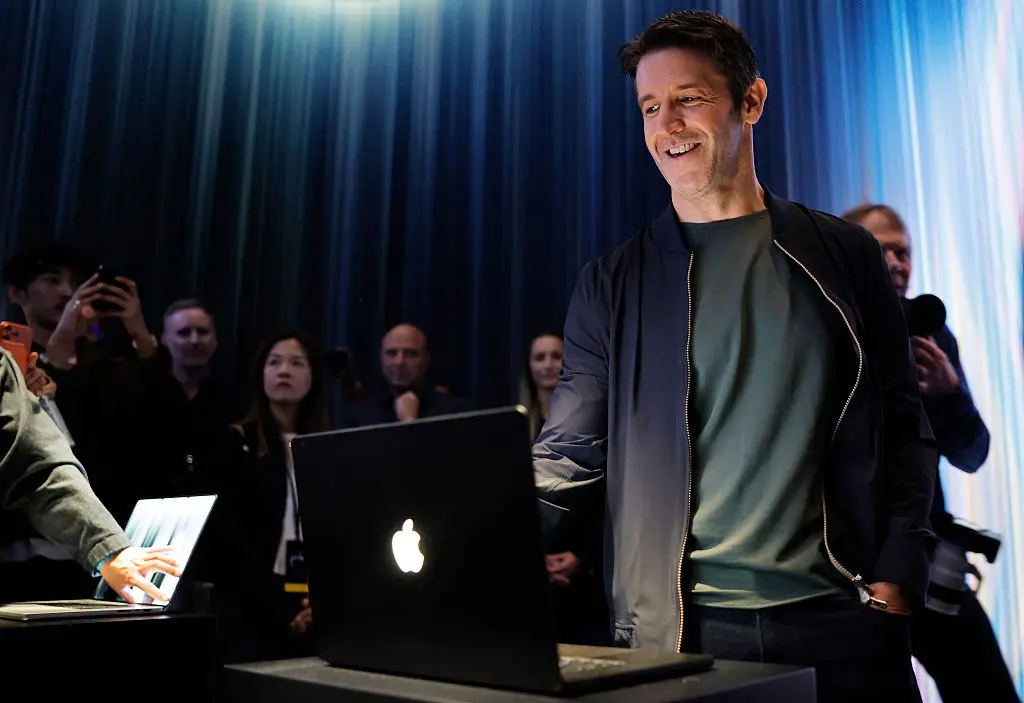
In a wide-ranging, candid interview with Wired’s veteran tech journalist Steven Levy, newly minted Apple CEO John Ternus pushed back against the prevailing tech-industry orthodoxy. Stepping into the chief executive role at the beginning of September 2026—following years of leadership within the company’s hardware engineering ranks—Ternus offered a firm defense of Apple’s measured, calculated trajectory. Rather than viewing Apple’s methodical rollout as a liability, Ternus framed it as a deliberate strategy rooted in user experience, deeply personal product creation, and a refusal to adopt technology purely for the sake of marketing hype.
This comprehensive report explores Ternus’s watershed interview, dissects Apple’s evolving philosophical approach to artificial intelligence, examines the shifting dynamics of the consumer tech ecosystem in 2026, and evaluates what the future holds for the world’s most valuable technology brand under its new leadership.
Detailed Chronology: From AI Laggard Perceptions to the 2026 Turning Point
To fully understand Apple’s current positioning in the artificial intelligence arena, it is necessary to trace the timeline of events, expectations, and technological hurdles that have defined the company’s trajectory over recent years.
The Generative AI Boom and Apple’s Quiet Approach (2022–2023)
When OpenAI launched ChatGPT in late 2022, it catalyzed a seismic shift across the technology sector. Overnight, generative AI transformed from an academic and enterprise curiosity into a consumer-facing phenomenon. While rivals like Microsoft, Google, and Meta immediately pivoted their entire product roadmaps toward front-and-center AI integration, Apple remained conspicuously quiet.
Behind closed doors, Cupertino was undoubtedly evaluating the space, but its public-facing posture prioritized privacy, local processing capabilities, and refined hardware integration over rushed cloud-based chatbot rollouts. This deliberate pacing quickly drew criticism from Wall Street analysts and tech commentators, who frequently argued that Apple was losing its competitive edge in the defining technological paradigm of the decade.
The Siri Delays and Summer 2026 Redemption (2024–2026)
The focal point of Apple’s perceived AI deficit has long been Siri. Originally introduced in 2011 as a pioneering consumer assistant, Siri steadily fell behind newer, more context-aware generative models. Apple announced ambitious plans to overhaul the assistant with deeper on-device intelligence and personal context understanding, but development complexities and rigorous privacy guardrails led to repeated postponements.
The anticipation—and frustration—culminated when the long-awaited, fully revamped version of Siri finally launched in the summer of 2026. While early reviews noted that the rollout felt somewhat anticlimactic given the years of buildup, the update fundamentally established a more reliable, deeply integrated AI foundation across Apple’s operating systems. It proved that while Apple was late to the party, it was building infrastructure designed to scale sustainably across billions of active devices.
A Leadership Transition: John Ternus Takes the Reins (September 2026)
As Apple navigated this critical technological inflection point, a major internal transition occurred. At the beginning of September 2026, John Ternus officially stepped into the role of CEO, succeeding his predecessor and instantly commanding the spotlight. Known previously for his steady hand and visionary oversight as Apple’s head of hardware engineering—where he spearheaded major transitions like Apple Silicon—Ternus inherited both the triumphs and the ongoing criticisms of the ecosystem.
In his first public memo as CEO, Ternus generated immense industry excitement by hyping an aggressive product launch slate. Yet, as the autumn dust settled, questions regarding Apple’s long-term AI strategy remained front and center. This set the stage for his high-profile sit-down with Steven Levy at Wired, where Ternus directly addressed the narrative surrounding Apple’s place in the AI landscape.
Supporting Context & Metrics: The Philosophy of "AI for AI’s Sake"
The crux of John Ternus’s defense during his interview with Wired centered on a fundamental design philosophy that has defined Apple for decades: technology should serve the human experience, rather than dictating it.
The Trap of Superficial Feature Padding
In the broader technology industry, the race to claim "AI supremacy" has frequently resulted in superficial feature padding. Companies have rushed to shoehorn generative text boxes, autonomous summarization tools, and cloud-dependent algorithms into products whether they genuinely improve the user experience or not.

Ternus made it explicitly clear that Apple refuses to participate in this frantic race to the bottom. "We don’t want to ship AI for AI’s sake," Ternus told Levy. In an era where competing press releases boast staggering parameter counts and dizzying computational metrics, Apple’s new chief executive is choosing to anchor his brand identity in utility, elegance, and tangible user satisfaction.
Invisible Technology and Seamless Integration
For Apple, the highest praise a technological advancement can receive is invisibility. Ternus elaborated on this philosophy by describing how artificial intelligence should feel to the end consumer:
"When we’re doing it right, people won’t have to think about whether it was AI that made this happen or more traditional software. What matters is, did we build something that they really love?"
This perspective reframes Apple’s perceived "delay" in the AI space. Rather than viewing the company as trailing behind competitors who rushed unrefined models to market, Cupertino’s strategy positions it as an arbiter of refinement. By embedding intelligence deeply into the metal, silicon, and operating system architecture—processing as much as possible locally on-device to preserve user privacy—Apple aims to make advanced machine learning feel less like a jarring chatbot interface and more like natural, intuitive software behavior.
Official Statements & Key Excerpts: Inside the Ternus-Levy Interview
The dialogue between John Ternus and Wired’s Steven Levy offers a fascinating window into the mindset guiding Apple through its next major chapter. Below are the core exchanges and thematic takeaways from the conversation:
- Addressing the "Behind on AI" Narrative:
When Levy queried Ternus about the persistent industry perception that Apple has fallen behind competitors in artificial intelligence, Ternus acknowledged the noise without showing defensive insecurity. "Everyone has an opinion," he noted, before offering a definitive counter-stance: "I really like where we’re at." This quiet confidence underscores a belief that Apple’s hardware-software co-design gives it a long-term advantage that brute-force cloud computing cannot easily replicate. - The Commitment to Meaningful Innovation:
Emphasizing product utility over marketing buzzwords, Ternus reiterated: "We’re absolutely going to leverage AI in our new products. We don’t want to ship AI for AI’s sake. What matters is, did we build something that they really love?" -
The Threat of Autonomous Agents and the Future of Apps:
One of the most profound moments of the interview occurred when Levy pressed Ternus on a darker, more disruptive horizon: Could advanced AI agents eventually render traditional smartphone apps obsolete? If an autonomous agent can seamlessly handle travel bookings, restaurant reservations, and file management behind the scenes, the traditional grid of app icons could theoretically become redundant.Ternus’s response was revealingly grounded in the craft of creation: "That could make life really easy, I suppose, but the creation of products is a deeply human and personal thing, something that we love to do." This statement highlights Apple’s dual identity as both a software platform and a hardware ecosystem deeply invested in developer ecosystems and tangible, physical craftsmanship.
Future Outlook: Navigating the Post-App, AI-Integrated Horizon
As we look toward the remainder of the 2020s, Apple stands at a fascinating crossroads. The tension between automated, agent-driven artificial intelligence and Apple’s tightly controlled, app-centric ecosystem will undoubtedly shape the next decade of consumer technology.
Balancing Automation with Ecosystem Control
The rise of autonomous AI agents poses a philosophical challenge to the traditional app store economy, which has served as a massive revenue engine and developer playground for Apple. If agents disintermediate applications, the way users discover and pay for services will transform entirely. Ternus’s acknowledgement that while such automation "could make life really easy," the creation process remains "deeply human and personal," suggests that Apple intends to protect the foundational art of product and software design even as artificial intelligence automates repetitive micro-tasks.
The Hardware-Software Synergy Advantage
Ultimately, Apple’s ace in the hole remains its tight coupling of custom silicon, operating system design, and physical hardware. As artificial intelligence models become more efficient, the ability to run sophisticated neural networks locally on billions of iPhones, iPads, Macs, and wearables—without sacrificing user privacy or battery life—will become paramount.
Competitors relying entirely on massive, power-hungry cloud data centers face escalating infrastructure costs and latency bottlenecks. By cultivating a measured, privacy-first, on-device AI philosophy, John Ternus is betting that consumers will ultimately prefer tools that integrate seamlessly into their daily lives over flashy, unstable novelties.
Conclusion
John Ternus’s early tenure as Apple CEO has already established a tone of calm pragmatism in an industry prone to hyperbole. By refusing to chase AI trends merely for the sake of market optics, Ternus is doubling down on Apple’s historic strengths: deep integration, uncompromising privacy, and an unwavering focus on the human experience. Whether this deliberate pacing proves to be a masterclass in long-term strategic patience or a missed opportunity in a hyper-fast technological race remains the defining question of the modern tech era. For now, however, Apple is marching to the beat of its own drum—and its new chief executive wouldn’t have it any other way.





Belum ada komentar. Jadilah yang pertama berkomentar!