

Executive Overview
The intersection of collaborative design software and autonomous artificial intelligence agents reached a critical inflection point during the inaugural Config conference held in India. Figma, the collaborative interface design giant, announced a sweeping expansion of its ecosystem integration by welcoming 20 new partners to support the Model Context Protocol (MCP)—an open-source standard designed to streamline how AI agents connect to external data sources, applications, and tools.
This major integration milestone, however, plays out against a backdrop of prominent ideological friction. Figma co-founder and CEO Dylan Field has been vocal about his reservations regarding the protocol. While the company continues to embrace the standard to satisfy surging consumer demand for interoperability, Field’s public criticisms highlight a simmering debate over data governance, security vulnerabilities, and structural imbalances within the AI development landscape.
This report provides a comprehensive examination of Figma’s strategic pivot, exploring the technical and philosophical criticisms leveled by its leadership against MCP, the security imperatives driving corporate caution, and the broader implications for the future of developer ecosystems and AI agent interoperability.
Detailed Chronology: From Public Spats to Config India
The tensions surrounding Figma’s adoption of the Model Context Protocol did not materialize overnight; they are the result of a rapidly escalating public debate regarding openness, reciprocity, and ecosystem control.
The Spark: The Pi Protocol Dispute
The catalyst for the most recent wave of public debate occurred just days before the Config conference in India. A co-creator of the Model Context Protocol publicly voiced frustration with Figma, specifically targeting the company’s initial hesitation to support Pi, an emerging open-source tool. The grievance underscored a growing expectation within the developer community that major design and productivity platforms must offer frictionless integration with arbitrary third-party AI architectures.
Field’s Retaliation on Social Media
Responding to the critique on X (formerly Twitter), Dylan Field turned the spotlight back onto Anthropic, the prominent AI research lab and the primary architect behind the MCP standard. Field questioned why Anthropic itself maintained closed boundaries regarding its own proprietary assets.
"Can you help me understand why you don’t make various Anthropic resources available via MCP? Maybe I’m missing something," Field wrote on September 30, 2026.
He subsequently expanded on the argument, calling attention to what he perceives as a double standard in how the tech industry defines "open" versus "closed" software ecosystems:
"I find it interesting that Anthropic (creators of MCP standard) do not expose artifacts / other cloud resources created via MCP. The debate is framed as open vs closed. Everyone always prefers open… obviously. And meanwhile issues of asymmetric context sharing are ignored."
Despite these pointed critiques, pragmatism ultimately prevailed. Field subsequently confirmed via social media that Figma does indeed plan to build support for Pi, signaling that market demands for user flexibility ultimately override corporate philosophical objections.
The Config India Announcements
Notwithstanding the friction, Figma pressed forward with its ecosystem expansion at Config India. The company officially unveiled 20 new MCP partners, integrating major platforms and developer utilities into its ecosystem. The newly announced partners include:
- Amp
- ClickUp
- Dia
- Junie by JetBrains
- Linear
- Meta Muse
- Mistral
- Notion
- OpenCode
- Sarvam Agents
This aggressive onboarding of partners demonstrates that despite leadership’s conceptual reservations, Figma recognizes that modern users demand deeply interconnected AI workflows that transcend proprietary platform boundaries.
Supporting Context & Metrics: Understanding the Model Context Protocol (MCP)
To fully comprehend the stakes of Figma’s strategic balancing act, it is essential to examine the technical architecture of the Model Context Protocol and the market forces driving its adoption.
What is the Model Context Protocol?
Introduced primarily by frontier AI labs like Anthropic, the Model Context Protocol functions as an open standard designed to solve a foundational bottleneck in artificial intelligence: context fragmentation. Historically, connecting an AI model or autonomous agent to enterprise databases, version control systems, design files, or productivity tools required custom, ad-hoc API integrations for every single pairing.
MCP establishes a universal communication layer. It standardizes how AI agents request data, query external tools, and transmit commands back to host software. By abstracting these connections, developers can theoretically write an AI integration once and deploy it across a multitude of distinct platforms.
The Rise of AI-Driven Design Workflows
Figma’s platform is uniquely reliant on complex, deeply nested relational data—vector networks, component libraries, design tokens, prototyping connections, and comment histories. As designers increasingly turn to generative AI agents to automate layout generation, write code snippets from design files, or analyze accessibility compliance, the demand for high-speed, programmatic data ingestion has exploded.
Users want their autonomous agents to read Figma canvases, extract style guides, and push updates directly back into projects. For Figma, supporting standards like MCP is no longer a peripheral feature; it is an existential requirement to remain competitive as the center of gravity for digital product creation shifts toward AI-augmented workflows.
Asymmetric Context Sharing: The Core Grievance
Dylan Field’s critique regarding "asymmetric context sharing" touches upon a very real structural reality in the current AI economy. Smaller software platforms, SaaS providers, and enterprise productivity tools are under intense market pressure to expose their proprietary data stores via open protocols to satisfy users who utilize frontier AI models.
However, major AI labs that author these standards often operate with varying degrees of openness regarding their internal weights, training datasets, cloud-native artifacts, and proprietary orchestration layers. Field’s critique argues that the burden of radical openness falls disproportionately on application-layer companies, while foundational model providers can maintain walled gardens around their core intellectual property.
Official Statements and Leadership Perspectives
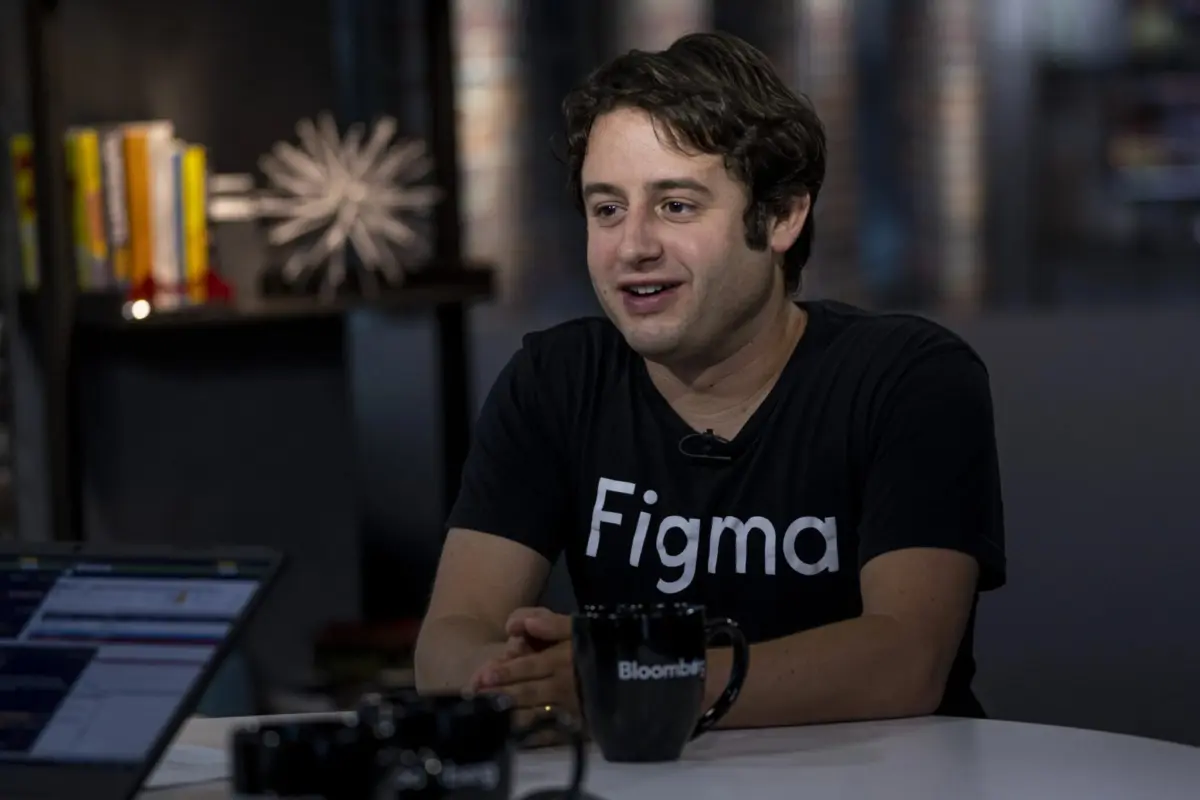
During a media briefing at the Config conference, journalists pressed Dylan Field to elaborate on his public commentary and clarify Figma’s long-term technical roadmap regarding open protocols.
A Measured Endorsement
Field acknowledged the immense value of expanding Figma’s ecosystem while maintaining a critical lens on the architectural limitations of current standards:
"I’m really excited about what we’re doing in terms of opening up our ecosystem. I also think that MCP is not a perfect protocol. And I think that it is something that has tons of room for improvement," Field stated during the briefing.
He highlighted the inherent power dynamics built into the framework, noting that the protocol currently provides structural advantages to frontier labs. Nevertheless, he acknowledged the undeniable voice of the user base:
"It is advantaged more to frontier labs. Also, I understand everyone online who just wants a protocol that they can use when they want to use their Figma data, and I want them to use it, too."
The Security Dilemma: Balancing Access and Abuse
Beyond philosophical debates over industry fairness, Figma’s leadership pointed to a deeply practical engineering challenge: security surface area.
According to the CEO, the primary reason Figma resists becoming infinitely and unconditionally open lies in the inherent risks of data exposure. As a platform housing sensitive corporate designs, unreleased product prototypes, and proprietary intellectual property for millions of global enterprises, data governance is paramount.
Field clarified that while the vast majority of designers and developers harbor no malicious intent, opening up deep programmatic pipelines via protocols like MCP exponentially increases the attack surface for potential abuse. Automated agents, if granted overly broad read-and-write permissions without robust guardrails, could theoretically be manipulated to exfiltrate proprietary design systems, facilitate automated scraping at scale, or execute unauthorized modifications to production-grade design files.
Consequently, Figma is forced to carefully calibrate the velocity of its open-standard integrations against the rigorous security demands of its enterprise customer base.
Future Outlook: The Road Ahead for Figma and AI Interoperability
As Figma integrates its 20 new MCP partners and prepares to roll out support for tools like Pi, the company stands at a fascinating crossroads between the developer community’s demand for radical openness and enterprise requirements for security and control.
Evolution of Open Standards
The friction between Figma and the architects of the Model Context Protocol signals a maturing industry. As AI protocols transition from experimental developer novelties into enterprise-grade infrastructure, governance models will inevitably evolve. The future of MCP and competing standards will likely depend on whether industry consortia can address concerns regarding reciprocity, data symmetry, and enterprise-grade security controls.
Figma’s Strategic Positioning
Figma’s willingness to publicly critique industry standards while simultaneously adopting them demonstrates a pragmatic, sophisticated leadership strategy. Rather than retreating into a fully closed ecosystem—which would alienate modern developers and AI power-users—Figma is choosing to participate in the conversation while actively advocating for protocol improvements.
For the design community and enterprise organizations alike, this approach offers the best of both worlds: rapidly expanding AI integration capabilities backed by the rigorous security oversight necessary to protect sensitive intellectual property in an increasingly automated world.








Belum ada komentar. Jadilah yang pertama berkomentar!