

Published Date: May 28, 2026
Category: Collectibles, Hobbyist Market Analysis, Secondary Trade
Executive Overview
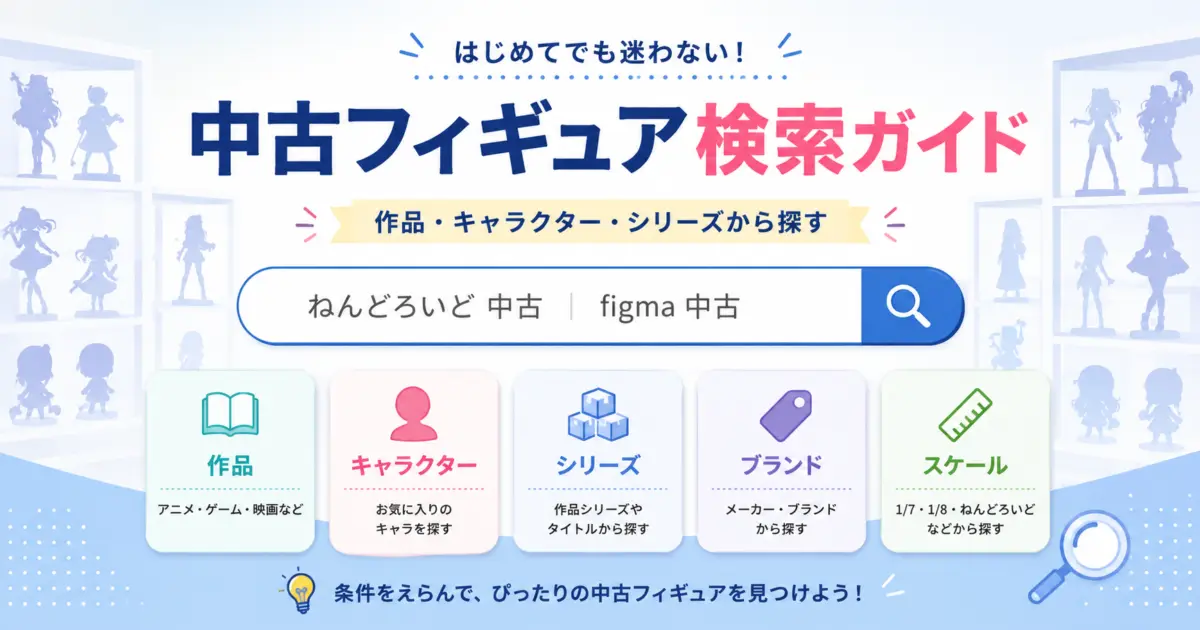
The secondary market for pre-owned collectible figures has undergone a monumental transformation over the past decade. What was once a niche, fragmented hobby largely dependent on local swap meets, specialty brick-and-mortar hobby shops, and unverified peer-to-peer auction listings has matured into a sophisticated, global digital economy.
Today, enthusiasts, veteran collectors, and casual fans alike have access to unprecedented levels of market transparency, real-time pricing data, and rigorous authentication standards. Platforms such as Yahoo! Auctions Japan, alongside specialized secondary marketplaces and consolidated storefronts, have revolutionized how rare collectibles are bought, sold, and valued. This evolution has not only increased buyer confidence but has also introduced professionalized logistics, grading systems, and price-tracking tools that rival traditional financial asset markets.
This comprehensive report explores the shifting dynamics of the pre-owned figure market, examining the infrastructure, pricing mechanisms, major manufacturer trends, and essential strategies for safely navigating this booming ecosystem.
Detailed Chronology: The Evolution of Figure Reselling
To truly understand the modern secondary market, one must examine its historical trajectory. The journey from unorganized garage sales to multi-million-dollar global online exchanges spans several distinct eras of digital and consumer behavior evolution.
Phase 1: The Grassroots Era (Late 1990s – Early 2000s)
In the early days of anime and pop-culture collecting, acquiring figures outside of direct retail releases required immense patience and local networking. Collectors relied heavily on physical hobby shops, independent import stores, convention dealer rooms, and early message boards. Information asymmetry was rampant; prices varied wildly depending on geographic location, and authentication was entirely dependent on the buyer’s personal expertise. Counterfeits—often referred to colloquially as "bootlegs"—were widespread, and recourse for defrauded buyers was virtually non-existent.
Phase 2: The Rise of Peer-to-Peer Platforms (Mid 2000s – 2010s)
As global internet infrastructure improved, early e-commerce platforms and auction sites began bridging geographical divides. Yahoo! Auctions Japan, eBay, and specialized forums allowed international buyers to connect with Japanese sellers through proxy services. However, this era still suffered from high friction: expensive international wire transfers, unpredictable shipping costs, language barriers, and a lack of standardized grading. Buyers frequently encountered inconsistent item descriptions, ranging from "mint in box" to heavily damaged packaging, without reliable photo evidence.
Phase 3: The Professionalization of Secondary Trade (2020s – Present)
The contemporary landscape is defined by institutionalization, data-driven pricing, and platform accountability. Modern marketplaces now integrate automated currency conversion, secure escrow payment systems, high-resolution multi-angle photography standards, and verified user-review tracking. Platforms no longer simply act as passive bulletin boards; they actively curate and police listings, offer authentication guarantees, and provide historical price charts that track a specific figure’s valuation over months and years.
Supporting Context & Metrics: Market Dynamics and Data Transparency
The modern secondary market is heavily driven by data analytics. Price tracking tools and historical sales databases have transformed collecting from a purely emotional hobby into an informed marketplace.
The Role of Manufacturer Metrics
Understanding how specific manufacturers hold their value on the secondary market is vital for both investors and hobbyists. Premium manufacturers such as Good Smile Company, Alter, Max Factory, and Kotobukiya generally maintain strong residual values, particularly for limited-run scale figures. Conversely, prize figures—often won through Japanese UFO catchers or arcade games—historically flood the market, resulting in lower secondary price stability, though rare variants or exclusive campaign releases can still command significant premiums.
Price Volatility and Supply-Demand Curves
Unlike mass-market consumer goods, collectible figures possess finite supply curves. Once a manufacturer closes production pre-orders, no new units are created. Consequently, secondary market pricing is entirely dictated by supply and demand dynamics:
- The Post-Release Dip: Immediately following a figure’s initial release, the secondary market often sees a brief stabilization or slight dip as pre-order cancellations and duplicate orders flood platforms.
- The Scarcity Spike: 12 to 24 months post-release, once retail stock is completely exhausted worldwide, secondary prices typically begin a steady upward trajectory, especially for characters experiencing a surge in media relevance (e.g., through a new anime season or movie release).
Official Statements and Industry Expert Insights
Industry analysts and marketplace administrators emphasize that while the secondary market offers incredible opportunities for completing collections, participants must remain vigilant.
Representatives from leading secondary trading platforms note that consumer protection has been the primary driver behind recent technological upgrades. "The introduction of automated verification algorithms and standardized condition grading has drastically reduced transaction disputes," states a leading market analyst. "Buyers are no longer flying blind. They can inspect high-resolution imagery of box corners, blister packs, and paint applications before committing capital."
Furthermore, consumer advocacy groups advise collectors to utilize trusted proxy services and platforms that offer buyer-protection policies. Experts recommend cross-referencing multiple pricing databases to identify market anomalies—specifically warning that prices significantly below the global average are often red flags for bootlegs, damaged goods, or fraudulent listings.
Future Outlook: Trends to Watch in Figure Collecting
As we look toward the future of the collectible figure market, several key trends are poised to shape the landscape:
- AI-Driven Authentication: Marketplaces are increasingly experimenting with computer-vision AI tools capable of detecting counterfeit figures and packaging by analyzing subtle printing discrepancies, box holograms, and paint gradients.
- Blockchain Provenance Tracking: For ultra-rare, high-end resin and PVC statues, emerging digital certificates of authenticity are being utilized to track ownership history and verify legitimacy across secondary sales.
- Global Logistics Integration: Reduced friction in cross-border shipping, coupled with localized regional warehouses managed by major platforms, will continue to lower transit times and import fee surprises for international buyers.
Final Takeaway
Navigating the secondary market for collectible figures requires a blend of passion, market awareness, and cautious methodology. By leveraging modern price-tracking tools, verifying seller credentials, and understanding manufacturer value retention, collectors can safely build extraordinary displays while safeguarding their investments for years to come.






Belum ada komentar. Jadilah yang pertama berkomentar!