

Executive Overview
The contemporary cultural and urban landscape is undergoing a profound transformation. As cities densify and digital infrastructures increasingly dictate human interaction, traditional spaces for community, critical discourse, and artistic production face unprecedented pressures. Amidst these systemic shifts, the question of curation—not merely as an act of arranging objects in a gallery, but as a vital form of hospitality, urban placemaking, and civic engagement—has emerged as a critical site of inquiry.
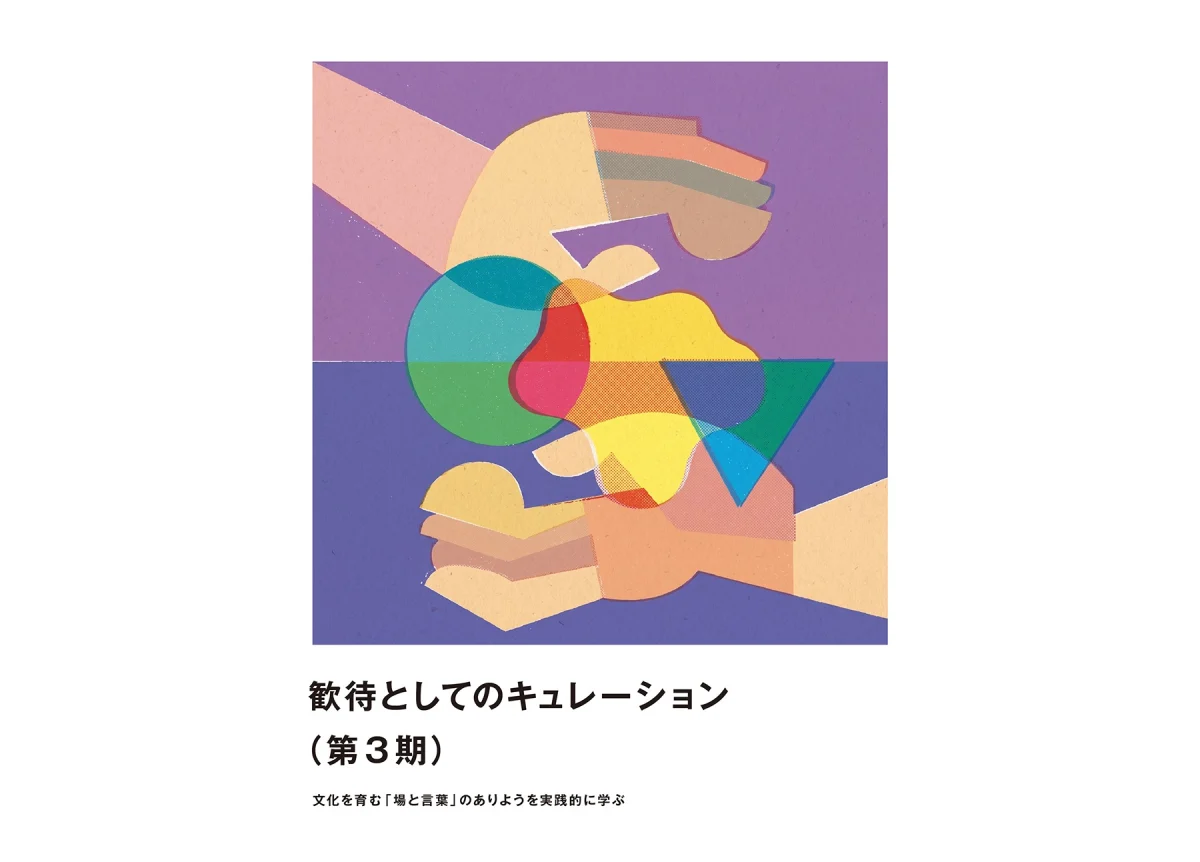
To address these complex contemporary dynamics, GAKU, in collaboration with an extraordinary cohort of artists, curators, researchers, and urban theorists, has announced an expansive, multi-part lecture and workshop series titled "Curating as Hospitality." Running from November 29, 2026, through March 31, 2027, this multidisciplinary program brings together leading cultural practitioners to examine the evolving role of curation across diverse public, semi-public, and institutional spaces.
The series is structured around seven distinct modules, each addressing a specific facet of curation as an ethical, spatial, and social practice. By interrogating the intersections of art, architecture, urbanism, and community organizing, the program seeks to reframe curation not as an exclusive institutional privilege, but as an accessible technology for nurturing human connection and fostering civic imagination.
This comprehensive report provides an in-depth examination of the GAKU Curation Lecture Series (2026–2027), detailing its conceptual foundations, event chronology, participating speakers, thematic metrics, and long-term implications for the future of cultural production and urban living.
Detailed Chronology & Program Structure
The "Curating as Hospitality" series is methodically distributed across a four-month period, unfolding across key cultural venues in Tokyo, including GAKU (located in Shibuya), Shibuya Good Stream, MINA (Museum of Imaginary Narrative Arts), and WWW. Below is the comprehensive chronology of the seven scheduled sessions:
Session 1: Introduction to Curating as Hospitality
- Date & Time: November 29, 2026, 16:30 – 19:30 JST
- Venue: GAKU (Room 303)
- Keynote Speakers: Emma Warren (Author, Journalist, and Researcher), L PACK. (Art Unit), and MINA representatives.
- Focus: Setting the theoretical framework for the entire series, this opening session explores how hospitality can function as a curatorial framework. Speakers will examine historical and contemporary precedents where acts of welcoming strangers into shared spaces transformed urban and cultural dynamics.
Session 2: Sound Systems and Urban Sociality
- Date & Time: December 13, 2026, 16:30 – 19:30 JST
- Venue: GAKU (Room 303)
- Keynote Speakers: Emma Warren, local community organizers, and musicologists.
- Focus: Focusing on the cultural geography of sound systems, this session investigates how underground music spaces, community radio, and DIY venues operate as social infrastructure. Emma Warren will draw upon her extensive research into grassroots music cultures to discuss how sound creates provisional yet durable spaces of belonging.
Session 3: The Ethics of Hospitality in Public Space
- Date & Time: January 11, 2027, 14:00 – 17:00 JST
- Venue: GAKU
- Keynote Speakers: Urban theorists, community activists, and spatial designers.
- Focus: This session addresses the ethical dimensions of welcoming others in increasingly privatized urban environments. Participants will analyze case studies of successful public interventions and discuss how curators can negotiate the boundaries between institutional control and grassroots autonomy.
Session 4: Designing Inclusive Public Infrastructure
- Date & Time: January 17, 2027, 14:00 – 17:00 JST
- Venue: PASS (Shibuya)
- Keynote Speakers: VENT, PASS representatives, and spatial designers.
- Focus: Centered on the physical infrastructure of PASS, this session explores the practical mechanics of designing and maintaining welcoming spaces. Discussions will focus on architectural accessibility, spatial justice, and the logistical challenges of sustaining community-led cultural venues.
Session 5: Food, Community, and Shared Sustenance
- Date & Time: February 1, 2027, 17:00 – 18:30 JST
- Venue: MINA (Museum of Imaginary Narrative Arts)
- Keynote Speakers: L PACK.
- Focus: Exploring the intersection of culinary arts and spatial practice, this session examines how food acts as a primary vehicle for hospitality. L PACK. will discuss their participatory projects that use coffee and communal dining to break down social barriers and foster unplanned encounters.
Session 6: Institutional Hospitality vs. Grassroots Autonomy
- Date & Time: February 7, 2027, 14:00 – 17:00 JST
- Venue: GAKU
- Keynote Speakers: Multi-disciplinary panel of curators, institutional directors, and independent researchers.
- Focus: A critical debate on the tensions between large-scale institutional frameworks and independent, self-organized cultural initiatives. The panel will explore hybrid models of curation that attempt to maintain grassroots vitality within formal institutional settings.
Session 7: Symposium & Manifesto Launch
- Date & Time: March 31, 2027, 10:00 – 12:00 JST
- Venue: WWWβ (Shibuya)
- Keynote Speakers: All participating curators, researchers, and special guests.
- Focus: The culminating event of the series, featuring a comprehensive symposium and the official launch of the "Curating as Hospitality Manifesto." Participants will synthesize the insights gathered across all prior sessions into actionable frameworks for future cultural and urban practices.
Supporting Context & Metrics
To fully understand the significance of the GAKU Curation Lecture Series, it is necessary to examine the socio-spatial context of contemporary Tokyo, particularly the Shibuya district. As one of the world’s most densely populated and rapidly developing urban centers, Shibuya represents both the zenith of hyper-capitalist modernization and a testing ground for alternative urban futures.
Key Metrics and Event Parameters
- Program Duration: November 29, 2026 – March 31, 2027 (4 months)
- Total Modules: 7 distinct thematic sessions
- Core Conveners: GAKU, PASS, MINA, and WWW
- Target Audience: Open to all—from high school students to working professionals, urban designers, artists, and researchers.
- Capacity: Limited to 20 attendees per session to ensure intimate, high-engagement discussions.
- Ticketing Structure: Advance registration required via Peatix; sliding-scale and student-accessible pricing models implemented to ensure socioeconomic diversity.
- Registration Deadline: Ongoing through individual session dates (final registration for the symposium closes March 31, 2027).
The Conceptual Evolution of Curation
Historically rooted in the Latin curare (meaning "to take care of"), curation has undergone a dramatic semantic expansion over the past three decades. Once confined to the preservation and display of objects within museum and archive walls, curation now permeates nearly every facet of contemporary life—from digital content feeds and retail environments to neighborhood activation and social movement building.
However, this ubiquity has also brought about a dilution of meaning. Curation is frequently co-opted as a marketing buzzword, stripping it of its radical potential for civic care and critical dialogue. The GAKU series directly confronts this commodification. By returning to the etymological roots of "care" and "hospitality," the program asks urgent questions: How can curation be a tool for radical inclusion rather than exclusion? How do we design spaces that welcome the stranger without erasing their alterity? And how can cultural workers resist the pressures of hyper- gentrification while remaining economically viable?
Official Statements & Keynote Perspectives
The curatorial framework of the series has been shaped by prominent voices across international cultural landscapes. Below are synthesized perspectives drawn from the lead organizers and key contributors:
GAKU Editorial Board on Spatial Justice
"Curation is not merely about selecting objects; it is about constructing the conditions under which human beings encounter one another. In an era marked by increasing social atomization and the privatization of public space, we must re-engage with curation as an infrastructure of care. This series aims to equip a new generation of cultural practitioners with the critical tools needed to reclaim spatial justice."
Emma Warren on Sound and Sociality
As a leading voice on underground music cultures and community spaces (noted for her authoritative writing on London’s DIY venues and community recording studios), Emma Warren emphasizes the fragility and resilience of physical gathering places.
"Spaces like community-run music venues, DIY recording studios, and neighborhood cafes are the invisible glue of our cities. When we lose them, we lose the capacity for spontaneous human connection. Curating these spaces isn’t just about programming events; it’s about holding open the doors for collective imagination."
L PACK. on Hospitality and Everyday Life
The artist duo L PACK., known for their itinerant coffee installations and participatory spatial interventions, bring a grounded, material approach to the series. Their work explores how simple, everyday rituals—such as sharing a cup of coffee—can transform transient urban spaces into sites of deep civic engagement.
"Hospitality is often misunderstood as polite service. True hospitality is disruptive; it requires us to make space for the uninvited, to listen across differences, and to construct temporary commons where everyone has a stake in the environment."
Future Outlook and Legacy
As urban centers globally grapple with post-pandemic recovery, commercial hyper-gentrification, and the virtualization of social life, initiatives like the GAKU Curation Lecture Series offer a vital counter-narrative. By fostering interdisciplinary dialogue between high school students, veteran curators, urban planners, and artists, the program bridges the gap between academic theory and grassroots practice.
The culmination of the series on March 31, 2027, with the release of the "Curating as Hospitality Manifesto," is intended to serve as an enduring resource for cultural workers navigating the complexities of the 21st-century city. This living document will synthesize case studies, methodological frameworks, and ethical guidelines developed across the seven sessions, providing a practical toolkit for anyone seeking to build more welcoming, equitable, and imaginative public spaces.
Participation and Access
Registration for all sessions is managed digitally via Peatix, with priority given to early applicants due to the strictly limited capacity of 20 participants per session. To support inclusive access, subsidized student rates and sliding-scale contributions are available across all modules. For complete schedule updates, speaker bios, and ticket reservations, interested participants should visit the official GAKU portal and associated venue websites.







Belum ada komentar. Jadilah yang pertama berkomentar!