

Executive Overview
As the digital landscape closes the chapter on another transformative year, YouTube has released its comprehensive end-of-year address to its sprawling global community of creators, artists, and digital entrepreneurs. Authored by platform leadership, the dispatch serves as a vital health check on the video-sharing giant, reflecting a platform experiencing explosive financial and demographic expansion while simultaneously grappling with the immense operational complexities of content governance, regulatory scrutiny, and creator burnout.
Amidst a backdrop of robust metric growth—highlighted by a staggering 65% year-over-year increase in channels surpassing the one-million-subscriber milestone—the platform finds itself at a historical crossroads. The core tensions defining the modern internet are acutely concentrated within YouTube’s ecosystem: how to vigorously protect free expression while aggressively policing hate speech and harassment; how to implement rigorous data privacy standards for children without destabilizing creator revenues; and how to foster an open, democratic platform while satisfying the demands of international regulators. This report provides an in-depth analysis of YouTube’s strategic shifts, detailing policy updates, monetization mechanics, technological upgrades, and the psychological health of the creator economy.

Detailed Chronology: A Year of Strategic Pivots and Platform Evolution
To understand YouTube’s current trajectory, one must examine the systematic rollout of platform updates, policy adjustments, and legislative engagements that defined the calendar year. Rather than deploying sweeping changes overnight, the platform’s product teams executed a methodical, test-driven strategy, launching over 2,500 distinct updates over the preceding twelve months.
[August: Shift in Tone]
   └── Platform issues a dedicated address prioritizing "Openness vs. Responsibility."
         │
[Fall: Copyright & Studio Rollout]
   └── Manual claiming reforms remove financial incentives for short music clips; transition to YouTube Studio intensifies.
         │
[Late Fall: Regulatory Adjustments]
   └── FTC/COPPA settlement compliance initiates sweeping changes for children's content.
         │
[Year-End: Comprehensive Review]
   └── Final letter outlines monetization expansion, gaming policy reforms, and mental health validation.
The Shift Toward Responsibility (August)
Breaking from traditional quarterly recaps, platform leadership published a specialized mid-year letter in August focusing entirely on the delicate equilibrium between openness and platform responsibility. Driven by persistent questions regarding the operational viability of a largely uncurated, open-access platform, this communication laid the philosophical groundwork for the aggressive policy enforcement that would characterize the remainder of the year.
Copyright Reform and the Music Claiming Overhaul
For years, one of the most vociferous complaints from the creator community centered on aggressive manual copyright claiming practices. Rightsholders could previously monetize videos containing fleeting, unintentional, or nominal background music clips, siphoning 100% of the video’s ad revenue regardless of the infraction’s scale.

Addressing this friction point, YouTube implemented crucial structural changes. The platform successfully removed the financial incentives associated with manual claims on very short music segments. Furthermore, it instituted mandatory timestamping for all manual claims, ensuring creators could pinpoint the exact offending frame, and deployed advanced editing tools enabling creators to excise or replace the claimed audio without dismantling the entire video asset.
The Migration to YouTube Studio
Technological modernization took center stage as the platform initiated the phased deprecation of the legacy "Classic Studio." Built upon aging technical architecture that severely bottlenecked rapid bug fixes and feature rollouts, Classic Studio was systematically phased out in favor of the newly engineered YouTube Studio. Featuring a centralized real-time performance dashboard, deeply granular analytics, and creator-requested utilities, the transition paved the way for faster, more agile product development moving into the new decade.
Supporting Context & Metrics: The Maturation of the Creator Economy
Behind the policy debates and interface redesigns lies an undeniably thriving economic engine. The democratization of digital media production has officially matured into a multi-billion-dollar global industry, lifting hundreds of thousands of independent creators into sustainable financial independence.

Financial and Demographic Milestones
The quantitative health of the ecosystem remains remarkably robust. Year-over-year data indicates a 65% surge in the number of channels crossing the coveted one-million-subscriber threshold. More importantly, the financial viability of mid-tier creators has also expanded significantly: the population of independent channels generating five- and six-figure annual incomes has grown by upwards of 40%.
Alternative Monetization and Fan-Creator Economies
While traditional pre-roll and mid-roll advertising remains the bedrock of digital publishing, YouTube’s strategic pivot toward direct-to-consumer fan funding mechanisms yielded dramatic results. Features designed to bridge the transactional and emotional gap between audiences and creators—specifically Super Chat, Channel Memberships, and integrated Merchandise shelves—have fundamentally transformed creator revenue models.
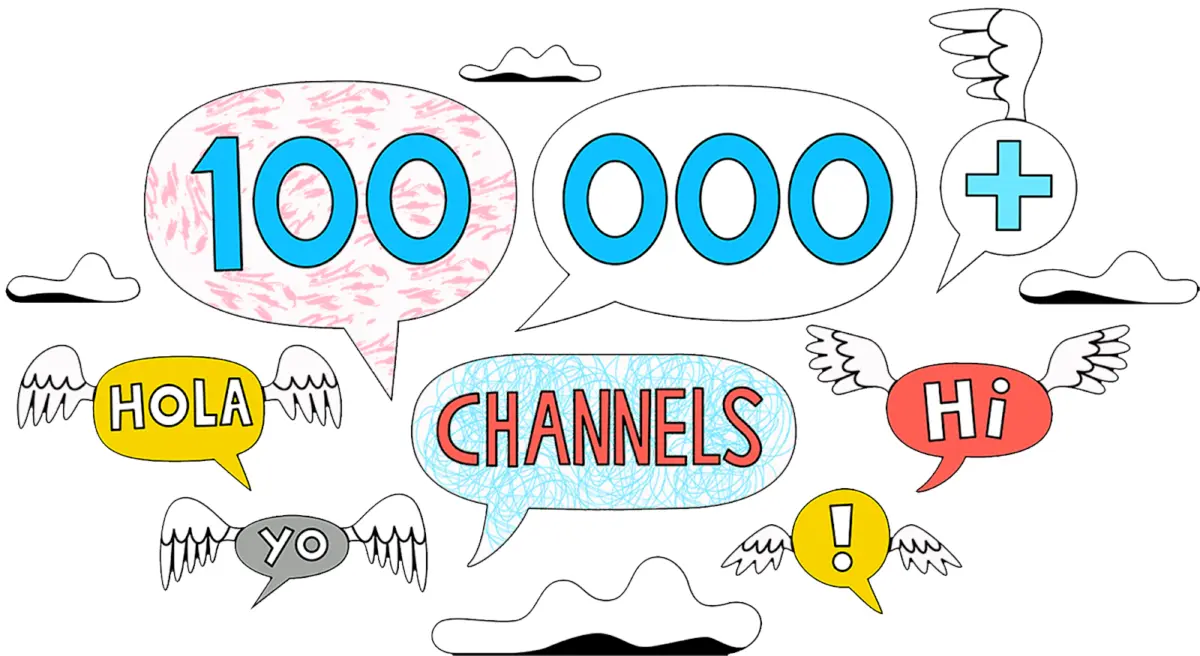
- Super Chat & Super Stickers: Crossing the threshold of over 100,000 participating channels, Super Chat has proven uniquely lucrative during live-stream broadcasts, with top-tier streams pulling in upwards of $400 per minute as fans pay for priority visibility. Capitalizing on this engagement, YouTube announced the international expansion of Super Stickers to eligible creators across 60 countries.
- YouTube Stories as a Growth Vector: Initially launched to foster casual, ephemeral communication, data reveals that Stories serve as a powerful algorithmic discovery tool. Creators utilizing active daily Stories experienced an average 8% higher subscriber growth rate compared to non-adopting peers.
- Bridging the "Edgy" Content Gap: Recognizing that provocative, mature, or complex content—frequently denoted by the dreaded "yellow icon" indicating limited ad suitability—alienated traditional brand safety marketers, YouTube experimented with targeted brand-matching programs. By connecting advertisers interested in mature audiences (such as promoters of R-rated cinematic releases) with suitable creators, the platform successfully generated hundreds of thousands of dollars in new ad revenue for previously marginalized content in its pilot month.
- Gaming Policy Delineation: In a major win for the gaming community, leadership committed to codifying a long-awaited policy distinction between simulated gaming violence and real-world violence, promising significantly relaxed restrictions for gaming content while maintaining uncompromising safety standards against real-world harm.
Official Statements and Internal Findings: Addressing Creator Burnout
Perhaps the most culturally significant segment of the platform’s year-end review centered on the human element of content creation: psychological burnout. For years, the algorithmic pressures of the "content hamster wheel" have forced creators into an unrelenting production cycle, driven by the persistent fear that taking a hiatus would trigger algorithmic penalization and audience attrition.

Debunking the Hiatus Myth
In response to widespread, vulnerable admissions of burnout from top-tier creators, platform product teams took the unprecedented step of conducting an empirical audit of channel performance data spanning six years. Analyzing millions of channels across hundreds of different break durations, the data yielded a universally reassuring conclusion: On average, channels that took time off experienced higher viewership upon their return than they commanded immediately prior to their departure.
[Creator Takes a Break]
       │
[Audience Anticipation & Algorithmic Refresh]
       │
[Channel Returns: Viewership Rises Above Pre-Break Baseline]
This data-driven revelation fundamentally challenges the prevailing industry anxiety, serving as official institutional validation that audience loyalty is anchored to the individual creator, not an uninterrupted, daily upload schedule.
Transparency in Product Development
Acknowledging creator frustration regarding unannounced platform experiments, leadership committed to radically overhauling its communication pipeline. Explaining that every feature deployment is rigorously tested across three to four variations—resulting in over 2,500 distinct updates over the course of a single year—the platform pledged to provide advance notice and deep contextual insights into why specific interface or algorithmic modifications are being tested.

Future Outlook: Regulatory Horizons, COPPA, and Article 17
As YouTube looks toward the future, the platform’s executive leadership is actively engaging with international policymakers, regulatory bodies, and legislative architects to shape the legal frameworks governing the next era of the internet.
Navigating COPPA and the FTC Settlement
The most immediate operational disruption facing creators involves compliance with the U.S. Federal Trade Commission (FTC) and the New York Attorney General regarding the Children’s Online Privacy Protection Act (COPPA). With the implementation of mandatory audience-setting designations identifying content targeted at children, creators face a seismic shift. Effective early in the new year, content designated as "made for kids" will automatically forfeit user-data-dependent features, including personalized advertising and public comment sections. Leadership has pledged ongoing support documentation to help creators navigate this complex legal transition.
The Global Battle Over Article 17
On the international stage, European regulatory landscapes continue to dominate strategic planning. Following intensive advocacy efforts by creators and platform executives alike—which successfully secured vital liability protections during the drafting phase of the European Union’s Copyright Directive (formerly Article 17)—the battleground has shifted to national parliaments.

As individual EU member states draft local legislation to implement Article 17, YouTube is actively pairing local creators with government regulators. The goal is to demystify the creator economy, illustrating how heavy-handed automated filtering mandates could inadvertently shutter independent digital businesses. Furthermore, the platform plans to transition its internal Self-Certification pilot—which empowers trusted creators to pre-rate their own ad compliance—to hundreds of thousands of YouTube Partner Program (YPP) members globally.
Philanthropy and Community Impact
Concluding on an optimistic note, leadership celebrated the extraordinary philanthropic mobilization of the creator ecosystem, specifically highlighting the unprecedented success of the #teamtrees environmental campaign spearheaded by creators MrBeast and Mark Rober. With the global community rallying to plant 20 million trees, YouTube announced that its native Donate button—currently in a closed beta phase—will soon expand to thousands of U.S. creators (with international rollouts to follow), allowing digital humanitarians to embed live fundraising campaigns directly into their video streams and premieres.
Conclusion
YouTube’s end-of-year address paints the portrait of an enterprise managing colossal growing pains. By marrying hard-nosed regulatory compliance with empathetic concessions toward creator mental health and robust technological modernization, the platform is attempting to future-proof its ecosystem. Whether these delicate balances can be maintained in an increasingly litigious and heavily regulated global digital economy will define the platform’s trajectory for the decade to come.





Belum ada komentar. Jadilah yang pertama berkomentar!