

Executive Overview
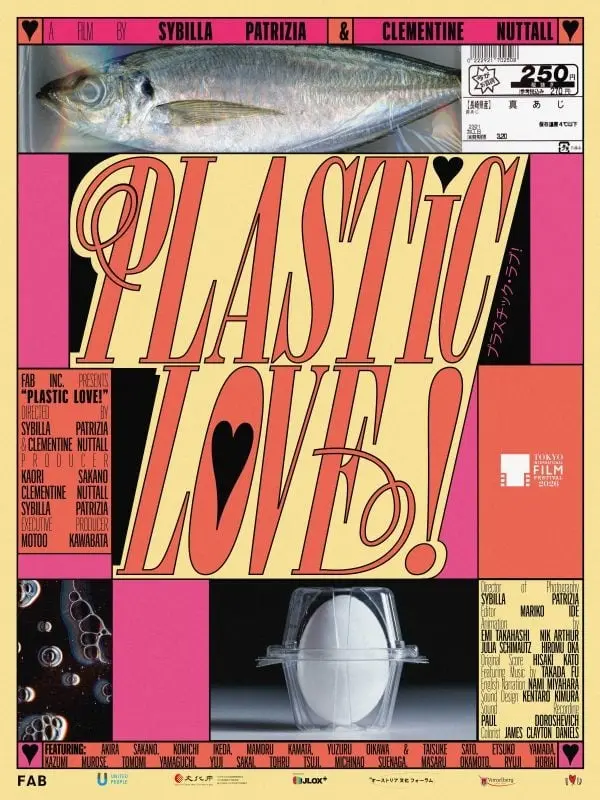
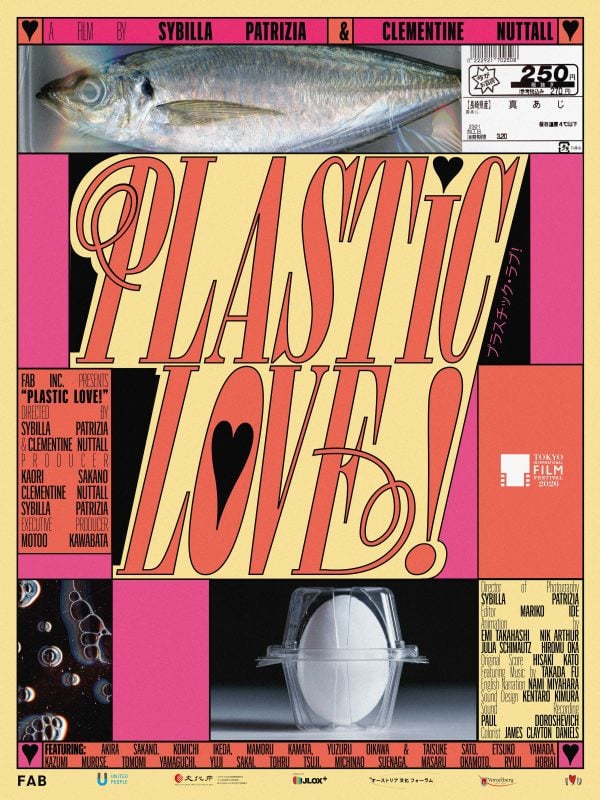
Plastic has woven itself into the very fabric of modern existence. It protects our food, extends shelf lives, cushions fragile items, and litters our household bins, often leaving consumers bewildered by hyper-specific municipal recycling codes and segregated disposal directives. It is this ubiquitous material—and the psychological, cultural, and industrial grip it maintains on contemporary society—that takes center stage in Plastic Love!, a documentary feature making waves at the 2026 Tokyo International Film Festival. Directed by the collaborative filmmaking duo Sybilla Patrizia and Clementine Nuttall, the 84-minute film sets out to dissect Japan’s notorious fascination with meticulous packaging while interrogating whether the nation’s hyper-efficient waste systems hold a viable blueprint for a post-plastic future.
Yet, despite its pop-infused aesthetic and ambitious conceptual scope, Plastic Love! ultimately walks a difficult tightrope between environmental critique and cultural portraiture. Boasting an ensemble cast that features Nami Miyahara, Akira Sakano, Komichi Ikeda, Mamoru Kamata, Yuzuru Oikawa, Taisuke Sato, Etsuko Yamada, and Kazumi Murose, the film relies on a vignette-driven structure to capture how various corners of Japanese society grapple with synthetic waste. From municipal incinerator plants burning mountains of refuse to traditional artisans keeping lacquerware alive, the documentary presents a rich tapestry of micro-perspectives.
However, as a piece of investigative filmmaking, it stumbles when attempting to move beyond localized observations. Rather than offering concrete, scalable solutions to a borderless environmental crisis, the film occasionally lapses into familiar preachiness, acting more as an aesthetically polished cautionary disclaimer than a roadmap for systemic change. While documentary enthusiasts and cinephiles will undoubtedly find much to admire in its immaculate framing and tight editorial pacing, policy-minded viewers searching for actionable insights into global waste reduction may leave the theater wanting.
Detailed Chronology & Cinematic Breakdown
Spanning an 84-minute runtime, Plastic Love! eschews a traditional linear narrative in favor of a thematic, multi-prefecture mosaic. Directors Sybilla Patrizia and Clementine Nuttall open the film with a vivid, high-energy montage that highlights the sensory overload of Japanese consumer culture—where convenience stores wrap individual bananas in film, and pristine pastries are sealed within triple-layered plastic enclosures. This pop-infused introduction sets an ironic tone, establishing the central paradox: a society that prizes hyper-cleanliness and aesthetic perfection is simultaneously choking on the very materials required to maintain it.
As the documentary progresses through its episodic vignettes, the chronology shifts rhythmically between grassroots education, industrial processing, and historical craftsmanship. In the early acts, the camera follows dedicated refuse collectors and civic educators as they attempt to make the arduous process of recycling engaging for young children. These scenes offer a fascinating glimpse into Japan’s early-education philosophy regarding civic responsibility, showing how the next generation is conditioned to view waste sorting not merely as a chore, but as a community obligation.
Midway through the runtime, the tone pivots sharply from the educational to the industrial. The audience is taken inside high-capacity incinerator plants where towering mechanical claws churn through endless seas of discarded single-use plastics. Workers at these facilities operate against a backdrop of roaring combustion chambers, offering stark testimony regarding the sheer volume of synthetic waste generated on a daily basis. These sequences provide some of the film’s most arresting visual motifs, contrasting the sterile, brightly colored consumer goods of the supermarket shelf with the apocalyptic, fiery realities of municipal waste disposal.
In its final third, Plastic Love! retreats from the industrial scale to examine traditional heritage. The narrative spotlights master craftsmen—such as those represented by cast members like Kazumi Murose—who continue to produce sustainable, lacquer-based tableware and wooden implements. These segments serve as a nostalgic reminder of a pre-plastic era, suggesting that traditional Japanese craftsmanship offers a philosophical antidote to throwaway culture. Yet, as the documentary draws to a close, this rapid succession of vignettes struggles to coalesce into a cohesive grand conclusion, leaving the audience suspended between modern industrial guilt and ancient artisanal idealism.
Supporting Context & Metrics: The Global Plastic Crisis Meets Japanese Consumerism
To fully grasp the thematic weight of Plastic Love!, one must contextualize Japan’s relationship with plastic within the broader framework of global environmental degradation. Japan consistently ranks among the world’s highest per capita generators of single-use plastic packaging, a reality driven by a deeply ingrained cultural obsession with product hygiene, tamper-proofing, and pristine presentation. In urban centers like Tokyo and Osaka, the convenience store—or konbini—serves as the epicenter of this packaging paradox, where virtually every item is cocooned in protective synthetic layers designed to appeal to the consumer’s eye.
At the same time, Japan boasts one of the most sophisticated waste management infrastructures in the world. Municipalities frequently demand that citizens sort their refuse into upward of 47 distinct categories, often requiring plastic bottles to have their labels removed, caps separated, and interiors thoroughly rinsed before disposal. While this system achieves remarkably high rates of thermal recycling (where plastic is burned to generate energy) and mechanical recycling, critics and environmental scientists argue that these downstream measures treat symptoms rather than the root cause.
Plastic Love! touches upon these systemic realities but often hesitates to interrogate the macro-economics driving them. For instance, while the film celebrates the exquisite durability of wooden and lacquer tableware produced by traditional artisans, it stops short of examining the economic viability of scaling such alternatives to replace billions of industrial packaging units. Asking modern global consumers to return to handcrafted lacquer bowls is an appealing romantic notion, but it fails to address the logistical demands of a globalized supply chain. Furthermore, the sheer burden of Japan’s hyper-complex sorting mandates—while locally manageable—risks alienating international populations if proposed as a universal template, as the psychological and physical friction of managing dozens of waste categories often leads to widespread compliance fatigue.
Production Craft, Cinematography, and Critical Reception
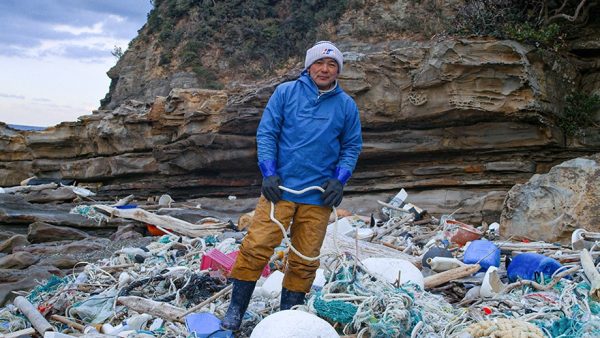
From a purely formal standpoint, Plastic Love! is an undeniable triumph of contemporary documentary craft. Directors Sybilla Patrizia and Clementine Nuttall have constructed a film that is visually arresting from its opening frame to its closing credits. The cinematography utilizes a rich, saturated palette that mirrors the hyper-colored nature of the consumer products it scrutinizes. Every shot—whether capturing the sterile, fluorescent glow of a Tokyo convenience store aisle or the earthy, muted tones of a countryside woodworking studio—is composed with meticulous precision.
The editing, executed with sharp geometric timing, ensures that the film maintains a brisk momentum despite its heavy subject matter. Transitions between disparate prefectures and subjects are handled with fluid grace, keeping the viewer intellectually engaged. However, this editorial pacing is occasionally a double-edged sword; the rapid-fire succession of vignettes rarely affords the audience sufficient time to absorb the emotional or sociological weight of the scenarios being presented.
Moreover, the film’s sonic and narrative layers encounter occasional turbulence. While the visual language is sophisticated, the voiceover narration has drawn mixed reviews from critics, occasionally striking a stilted or overly didactic tone. Rather than allowing the observational footage to speak for itself, the narration leans into heavy-handed lecturing about the well-documented harms of plastic pollution—a point that felt urgent a decade ago, but in 2026 risks feeling redundant to audiences already saturated with environmental messaging.
Despite these narrative shortcomings, the underlying artistry of Patrizia and Nuttall’s direction secures the film a respectable three-star rating across multiple critical metrics. It stands as a testament to the power of documentary aesthetics, even when the underlying thesis struggles to map out a clear path toward global salvation.
Future Outlook: Where Do We Go From Here?
As Plastic Love! finishes its run on the international festival circuit, it leaves behind a complicated legacy that mirrors our current environmental impasse. The documentary succeeds brilliantly as a cultural snapshot of a nation wrestling with its own contradictions, highlighting the tension between the comforting tactile familiarity of plastic packaging and the catastrophic ecological footprint it leaves behind.

Yet, the central question posed by the film’s synopsis—whether Japan’s packaging obsession holds the key to escaping a plastic-wrapped future—remains frustratingly unanswered. By focusing predominantly on localized remediation, traditional craftsmanship, and municipal sorting rituals, the film sidesteps the macroeconomic transformations required to fundamentally alter global manufacturing lines. Biodegradable polymers, circular supply chain mandates, and corporate accountability measures receive little to no substantive interrogation within the runtime.
For industry stakeholders, policymakers, and environmental activists, Plastic Love! serves as both an inspiration and a warning. It demonstrates that cultural attitudes toward packaging are deeply entrenched and cannot be legislated away overnight through bureaucratic sorting rules alone. Moving forward, the conversation must evolve past localized consumer guilt and municipal incineration metrics. True systemic escape from our plastic-wrapped future will require a coordinated marriage of Japanese civic discipline, industrial redesign, and uncompromising global policy—a holistic synthesis that Plastic Love! brilliantly visualizes, but ultimately leaves for others to build.






Belum ada komentar. Jadilah yang pertama berkomentar!