

Executive Overview
In popular music culture, elaborate fan theories function as modern folklore. From the enduring myth of Paul McCartney’s untimely demise and replacement in the Beatles to contemporary digital rabbit holes, audiences have long sought hidden layers within the oeuvres of their favorite artists. Among modern alternative rock acts, few bands have cultivated an environment as fertile for such speculation as Radiohead. Known for their intricate arrangements, abstract lyricism, and reclusive public profile, the British outfit has consistently invited deep analytical engagement from its listener base.
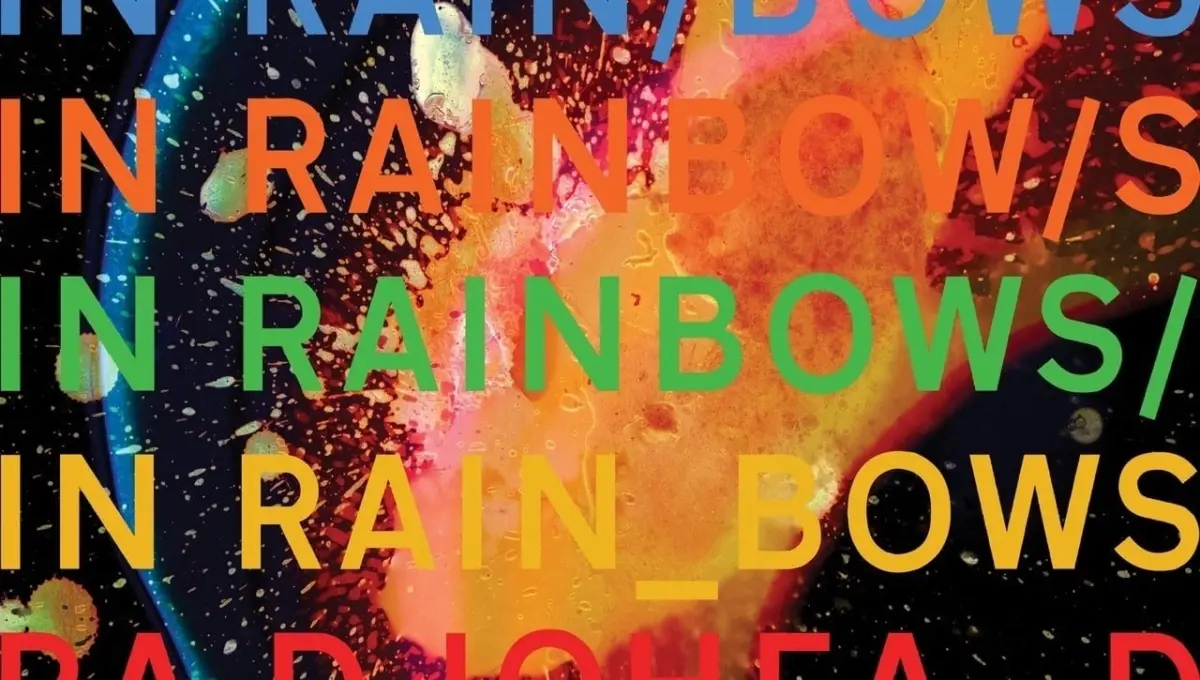
One such legend to capture the imagination of the band’s devotees in recent years is the "Binary Theory." First articulated by journalist Kevin Flick shortly after the 2007 release of In Rainbows, this hypothesis posits a profound, structural link between the band’s landmark 1997 breakthrough, OK Computer, and their self-released seventh studio album a decade later. According to the theory, the two records—representing the binary digits 01 and 10—can be seamlessly woven into a single, alternating playlist that reveals a secret, grand design orchestrated by the band.
While a rigorous musicological and numerological examination reveals that the Binary Theory ultimately collapses under its own weight—much like the Paul Is Dead myth before it—it serves as a compelling lens through which to view modern fan culture. This article investigates the mechanics of the Binary Theory, weighs its evidence against hard facts, and explores how Radiohead’s unique artistic and marketing strategies purposefully foster this climate of interpretive devotion. By examining the cognitive, psychological, and commercial frameworks at play—drawing upon principles of scarcity, reciprocation, and social identity theory—we can understand why fans relentlessly seek out a "jigsaw falling into place" long after the music has stopped playing.
Detailed Chronology: Radiohead’s Riddles and the Evolution of Fan Lore
Radiohead’s journey from alternative rock radio mainstays to untouchable avant-garde icons has been marked by a deliberate retreat from conventional promotional machinery. Following global acclaim with OK Computer (1997), the band systematically dismantled standard industry expectations. With subsequent releases like Kid A (2000) and Amnesiac (2001), they bypassed traditional singles in favor of animated internet "blips," hidden CD booklet art, and shifting sonic paradigms.
This penchant for ambiguity is deeply woven into their videography and musical composition:
- "Just" (1995): The music video features a man mysteriously lying on a pavement, surrounded by increasingly frantic onlookers who eventually lie down beside him. To this day, the director refuses to reveal the character’s final whispered confession, turning an unresolved narrative into a permanent fixture of fan folklore.
- "Pyramid Song" (2001): Musically and metrically ambiguous, this track features a veiled 4/4 time signature and a palindromic 3-3-4-3-3 rhythm. Music theorist Brad Osborn has noted how its structural geometry mirrors the physical dimensions of a pyramid, complete with a transpositional variant of the famous BACH musical cipher.
- "Daydreaming" (2016): Employing classic backmasking techniques reminiscent of the Beatles, the track features a reversed audio snippet toward its conclusion, which fans have interpreted as a poignant tribute to the passing of Thom Yorke’s long-term partner, Rachel Owen.
Against this historical backdrop of ciphers, hidden booklets, and thematic riddles, the release of In Rainbows in October 2007 arrived as fertile ground for new myth-making. Eschewing a physical rollout, the band offered the album online via an unprecedented "pay-what-you-want" digital download model. Within weeks, listener communities began searching for deeper numerological and structural codes, giving birth to the Binary Theory.
Supporting Context & Metrics: Testing the Binary Theory
The core premise of the Binary Theory rests on the alleged ubiquity of the number ten surrounding In Rainbows. Kevin Flick’s original formulation highlighted several coincidences:
- The Lead-Up: The album’s announcement was allegedly preceded by cryptic messages featuring the Roman numeral "X," and the album was officially announced exactly ten days prior to its digital release on October 10, 2007.
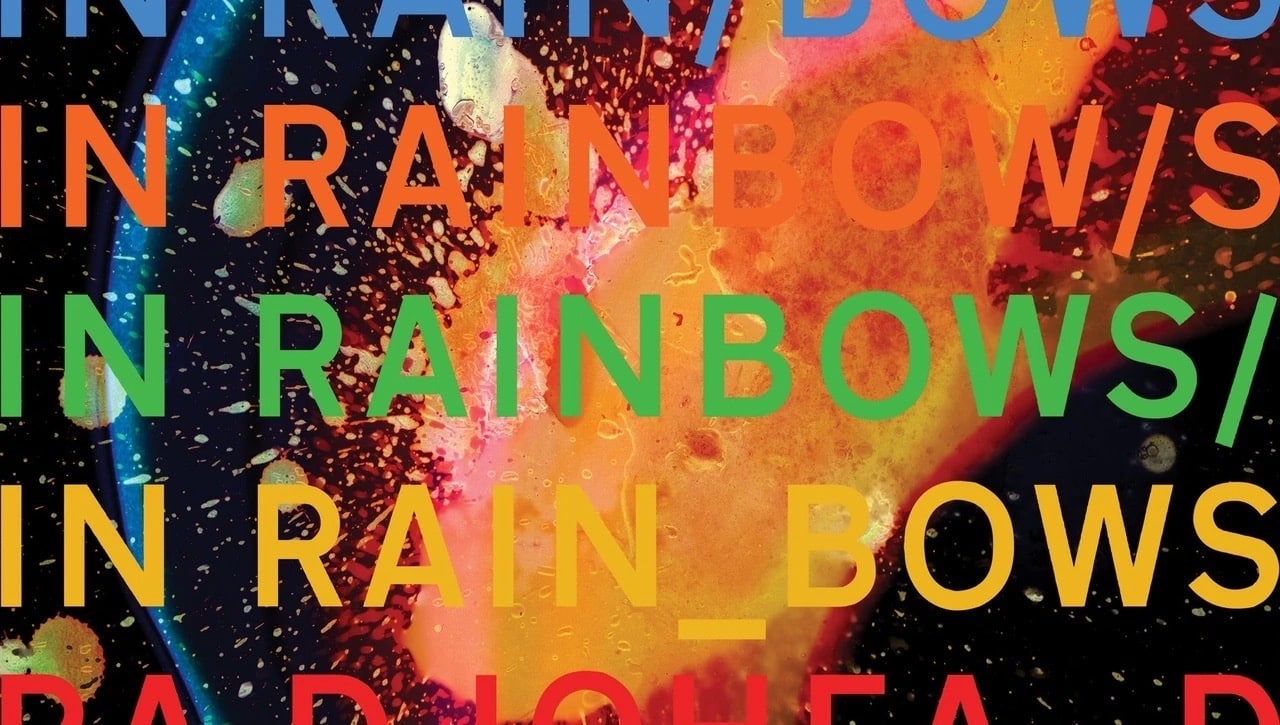
- The Numerology: The album title contains ten letters; the vowel layout on the album cover typography resembles the digits "1" and "0"; and the tracklist consists precisely of ten songs.
- The Binary Bridge: Connecting OK Computer (working Ones and Zeroes) to In Rainbows yields 01 and 10, the foundational binary code pair.
Flick argued that this numerical logic was intended to produce a complementary, alternating tracklist—beginning with OK Computer’s opening track, "Airbag," and concluding with In Rainbows’ closing track, "Videotape."
[OK Computer: 01] -- Airbag
      ↓
[In Rainbows: 10] -- 15 Step
      ↓
[OK Computer: 01] -- Paranoid Android (or alternative flow)
      ... [Alternating Playlist Continues] ...
      ↓
[In Rainbows: 10] -- Videotape
Where the Theory Breaks Down
Despite the smooth, reverb-laden transitions that occur when stitching select tracks together—such as the metronome pulse bridging "Airbag" to "15 Step"—closer inspection reveals major structural fractures:
- Track Count Discrepancies: Alternating OK Computer’s 11 tracks with In Rainbows’ 10 tracks creates an imbalance. To force the sequence to work, theorists must conveniently exclude OK Computer’s spoken-word interlude, "Fitter Happier."
- Chronological Inaccuracies: Claims regarding simultaneous release dates fail; OK Computer dropped on May 21, 1997, while In Rainbows arrived a decade later on October 10, 2007. Furthermore, archival blog traces show only eight cryptic teaser images—not nine—undermining the numerical build-up.
- Lyrical and Musical Gaps: There are no direct lyrical allusions or intentional cross-references between the two records. While songs like "Nude" originated during the OK Computer writing sessions, Radiohead is famous for recycling and incubating archival material across decades—evidenced by "Burn the Witch" and "True Love Waits" sitting in live rotation for years before finding homes on A Moon Shaped Pool (2016).
Furthermore, the existence of competing fan theories—such as the Golden Ratio Theory, which claims the title In Rainbows is sung in the backing vocals of "Reckoner" at the exact mathematical division point of the album’s runtime—highlights the malleable nature of numerological fanaticism. As music psychologist studies suggest, when a listener is fixated on a pattern, cognitive confirmation bias ensures they will find it, regardless of contradictory empirical evidence.
Official Statements: The Band’s Playful Evasion
Rather than issuing formal denials, members of Radiohead have consistently met the Binary Theory with a mixture of humor, bemusement, and theatrical coyness, feeding the very mythos they decline to validate.
When questioned about the validity of the Binary Theory in interviews, drummer Phil Selway offered a characteristic dodge:
"I’m sure that there must be. No smoke without fire… I feel like the custodian of Radiohead secrets here."
Frontman Thom Yorke has been similarly playful, acknowledging the fan base’s elaborate imaginations while gently puncturing their absolute authority:
"There’s one about… ‘ten’ comes up a lot. […] Every time […] I get asked about it, […] I say, ‘Oh, yes, absolutely! We thought of all that.’ Yes. […] [The fans are] usually slightly wrong. […] I think it’s nice that people are interested enough to come up with all these mad ideas."
Guitarist Ed O’Brien struck a similar chord regarding alternative mathematical hypotheses, noting of the Golden Ratio theory: "I love that [theory]. It […] says that you get to the heart of the record right in the middle of ‘Reckoner’. […] Which is true, but […] it wasn’t deliberately done like that, obviously."
These responses illustrate a sophisticated media literacy on the part of the band. By refusing to offer definitive, clinical closures to fan theories, Radiohead preserves the aura of mystery essential to their brand identity.
Future Outlook: Enigmatic Marketing and the Psychology of Fandom
How do theories like the Binary Theory survive in the face of logical counter-evidence? The answer lies at the intersection of consumer psychology and modern music marketing.
1. The Principle of Scarcity and the Paradox of Choice
As Robert Cialdini outlines in Influence, humans are intensely motivated by potential loss and perceived scarcity. By breaking traditional release cycles, withholding music from streaming platforms for years, and utilizing cryptic social media alter-egos like "Chieftain Mews," Radiohead combats the modern digital malaise of market oversaturation. According to Barry Schwartz’s "paradox of choice," overwhelming consumer options lead to cognitive fatigue. Radiohead’s curated scarcity positions them as an exclusive entity, reducing cognitive load and inviting deep, focused engagement.
2. The Rule of Reciprocity and Participatory Culture
Radiohead’s experiments—from the pay-what-you-want In Rainbows model to publishing open-source audio stems for The King of Limbs (2011) and launching fan video contests—actively invite listener participation. Cialdini’s rule of reciprocity dictates that when an artist provides novel, unexpected value, fans feel psychologically compelled to "repay" that gesture through intense devotion, community building, and active creative output, such as crafting theoretical playlists.
3. Social Identity and Continuity Theory
Drawing upon Henri Tajfel’s Social Identity Theory, participating in fan communities forms a vital pillar of an individual’s self-concept. Theories like the Binary Theory are not merely passive analytical exercises; they are social glue. They allow isolated listeners to feel part of an elite intellectual collective. Continuity theory suggests that these enduring connections to a beloved band provide a stable sense of personal identity across decades of life.
Conclusion
As Radiohead navigates its ongoing hiatus—with members pursuing side projects like The Smile, film scores, and solo records—the appetite for archival excavation remains insatiable. The Binary Theory may not hold up to strict musicological scrutiny, but its endurance is a testament to the symbiotic relationship between visionary artists and an engaged audience. In an era where algorithmic transparency threatens to strip music of its magic, fan theories serve as a vital, creative counter-narrative—proving that sometimes, the collective act of searching for meaning is far more powerful than the destination itself.







Belum ada komentar. Jadilah yang pertama berkomentar!