

Executive Overview
Fifty years after Sylvester Stallone first pulled on the taped-up boxing gloves of a low-level Philadelphia enforcer, the Rocky franchise remains an immovable pillar of cinematic history. What began as a desperate, low-budget gamble against the Hollywood studio system evolved into a multi-generational cultural phenomenon, spawning nine films, reshaping the sports-drama genre, and cementing Stallone as one of the most resilient creative forces in the history of motion pictures.
The enduring legacy of Rocky is currently experiencing a profound cultural renaissance. This revitalization is fueled not only by the ongoing success of the Creed legacy-sequels—which transitioned the narrative focus to the son of his former rival, Apollo Creed—but also by the heightened interest surrounding Peter Farrelly’s biographical film, I Play Rocky, which chronicles Stallone’s grueling real-life crusade to bring his screenplay to the silver screen.
Critics and audiences alike have long debated the definitive qualities of the greatest cinematic franchises, yet Rocky occupies a rare tier. It balances raw escapism with resonant emotional depth, outliving the critical snobbery of its early decades to emerge as a masterclass in audience manipulation, thematic variance, and sheer, unrelenting grit. As viewers continue to revisit the saga—particularly during the holiday season—the fundamental question persists: Is Rocky the most rousing, emotionally resonant franchise in the history of cinema?
Detailed Chronology: From Rags to the Ring and Beyond
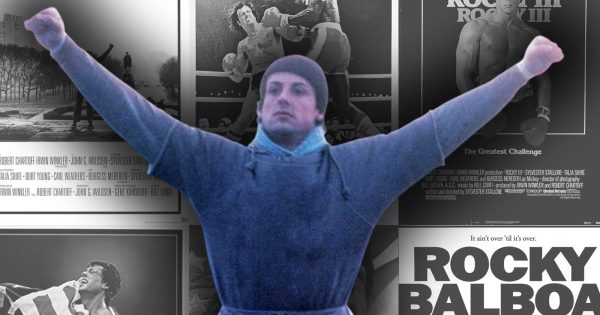
To understand the scope of the Rocky universe, one must trace its trajectory from an independent triumph in 1976 to a sweeping cinematic tapestry that spans half a century.
[1976: Rocky] ──> [1979: Rocky II] ──> [1982: Rocky III] ──> [1985: Rocky IV]
                                                                    │
[2023: Creed III] <── [2018: Creed II] <── [2015: Creed] <── [2006: Rocky Balboa] <── [1990: Rocky V]
1. The Genesis and the Miracle (1976)
Written by an essentially destitute Sylvester Stallone, who famously refused to sell his script unless he was permitted to star as the title character, Rocky was produced on a shoestring budget of roughly $1.07 million. Directed by John G. Avildsen, the film became an unprecedented box office juggernaut, grossing over $225 million worldwide. At the 49th Academy Awards, the underdog film defied industry expectations by winning Best Picture, Best Director, and Best Editing, while earning Stallone dual nominations for Best Actor and Best Original Screenplay.
2. The Golden Sequels and Theatrical Peak (1979–1985)
- Rocky II (1979): Stallone stepped behind the camera for the first time as director, crafting a direct continuation that satisfied audiences yearning for a definitive rematch between Balboa and Apollo Creed. The emotional anchor—cemented by Talia Shire’s iconic "Win" plea—solidified the franchise’s formula.
- Rocky III (1982): Introducing Mr. T as Clubber Lang, this installment shifted the franchise toward heightened 1980s theatricality while delivering a devastating emotional blow with the death of Mickey Goldmill (Burgess Meredith), set to Survivor’s immortal anthem, "Eye of the Tiger."
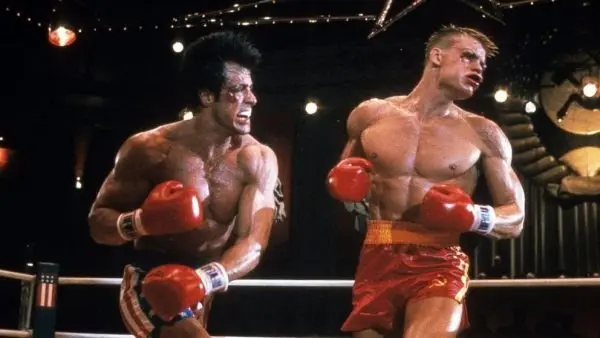
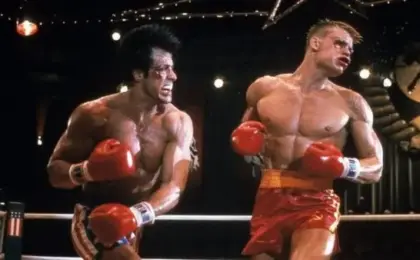
- Rocky IV (1985): Peak Cold War cinema. Stallone pitted his hyper-muscularized hero against the towering Soviet machine Ivan Drago (Dolph Lundgren). Driven by Vince DiCola’s pulsating synth-heavy score and iconic training montages, it remains the highest-grossing film in the original franchise run.
3. The Misstep and the Melancholic Return (1990–2006)
- Rocky V (1990): Directed by original helmer Avildsen, the fifth film attempted to bring Rocky back to his gritty, street-level roots after financial ruin. While heavily criticized at the time for its tonal shifts and weak antagonist plotting, retrospective reappraisals have highlighted emotional high points, including poignant flashbacks featuring Burgess Meredith’s Mickey.
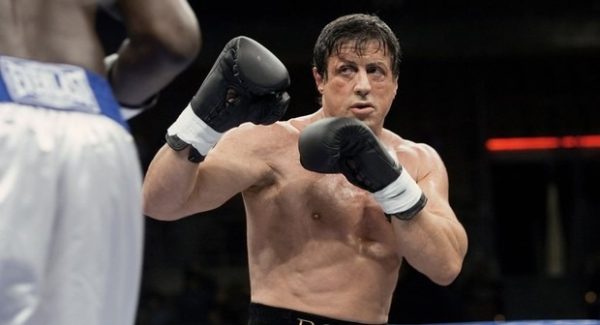
- Rocky Balboa (2006): Sixteen years after seemingly hanging up his gloves, Stallone returned as director and star for a quietly heartbreaking elegy. An aging, widowed Rocky steps back into the ring for an exhibition match, delivering profound reflections on grief, aging, and the persistent internal fire that refuses to die.
4. The Creed Era and Legacy Reimagining (2015–Present)
- Creed (2015): Directed by Ryan Coogler, this spin-off breathed fresh life into the intellectual property by casting Michael B. Jordan as Adonis Creed, with an older Balboa serving as trainer and mentor. The performance earned Stallone his second career Academy Award nomination.
- Creed II (2018) & Creed III (2023): Continuing the legacy without Stallone in the director’s chair (and with Stallone stepping back from the screen in the third installment), the franchise proved that the thematic architecture built by Stallone could be safely adapted and modernized by visionary new filmmakers.
Supporting Context & Metrics: The Anatomy of a Cultural Titan
The longevity of the Rocky franchise is not merely a byproduct of nostalgia; it is anchored in hard numbers and a precise structural formula.

- Box Office Dominance: Across nine theatrical releases, the Rocky and Creed universe has grossed in excess of $1.7 billion globally, making it one of the most financially reliable sports franchises in motion picture history.
- Critical Reappraisal: While contemporary critics in the 1980s occasionally dismissed sequels like Rocky III and Rocky IV as populist escapism compared to "high-brow" cinema of the era (such as Taxi Driver or Network), modern film scholarship has aggressively reevaluated these entries. Scholars now praise their rhythmic editing, mythic storytelling, and stylistic bravura.
- The Narrative Variance Engine: Stallone engineered a narrative architecture where each sequel introduced a distinct thematic conflict rather than lazily repeating the beats of its predecessor:
- Rocky: Proving self-worth ("Going the distance").
- Rocky II: Family responsibility and pride.
- Rocky III: Coping with complacency and loss of hunger.
- Rocky IV: Man versus machine / geopolitical tension.
- Rocky V: Bankruptcy, brain trauma, and surrogate fatherhood.
- Rocky Balboa: Grief, legacy, and aging.
┌────────────────────────────────────────────────────────┐
│              THE ROCKY THEMATIC SPECTRUM               │
├──────────────────┬─────────────────────────────────────┤
│ Film             │ Core Narrative Theme                │
├──────────────────┼─────────────────────────────────────┤
│ Rocky            │ Self-worth & "Going the Distance"   │
│ Rocky II         │ Family Responsibility & Pride       │
│ Rocky III        │ Complacency vs. Hunger              │
│ Rocky IV         │ Man vs. Machine / Geopolitics       │
│ Rocky V          │ Financial Ruin & Surrogate Legacy   │
│ Rocky Balboa     │ Grief, Aging, & Emotional Closure   │
│ Creed Series     │ Generational Trauma & Identity      │
└──────────────────┴─────────────────────────────────────┘
Official Statements and Industry Reflections
The cultural resonance of the franchise has frequently been articulated by its creator and the wider Hollywood establishment. Reflecting on the harrowing pre-production struggles of the 1976 original—where he slept in the New York Port Authority bus terminal and briefly hadaris sold his dog, Butkus, out of financial desperation—Stallone has often emphasized that Balboa’s perseverance was autobiographical.
"People asked me why I didn’t take the money and walk away from the script," Stallone recounted in various interviews and his recent memoir, The Steps. "They were offering life-changing cash for a guy who had ninety dollars in the bank. But if I had sold the script and watched someone else play Rocky, I would have hated myself for the rest of my life. Rocky was me. We were fighting the same fight."
Peter Farrelly, director of the biographical drama I Play Rocky, noted the universal appeal of Stallone’s stubborn vision during promotional rounds:
"Sylvester Stallone’s refusal to compromise wasn’t arrogance; it was survival. The story of how that movie got made is the ultimate embodiment of the character it birthed. You cannot separate the man from the myth."
Critical re-evaluations have similarly shifted. Renowned film historians have increasingly cited Stallone’s prowess as a writer-director, emphasizing his innate ear for working-class cadence, colloquial philosophy, and emotionally punchy dialogue that resonates just as powerfully out of context on modern digital platforms as it does within the narrative flow of a feature film.
Future Outlook: Will the Italian Stallion Rise Again?
As the Creed universe continues to expand under the stewardship of Michael B. Jordan—with Creed IV currently in active development—the horizon for the broader franchise remains bright. However, questions linger regarding the physical return of the franchise’s patriarch.
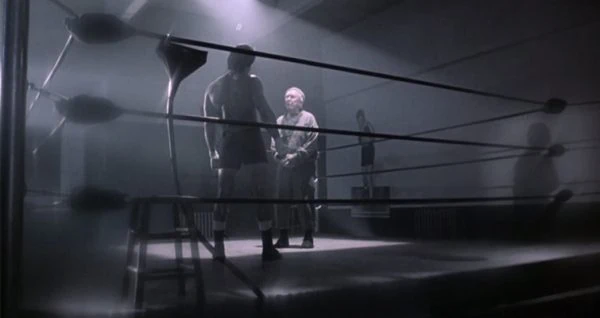
Stallone has repeatedly hinted in recent years that he harbors ideas for yet another chapter centering specifically on Rocky Balboa. While creative control of the Creed offshoot has largely passed to a new generation of filmmakers, Stallone’s enduring creative footprint ensures that any future installment will be measured against the high standard he established fifty years ago.
Furthermore, the mainstream success of Peter Farrelly’s I Play Rocky cements the franchise’s meta-narrative status. Audiences are no longer just invested in the fictional bouts fought inside the squared circle of the Spectrum or the Las Vegas arenas; they are equally captivated by the real-world grit of a struggling actor who refused to stay down when Hollywood threw its heaviest punches.
As long as human beings respond to stories of perseverance against insurmountable odds, Sylvester Stallone’s battered, big-hearted underdog will continue to answer the bell.



Belum ada komentar. Jadilah yang pertama berkomentar!