

Executive Overview
There are few culinary experiences quite as universally comforting as a bowl of freshly prepared, handmade pasta. From the delicate, meticulously folded folds of tortellini from Emilia-Romagna to the rustic, thumb-indented orecchiette of Puglia, handmade pasta represents an apex of domestic gastronomy. Yet, this ancient art form stands at a precarious crossroads. In an era dominated by hyper-convenience, pre-packaged grocery aisles, and increasingly frantic modern lifestyles, the traditional craft of handmade pasta is quietly fading—even within the sun-drenched kitchens of Italy.
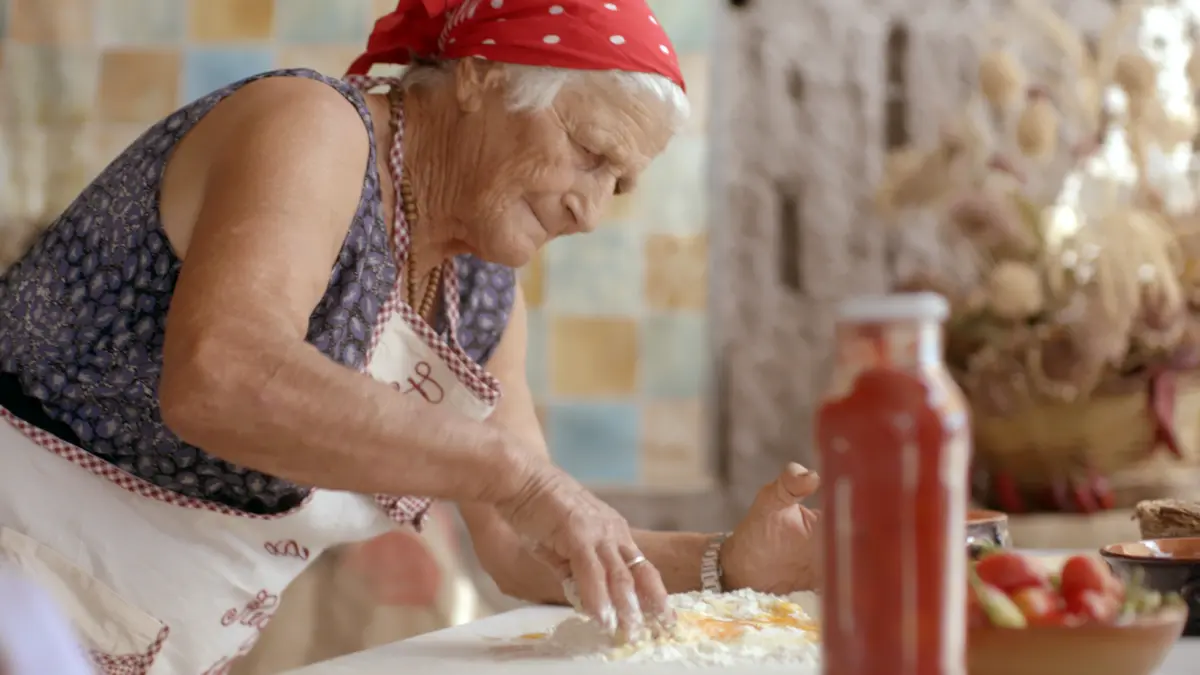
Enter Pasta Grannies, a globally celebrated digital media phenomenon and cultural archive founded by British food writer, author, and producer Vicky Bennison. What began as a modest YouTube channel five years ago has blossomed into an international movement, a literary success, and a vital digital repository of intangible cultural heritage. By crisscrossing the Italian peninsula, Bennison and her camera crew step past the threshold of commercial restaurants and into the private, time-worn kitchens of Italy’s matriarchs—affectionately known as nonnas.
These women, many of whom have been rolling dough by hand for nearly a century, are not merely demonstrating recipes. They are passing down deeply guarded regional techniques, familial secrets, and centuries-old culinary wisdom to a global audience hungry for authenticity. More than a simple cooking tutorial, Pasta Grannies operates as an anthropological lifeline. It bridges generational divides, ensures that rare regional specialties avoid extinction, and leverages the democratizing power of YouTube to give a global voice to women whose stories might otherwise have remained confined to their local villages.
This in-depth report explores the genesis of Pasta Grannies, the mechanics of its cultural preservation, the socio-economic factors threatening traditional Italian cooking, and the profound impact of digital platforms on safeguarding global gastronomy for future generations.
Detailed Chronology: From Concept to Global Phenomenon
To understand the meteoric rise of Pasta Grannies, one must examine the timeline of its evolution—a journey driven by curiosity, journalistic tenacity, and the unexpected synergy between rural tradition and digital technology.
The Genesis: Recognizing a Vanishing World (Pre-2015)
Long before launching the YouTube channel, Vicky Bennison was immersed in the culinary and cultural landscape of Italy. As a seasoned food writer and author, she spent considerable time living in Le Marche, a picturesque yet often overlooked region nestled between the Apennine Mountains and the Adriatic Sea. During her time there, Bennison observed a quiet demographic and cultural shift.
She noticed that elderly Italian women—grandmothers who possessed an encyclopedic, muscle-memory-driven knowledge of pasta-making—were aging, and their grandchildren were increasingly detached from the laborious rituals of the kitchen. Modern conveniences, changing labor markets, and the ubiquity of industrial food production meant that centuries of accumulated culinary knowledge were on the verge of dying out with the passing generation. Bennison realized that no comprehensive, intimate visual archive existed to capture these women not as professional chefs, but as domestic artisans working in their natural habitats.
Launching the Digital Archive (2015–2017)
In 2015, armed with a camera, a deep respect for Italian culture, and a distinct lack of traditional broadcasting backing, Bennison officially launched the Pasta Grannies YouTube channel. The premise was deceptively simple: locate remarkable older women across Italy, visit them in their home kitchens, and film them making their signature pasta dishes from scratch.
The early days of the channel were characterized by a raw, unpolished authenticity. There were no high-budget studio kitchens, no professional food stylists, and no scripted banter. Instead, viewers were treated to the genuine sounds of whistling pressure cookers, barking neighborhood dogs, and the rhythmic, hypnotic thwack of a rolling pin (mattarello) hitting a wooden pastry board.
Viewers watched elderly women with flour-dusted aprons explain, often exclusively in regional dialects or heavily accented Italian, why the weather affected their dough or how their mothers had taught them to pinch agnolotti during wartime. Slowly, organically, a digital community began to coalesce. Food enthusiasts from New York to Tokyo found themselves mesmerized by hands that looked like topographical maps of lived experience effortlessly transforming flour and water into edible art.
Mainstream Breakthrough and Diversification (2018–2020)
As subscriber counts ticked upward, the cultural significance of Pasta Grannies attracted the attention of mainstream media, literary agents, and global brands. The channel evolved from a passionate side project into a fully realized media enterprise.
In 2019, Bennison published the Pasta Grannies cookbook through Hardie Grant, a milestone that translated the digital experience into a physical, highly coveted collector’s item. The book was not merely a collection of recipes; it was a companion piece to the videos, featuring lush photography, biographical portraits of the nonnas, and deep dives into the socio-historical contexts of Italy’s culinary micro-regions. The book became an international bestseller, cementing Bennison’s project as an authoritative voice in contemporary food culture.
Concurrently, the YouTube channel’s production values subtly matured while retaining their intimate core. Collaborations, special field trips to remote mountain hamlets, and anniversary specials expanded the scope of the channel. The audience base transformed from a niche group of Italophiles into a massive, diverse global community spanning millions of subscribers.
The Pandemic Resurgence and Cultural Permanence (2020–Present)
When the COVID-19 pandemic swept the globe in 2020, locking populations indoors and sparking an unprecedented global renaissance in home baking and comfort cooking, Pasta Grannies achieved new heights of cultural relevance. Millions of locked-down citizens turned to the channel not just for culinary instruction, but for emotional comfort, connection, and a vicarious escape to the sun-baked hills of Tuscany, the rugged coasts of Calabria, and the misty valleys of the north.
In recent years, platforms like YouTube have recognized the profound cultural impact of the channel, documenting the behind-the-scenes reality of how Bennison scouts her subjects and manages the logistics of filming elderly matriarchs across remote Italian terrains. Today, Pasta Grannies stands as a masterclass in how digital platforms can be weaponized not for superficial clout, but for the preservation of human heritage.
Supporting Context & Metrics: The Anatomy of a Cultural Movement
To fully grasp the magnitude of Pasta Grannies, one must analyze the quantitative metrics of its reach alongside the qualitative sociological factors threatening Italian foodways.
The Sociological Threat: Why Traditional Pasta is Endangered
Italy is internationally renowned for its gastronomy, yet the domestic reality of food preparation has undergone radical shifts over the past half-century. According to cultural anthropologists and agricultural economists, several factors contribute to the decline of traditional home cooking in Italy:
- Urbanization and Demographic Shifts: Younger generations have largely migrated from rural villages (paesi) to urban centers like Milan, Rome, and Turin for employment, breaking the multi-generational co-living households where culinary knowledge was traditionally passed down through daily osmosis.
- The Time Deficit: Modern Italian work culture has evolved. With both parents frequently working long hours outside the home, the hours-long ritual of making pasta from scratch on a weekday has become an unsustainable luxury.
- The Rise of Industrial Convenience: Supermarkets stocked with inexpensive, factory-produced dried pasta and vacuum-sealed fresh pasta have made home production economically and temporally redundant for many time-poor households.
- The Aging Population: Italy boasts one of the oldest median populations in the world. As the generation born before and during World War II passes away, an irreplaceable library of unwritten, experiential culinary data risks vanishing entirely.
Digital Metrics and Engagement
While traditional academic institutions struggle to archive oral histories and localized craft traditions, YouTube has provided an agile, infinitely scalable alternative. Consider the operational footprint of Pasta Grannies:
- Global Audience: The channel commands an enthusiastic subscriber base numbering in the hundreds of thousands, with individual videos frequently pulling in millions of views.
- Geographic Reach: Viewers tune in from over 190 countries, proving that the universal language of food transcends linguistic and cultural boundaries.
- Demographic Diversity: Far from appealing only to older demographics, the channel enjoys a massive following among Gen Z and Millennial home cooks who are actively seeking tactile, screen-free hobbies and authentic connections to the past.
- Archival Volume: Over five years, Bennison and her team have documented well over 300 distinct nonnas, cataloging regional variations of pasta that do not exist in commercial recipe books.
Official Statements & Philosophical Insights
The success of Pasta Grannies is anchored in a clear, unwavering philosophy articulated by its founder and validated by the platform that champions it.
Vicky Bennison on the Mission of Preservation
Vicky Bennison has consistently emphasized that the project is fundamentally about human dignity, women’s labor, and cultural legacy rather than mere entertainment. In reflections on her work, Bennison highlights the profound technological irony and triumph of using a modern, Silicon Valley-born video platform to preserve ancient, agrarian traditions:
"YouTube is just the most fantastic way for these women to pass on their skills and traditions to their grandchildren, their great-grandchildren, and the rest of the world."
Bennison has frequently noted that older women in rural societies have historically been rendered invisible—relegated to the domestic sphere without formal recognition for the immense economic and cultural labor they perform. Pasta Grannies upends this dynamic by thrusting these matriarchs into the global spotlight, celebrating their expertise with the reverence typically reserved for Michelin-starred executive chefs.
Furthermore, Bennison points out the emotional resonance of the videos for the nonnas’ own families:
"Often, the grandchildren are too busy with their modern lives to sit down and learn the exact measurements or the subtle wrist flick required to shape a perfect corzetti. Through our films, those grandchildren now have a permanent digital heirloom. They can watch their grandmother working long after she is gone, hearing her voice and seeing her hands create magic."
The Platform Perspective: Why YouTube Invested in the Story
Recognizing the unique cultural intersection of rural tradition and cutting-edge digital media, YouTube dispatched documentary crews to Italy to shadow Vicky Bennison and meet the nonnas firsthand. The initiative underscored YouTube’s evolving role not merely as an entertainment hub, but as a critical global archive for human culture.
Platform executives and media analysts have pointed to Pasta Grannies as a prime example of "creator-led preservation"—a phenomenon where passionate individuals leverage digital tools to achieve what traditional, heavily funded institutional archives often fail to do: engage a massive, global, participatory audience in real-time. By supporting creators who focus on heritage, craft, and education, digital platforms help sustain micro-communities and cultural practices that might otherwise succumb to the homogenizing forces of globalization.
Future Outlook: The Legacy and Evolution of Pasta Grannies
As Pasta Grannies looks toward the future, its mission is expanding beyond the confines of weekly YouTube uploads and bestselling cookbooks. The project represents a blueprint for how cultural heritage can be sustained in the 21st century.
Expanding the Archive and Geographical Scope
While Italy remains the spiritual and physical heartland of the brand, the appetite for authentic, matriarchal culinary traditions is truly global. Food historians and fans alike frequently speculate on the potential expansion of the Pasta Grannies model to other culinary cultures facing similar threats of erasure—from the vanishing noodle-making techniques of rural China to the complex, hand-ground maize traditions of indigenous Mexican communities. While Bennison remains deeply focused on the infinite micro-regions of Italy—where every valley seems to boast a shape of pasta found nowhere else on Earth—the foundational philosophy is infinitely portable.
Educating the Next Generation of Gastronomes
The ultimate metric of success for Pasta Grannies is not view counts, book sales, or silver play buttons, but behavioral change. Across social media, hashtags inspired by the channel show thousands of young home cooks proudly displaying their misshapen ravioli, flour-covered countertops, and hand-rolled pici.
By demystifying the process and stripping away the intimidation factor associated with professional Italian cooking, the nonnas have empowered a new generation to view cooking not as a chore, but as an act of meditation, cultural appreciation, and love.
Conclusion
In an age where artificial intelligence, automated food production, and digital detachment threaten to distance humanity from the physical realities of what we consume, Pasta Grannies offers a grounding, radical counter-narrative. It reminds us that culture is not stored merely in museums or academic journals; it lives in the muscle memory of an 85-year-old woman’s hands in a stone kitchen in Basilicata.
Through the unlikely marriage of elderly Italian matriarchs and global video streaming, Pasta Grannies has ensured that the flour-dusted wisdom of the past will continue to shape the kitchens of the future.







Belum ada komentar. Jadilah yang pertama berkomentar!