

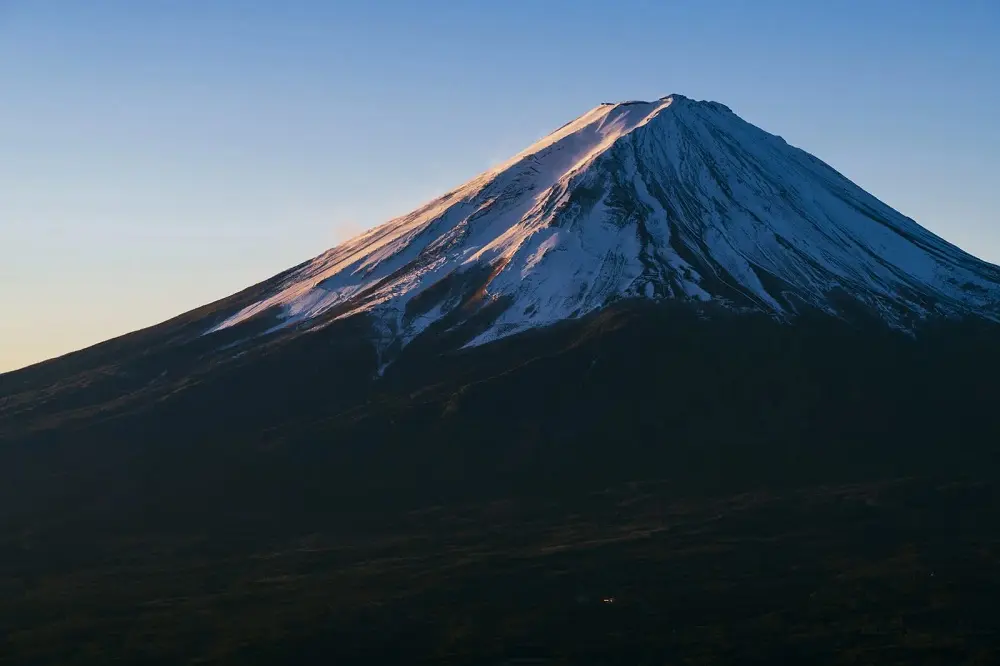
Executive Overview
August 20 proved to be a stark demonstration of compromised judgment and the severe physical toll exacted by Japan’s highest peak. While local authorities and international media outlets were already parsing the harrowing details of a separate incident involving a 7-year-old boy abandoned on the mountainside by his father, another high-altitude emergency was quietly unfolding on the iconic slopes of Mt. Fuji.
A 33-year-old German national, visiting Japan to experience the majesty of its most famous mountain, had to be rescued by emergency personnel after suffering a severe recurrence of altitude sickness. Her ordeal highlights a growing trend of foreign and domestic tourists underestimating the unforgiving environmental realities of Mt. Fuji, often ignoring early physiological warning signs in a relentless pursuit of the summit.
The hiker’s journey—marked by an overnight medical intervention, a questionable pre-dawn ascent, and a mechanized rescue via mountain bulldozer—underscores the critical strain placed on local emergency services. It also reignites a pressing public safety debate regarding self-regulation among climbers, the adequacy of current advisory warnings, and the point at which personal ambition must defer to basic medical survival.
Detailed Chronology: The Anatomy of a Mountaintop Emergency
Phase 1: Ascent and the Onset of Symptoms (August 19)
The sequence of events began on the morning of August 19, when the 33-year-old German hiker, accompanied by a traveling companion, commenced her trek up the Fujinomiya Trail. As one of the primary routes leading to the summit of Mt. Fuji, the Fujinomiya Trail is known for its steep and direct incline.
The pair started their journey at the trail’s fifth station, situated at an elevation of approximately 2,400 meters (7,874 feet). For the first several hours, the climb progressed as planned. However, as hikers ascend Mt. Fuji, the drop in atmospheric pressure and decreasing oxygen levels present profound physiological challenges, even for individuals in good physical condition.
By the afternoon, having reached the eighth station at an elevation of 3,250 meters (10,663 feet)—a vertical gain of over 850 meters in just a few hours—the woman began exhibiting classic, unmistakable symptoms of acute mountain sickness (AMS). These symptoms included dizziness, profound fatigue, and acute nausea. Recognizing that she could no longer safely proceed upward without medical evaluation, she sought help at the eighth station’s operational medical center. Following a professional medical examination, the severity of her condition necessitated immediate intervention, leading the party to secure accommodations in a nearby mountain hut to rest through the night.
Phase 2: The Push to the Summit (August 20)
Despite having experienced symptoms severe enough to warrant a medical check and an overnight layover at high altitude, the hiker made the fateful decision to continue her journey. In the pre-dawn hours of August 20, before the sun had even broken over the horizon, she re-entered the trail system.
Her goal was the summit, an additional vertical ascent of 526 meters. According to official guidelines provided by the Mt. Fuji Climbing Official Website, this final stretch under optimal conditions typically demands roughly two hours of strenuous exertion.
Operating in sub-optimal physical condition and fighting against the thin air of the upper reaches, the German tourist successfully pushed through the fatigue and reached the peak. While she achieved her objective of standing at the apex of Japan, her physical reserves were entirely depleted. The triumph of reaching the top was immediately overshadowed by a catastrophic physical collapse.
Phase 3: Collapse and the Rescue Operation
Whether the resurgence of her symptoms began during the final leg of the ascent or immediately upon turning around for the descent remains officially unclarified; however, her condition deteriorated rapidly on her way back down.
She managed to retrace her steps down to the eighth station, the exact same medical center where she had sought help the previous afternoon. By this time, her condition was acute. She felt so profoundly unwell and physically incapacitated that medical personnel at the station deemed it entirely unsafe for her to attempt the remainder of the descent under her own power.
Recognizing the escalating risk of systemic shock or pulmonary complications, the attending physician contacted the Shizuoka Prefectural Police. A detachment of their specialized mountain rescue team, stationed nearby at the ninth station, was dispatched to the scene. Due to the rugged terrain and the patient’s acute incapacitation, rescuers utilized a mountain bulldozer—a specialized heavy vehicle employed for logistics and emergency transport on the volcano’s slopes—to safely convey the woman down to the fifth station.
Upon reaching the fifth station, where the trail intersects with the vehicular road network, she was transferred directly into the custody of waiting paramedics. She was subsequently transported to a regional hospital for comprehensive medical examination, stabilization, and treatment.
Supporting Context & Metrics: The Reality of Mt. Fuji’s Environment
To fully understand the gravity of the German hiker’s situation, one must examine the unique geographical and environmental factors that transform Mt. Fuji from a picturesque cultural symbol into a hazardous high-altitude wilderness.
Altitude and Physiological Stress
Standing at 3,776 meters (12,388 feet), Mt. Fuji is not among the tallest mountains in the world, but its sheer isolation and the speed with which climbers ascend make it a frequent trap for altitude-related illnesses. Acute Mountain Sickness typically begins to manifest in susceptible individuals at elevations above 2,500 meters.
- Fifth Station (Fujinomiya Route): 2,400 meters (7,874 feet) – The gateway for most climbers, where the body first begins to register reduced barometric pressure.
- Eighth Station: 3,250 meters (10,663 feet) – The critical threshold where oxygen availability drops to roughly 70% of sea-level values, significantly increasing the incidence of severe AMS, HAPE (High-Altitude Pulmonary Edema), and HACE (High-Altitude Cerebral Edema).
- The Summit: 3,776 meters (12,388 feet) – An environment where atmospheric oxygen is roughly two-thirds of that at sea level, leaving even elite athletes winded and vulnerable to cognitive impairment.
A Pattern of Preventable Incidents
This rescue is far from an isolated anomaly. Mt. Fuji has seen a worrying frequency of high-profile rescue operations driven by poor risk assessment. Just one month prior, local headlines were dominated by the rescue of a 99-year-old Japanese woman who required emergency intervention while attempting to conquer the peak. When combined with concurrent incidents—such as the aforementioned case of a 7-year-old boy left stranded by his father on the same day—a disturbing portrait of modern tourism on the mountain emerges.
Climbers frequently treat Mt. Fuji as a tourist attraction rather than a serious alpine climb. The accessibility of the mountain, heavily promoted globally, creates a false sense of security that shatters the moment extreme weather, exhaustion, or altitude sickness sets in.
Official Statements and Institutional Warnings
In the wake of the German tourist’s evacuation, the Shizuoka Prefectural Police released an authoritative statement addressing the incident. Re-emphasizing a core safety mantra that authorities have been forced to repeat with growing frequency, the police department reminded all prospective hikers of a fundamental rule of mountaineering: if a climber feels any genuine concern regarding their physical condition while on the trail, they must immediately abort their ascent.
The statement underscores a profound disconnect between institutional health advisories and the personal decision-making processes of climbers. While the exact details of the initial medical examination at the eighth station on August 19 remain confidential, the timeline raises serious questions. It remains publicly unconfirmed whether the woman’s decision to press on to the summit on the morning of August 20 was made in direct defiance of medical advice, or if she chose to ignore the clear warning sign her body had already provided.
Rescue coordinators and mountain guides point out that needing to halt an ascent to seek professional medical intervention and spend the night in an alpine refuge is not merely an inconvenience—it is an unambiguous biological warning. When the human body forces a shutdown at 3,250 meters, it is signaling an inability to acclimatize properly. Ignoring this signal in favor of reaching a summit is widely regarded by alpine specialists as a high-risk gamble with potentially fatal consequences.
Future Outlook: Protecting Climbers and Preserving Safety
As local municipalities, Yamanashi and Shizuoka prefectures, and law enforcement agencies grapple with record-breaking visitor numbers, incidents like the one involving the 33-year-old German hiker are prompting serious structural reviews of how Mt. Fuji is managed.
The Push for Enhanced Pre-Trip Education
Emergency services and tourism boards are increasingly recognizing that physical readiness must be matched by psychological and logistical preparation. Future management strategies are expected to lean heavily on mandatory pre-trip safety briefings, digital awareness campaigns targeting international tourists, and clearer multi-lingual signage at all major trailheads.
Educating foreign visitors—who may come from flat terrain or low-altitude environments and possess little to no alpine experience—is now a paramount logistical challenge for Japanese authorities.
Re-evaluating Trail Medical Infrastructure
The presence of medical centers at stations like the eighth station proved vital in preventing a medical emergency from escalating into a fatality. However, the recurring need to rescue individuals who return to these stations only to collapse again after attempting further ascents suggests that medical staff may need stronger enforcement powers.
Currently, medical personnel can diagnose and treat, but they rely heavily on the voluntary compliance of exhausted or stubbornly ambitious hikers. Discussions are ongoing among local stakeholders regarding whether medical professionals should be empowered to formally "ground" a hiker, issuing mandatory descent orders when physiological markers indicate a severe risk to life and health.
Conclusion
The rescue of the German tourist from the slopes of Mt. Fuji serves as both a cautionary tale and a stark reminder of the laws of nature. Mountains do not negotiate with ambition, and altitude sickness does not care about bucket lists. As Japan’s sacred peak continues to draw millions of pilgrims and thrill-seekers from around the globe, the paramount lesson from the events of August 20 is clear: the true measure of a successful climb is not merely reaching the summit, but living to tell the tale—and knowing when the mountain has commanded you to turn back down.








Belum ada komentar. Jadilah yang pertama berkomentar!