

Executive Overview
The landscape of content creation, live streaming, and professional remote collaboration has evolved at a blistering pace over the past half-decade. What was once a niche hobby dominated by enthusiastic amateurs using basic 720p peripherals has matured into a multi-billion-dollar global industry. Creators today face fierce competition, and audience expectations regarding audio-visual fidelity have skyrocketed. Viewers no longer tolerate washed-out colors, grainy low-light performance, or stuttering frame rates.
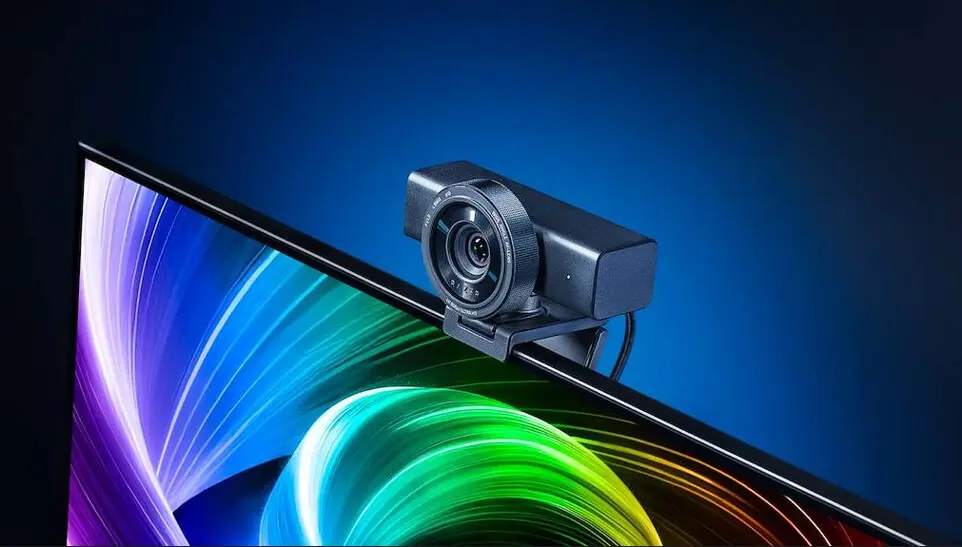
To bridge the quality gap between consumer-grade webcams and expensive, complex digital single-lens reflex (DSLR) or mirrorless camera setups, gaming and creator lifestyle giant Razer has announced its latest flagship peripheral: the Razer Kiyo V2 Pro.
Positioned squarely at the intersection of professional-grade imaging and plug-and-play convenience, the Kiyo V2 Pro aims to redefine what is possible in a standalone USB camera. Its headline features include native 4K ultra-high-definition recording at a buttery-smooth 60 frames per second, anchored by a state-of-the-art Sony STARVIS 2 sensor engineered specifically to conquer difficult low-light environments. Combined with sophisticated software-driven auto-framing, comprehensive HDR support, and a versatile mounting ecosystem, this new hardware release signals Razer’s intent to capture the wallets of elite streamers, virtual presenters, and digital creators who demand cinematic clarity without the technical headaches of an interchangeable lens ecosystem.
This comprehensive report provides an in-depth breakdown of the Razer Kiyo V2 Pro. We will examine its core specifications, dissect its technological innovations, explore its software ecosystem, evaluate its pricing and global availability, and contextualize its arrival within the broader trajectory of the digital content creation market.
Detailed Chronology of the Release and Feature Breakdown
The announcement of the Razer Kiyo V2 Pro represents the culmination of years of iterative development within Razer’s streaming hardware division. The original Kiyo popularized the ring-light webcam concept, while subsequent iterations pushed resolution boundaries. With the V2 Pro, Razer has shifted its focus away from built-in physical lighting rings—recognizing that professional creators prefer controlled studio lighting or softboxes—and redirected all engineering efforts toward absolute optical excellence and sensor performance.
1. Optical Excellence: 4K at 60fps and the Sony STARVIS 2 Sensor
At the absolute core of the Kiyo V2 Pro is its imaging pipeline. For years, webcams forced a painful compromise: users could either stream at a high frame rate (such as 1080p at 60fps) for smooth motion or sacrifice fluidity for high resolution (4K at a sluggish 30fps). The Kiyo V2 Pro obliterates this bottleneck by delivering crisp 4K resolution at a true 60 frames per second. This ensures that fast-moving hands, rapid gaming reactions, or animated presenters remain remarkably fluid, eliminating the jarring judder associated with lower frame rates.
Powering this high-resolution, high-frame-rate capture is the Sony STARVIS 2 sensor. Originally developed for high-end security and surveillance applications where low-light clarity is a matter of absolute necessity, the STARVIS 2 sensor boasts vastly improved pixel architecture, superior quantum efficiency, and drastically reduced noise levels. For streamers who prefer late-night gaming sessions with moody RGB room lighting rather than blinding studio lamps, this sensor acts as a game-changer. It pulls in significantly more ambient light, rendering deep shadows cleanly while preventing highlights from blowing out.
2. Wide-Angle Field of View and Dynamic Auto-Framing
To accommodate diverse physical setups—ranging from cramped gaming dens to sprawling, minimalist podcasting desks—the Kiyo V2 Pro is equipped with a custom-engineered 86-degree wide-angle lens. While wide-angle lenses are notorious for creating fish-eye distortions at the edges of a frame, Razer has implemented advanced optical and software corrections to keep geometric distortion under strict control, ensuring straight lines remain straight and faces retain their natural proportions.
Furthermore, the webcam leverages intelligent software algorithms to provide dynamic pan, tilt, and zoom (PTZ) capabilities. When enabled, the camera can track the user’s movements within the frame, smoothly adjusting the crop to keep them centered even if they lean back, stand up, or shift positions during a passionate broadcast. This mimics the effect of a dedicated camera operator without requiring any manual intervention.
3. Intelligent Exposure and High Dynamic Range (HDR)
Lighting inconsistencies can ruin an otherwise flawless broadcast. Sunlight shifts behind clouds, overhead room lights flicker, and monitor glow fluctuates depending on what is on screen. To combat this, Razer has integrated One-Click Image Enhancement, an automated system that instantly recalculates and adjusts exposure, white balance, and noise reduction on the fly.
For scenes with extreme contrast—such as a creator sitting in front of a bright window or a high-contrast gaming monitor—the Kiyo V2 Pro features Ultra-High Dynamic Range (HDR) processing. HDR captures multiple exposures simultaneously and blends them into a single, balanced video stream. This preserves delicate details in bright highlights (like windowpanes or white clothing) while simultaneously lifting details out of dark shadows (like hair strands or clothing folds), resulting in a balanced, professional-looking image right out of the box.
For advanced users who prefer absolute control over their visual branding, Razer includes a comprehensive suite of manual adjustments. Creators can dive into the software to fine-tune exact color profiles, sharpness levels, contrast ratios, and ISO limits to match their unique aesthetic.
4. Software Integration via Camo Pro
Hardware is only as good as the software driving it. To unlock the full potential of the Kiyo V2 Pro, Razer has bundled access to Camo Pro, a robust third-party webcam control application. Camo Pro serves as the command center for the device, providing intuitive sliders for the aforementioned auto-framing features, advanced image adjustments, and device routing. While Razer’s announcement did not explicitly specify the exact duration of the bundled Camo Pro subscription—leaving open the possibility of a tiered or time-limited trial—the inclusion of the software ensures that users have access to professional-grade controls immediately upon unboxing.
5. Physical Hardware Design: Mounting and Privacy
Beyond pixels and sensors, physical ergonomics play a critical role in daily creator workflows. The Kiyo V2 Pro is housed in a sleek, professional chassis that sits securely on a universal pivoting mount. This mount is engineered to clamp effortlessly onto the top bezel of virtually any standard computer monitor or laptop screen, while also featuring a standard tripod threading at the base. This dual-compatibility grants creators the absolute freedom to position the camera directly above their display, off to the side on a desk stand, or mounted high on a studio boom arm for unique overhead angles.
Privacy and security are paramount in modern home and office environments. Addressing concerns over unauthorized camera access, Razer has integrated a twist-operated physical privacy shutter directly into the camera housing. With a simple manual twist, a mechanical barrier slides across the lens, offering undeniable peace of mind that the camera is physically blocked when not in use—superseding software kill switches that can theoretically be bypassed by sophisticated malware.
Supporting Context, Metrics, and Market Positioning
Pricing and Global Availability
At the time of its global launch, the Razer Kiyo V2 Pro carries a recommended retail price of US$299.99 / €319.99. It is available immediately through official channels, including Razer.com, physical RazerStores, and selected authorized online and brick-and-mortar retail partners worldwide.
However, regional rollouts vary. As of the time of writing, Razer has not yet announced an official local price for the Malaysian market, nor has it named specific local retail partners who will carry the device in the region. Malaysian creators and tech enthusiasts will likely need to monitor local distributors or consider authorized regional import channels as inventory scales up globally.
The Evolution of the Creator Hardware Ecosystem
To fully appreciate the significance of the Kiyo V2 Pro, one must analyze the macroeconomic trends shaping the creator economy. According to various digital media analytics firms, the global live-streaming market continues to expand exponentially, driven by platforms like Twitch, YouTube Live, TikTok, and corporate virtual conferencing tools like Zoom and Microsoft Teams.
Historically, creators faced a stark binary choice:
- Budget Webcams ($50–$100): These devices typically max out at 1080p, utilize small, noisy sensors that struggle in anything less than studio-grade lighting, and offer zero optical flexibility.
- Mirrorless/DSLR Setups ($800–$2,000+): These systems deliver breathtaking cinematic quality with shallow depth of field, but they require purchasing a camera body, an expensive lens, a dummy battery to prevent overheating, a clean HDMI capture card (such as an Elgato Cam Link), and complex mounting hardware. Furthermore, they suffer from potential overheating issues during marathon multi-hour streaming sessions.
The Kiyo V2 Pro squarely targets the vast "sweet spot" in the middle of this market. At $299.99, it undercuts a proper mirrorless setup by hundreds of dollars while eliminating the web of cables, capture cards, and software drivers required to make a standalone camera function as a webcam. By adopting the Sony STARVIS 2 sensor, Razer has successfully crossed a technical threshold, proving that a simple USB plug-and-play device can rival the low-light performance of much larger imaging sensors.
Official Statements and Industry Insights
While Razer’s official press release emphasizes the technical specifications of the Kiyo V2 Pro, industry analysts and early-access reviewers have pointed out
several key takeaways regarding Razer’s strategic direction.
Razer’s hardware division has long been recognized for listening closely to community feedback. In earlier generations of streaming gear, the company experimented heavily with integrated lighting rings. While popular among casual users, professional creators consistently voiced a preference for cleaner industrial designs that allow them to integrate their own lighting setups. By stripping away the ring light and reinvesting that physical space and manufacturing budget into the optical lens assembly and the Sony STARVIS 2 sensor, Razer has demonstrated a mature understanding of its core demographic.
An anonymous industry hardware engineer commented on the release:
"Integrating a sensor of the caliber of the Sony STARVIS 2 into a USB webcam form factor is no small feat. It requires sophisticated image signal processor (ISP) tuning to handle the massive data throughput of uncompressed 4K60 video over standard USB protocols without inducing latency or thermal throttling. Razer’s engineering team has clearly prioritized optical integrity over gimmicky software features, which is precisely what professional creators have been begging for."
Future Outlook: What the Kiyo V2 Pro Means for the Future of Streaming
The launch of the Razer Kiyo V2 Pro is not merely the introduction of a new SKU; it is indicative of a broader industry trend where peripheral manufacturers are continuously pushing the boundaries of what integrated computer accessories can achieve.
As remote work, hybrid corporate environments, and independent content creation continue to merge, the demand for high-end video conferencing and broadcasting tools will only intensify. We are rapidly approaching an era where the distinction between a "work webcam" and a "streaming camera" will completely dissolve, replaced by universal high-performance imaging devices that adapt to the user’s specific context.
Looking forward, several developments can be anticipated in the wake of the Kiyo V2 Pro:
- Mainstream Adoption of AI-Driven Optics: The inclusion of dynamic auto-framing and software-assisted PTZ in the Kiyo V2 Pro highlights how artificial intelligence is transforming static lenses into dynamic, responsive tools. Future iterations will likely incorporate more advanced machine-learning models capable of real-time background separation, gaze correction, and automated gesture tracking without external software overhead.
- Pressure on Competitors: Rival streaming hardware manufacturers—such as Logitech, Elgato, and Insta360—will undoubtedly feel pressure to respond to Razer’s adoption of the Sony STARVIS 2 sensor at the sub-$300 price point. This intense competition will ultimately benefit consumers, accelerating the timeline for 4K60 adoption across all major peripheral brands.
- Ecosystem Synergy: As Razer continues to refine its software suites (spanning Synapse, Camo Pro, and lighting controls), the friction of managing multiple hardware devices will continue to decrease, paving the way for truly unified creator control centers.
Conclusion
The Razer Kiyo V2 Pro stands as a formidable achievement in consumer optical engineering. By marrying the raw clarity of 4K resolution at 60 frames per second with the low-light wizardry of the Sony STARVIS 2 sensor, Razer has successfully addressed the most persistent pain points plaguing modern streamers and content creators.
Supported by intelligent auto-framing, HDR processing, a flexible universal mount, and a physical privacy shutter, the webcam delivers a near-cinematic broadcasting experience straight out of the box. While its US$299.99 / €319.99 price tag places it at the premium end of the webcam spectrum, the value proposition becomes exceptionally clear when compared to the prohibitive costs and technical complexities of traditional DSLR setups. For creators looking to elevate their visual production value without overhauling their entire desk architecture, the Razer Kiyo V2 Pro is a compelling, future-proof investment.







Belum ada komentar. Jadilah yang pertama berkomentar!