

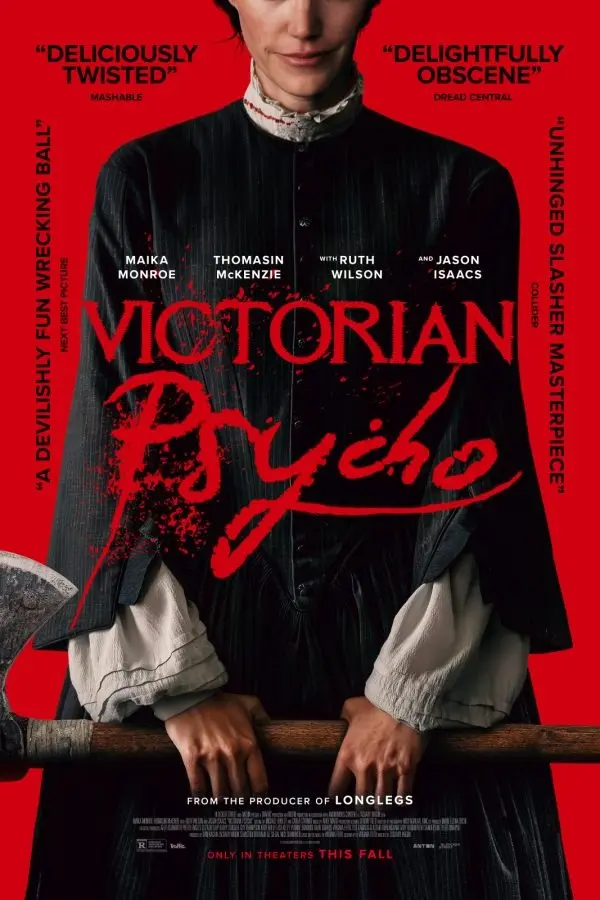
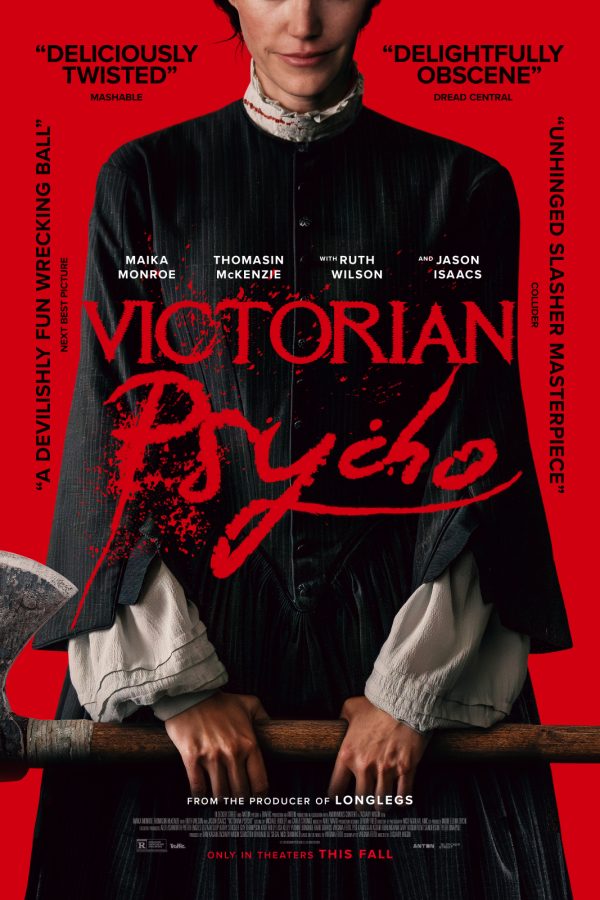
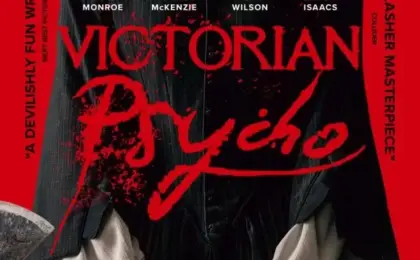
The cinematic landscape of 2026 welcomes a dark, period-specific subversion of psychological horror with the release of Victorian Psycho. Directed by Zachary Wigon—renowned for his work on the razor-sharp, high-tension thriller Sanctuary—the film attempts to marry the atmospheric claustrophobia of nineteenth-century gothic fiction with the visceral, pitch-black comedy of a class-conscious slasher. At the center of this ambitious project is modern-day horror icon Maika Monroe, who steps into the role of Winifred Notty, an eccentric, deeply disturbed governess whose arrival at a remote country estate acts as a catalyst for chaos, carnage, and quiet subversion.
Adapted by Virginia Feito from her own novel of the same name, Victorian Psycho boasts an enviable ensemble cast featuring Thomasin McKenzie, Ruth Wilson, and Jason Isaacs. Yet, despite its tantalizing premise—a serial-killing governess wreaking havoc on the self-absorbed, obscenely wealthy elite—the film struggles to maintain a consistent narrative momentum. Critics and audiences alike have found themselves navigating a project caught in an awkward identity crisis: torn between stylish, avant-garde stylistic flourishes and an episodic, sluggish pacing that frequently deflates its own suspense.
This in-depth review and industry analysis examines the trajectory of Victorian Psycho, deconstructing its narrative choices, directorial missteps, standout performances, and the broader implications of its reception within the contemporary horror ecosystem.
Detailed Chronology
1858: The Arrival at Ensor House
The narrative core of Victorian Psycho unfolds against the rigid, oppressive backdrop of 1858 Victorian England. The story commences with the arrival of Winifred Notty (Maika Monroe) at Ensor House, a remote, moody gothic manor. Winifred has been hired to care for the children of the affluent, deeply self-absorbed Pounds family: young siblings Andrew and Drusilla, portrayed by Jacobi Jupe and Evie Templeton, respectively.
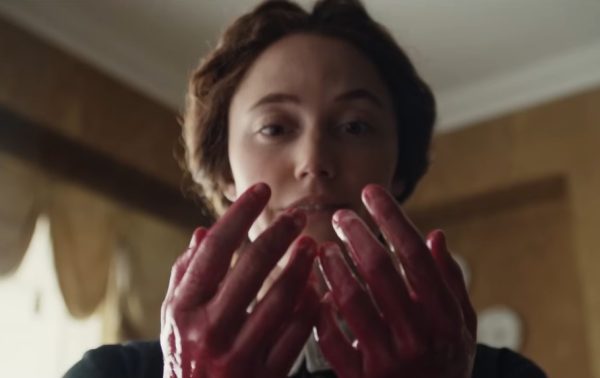
From her very first moments on the estate, Winifred’s behavior oscillates violently between the hyper-correct decorum expected of a nineteenth-century educator and moments of unfiltered, bizarre psychopathy. Her surname—Notty—is deliberately invoked with a cringe-inducing phonetic leaning toward "naughty," telegraphing her role as a diabolical disruptor within the otherwise stifling social order of the household. Almost immediately following her assimilation into the domestic staff, employees begin to inexplicably disappear. Whispers ripple through the servants’ quarters, and the estate’s owners are left to ponder whether their new hire harbors dark, destructive secrets.
The Domestic Dynamic and Rising Tensions
As Winifred attempts to balance her murderous impulses with the contractual obligations of her employment, she forms an unexpected alliance with Lamb, a naive nursemaid played by Thomasin McKenzie. This relationship forms one of the central narrative threads, driven largely by Lamb’s baffling gullibility; she readily believes Winifred’s fabricated claims that a restless ghost patrols the corridors of Ensor House.
Concurrently, Winifred interacts with the heads of the household, Mr. and Mrs. Pounds, brought to life by Jason Isaacs and Ruth Wilson. Isaacs and Wilson lean heavily into the infuriating, cartoonish wealth of the British upper class, playing characters so profoundly detached from reality that they frequently blur the line between being delightfully satirical and genuinely as unhinged as their new governess.
However, beneath the eccentricities of the household lies a darker, more visceral undercurrent. As the narrative progresses, it becomes uncomfortably clear that the Pounds patriarch is not merely obnoxious in his obscene wealth, but physically abusive toward his children—particularly Drusilla. This cruelty injects a genuine sense of danger and systemic rot into the estate, prompting audiences to question whether Winifred’s eventual violent retribution will extend beyond the missing staff to encompass the abusive structures of Victorian domesticity itself.
The Third-Act Unraveling
As the film ambles toward its inevitable conclusion, the pacing shifts from sluggish character studies to heightened, hyper-stylized violence. The third act forces viewers into a surreal psychological landscape where the boundaries between objective reality and Winifred’s distorted internal monologues blur entirely. While directors like Wigon attempt to inject sharp visual flair—utilizing unconventional camera angles, subjective framing devices like a sketchbook perspective on impact, and sudden bursts of slasher-style kinetic energy—the climax arrives too late to salvage the narrative inertia. The motivations behind the final act of violence feel predictable, having been hollowed out by a sluggish preceding hour that failed to build genuine investment or suspense.
Supporting Context & Metrics
Production and Adaptation Challenges
The creative lineage of Victorian Psycho is a study in contrasts. Zachary Wigon’s previous feature, Sanctuary, was lauded for its relentless, claustrophobic tension and razor-sharp dialogue. Transitioning to a period piece based on Virginia Feito’s source material, however, appears to have introduced structural hurdles that the production could not entirely overcome. Adapting a novel into a feature-length script requires a compression of interiority; unfortunately, Winifred’s quirky first-person narration often translates on screen as aimless wandering rather than calculated menace.
Cast and Crew Overview
- Director: Zachary Wigon
- Screenwriter: Virginia Feito (based on her novel)
- Distributor: Bleecker Street
- Key Cast:
- Maika Monroe as Winifred Notty
- Thomasin McKenzie as Lamb
- Ruth Wilson as Mrs. Pounds
- Jason Isaacs as Mr. Pounds
- Evie Templeton as Drusilla Pounds
- Jacobi Jupe as Andrew Pounds
- Supporting cast: Ruth Wilson, Evie Templeton, Jacobi Jupe, Amy De Bhrún, Katherine Moran, Dagmar Döring, Kate Brady, Elishka Lane, and Guillaume Doradoux.
Visual and Thematic Metrics
The film’s aesthetic strategy relies heavily on visual signifiers of psychological distress:
- Cinematographic Choices: Tilted Dutch angles to signal Winifred’s unstable mental state, subjective camera mountings during violent interactions, and high-contrast gothic interior lighting.
- Thematic Exploration: Class warfare wrapped in period-costume horror, exploring the intersection of female repression, Victorian social mobility, and systemic domestic abuse.
- Critical Reception Index: While individual performances—particularly Maika Monroe’s jittery, physical embodiment of suppressed mania and the magnetic presence of Ruth Wilson and Jason Isaacs—have drawn praise, the overall film has received mixed reviews, averaging a rating of two out of four stars for direction/film execution and three out of five stars for overarching entertainment value from major outlets like Flickering Myth.
Official Statements
While traditional corporate press releases for Bleecker Street have focused heavily on the star power of Maika Monroe—cementing her status as a modern-day "scream queen" by pivoting from contemporary thrillers like It Follows and Longlegs into period horror—early promotional interviews highlighted the unique challenges of capturing Feito’s distinct literary voice.
"Adapting a character as unhinged yet meticulously structured as Winifred Notty required a delicate dance between historical pastiche and unadulterated psychological unravelling," noted creative representatives close to the production during the film’s early promotional circuit. "The goal was never just to make a period piece with blood, but to investigate the rot beneath the polished floorboards of Victorian society through a distinctly warped lens."
Cast members have similarly reflected on the stylistic audacity required to bring the Pounds household to life. Ruth Wilson and Jason Isaacs embraced the theatricality of their roles, viewing the elder Pounds couple not merely as antagonists, but as living monuments to the absurdities of nineteenth-century privilege—thereby heightening the satirical stakes of Winifred’s murderous campaign.
Future Outlook
The release of Victorian Psycho marks a fascinating, if uneven, entry in the burgeoning subgenre of elevated period-horror satire. As studios continue to experiment with casting modern horror royalty in historical settings, the film serves as both a cautionary tale and a showcase of unrealized potential.
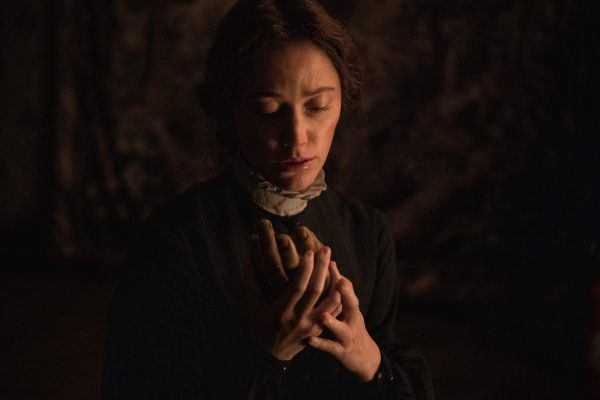
For director Zachary Wigon, the project demonstrates an eye for striking visual composition and bold tonal experiments, even if the narrative execution ultimately buckles under its own eccentricities. Meanwhile, Maika Monroe’s commitment to the role ensures that, despite narrative shortcomings, the character of Winifred Notty will likely endure as a memorable, if divisive, figure in contemporary horror iconography.
Moving forward, the commercial and critical reception of Victorian Psycho underscores an evolving audience appetite for complex, morally ambiguous female protagonists in historical spaces. While the film may not achieve the breathless momentum of Wigon’s previous cinematic outings, it opens the door for future adaptations to refine the balance between biting class critique and relentless, high-tension storytelling. As the horror landscape shifts through the remainder of the decade, filmmakers taking similar stylistic risks will undoubtedly look to Victorian Psycho as a bold, ambitious blueprint of what happens when modern psychological terror collides with the rigid formalities of the past.





Belum ada komentar. Jadilah yang pertama berkomentar!