

Executive Overview
For over a century, the marriage of moving images and recorded sound has relied on a foundational artistic axiom: a film is only as good as its soundtrack. Within this cinematic landscape, few tropes are as enduring, pervasive, or psychologically effective as the musical scoring of the antagonist. From the booming brass of Darth Vader’s "Imperial March" in The Empire Strikes Back to the Machiavellian showstoppers belted by Disney’s animated royalty—such as Scar in The Lion King or Ursula in The Little Mermaid—cinematic villainy has consistently generated iconic aural moments.
Yet, long before the invention of celluloid, Western art music and opera had already mastered the synthesis of visual drama and aural storytelling. Centuries before the silver screen, the operatic stage utilized towering arias to define its most corrupt and complex characters—from Iago’s chilling "Credo in un Dio crudel" in Verdi’s Otello to the terrifying pyrotechnics of the Queen of the Night’s "Der
Hölle Rache" in Mozart’s The Magic Flute.
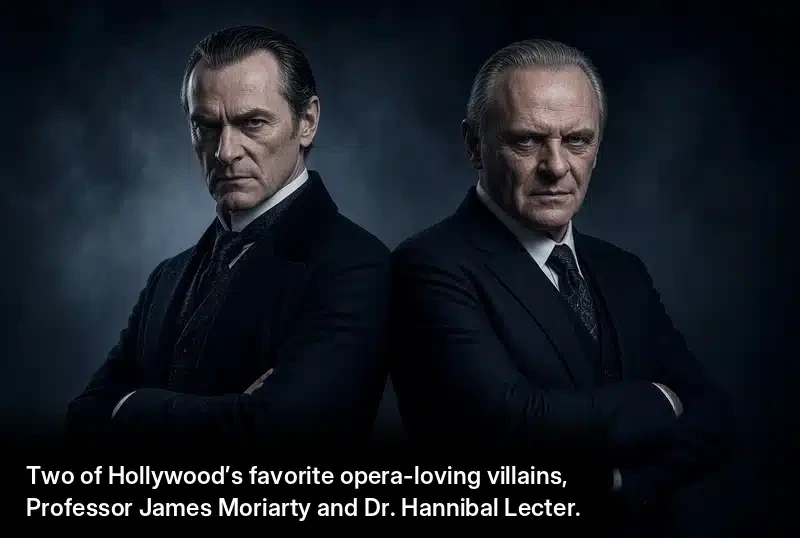
In modern American film and television, this historical lineage manifests in the specific trope of the intellectual nemesis. Hollywood routinely equips its most dangerous, calculating villains with a deep appreciation for European classical music and opera. This artistic choice serves multiple narrative functions: it acts as a shorthand for exceptional intelligence, provides rich intertextual subtext, and reflects deep-seated American cultural anxieties surrounding European sophistication and prestige. Today, as opera recedes into a niche demographic, its cinematic deployment highlights a fascinating paradox—using an art form largely unknown to the general audience to universally communicate elite refinement, ultimate power, and cold, calculated evil.
Detailed Chronology: From Fritz Lang to Modern Streaming Antagonists
The intersection of Western art music, opera, and cinematic villainy boasts a rich history spanning nearly a century of technological and aesthetic evolution.
- 1931 (The Genesis of the Leitmotif of Terror): Fritz Lang’s masterpiece M introduces Hans Beckert, a serial killer of children portrayed by Peter Lorre. Beckert compulsively whistles Edvard Grieg’s "In the Hall of the Mountain King" from Henrik Ibsen’s Peer Gynt whenever he is stalking his prey. This innovation establishes the first major cinematic use of a pre-existing classical leitmotif to track, identify, and foreshadow a villain’s off-screen presence.
- 1915–1979 (The Ideological Weaponization of Wagner): D.W. Griffith’s The Birth of a Nation (1915) utilizes Richard Wagner’s "Ride of the Valkyries" from Die Walküre to underscore the Ku Klux Klan, embedding classical grandeur into American white supremacy. Decades later, Francis Ford Coppola subverts this very trope in Apocalypse Now (1979), deploying the exact same piece as diegetic psychological warfare during an American helicopter assault on a Vietnamese village, thereby highlighting the hollow, destructive nature of imperialist hubris.
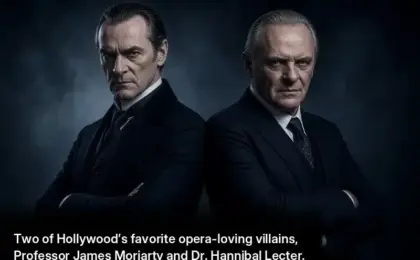
- 1980–1993 (The Golden Age of the Operatic Psycho): Throughout the late 20th century, Hollywood cements the connection between high culture and depravity. Martin Scorsese employs Pietro Mascagni’s "Intermezzo" from Cavalleria Rusticana in Raging Bull (1980) to foreshadow domestic betrayal. This trend peaks with Jonathan Demme’s The Silence of the Lambs (1991), where Dr. Hannibal Lecter orchestrates a visceral, violent escape to the strains of Bach’s Goldberg Variations, followed by Ridley Scott’s Hannibal (2001), which features the custom-composed operatic masterpiece "Vide cor meum."
- 2010–Present (The Digital Era and Deconstruction of the Trope): Modern television and cinematic universes continue to rely on this legacy while occasionally subverting it. Shows like the BBC’s Sherlock (2010–2017) feature Moriarty breaking into the Tower of London to the tune of Rossini’s La gazza ladra. Meanwhile, contemporary streaming monoliths like Netflix’s Stranger Things (2022) expand the definition of high art by linking the supernatural antagonist Vecna to Philip Glass’s minimalist modern opera Akhnaten, proving the enduring power of elevated musical curation in defining ultimate evil.
Supporting Context & Metrics: The Mechanics of Musical Villany
To understand why Hollywood systematically pairs malevolence with Mozart, Bach, and Wagner, one must examine both the practical mechanics of filmmaking and the broader sociology of cultural perception.
Practical and Aesthetic Drivers
From a purely logistical standpoint, pre-recorded Western art music offers distinct advantages to filmmakers. Much of the classical repertoire exists in the public domain, making it royalty-free or exceptionally cost-effective. Furthermore, these musical themes have stood the test of time, possessing an inherent memorability designed to contrast against recitative sections or underscore intense dramatic turning points.
More importantly, instrumental music is non-narrative; lacking a literal plot or defined characters, it relies on its affective power to shape emotional landscapes. When filmmakers insert pre-existing, culturally charged sonic markers like Wagner’s "Ride of the Valkyries" or Puccini’s soaring arias, they import centuries of cultural baggage directly into the scene. This provides extra-diegetic exposition and subtext that words alone cannot achieve.
The Sociology of the Intellectual Nemesis
However, the most profound function of opera in American media is characterization. In modern cinema, as cultural critic Theodore Gioia notes, "classical music has become the trademark of villains."

Why? Because opera is widely perceived as the pinnacle of performed drama, technical vocal expression, and theatrical staging. Its epic scope, complex compositions, and elite ticket pricing mark it as entertainment for the educated and the wealthy. When a cinematic villain sits quietly in a darkened opera box—such as Al Capone in The Untouchables listening to Leoncavallo’s Pagliacci, or Professor Moriarty attending Don Giovanni in Sherlock Holmes: A Game of Shadows—the narrative communicates volumes without a single line of dialogue:
- Intellectual Superiority: The villain possesses a mind capable of appreciating intricate, multi-layered artistic structures.
- Emotional Detachment: The juxtaposition of serene, beautiful, or deeply tragic music against heinous acts of brutality underscores that the villain’s crimes are not impulsive outbursts of passion, but cold, calculated, rational decisions.
- Class and Power: It signals the same education, wealth, and aristocratic authority that historical elites enjoyed, positioning the antagonist as a formidable match for society’s protectors.
Official Statements & Industry Perspectives
Film historians, musicologists, and cultural theorists have long debated the implications of associating high art with moral depravity in American media.
Dr. J. Peter Burkholder, co-author of A History of Western Music, notes the historical divergence between high and low culture that enables this cinematic shorthand: "Over the past two centuries, an irreparable split between elite and popular theater has emerged, rooted in the high seriousness found in Wagner and his contemporaries. Popular entertainment adapted quickly, while opera increasingly became an art for connoisseurs."
Film theorist Ronald L. Davis, writing on American cultural history (Culture on the Frontier), emphasizes the deep historical roots of America’s relationship with European aesthetics: "Cultural historians have pointed out time and again that American artistic tastes at least until the late 19th century were essentially derived from Europe. The ongoing quest to establish an indigenous American sound—culminating in jazz—left a lingering cultural complex regarding Old World sophistication."
Industry insiders argue that while the average moviegoer may not understand the specific plot points of the arias being played, the emotional and cultural register translates universally. As noted in media analyses of villainous tropes, the sound of an orchestra tuning or a soprano hitting a high C immediately signals to a global audience that they are dealing with a mastermind who operates on a plane far above conventional morality.
Future Outlook: The Evolution of Cinematic Antagonism
As we look toward the future of film and television scoring, the landscape of cinematic villainy is undergoing a subtle yet profound transformation.
Opera itself remains in a precarious cultural position. Plagued by language barriers (as major works are sung in Italian, German, or French), extended formats that clash with modern shrinking attention spans, and exorbitant ticket prices in European and American houses, opera has retreated further into niche status. Paradoxically, this exact removal from mass consumption enhances its cinematic utility. Because the average modern viewer is unfamiliar with the intricacies of a Handel aria or a Mozart opera, the music functions purely as an unadulterated signifier of otherness, elitism, and intellectual menace.
However, the definition of "high art" is expanding. As demonstrated by recent television hits incorporating minimalist modern compositions—such as Philip Glass in Stranger Things—future villains may no longer be restricted to the traditional 18th- and 19th-century European canon. Directors are beginning to draw from global avant-garde traditions, electronic academic compositions, and contemporary art music to signify intellectual supremacy.
Yet, the core psychological archetype remains unchanged. Whether listening to Bach while dissolving evidence, quietly weeping to a Puccini aria after framing an innocent man, or whistling a haunting 19th-century folk melody before striking, the intellectual nemesis will continue to utilize Western art music as a weapon. By wedding high culture with low-down cruelty, Hollywood ensures that the most terrifying villains will always have a soundtrack as sophisticated as their crimes.



Belum ada komentar. Jadilah yang pertama berkomentar!