Global interactive entertainment giant HoYoverse is entering the cozy life-simulation genre with Petit Planet, a major strategic departure from its traditional narrative-driven action RPGs like Genshin Impact and Honkai: Star Rail. Scheduled to launch globally on December 4, 2026, across iOS, Android, and PC (Windows), with a dedicated release planned for the Nintendo Switch 2 platform, Petit Planet seeks to blend the gentle rhythms of community life simulators with the ongoing operational cadence of live-service titles.
Ahead of the game’s official release, key insights provided by Lead Game Designer Murphy and Lead Artist Yinli Huang reveal how the studio intends to resolve the inherent tension between live-service mechanics—traditionally defined by daily grinds, finite event windows, and aggressive monetization—and the relaxed, stress-free appeal of cozy gaming. Featuring a cosmetic-only monetization architecture, modular world customization, non-mandatory AI-driven NPC interaction systems, and an anti-FOMO (fear of missing out) update strategy, Petit Planet represents HoYoverse’s boldest genre experimentation to date.
Detailed Chronology of Development & Reveal
The operational journey behind Petit Planet spans nearly three years of covert intellectual property registrations, public testing, and iterative design overhauls based on community feedback.
[Feb 2024] Initial Trademark ("XinBuGuDi")
   │
[Jun 2024] Secondary Trademark ("Astaweave Haven")
   │
[Oct 2024] Global Title Finalized ("Petit Planet")
   │
[Sep 2025] Global Reveal & Teaser Trailer
   │
[Sep 2025 – Late 2026] Three Closed Beta Tests (CBT 1–3)
   │
[Dec 1, 2026] Pre-Downloads Open
   │
[Dec 4, 2026] Global Launch (iOS, Android, PC) / Switch 2 (TBA)
Trademark Discovery and Early Signals
February 2024: Industry observers first noticed HoYoverse securing intellectual property rights in China for a project under the title XinBuGuDi.
June 2024: Additional filings emerged internationally under the name Astaweave Haven, sparking widespread industry speculation regarding an entry into farming or social simulation.
October 2024: The studio consolidated its brand strategy, filing global trademarks for the definitive Petit Planet.
Public Unveiling and Beta Iterations
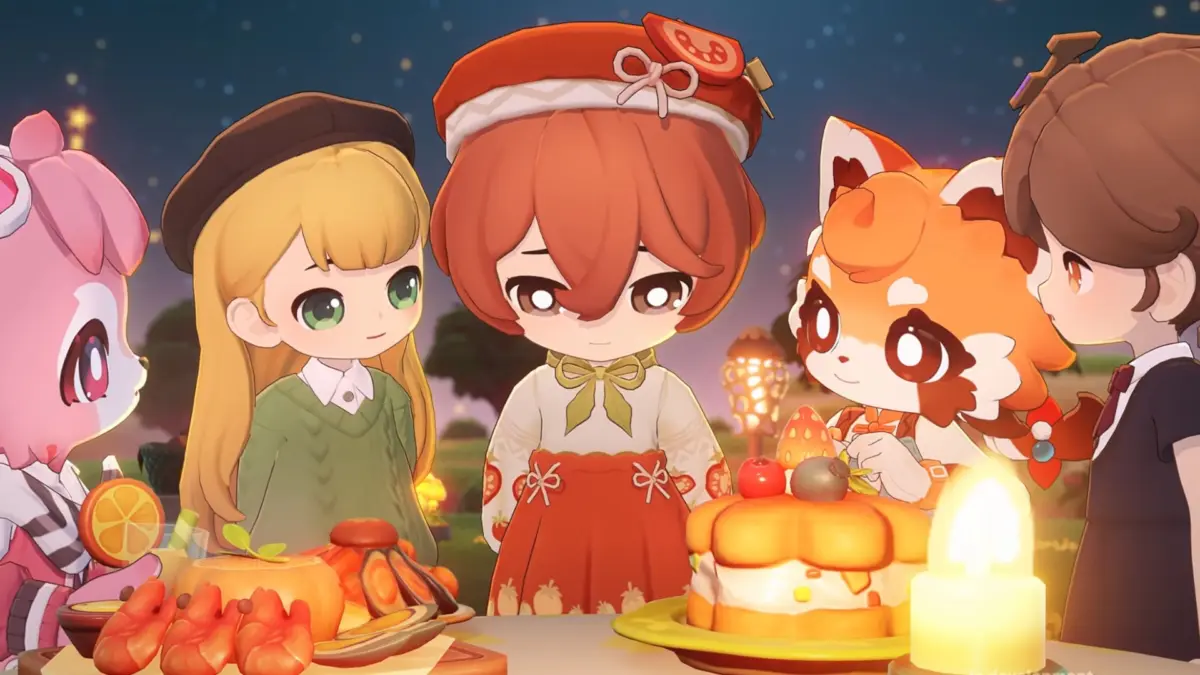
September 2025: HoYoverse officially introduced Petit Planet to the public through a teaser trailer alongside a extended announcement showcase, showcasing a space-fantasy aesthetic where players manage individual mini-planets within a broader galaxy known as the "Starsea."
Late 2025 – Late 2026: Over a 14-month span, the development team conducted three closed beta tests (CBTs). These testing phases introduced significant gameplay adjustments, ranging from camera perspective refinements to structural rebalances of NPC interaction frequencies.
December 1, 2026: Client pre-downloads open across global app stores and PC launchers.
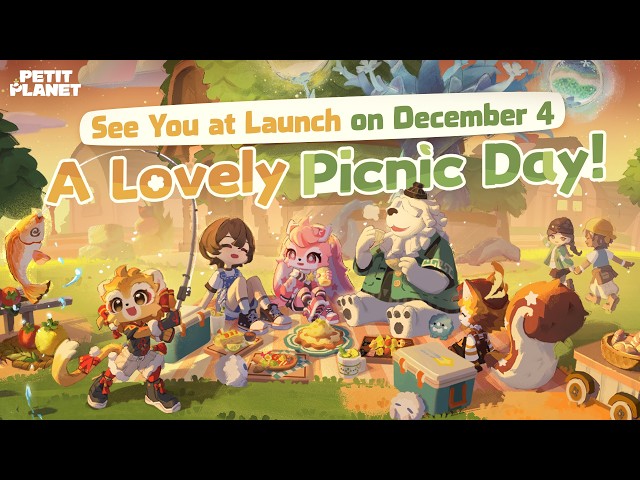
December 4, 2026: Official commercial launch date for iOS, Android, and Windows PC.
Historically, HoYoverse built its financial foundation on character-driven gacha frameworks. Petit Planet diverges entirely from this precedent.
To preserve the non-competitive, accessible nature of a cozy simulator, the team eliminated character-gacha mechanics. All non-player character (NPC) neighbors are accessible to all players at no cost, alongside their complete storyline progression paths.
Monetization is restricted to aesthetic and cosmetic items. While the operational engine utilizes pull currencies—such as "Sea Whistles" for standard pools and "Curio Sea Whistles" for limited-time banners—these unlock visual customizations, clothing, and decorative housing assets rather than gameplay power or character access.
Engineering a Spherical World: Camera & Rendering Challenges
Transitioning from standard flat-plane environments to small, spherical worlds introduced distinct technical hurdles for Lead Artist Yinli Huang and the engineering team:
Occlusion on Spherical Horizons: Placing environmental assets across a curved geometry meant objects distant from the player naturally dipped beneath the horizon line. The team developed a custom asset-coverage and rendering hierarchy to prevent pop-in while keeping distant landscapes visual.
Spatial Disorientation & Motion Sickness: Player movement across a tight 3D sphere initially generated motion disorientation during rapid navigation. The development team implemented custom camera tracking angles, dynamic horizon smoothing, and adjustable field-of-view parameters to ensure comfortable navigation.
Stylistic Harmonization: The art group established a stylistic middle ground between photorealistic natural elements and traditional anime cell-shading. Plant design, in particular, underwent numerous iterations to feel visually familiar while matching the soft fantasy art style of the Starsea.
Social Dynamics: Balancing Introverted and Extroverted Gameplay
Multiplayer functionality in Petit Planet is designed to accommodate different social preferences:
Private Planets: Players can invite up to seven guests simultaneously (an eight-player lobby) to their personal world for casual activities, including soccer, tabletop games, and card matches.
Galactic Bazaar: A large-scale social hub capable of housing dense player populations for trading, seasonal festivals, and public gatherings.
Introvert-Centric Design Tweak: During early closed betas, playtesters noted that automated NPC neighbor home visits created social pressure. In response, developers lowered NPC visit frequencies and established player-controlled boundary settings.
Safety & Moderation: To curb griefing and inappropriate behavior within shared spaces, HoYoverse implemented real-time automated text filtering, an in-game reporting suite, host control privileges, and account suspension protocols under a revised User Agreement.
Optional Generative AI Integration
Petit Planet features an integrated AI system for NPC interactions, designed to make town residents feel distinct and reactive:
Psychological Framework: Each NPC operates under pre-configured personality traits modeled on psychological metrics (including MBTI-style archetypes) alongside explicit moral parameters.
Contextual Memory: AI-enabled NPCs retain localized conversation logs, allowing them to recall previous interactions and dynamically adapt dialogue choices over time.
Privacy & Control Systems: Addressing broader player concerns regarding generative technology, HoYoverse implemented explicit user controls. Players retain total authority over their data, with options to clear conversation histories or deactivate AI-driven dialogue features entirely via an in-game toggle.
Official Statements & Insights from HoYoverse Leadership
The vision behind Petit Planet reflects a systemic shift in how HoYoverse conceptualizes narrative structure, player retention, and world design.
"In Petit Planet, we want to make sure our core gameplay... is accessible to all players.
 So the monetization will be cosmetic only. All the neighbors will be free."
 — Lead Game Designer Murphy
On Pacing, Live-Service Burnout, and Anti-FOMO Design
Addresses the challenge of implementing live-service frameworks within a relaxing game, Lead Game Designer Murphy noted:
"We understand the cozy and slower-paced gaming experience. We will try to extend the time window as long as possible for limited-time events. Our goal is to create a pace where our players won’t be worried about having to complete tasks and stay active to get all the resources.
"Unlike other HoYoverse titles, there aren’t really main stories in this game. Our purpose is to provide an immersive experience of gradually establishing relationships with neighbors; a more simulated experience of real life."
Murphy further clarified that while standard HoYoverse titles follow a rigid six-week patch cycle, Petit Planet will utilize a broader update cadence focused on seasonal shifts, new hobbies, expanded islands, and systemic additions rather than high-pressure content rushes.
On Relationship Mechanics and NPC Design
Highlighting the emotional core of the game’s non-playable cast, Murphy detailed the multi-tiered goals designed for different playstyles:
"In the short term, when players log into the game, they can experience random new creatures, new weather, and explore new things… In terms of the mid-term experience, as players invest more time, their relationships with the NPCs will gradually develop, so you’ll unlock more stories behind these neighbors.
"We’ve spent a lot of time refining the stories of our NPCs so that you will feel like they are really your friends. As you develop a closer relationship, you can unlock more features… For example, you can change their outfit and decorate or change the appearance of their home, just like helping a real friend pick an outfit."
When asked about personal favorite characters, Murphy highlighted Yunguo, a character central to the game’s core themes:
"Yunguo is a very shy character who has a kind of green thumb and loves plant things. Yunguo is very introverted, but is still trying to meet new people and build up connections. That’s something I feel is very brave."
Unveiling an unconventional influence on the game’s design, Murphy shared:
"I recently watched a documentary called Clarkson’s Farm. It shares a lot of inspiration about how planning and running a farm can bring pure joy to daily life. So I think I get inspiration from that."
Lead Artist Yinli Huang elaborated on the meticulous structural setup required for every resident populating the Starsea:
"We start with their unique personalities and background stories. We have a very comprehensive design for each neighbor, setting up their cultural background, habits, relationships, and even an MBTI-like personality framework. In the art design phase, we add unique phrase expressions, actions, and reactions while ensuring the colors align with the overall game world."
Future Outlook, Platform Strategy & Industry Implications
+-----------------------------------------------------------------+
|                       LAUNCH & PLATFORM ROADMAP                 |
+-----------------------------------------------------------------+
|  DECEMBER 1, 2026   │ Global Pre-Downloads Open (PC & Mobile)   |
|  DECEMBER 4, 2026   │ Official Launch on iOS, Android, PC       |
|  FUTURE HORIZON     │ Nintendo Switch 2 Release (In Development)|
+-----------------------------------------------------------------+
The Nintendo Switch 2 Strategy
Petit Planet marks a major milestone for HoYoverse as its first title officially designated for Nintendo’s next-generation hardware platform, the Nintendo Switch 2. Addressing the rationale behind choosing this project for the platform over past titles, Yinli Huang stated:
"We think that, as a life simulation game, Petit Planet is very suitable for playing on Nintendo Switch 2. For other projects [like Genshin Impact], there are different considerations and different demands. So there are no certain plans for that."
Post-Launch Roadmap & Industry Position
When Petit Planet opens its servers on December 4, 2026, it will enter a market long dominated by traditional premium franchises such as Nintendo’s Animal Crossing and ConcernedApe’s Stardew Valley. However, HoYoverse’s hybrid formula introduces several key differentiators to the life-simulation space:
Persistent Community Canvas: The User-Generated Content (UGC) system lets players sculpt terrain while fully customizing skyboxes, weather patterns, dynamic water channels, and planetary atmospheres to share across global networks.
Expanded Regional Festivals: While initial seasonal events will draw inspiration from widespread global holidays, post-launch updates will integrate localized cultural celebrations featuring unique regional themes and architectural aesthetics.
Starsea Exploration: The development team plans to expand maritime and space-based traversal, enabling players to captain custom vessels across uncharted celestial bodies to harvest rare resources and discover hidden island biomes.
By stripping away compulsory gacha progression in favor of cosmetic-driven monetization, offering modular privacy controls for AI interactions, and pacing content updates to reduce player burnout, HoYoverse’s Petit Planet establishes a compelling new model for live-service cozy games.









Belum ada komentar. Jadilah yang pertama berkomentar!