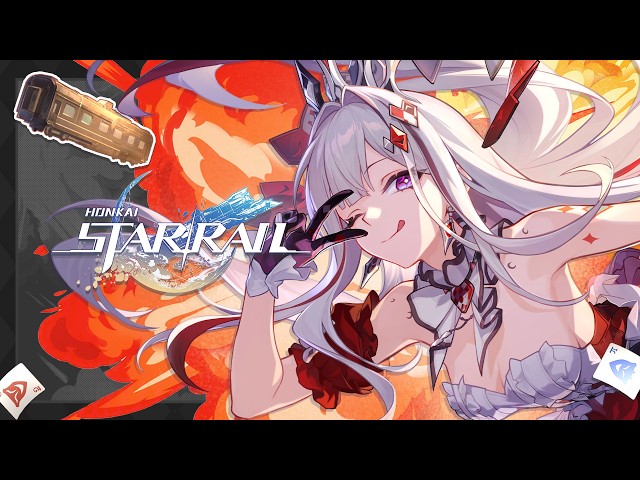
HoYoverse’s flagship space-fantasy turn-based RPG, Honkai: Star Rail, stands at a pivotal juncture in its operational life cycle. As the title approaches the narrative and gameplay climax of its fourth major version update—centered on the media-obsessed world of Planarcadia—the game continues to redefine the boundaries of live-service gacha design. Recent updates have introduced groundbreaking paradigm shifts, including the debut of a second new playable Path, the release of the game’s first playable Aeon (god-like cosmic entities within the universe’s lore), and an upcoming high-profile cross-title collaboration with HoYoverse’s urban action hit, Zenless Zone Zero.
In an interview in South Korea, Lead Game Designer Chengnan An provided comprehensive insights into the technical, philosophical, and mechanical decisions driving Honkai: Star Rail’s trajectory. The discussion illuminated the narrative justification for rendering cosmic deities playable, the structural logic behind character variants (SP units), the multi-year production pipelines required to construct new planets, and the prospective expansion of the title onto next-generation hardware like the Nintendo Switch 2.
=================================================================================
                          HONKAI: STAR RAIL CORE METRICS
=================================================================================
 Current Operational Phase   : Version 4.x Climax (Planarcadia Arc)
 Development Cycle Lead-Time : 15+ Months per major world destination
 Character Backlog Status    : >10 unreleased original units concurrently in dev
 Upcoming Major Event        : Version 4.8 Crossover with Zenless Zone Zero (ZZZ)
 Platform Horizons           : Evaluating portable platforms (Switch 2 consideration)
=================================================================================
Detailed Chronology
The Progression of Version 4 and Lore Integration
The structural trajectory of Honkai: Star Rail’s Version 4 lifecycle has been defined by bold mechanical experimentation and high-concept narrative arcs.
+-------------------------------------------------------------------------------+
|                       VERSION 4 DEVELOPMENT TIMELINE                          |
+-------------------------------------------------------------------------------+
| • Early Version 4.x : Arrival at Planarcadia (Himeko's Homeworld)             |
|                       Introduction of the "Clout is King" narrative arc       |
| • Mid Version 4.x   : Debut of Playable Aeon Aha (Path of Elation)            |
|                       Rollout of major SP variants (Himeko Nova, Silver Wolf) |
| • Version 4.8       : Zenless Zone Zero Cross-IP Collaboration                |
|                       (Kafka & Robin to ZZZ; Astra Yao & Ellen Joe to HSR)    |
| • Looking Ahead     : Transition to Version 5.0 Engine & World Pipeline     |
+-------------------------------------------------------------------------------+
Early Version 4 Arc: The Astral Express crew arrived at Planarcadia, the ancestral homeworld of Himeko and the historical site where the Astral Express originally recommenced its galactic voyage. The world introduced deep thematic commentary on digital culture, internet algorithms, and performative fame, dubbed the "Phantasmoon Games."
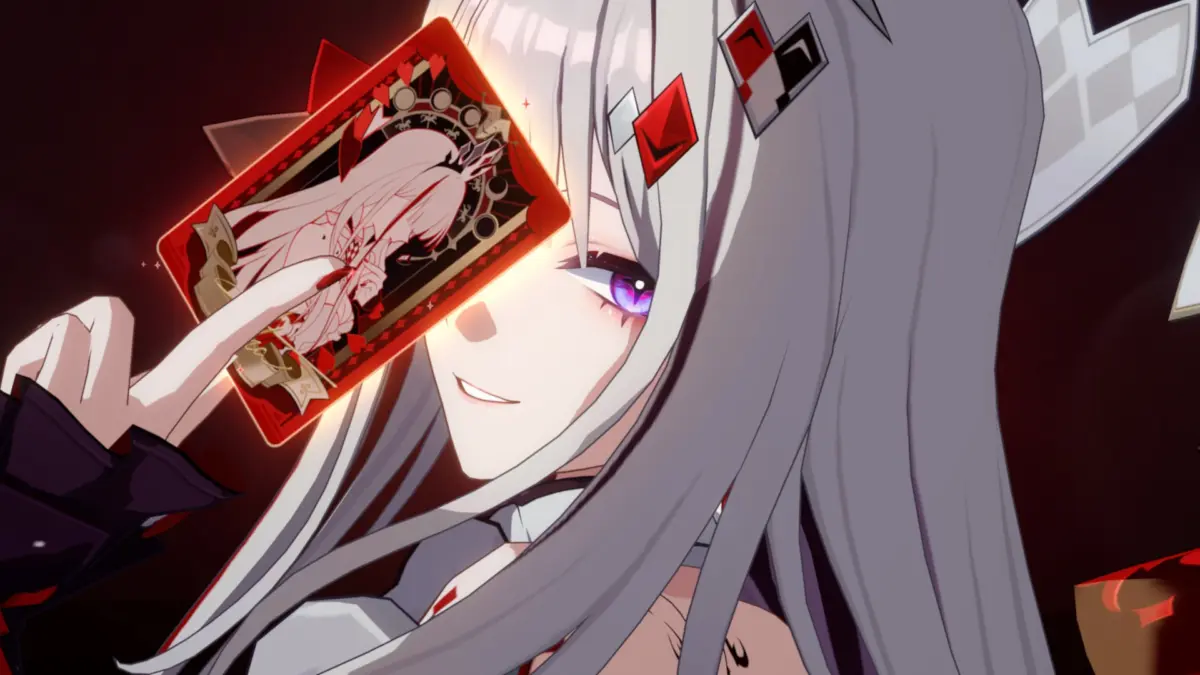
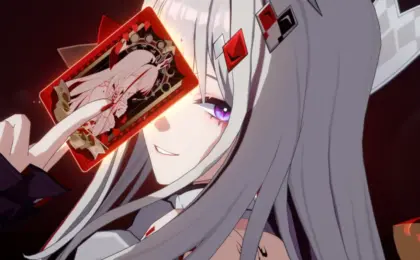
Mid-Cycle Breakthrough: HoYoverse introduced Aha, the Aeon of Elation, breaking a long-standing structural precedent by transforming an abstract cosmic deity into a playable combatant. This release was paired with a surge in alternate character variants ("SP" units), including Himeko Nova, Mortenax Blade, and Silver Wolf Lv. 999.
Version 4.8 Collaboration Announcement: The studio confirmed a two-way character exchange with Zenless Zone Zero. Under this framework, Star Rail’s Kafka and Robin enter the action-centric world of New Eridu, while Zenless Zone Zero’s Astra Yao and Ellen Joe board the Astral Express. This follows the precedent set nearly two years prior when Sparkle crossed over into Honkai Impact 3rd.
Supporting Context & Metrics
The Math & Mechanics of Playable Godhood
Prior to Version 4, Aeons were portrayed in Honkai: Star Rail as incomprehensible, cosmic-scale forces of nature—distinct from the more localized divine figures, such as the Archons in Genshin Impact. Bringing an Aeon into the playable roster presented severe game-balance risks and conceptual hurdles.
+-------------------------------------------------------------------------------+
|                      AEON DESIGN & BALANCE FRAMEWORK                          |
+-------------------------------------------------------------------------------+
| Lore Status        : Universal Entity / Primordial Force                      |
| Playable Designation: Aeon of Elation (Aha)                                   |
| Combat Class       : Dedicated Support / Enabler                              |
| Core Feature       : "Aha Instant" Stage Mechanics                            |
| Design Objective   : Elevate team rotation without powercreeping combat limits|
+-------------------------------------------------------------------------------+
To prevent powercreep and preserve system stability, the design team opted to contextualize Aha not as a raw damage-dealer capable of trivializing turn-based combat, but as an enabler.
The Support Archetype: Aha was engineered specifically as a support unit. Lore-wise, the Path of Elation centers on shared emotional resonance, performance, and theatricality.
The "Aha Instant" Mechanism: Rather than dominating battle metrics single-handedly, Aha’s abilities grant specialized combat windows—termed "Aha Instants"—that allow accompanying party members to execute empowered abilities. This mechanic reinforces the thematic concept of a theatrical stage where mortal units shine alongside the deity.
Production Cycles and Roster Engineering
The production pipeline for Honkai: Star Rail operates on an extended time horizon. Creating a cohesive world involves far more than surface-level cultural aesthetics; it requires aligning narrative themes, system mechanics, and character kits over multi-year cycles.
15-Month World Lead Time: A brand-new world requires upwards of 15 months of pre-production and active development before public release.
Backlog Stability: The development team continuously maintains a active queue of more than 10 unreleased original characters in various stages of conceptualization and mechanical testing.
SP Variant Strategy: The increased deployment of SP variants (such as Silver Wolf Lv. 999 or Himeko Nova) serves as a intentional retention strategy. Rapidly flooding the ecosystem with entirely unknown characters risks diluting emotional investment. Reintroducing established core figures under transformed paths or advanced lore states allows long-time players to build deeper narrative connections while providing accessible touchpoints for newcomers.
Official Statements
On the Selection and Balancing of Aeon Aha
Lead Game Designer Chengnan An clarified why Aha was selected as the vanguard for playable Aeons and how the team managed the power-scaling dynamic:
"As for Aeons, they are quite an abstract concept for most of the people in the world, where Aha is the most human-like one. Elation is certainly a slightly more approachable concept… and Aha has always used the motifs of the comedy and tragedy theatre masks, technically putting a ‘face’ to the great power."
Addressing concerns regarding combat balance and lore fidelity, An emphasized:
"We certainly don’t want her to destroy our battle system with the power of an Aeon. I think that kind of design also doesn’t fit her personality as an Aeon of Elation. We think Aha is closely connected to other characters. We think the path of Elation is also about bringing happiness and all these emotions. So we think Aha is more suitable to be a support character in combat rather than a damage character."
On Cross-IP Collaborations with Zenless Zone Zero
Discussing the upcoming Version 4.8 crossover and the character selections made alongside the Zenless Zone Zero team, An noted the distinct mechanical and stylistic logic applied to Kafka and Robin:
"Kafka herself is a very charming character, so we think she’s quite a perfect choice. Also, Kafka’s combat style is suitable for an action game with her rapid combat rhythm… Players have a deep emotional connection with her, as she’s the first character that you meet during the tutorial."
Regarding Robin’s insertion into the urban-pop universe of New Eridu:
"As for Robin, she herself is a popular singer, so we think it’s so appropriate to let her travel across and to have a tour… I think she can build this connection with players so easily, and I think also that’s why [the ZZZ team] chose Astra Yao."
=================================================================================
                    CROSSOVER CHARACTER MATRIX (VERSION 4.8)
=================================================================================
 Character     | Origin Game           | Destination Game      | Primary Role
---------------+-----------------------+-----------------------+-----------------
 Kafka         | Honkai: Star Rail     | Zenless Zone Zero     | Fast-Action Combat
 Robin         | Honkai: Star Rail     | Zenless Zone Zero     | Narrative/Singer
 Astra Yao     | Zenless Zone Zero     | Honkai: Star Rail     | Guest Operative
 Ellen Joe     | Zenless Zone Zero     | Honkai: Star Rail     | Guest Operative
=================================================================================
On Worldbuilding Philosophy and Planarcadia
When detailing the creative direction behind new destinations, An explained that settings are constructed around thematic inquiries rather than simple real-world proxies:
"When it comes to the theme of a planet, it’s not just about the concept of a certain culture. It’s more about how to introduce our stories and characters. Take Xianzhou Luofu, for example… we wanted to introduce the path of The Hunt and the Abundance."
On the commentary embedded within Planarcadia’s story:
"We talk about the theme of ‘clout is king,’ and we amuse ourselves to death, and we serve as observers in our daily life, and we also see someone who wants to gain a lot of clout. So it’s not simply about the story. We developers also want to explore some more modern-day issues together with our players through the stories."
On Long-Term Planning and Hardware Portability
In response to queries regarding technical pipelines and hardware expansion—specifically regarding next-generation portable hardware such as the Nintendo Switch 2—An reiterated HoYoverse’s baseline philosophy:
"It’s almost impossible to make a game if we just look ahead one update only. We always want to provide content with high quality, and make sure our stories and characters are closely connected. So we have to plan ahead of time."
Regarding platform availability:
"For HSR, we always want to reach a larger group of players, and we’re always looking into the development of different platforms… How portable a platform is factors heavily into our decisions."
Future Outlook
As Honkai: Star Rail prepares to conclude its Version 4 lifecycle and pivot toward Version 5.0, the game’s operational blueprint points toward sustained expansion across narrative, technical, and platform dimensions.
+-------------------------------------------------------------------------------+
|                       STRATEGIC ROADMAP: VERSION 5.0+                         |
+-------------------------------------------------------------------------------+
| • Long-Awaited Roster Debuts : Potential integration of legacy lore figures   |
|                                (e.g., Screwllum, Elio, Mr. Reca)              |
| • Engine & Asset Evolution   : Scaled visual pipelines for future hardware    |
| • Multi-Platform Expansion   : Active evaluation of next-gen portables        |
| • Continued Transmedia       : Inter-game crossover precedents established   |
+-------------------------------------------------------------------------------+
1. Narrative & Character Debuts
With An confirming that long-anticipated characters are scheduled to join the playable roster within the next year, community attention remains focused on figures previously restricted to lore cameos, light cones, or NPC statuses. Highly sought-after entities like the Genius Society’s Screwllum, the enigmatic Stellaron Hunters leader Elio, and Penacony’s Mr. Reca represent prime candidates for playable integration under the studio’s current variant-and-newcomer balance strategy.
2. Multi-Platform Strategy
While official technical announcements regarding next-generation platforms remain pending, the team’s explicit focus on platform portability indicates that Honkai: Star Rail is being engineered for broader hardware accessibility. As performance targets scale up alongside visual fidelity, optimized client builds for future handheld consoles remain a strategic imperative.
3. Universe Integration
The cross-pollination between Honkai: Star Rail, Honkai Impact 3rd, and Zenless Zone Zero marks a structural shift toward a more interconnected HoYoverse ecosystem. By leveraging shared thematic beats—such as global music icons like Robin and Astra Yao—the studio is positioned to execute complex trans-game events that sustain player engagement across its entire portfolio.







Belum ada komentar. Jadilah yang pertama berkomentar!