

Executive Overview
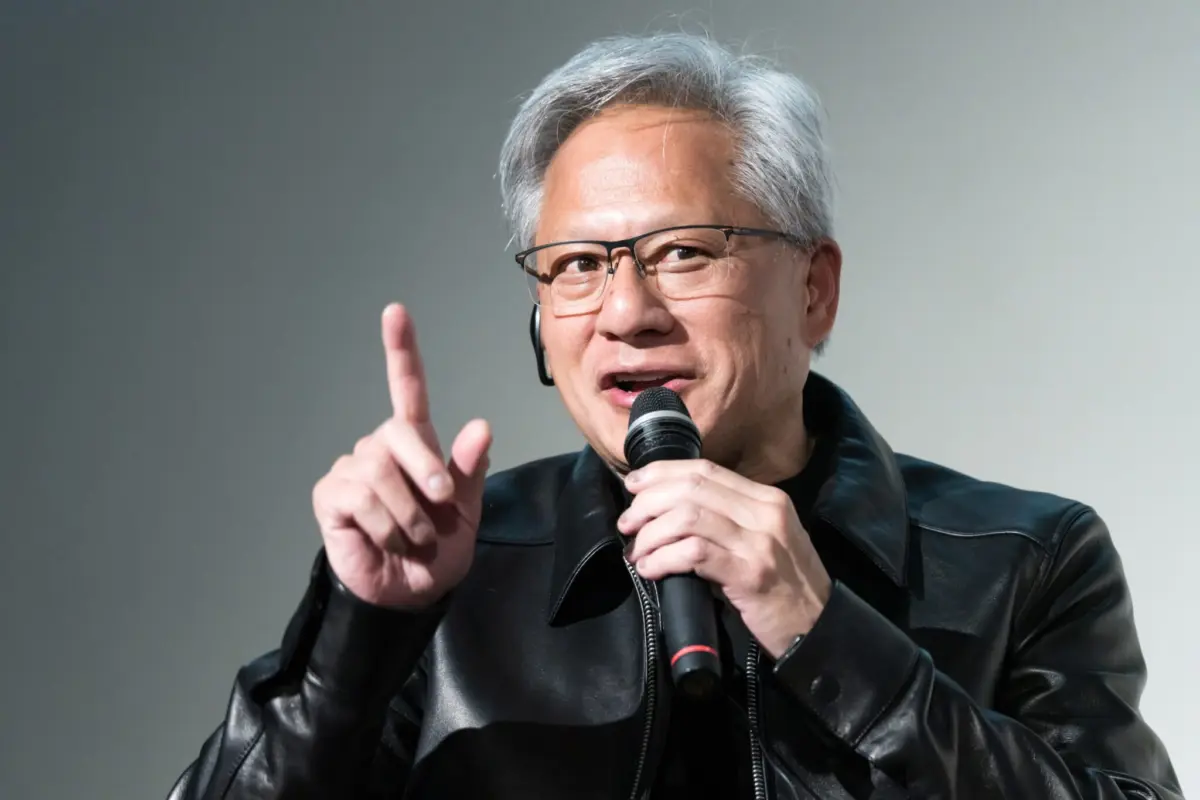
The global technology ecosystem was sent into a profound shockwave when Nvidia’s board of directors announced the launch of an independent investigation into co-founder and CEO Jensen Huang. The inquiry follows Huang’s admission to staff regarding an extramarital relationship with Alice Huang, an executive at Singapore-based cloud firm Megaspeed.
U.S. intelligence officials allege that Alice Huang is a covert operative for Beijing, systematically feeding sensitive intelligence back to Chinese authorities. While no criminal charges have been filed, and the Chinese Embassy in Washington has dismissed the allegations as "groundless smears and slanders," the implications extend far beyond a standard corporate misconduct scandal.
As the absolute linchpin of the global artificial intelligence economy, Nvidia is not merely a hardware manufacturer; it functions as the infrastructure, bank, and architectural foundation for the entire sector. With thousands of downstream tech partners, venture investments spanning hundreds of startups, and deep financial commitments to major macroeconomic players, a leadership crisis at the center of Nvidia threatens to destabilize markets worldwide.
This deep-dive investigation examines the unfolding scandal, leveraging insights from Yale School of Management Professor Jeffrey Sonnenfeld, intelligence briefings, corporate governance precedents, and the broader vulnerabilities exposed within the tech industry’s security apparatus.
Detailed Chronology and the Anatomy of the Scandal
The timeline leading up to Nvidia’s Sunday board announcement reveals a slow-burning geopolitical and personal firestorm. According to reports from The New York Times, U.S. intelligence officials first briefed President Donald Trump regarding counterintelligence concerns surrounding Alice Huang approximately a year ago. At the time, intelligence assessments indicated that Jensen Huang was likely unaware of her alleged intelligence-gathering activities. However, senior administration officials have increasingly expressed skepticism that the CEO of the world’s most critical semiconductor firm could remain oblivious for long.
The situation escalated when Jensen Huang openly disclosed his marital infidelity to Nvidia employees, prompting the board to act decisively. The board of directors—comprising its independent members, excluding Huang—announced a formal, independent investigation to determine whether any proprietary company secrets, source code, or national security vectors were compromised.
Compounding the pressure on the CEO, the political calendar offers no breathing room. Three U.S. House committee chairmen have formally requested a closed-door briefing from Huang on November 18, just one day after Nvidia is scheduled to report its latest quarterly earnings on November 17. While Nvidia stated that Huang will continue running day-to-day operations during the probe, industry experts anticipate that he will be forced to delegate significant operational responsibilities to manage the compounding legal and political fallout.
Supporting Context & Metrics: The Epicenter of the AI Economy
To understand why Jensen Huang’s personal indiscretion is a systemic risk rather than a localized human resources issue, one must examine Nvidia’s staggering footprint in the modern financial and technological landscape.
The Circular Financing Web
Nvidia is not simply the dominant supplier of advanced AI accelerators; it is the financial engine fueling the generative AI boom. Beyond its core chip business, Nvidia maintains equity stakes in hundreds of AI startups and has directly invested in industry leaders including:
- OpenAI
- Anthropic
- xAI
- CoreWeave
- Nebius
Furthermore, in August, Nvidia signed preliminary agreements with major financial powerhouses—including Apollo, BlackRock, Blackstone, Brookfield, Goldman Sachs, and KKR—aimed at mobilizing more than $500 billion in infrastructure capital over time. Huang previously stated that Nvidia could backstop up to 25% of this massive capital deployment. While designed to distribute risk, a leadership crisis at the apex of this multi-trillion-dollar web threatens to rattle investor confidence across Wall Street and Silicon Valley alike.
The Megaspeed Connection and Export Controls
At the heart of the geopolitical scrutiny is Megaspeed, a Singapore-based cloud provider that emerged out of a Chinese gaming enterprise. Megaspeed became Nvidia’s largest buyer in Southeast Asia, purchasing roughly $2 billion worth of advanced chips by late 2025.
This massive volume triggered intense regulatory concerns regarding whether Megaspeed was acting as a conduit to circumvent U.S. export restrictions—either by physically re-exporting chips to mainland China or by facilitating remote computational access for Chinese entities. While an Nvidia spokesperson told The Hill that these allegations were thoroughly investigated and debunked, the entanglement with Megaspeed remains a focal point for both congressional investigators and the board’s independent audit.
Official Statements and Stakeholder Reactions
The fallout has triggered sharp commentary from industry titans, geopolitical analysts, and governance experts.
The Governance Perspective: Professor Jeffrey Sonnenfeld
To evaluate Huang’s prospects of survival, leadership expert and Yale School of Management Senior Associate Dean Jeffrey Sonnenfeld offered a sobering assessment, placing Huang’s odds of weathering the storm at "about 50-50."
Sonnenfeld noted that until now, Huang has been "revered and trusted by everybody in technology." However, he characterized the affair as "remarkably poor judgment."
"Even if Huang was merely naive, any employee in Nvidia other than him would be fired over this," Sonnenfeld observed, emphasizing that the sheer recklessness introduces an irretrievable loss of confidence.
Sonnenfeld introduced the concept of idiosyncrasy credits—a psychological framework developed by Edwin Hollander in 1958. The theory suggests that individuals earn latitude within a group by demonstrating competence and adhering to baseline rules. Huang has accumulated decades of goodwill and credits since co-founding Nvidia in 1993. However, when a lapse in judgment appears self-serving or threatens core security norms, those credits can evaporate rapidly.
Unlike past executive scandals—such as former HP CEO Mark Hurd, who resigned in 2010 over inaccurate expense reports hiding a personal relationship before moving seamlessly to Oracle—Huang has no corporate parachute. Nvidia is his life’s work, and the company maintains an unusually flat organizational structure with roughly 60 direct reports, leaving no obvious internal successor ready to step into the breach.
Geopolitical Warnings and Davos Flashpoints
Long before the personal scandal broke, Huang’s vocal advocacy for selling advanced semiconductor chips to Chinese markets drew fierce pushback from national security hawks and industry peers alike.
At the World Economic Forum in Davos last January, Anthropic CEO Dario Amodei—whose company has received backing from Nvidia—stunned attendees by comparing the unrestricted export of advanced AI chips to adversarial nations to "selling nuclear weapons to North Korea."
These pre-existing anxieties have amplified the board’s urgency. Independent directors must now definitively trace what technology, if any, reached China through unauthorized channels, and evaluate the full scope of Nvidia’s commercial ties to Megaspeed.
Future Outlook and Industry Implications
As the independent investigation unfolds, the tech sector is forced to reckon with systemic vulnerabilities that go far beyond one executive’s personal life.
The Defense Contrast: A Wake-Up Call for Tech Security
Industry analysts argue that Silicon Valley has operated with a dangerous degree of laxity regarding insider threats and foreign espionage, contrasting sharply with traditional defense contractors bound by rigorous government security clearance regimes.
This vulnerability was underscored just last month by the FBI arrest of an OpenAI employee accused of concealing a recording device inside an executive conference room. While companies maintain that core model weights and proprietary customer data remained secure, these compounding incidents highlight how deeply exposed major AI laboratories and hardware giants are to infiltration.
The Structuring Vulnerability
One critical detail separates Huang from other tech founders: he does not possess super-voting dual-class stock. While Sonnenfeld and other governance experts typically advocate for dual-class shares to protect visionary founders from reactionary board ousters, Huang’s operation without them means the board holds unmitigated authority. If the independent investigation concludes that national security or corporate integrity was severely compromised, the board’s capacity to remove him is legally unhindered.
The Ultimate Test for the AI Economy
Jensen Huang may ultimately be cleared of knowingly aiding foreign intelligence operations, allowing him to retain his title. Yet, the true test will not be decided in the boardroom alone.
It will be decided when millions of retail investors with Nvidia in their retirement funds, institutional partners across Wall Street, and global technology consumers decide whether an artificial intelligence economy built predominantly on the personal judgment and singular vision of Jensen Huang remains structurally sound.
Disclaimer: When you purchase through links in our articles, we may earn a small commission. This does not affect our editorial independence.







Belum ada komentar. Jadilah yang pertama berkomentar!