

Executive Overview
In a nation renowned globally for its uncompromising standards of hospitality, precision, and flawless customer service, a dining establishment that explicitly warns patrons it might get their orders wrong sounds like an engineered recipe for chaos and dissatisfaction. Yet, far from drawing complaints, this exact premise routinely fills dining rooms with broad smiles, deep connections, and appreciative tears.
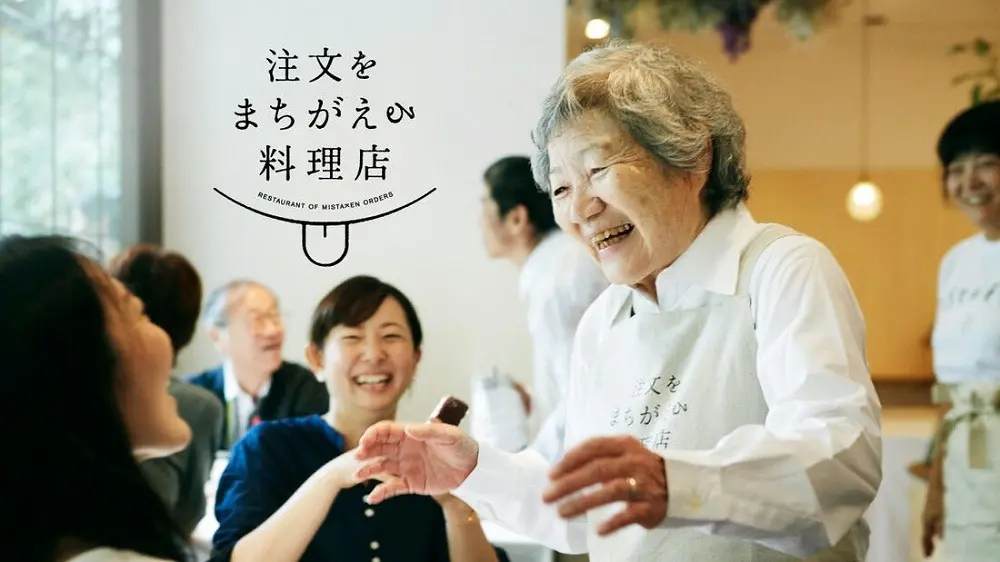
Known officially as the Chumon wo Machigaeru Kamoshirenai Ryori-ten—translated internationally as the Restaurant of Mistaken Orders—this nomadic culinary project upends traditional service norms. The secret behind its high error rate is not a lack of training or indifference; rather, its front-of-house waitstaff is composed entirely of senior citizens living with dementia.
Originating in 2018, the initiative operates as a pop-up concept, partnering with pre-existing restaurants that lend their spaces for a single day. Most recently, the project touched down in Matsuyama, Ehime Prefecture, collaborating with Tenryu Ramen on September 21. Fittingly, this date coincided with both Japan’s national public holiday, Respect for the Aged Day, and World Alzheimer’s Day.
Rather than functioning as a commercial labor enterprise, the Restaurant of Mistaken Orders serves as a powerful sociological and community experiment. Its core objectives are twofold: to cultivate greater public empathy and awareness toward individuals navigating cognitive decline, and to afford participating seniors a restored sense of confidence, purpose, and social connection. By transforming a potential dining mishap into a shared exercise in patience and mutual understanding, the project offers a blueprint for a more inclusive society—proving that a mistaken order can sometimes lead to the most meaningful human interactions.
Detailed Chronology: The Matsuyama Pop-Up Experience
The journey of the Restaurant of Mistaken Orders in Matsuyama began long before the first bowl of ramen was served. Planning for the September 21 event required extensive coordination between local welfare advocates, the operational team behind the pop-up, and the management of Tenryu Ramen. Transforming a commercial kitchen and dining hall into a dementia-inclusive environment demands careful preparation, ensuring both the safety and comfort of the elderly servers and the receptive mindset of the incoming patrons.
Morning Preparations and Briefing
As dawn broke over Ehime Prefecture on September 21, the atmosphere inside Tenryu Ramen was markedly different from a standard prep day. Four local senior citizens—ranging in age from 78 to 88—arrived alongside family members and support staff. Unlike typical restaurant orientation sessions focused on speed, efficiency, and point-of-sale terminal shortcuts, the briefing for these temporary servers centered on comfort, engagement, and emotional reassurance.
The senior waitstaff donned their aprons, familiarized themselves gently with the layout of the dining room, and practiced carrying trays under the watchful, encouraging eyes of organizers. The mood was lighthearted yet charged with a palpable sense of anticipation. For these participants, stepping into a public service role represented a significant departure from the isolation that frequently characterizes advanced stages of cognitive decline.
Doors Open: Navigating Expectations
When the doors officially opened to the public at lunchtime, patrons streamed in fully aware of the restaurant’s premise. The menu was intentionally streamlined to minimize operational friction, yet the potential for mix-ups remained high. Throughout the afternoon service, orders flowed from tables to the kitchen, and plates made their way back out—though not always to the tables that requested them.
In a conventional restaurant setting, a serving error triggers frustration. At the Restaurant of Mistaken Orders, however, the response was radically different. When a customer was served gyoza instead of ramen, or a bowl of noodles meant for the neighboring table, the reaction was met with gentle laughter, polite redirection, and patient conversation.
Emotional Highs and Human Connection
The afternoon was punctuated by deeply emotional vignettes. Among the diners were family members of the waitstaff, eager to support their loved ones from the other side of the table. In one widely circulated moment captured by documentary crews, a daughter sat watching her elderly mother navigate the dining room floor with an apron tied around her waist. Overcome by the rare sight of her mother remaining active, engaged, and visibly joyful outside the confines of specialized care, the daughter wiped away tears of profound gratitude.
Interactions between customers and servers consistently defied the transactional nature of modern dining. A father dining with his family of four reflected on the unique dynamic of the room, noting that the experience required slowing down the frantic pace of everyday life. "If we took our time and listened and spoke patiently, we could understand each other," he observed.
As the service drew to a close, one of the elderly waitresses removed her apron, looked out over the emptying dining room, and shared a radiant smile with the organizers. "I was really happy to get to see so many people and talk with them," she said, encapsulating the fundamental success of the day.
Supporting Context & Metrics: The Scale and Philosophy of the Movement
To fully understand the significance of the Matsuyama event, one must examine the broader socio-cultural landscape of Japan and the structural philosophy that governs the Restaurant of Mistaken Orders.
Japan’s Demographic Realities
Japan stands at the leading edge of global demographic aging. With one of the world’s highest life expectancies and rapidly declining birth rates, the nation’s elderly population comprises nearly thirty percent of its total citizenry. Concurrently, the prevalence of dementia has scaled upward, making cognitive health and elder care critical political, social, and economic priorities.

Historically, societies grappling with the rise of neurodegenerative conditions have tended toward institutionalization or physical segregation, quietly tucking aging citizens away into specialized facilities. While medical care in these facilities is often exceptional, the social cost can be devastating: isolation, depression, and a steady erosion of self-worth. The Restaurant of Mistaken Orders was explicitly conceived to counteract this societal drift.
The Founding Vision and Operational Model
Founded in 2018, the initiative operates under a decentralized pop-up model. Rather than maintaining a permanent, fixed-location brick-and-mortar restaurant—which would entail high overhead costs and potentially institutionalize the experience—the project collaborates with existing culinary businesses willing to dedicate their space for a day. This strategy yields multiple benefits:
- Cost Efficiency: It eliminates the financial burden of permanent commercial real estate.
- Community Integration: By embedding the pop-up within functioning, mainstream neighborhood restaurants, the project forces integration rather than separation. Regular diners who might not otherwise seek out a dementia-awareness seminar suddenly find themselves face-to-face with the reality of cognitive aging in a warm, welcoming environment.
- Scalability: The framework can be easily replicated across different prefectures, from bustling metropolitan centers like Tokyo and Fukuoka to regional hubs like Matsuyama.
Financial Sustainability and Crowdsourcing
Because the primary charter of the Restaurant of Mistaken Orders is public education, community outreach, and emotional resonance rather than commercial profit-generation, its financial model relies heavily on public goodwill. Operating revenues from the pop-up days are nominal and generally absorbed by event logistics.
To sustain its ongoing campaigns, regional expansions, and documentary awareness projects, the organization partners with digital philanthropy platforms—such as Yahoo! Japan Net Donations—allowing concerned citizens and advocates who cannot physically attend a pop-up event to contribute financially to the cause.
Official Statements & Community Feedback
The resonance of the Restaurant of Mistaken Orders extends far beyond individual anecdotes, anchored by a clear institutional mission and reinforced by overwhelmingly positive public feedback.
The Organizational Mission Statement
In its official charter, the founding collective outlines the fundamental ethos driving every pop-up event:
"The purpose of the venture is to foster a greater sense of awareness and consideration towards people living with dementia, and also to give the participating seniors a sense of confidence and accomplishment by showing that their condition doesn’t have to mean complete debilitation and isolation from human interaction. We hope this feeling of openness and understanding will spread across Japan, and through the world."
This statement positions the restaurant floor as a metaphor for the broader world. The errors made by the waitstaff—forgotten orders, confused directions, or delayed service—are framed not as failures of customer service, but as gentle reminders that human interaction requires patience, active listening, and empathy.
Patron and Participant Testimonies
Public response across media outlets covering the Matsuyama event—including reports from ITV and Fukuoka TNC News—underscores a profound cultural shift in how diners perceive cognitive decline after experiencing the pop-up.
- On Patience and Communication: Patrons frequently note that the restaurant forces a mindful deceleration of pace. As observed by family diners in Matsuyama, the experience demonstrates that communication barriers between neurotypical individuals and those with dementia are easily bridged when societal pressure for hyper-efficiency is lifted.
- On Dignity and Joy: For the participating seniors, the emotional payoff is transformative. Far from feeling overwhelmed, participants report a resurgence of vitality. The ability to perform a tangible social task—welcoming guests, holding a notepad, and engaging in conversation—restores a vital sense of agency.
- On Familial Healing: For relatives watching from the sidelines, seeing their aging parents or grandparents integrated into normal, vibrant community life provides immense psychological relief and emotional validation.
Future Outlook: Global Ambitions and Societal Impact
As the Restaurant of Mistaken Orders continues its nationwide tour across Japan—with recent high-profile activations in regional cities like Matsuyama and Fukuoka—organizers are increasingly looking toward the horizon with broader ambitions.
Scaling the Concept Internationally
The universal nature of cognitive aging means that the challenges addressed by the project are not unique to Japan. Societies across North America, Europe, and the broader Asia-Pacific region are similarly grappling with aging populations and the social isolation of individuals with dementia. Consequently, international inquiries into the pop-up model have steadily increased.
The core philosophy of the project—using the hospitality industry as a medium for public empathy training—holds immense potential for cross-cultural adaptation. Organizers have expressed long-term aspirations to see the initiative replicated globally, adapting the pop-up framework to local culinary traditions from Italian trattorias to American diners.
Transforming Public Policy and Daily Attitudes
Ultimately, the success of the Restaurant of Mistaken Orders cannot be measured solely by the number of bowls of ramen served or donations collected. Its true metric lies in cultural permeation. By reframing mistakes as opportunities for connection, the project challenges the relentless pursuit of perfection that characterizes modern consumer culture.
As Japan and the global community navigate an increasingly aging future, initiatives like the Restaurant of Mistaken Orders point the way toward a more compassionate social compact. They remind us that a society is judged not merely by the speed and flawlessness of its commercial transactions, but by how it embraces, honors, and maintains the dignity of its most vulnerable members—proving that sometimes, a mistaken order is precisely what we need to receive.





Belum ada komentar. Jadilah yang pertama berkomentar!