

By Craig Robinson, Senior Editor
Last Updated: September 3, 2026
Executive Overview
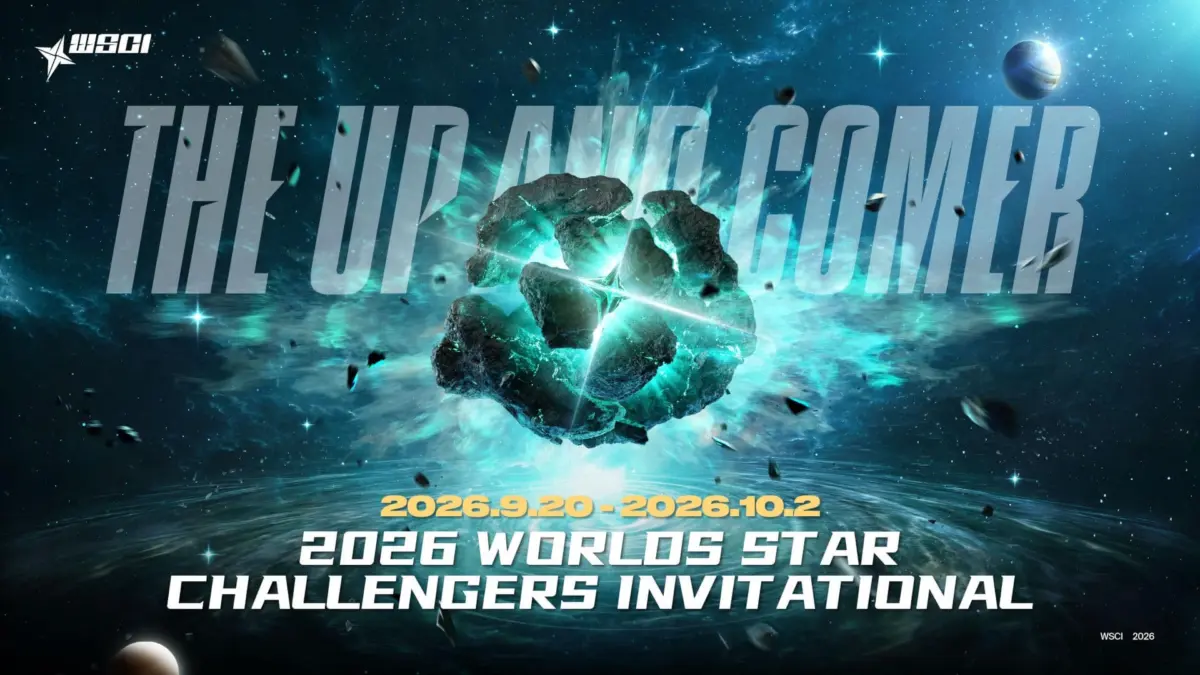
In a landmark shift for the competitive League of Legends ecosystem, Riot Games and TJ Sports have officially announced the inaugural 2026 World Star Challengers Invitational (WSCI). Set to run from September 20 through October 2, 2026, this international tournament represents the first-ever global competition dedicated entirely to Tier 2 League of Legends.
Bringing together 16 elite teams from across all major competitive regions—including China, Korea, the Americas, EMEA, and APAC—the WSCI is structured to serve as an intensive, development-focused showcase. Far from a mere exhibition, the pilot tournament aims to accelerate the career trajectories of emerging talent, bridge the gap between fragmented regional ecosystems, and offer global fans an early glimpse of the next generation of LoL Esports superstars.
Coming during an exceptionally crowded autumn calendar that includes the newly globalized Demacia Cup and the lead-up to the Worlds Play-Ins, the WSCI arrives at a crucial juncture. As traditional powerhouses experience seismic shifts—highlighted by historic roster failures in major leagues—the establishment of a robust Tier 2 global stage could fundamentally alter how organizations scout, develop, and retain talent.
Detailed Chronology and Tournament Structure
The Road to the WSCI: Qualification and Regional Pathways
The tournament format brings together 16 competitive squads selected through a combination of regional pathways and international performance benchmarks. Five major operational regions are participating in the inaugural event:
- China (LPL ecosystem pathways)
- Korea (LCK Challengers ecosystem)
- EMEA (European Regional Leagues / ERLs)
- The Americas
- APAC
Each of the five major regions qualifies three teams via internal Tier 2 structures. To round out the 16-team roster, these 15 regional representatives are joined by the reigning Asia Masters Champion, ensuring that top-tier regional dominance is rewarded with a direct global slot.
Seeding Pools and Group Stage Mechanics
To maintain competitive integrity and balanced groups, teams are distributed into three distinct seeding pools based on regional standing and historical Tier 2 metrics. The group formation follows strict draw constraints designed to mirror premier international events like the World Championship:
- Pool Distribution: Groups are constructed by sequentially drawing one team from Pool 1, one team from Pool 2, and two teams from Pool 3.
- Regional Protections: No single group can contain more than two teams from the same region, and teams originating from Pools 1 and 2 of the same region are barred from being drawn into the same group.
The Group Stage runs from September 20 to September 25. The 16 teams are divided into four groups, playing a grueling double round-robin schedule in a Best-of-One (Bo1) format. At the conclusion of the round-robin matches, the top two teams from each group advance, narrowing the field to eight contenders for the playoff bracket.
The Bracket Stage: From Quarterfinals to the Grand Final
The survival test transitions into the single-elimination Bracket Stage, scheduled from September 27 to October 2.
- Quarterfinals & Semifinals: Played in high-stakes Best-of-Five (Bo5) series, testing the adaptability, mental fortitude, and deep champion pools of developmental rosters.
- The Grand Final: Taking place on October 2, the championship series marks the culmination of the seven-series bracket, crowning the first-ever global Tier 2 champion just as the primary World Championship festivities begin to dominate the global spotlight.
Supporting Context & Metrics: The Tier 2 Landscape and Off-Season Heat
Filling the Competitive Void
The timing of the World Star Challengers Invitational is no accident. The global League of Legends off-season is rapidly heating up, running parallel to other major structural adjustments across the ecosystem. Recently, the Demacia Cup went global for 2026, incorporating 12 teams from all major regions to give mid-tier organizations (typically those finishing 4th to 6th in their respective domestic leagues) a platform for international experience.

However, until now, genuine Tier 2 squads—those grinding through regional leagues without franchise protection or direct access to international LANs—have been isolated within their geographic borders. The WSCI directly addresses this structural vacuum. By functioning as a high-stakes pilot program, Riot Games and TJ Sports are evaluating how cross-regional Tier 2 competition can sustainably support player pipelines before committing to a longer-term global Tier 2 calendar in future years.
Implications for the EMEA Region and European Talent
For fans and organizations across Europe and the UK, the EMEA region’s three qualifying slots represent a vital stake in the tournament. With the premier LEC slots monopolized by the simultaneous World Championship, the WSCI thrusts the Tier 2 ecosystem—most notably teams originating from the LFL and other premier European Regional Leagues (ERLs)—into the international spotlight.
This exposure arrives at a pivotal moment. European development pathways have faced intense scrutiny, particularly as legacy organizations grapple with shifting competitive realities. Notably, Fnatic recently made history for the wrong reasons, missing the World Championship for the first time since 2016. Such seismic failures among Tier 1 giants mean that front offices across the LEC will be monitoring the WSCI closely. Organizations searching for cost-effective, high-upside rookie talent will look to these international matches as proof of concept for European prospects.
Furthermore, the tournament introduces intriguing possibilities for independent and unfranchised rosters. The ongoing conversations surrounding high-profile independent projects—such as the potential resurgence of the Los Ratones roster led by community figures like Caedrel—highlight a growing appetite for alternative competitive pathways. When teams are locked out of permanent partnership slots in major franchise leagues, events like the WSCI provide tangible competitive objectives, monetary incentives, and global visibility that keep non-franchised rosters motivated.
Official Statements and Industry Reception
While full rosters and specific club invitations are still being finalized through regional discretion, the initial announcement by LoL Esports on social media has generated widespread industry enthusiasm.
"Alongside TJ Sports, we’re bringing an international event to Tier 2! 16 teams from Asia, Europe, and the Americas will compete from September 20 – October 2. Make sure to follow your regional Tier 2 social channels for more info…"
— LoL Esports Official Announcement
Industry analysts have praised the initiative for treating Tier 2 not merely as a feeder system, but as a viable competitive product in its own right. By giving academy and Challenger squads a taste of international travel, high-pressure LAN environments, and cross-regional scrimmages, Riot Games is actively safeguarding the long-term health of the professional talent pool.
Future Outlook: What the WSCI Means for the Future of LoL Esports
As the esports industry matures, the challenge of sustainable talent cultivation remains paramount. Traditional sports have long utilized robust minor league and developmental systems (such as baseball’s minor leagues or European football’s youth academies) to foster competitive longevity. Until the introduction of the World Star Challengers Invitational, League of Legends lacked a unified global platform for its equivalent tier.
Key Questions for the Pilot Program:
- Logistics and Sustainability: How smoothly will international travel and technical requirements be managed for 16 developmental teams operating outside the primary Tier 1 broadcast umbrella?
- Viewer Engagement: Can Tier 2 matches capture the imagination of global audiences when scheduled alongside the marquee World Championship Play-Ins?
- Permanent Integration: Will the success of the 2026 pilot lead to a permanent, recurring global Tier 2 circuit integrated directly into the official competitive calendar?
If the 2026 World Star Challengers Invitational successfully achieves its developmental metrics, it could permanently reshape the architecture of competitive League of Legends. For players grinding away in regional leagues, the dream of international glory is no longer exclusively reserved for Tier 1 veterans. Starting this September, the path to global recognition begins in the Challengers tier.
Stay tuned to Esports News UK for continuous updates on regional qualifiers, team rosters, and live coverage as the 2026 World Star Challengers Invitational approaches.




Belum ada komentar. Jadilah yang pertama berkomentar!