

Executive Overview
The digital landscape of modern music festivals has undergone a profound transformation over the past decade, shifting from exclusive, in-person live experiences to hybrid global spectacles that reach millions of screens worldwide. At the vanguard of this movement is "ROCK IN JAPAN FESTIVAL 2026," one of the world’s premier outdoor rock and alternative music events. In a landmark announcement, festival organizers have officially confirmed a comprehensive, multi-platform YouTube broadcast strategy designed to bring the energy, sweat, and unforgettable performances of the festival grounds directly to fans across the globe.
As physical tickets continue to sell out within minutes of release, the decision to broadcast the festival via official digital channels acts as both a democratic cultural bridge and a masterclass in modern event marketing. Scheduled across designated weekends, the broadcast initiative encompasses premiere streams, limited-time archive replays, and meticulously curated setlists from some of alternative rock, indie, and pop-punk’s biggest names.
This comprehensive report provides a deep-dive analysis into the ROCK IN JAPAN FESTIVAL 2026 YouTube broadcast. We examine the exact streaming timetables, the structural framework of the digital rollout, the logistical brilliance of the archive windows, and what this streaming paradigm means for the future of international music consumption.
Detailed Chronology & Streaming Schedule
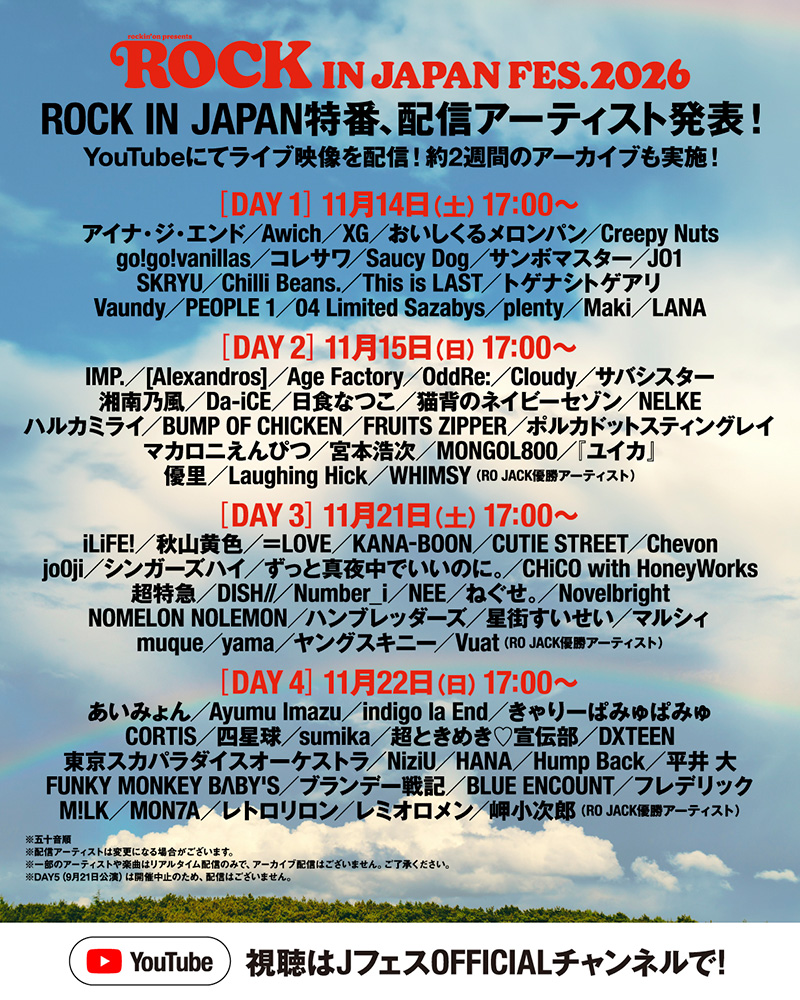
The streaming rollout for ROCK IN JAPAN FESTIVAL 2026 is structured across multiple phases, ensuring that audiences across different time zones can experience the festival live or catch up via delayed playback windows. Below is the precise chronological breakdown of the broadcast schedule, categorized by festival days and streaming formats.
Live-Stream & Premiere Windows
The festival’s broadcast kicks off following the conclusion of the physical event dates, utilizing a premiere format that mimics the communal experience of a live concert. Fans tuning into the official J-ROCK OFFICIAL YouTube channel will experience synchronized viewings with real-time live chat functionality.
- DAY 1 Broadcast (Covering physical event from September 12):
- Date & Time: November 14 at 17:00 (JST)
- DAY 2 Broadcast (Covering physical event from September 13):
- Date & Time: November 15 at 17:00 (JST)
- DAY 3 Broadcast (Covering physical event from September 19):
- Date & Time: November 21 at 17:00 (JST)
- DAY 4 Broadcast (Covering physical event from September 20):
- Date & Time: November 22 at 17:00 (JST)
Extended Archive & Replay Windows
Recognizing that global audiences cannot always tune in during strict premiere windows, festival organizers have established generous archive streaming periods. These windows allow fans to re-watch performances on-demand for a strictly limited duration.
- DAY 1 & DAY 2 Archive Window:
- Availability: From the conclusion of the initial premiere up until November 30 at 18:00 (JST).
- DAY 3 & DAY 4 Archive Window:
- Availability: From the conclusion of the initial premiere up until December 7 at 18:00 (JST).
Fans are strongly advised to bookmark the official J-ROCK OFFICIAL YouTube Channel and set notification reminders, as archive content will be strictly taken down once the expiration timers elapse.
Supporting Context & Cultural Metrics
To fully appreciate the gravity of the ROCK IN JAPAN FESTIVAL 2026 YouTube broadcast, one must examine the economic and cultural ecosystem surrounding modern Japanese music festivals.
The Shift Toward Hybrid Event Models
Over the last five years, live music gate receipts have surged, but physical venue capacities remain finite. ROCK IN JAPAN FESTIVAL, traditionally held across sprawling outdoor venues, faces immense logistical caps on daily attendance. By introducing a high-definition digital layer via YouTube, the organizers effectively bypass physical venue restrictions, democratizing access for students, international fans, and those living in remote regions who cannot afford travel or lodging expenses.
The Rise of Global J-Rock Consumption
Streaming metrics from platforms like Spotify and YouTube over the past half-decade indicate a staggering rise in international consumption of Japanese rock, indie, and alternative music. Bands that once remained strictly domestic acts now boast millions of monthly global listeners. The ROCK IN JAPAN FESTIVAL YouTube broadcast capitalizes on this borderless demand, acting as a high-production-value export mechanism for Japanese contemporary music culture.
Furthermore, the integration of live chat features during premieres fosters a powerful sense of virtual community. Fans from Tokyo to New York, London, and São Paulo share reactions, lyric quotes, and emotional high-fives in real-time, transforming a solitary screen into a global stadium.
Official Statements and Industry Implications
While formal press releases from event stakeholders emphasize the logistical framework of the broadcasts, industry insiders and music economists have been quick to praise the initiative’s strategic vision.
Bridging the Gap Between Artist and Audience
In a joint statement regarding the digital rollout, production leads emphasized that the primary goal is "to ensure the unfiltered energy of the festival grounds reaches every corner of the earth." The curation process for the broadcast involves close collaboration with the performing artists’ management teams to capture optimal audio-visual fidelity, ensuring that the broadcast feels less like a television recording and more like an immersive front-row experience.
Economic Viability and Sponsorship Synergy
From a business perspective, free-to-air YouTube streaming financed through ad-revenue models and corporate sponsorships offers a sustainable alternative to pay-per-view (PPV) models. By keeping the barrier to entry non-existent (free streaming), the festival maximizes viewer volume. This massive eyeball metric, in turn, provides immense value to festival sponsors and increases merchandise sales through direct links embedded in the video descriptions.
Future Outlook: The Next Era of Festival Broadcasting
As we look toward the remainder of the 2020s, the success of the ROCK IN JAPAN FESTIVAL 2026 streaming initiative sets a new benchmark for the global music industry.
What Comes Next?
- Enhanced Interactivity: Future iterations of the broadcast are expected to experiment with multi-cam angle selection, allowing viewers to switch between stage perspectives or focus on specific band members.
- Immersive Audio Formats: With the rapid adoption of spatial audio and Dolby Atmos encoding on consumer playback devices, upcoming festival broadcasts will likely transition from stereo mixes to fully immersive surround soundscapes.
- Extended Digital Longevity: While the 2026 archive windows are strictly limited (expiring in late November and early December), the data gathered from these streams will help organizers tailor future hybrid releases, potentially leading to permanent on-demand library additions or curated compilation specials.
Final Thoughts
The announcement of the ROCK IN JAPAN FESTIVAL 2026 YouTube broadcast is more than just a scheduling update—it is a testament to the resilience and adaptability of live music in the digital age. By opening the floodgates to a worldwide audience, the festival cements its legacy not just as a domestic Japanese institution, but as a titanic pillar of the global rock and alternative music calendar.
Ensure your reminders are set, clear your schedule for the premiere windows, and prepare to experience the pinnacle of Japanese rock culture from the best seat in the house.
For continuous updates, streaming links, and official merchandise, visit the J-ROCK OFFICIAL YouTube Channel.





Belum ada komentar. Jadilah yang pertama berkomentar!