

Executive Overview
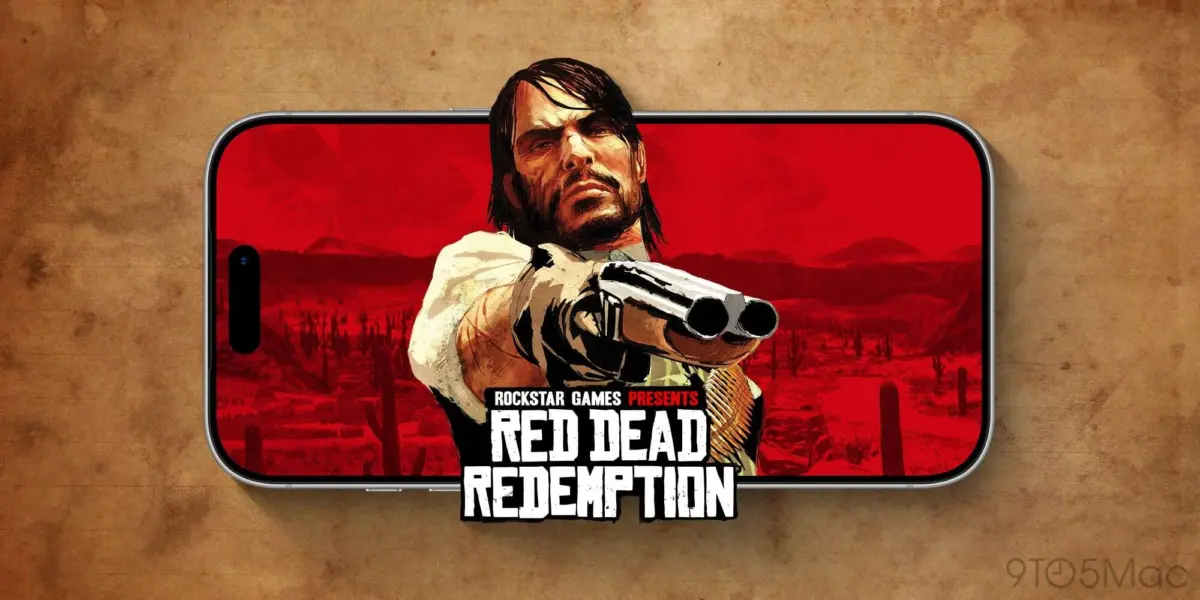
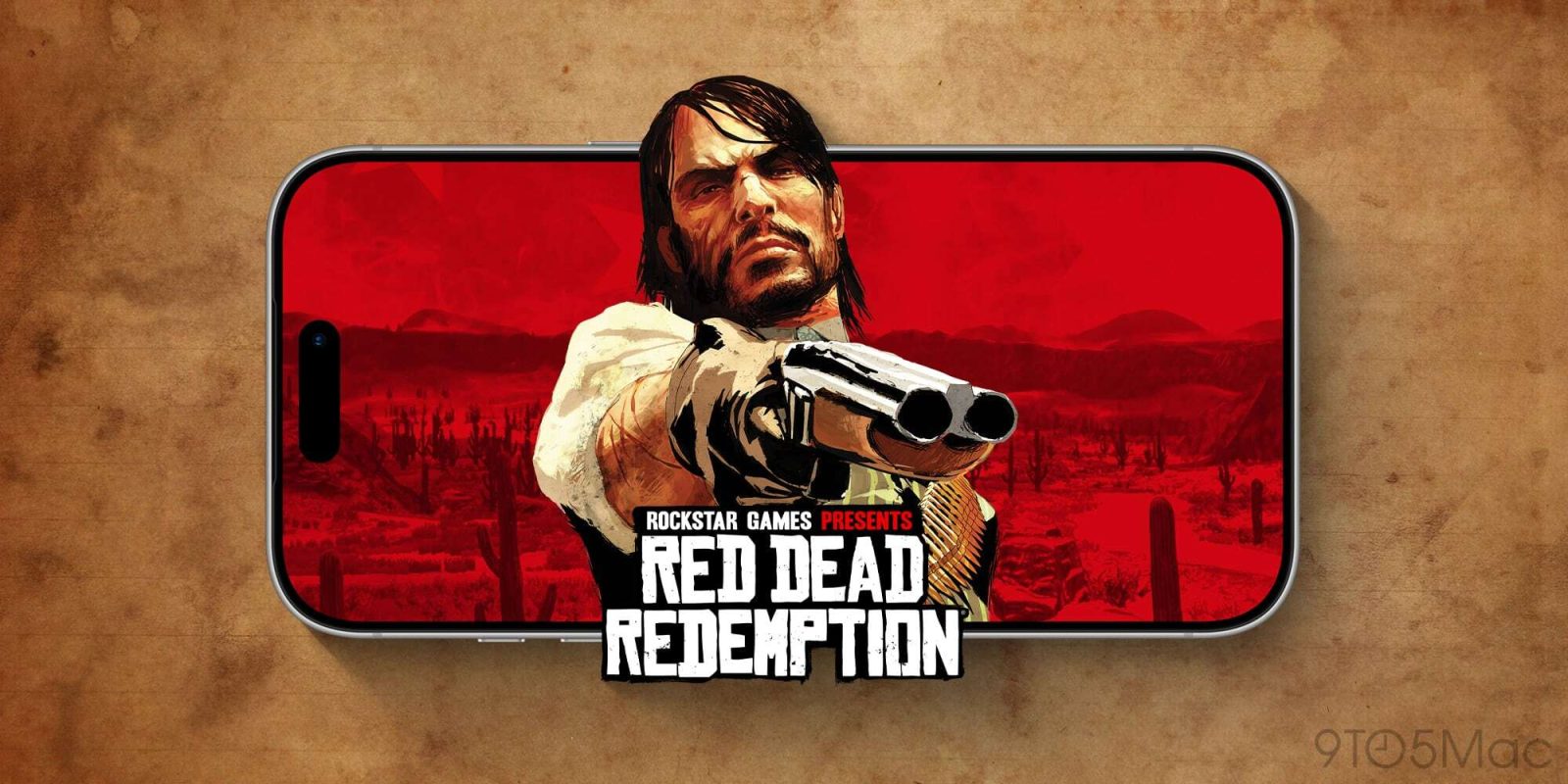
The landscape of mobile gaming is undergoing a seismic shift, transitioning rapidly from casual, microtransaction-heavy time-killers to fully realized, console-quality AAA experiences. In what is arguably one of the most significant announcements for mobile entertainment in recent years, Rockstar Games has officially confirmed that its critically acclaimed 2010 masterpiece, Red Dead Redemption, alongside its iconic zombie-horror companion, Undead Nightmare, is making its way to iOS and Android devices.
Slated for release on December 2, this upcoming launch brings the sweeping, cinematic expanse of the American frontier directly to iPhones and iPads. This rollout isn’t just a standard port; it forms part of a massive, multi-platform deployment that also targets current-generation hardware, including the PlayStation 5, Xbox Series X|S, and next-generation Nintendo hardware.
For Apple users, the release represents a monumental victory for the platform’s burgeoning high-end gaming ecosystem. Propelled in part by Netflix’s aggressive push into high-tier mobile gaming, subscribers to the streaming service will be able to download and play the epic Western without paying an additional fee. Alternatively, players who prefer a standalone purchase can buy the game directly through the iOS App Store.
As Apple continues to optimize its custom silicon—from the M-series chips in iPads to the A-series processors in iPhones—hardware capability is no longer the bottleneck for AAA gaming. Instead, the frontier is opening up, and John Marston’s poignant journey to bury his blood-stained past is about to fit neatly into millions of pockets around the globe.
Detailed Chronology: From the Dust of 2010 to Mobile Integration
To fully appreciate the weight of this December 2 release, it is vital to trace the historical trajectory of Red Dead Redemption and how it crossed the technological chasm from seventh-generation consoles to pocket-sized mobile devices.
The Original Genesis (2010)
When Rockstar San Diego originally released Red Dead Redemption in May 2010 for the PlayStation 3 and Xbox 360, it was hailed as a technical and narrative triumph. Pushing the limits of aging hardware, the title delivered a breathtaking open-world sandbox set in the dying days of the American Wild West. Players assumed the role of John Marston, a former outlaw coerced by federal agents to hunt down the remaining members of his old gang.
Later that same year, Rockstar expanded the universe with Undead Nightmare, a non-canonical, highly praised single-player expansion that injected a fictional zombie apocalypse into the historical sandbox, tasking Marston with finding a cure for a frontier-spanning plague.
The Long Console Purgatory
For over a decade, fans clamored for a modern port or remaster. For years, the game remained locked on the Xbox 360 (via backward compatibility on Xbox One and Xbox Series X|S) and the PlayStation 3 (trapped via cloud streaming on PlayStation Plus). It wasn’t until August 2023 that Rockstar finally broke the silence, bringing the game to the PlayStation 4 and Nintendo Switch, followed by a PC release. However, these versions largely focused on legacy hardware parity rather than pushing forward-facing technology.
The Mobile Pivot and Modern Platforms
The announcement for the December 2 release marks a major paradigm shift. Rockstar is simultaneously launching the titles for mobile devices (iOS and Android) alongside enhanced versions for current-generation consoles (PS5 and Xbox Series X|S).
According to Rockstar Games’ official communications, these new iterations will feature:
- Complete single-player experiences for both Red Dead Redemption and Undead Nightmare.
- All bonus content originally bundled in the Game of the Year Edition.
- Tailored "mobile-friendly control options" designed specifically for touchscreens, alongside anticipated support for Bluetooth game controllers.
- Free upgrades and cross-progression capabilities for eligible players across supported platforms.
Supporting Context & Metrics: The Evolution of iOS as a AAA Platform
The arrival of Red Dead Redemption on iOS is not an isolated event; rather, it is the culmination of a multi-year strategy by Apple, third-party publishers, and subscription services like Netflix to transform the iPhone into a legitimate gaming powerhouse.
Apple’s Silicon Advantage and Metal API
For years, mobile gaming was synonymous with free-to-play puzzle games, gacha titles, and simplified arcade experiences. However, the introduction of Apple’s custom A-series Bionic and Pro chips, coupled with advanced graphics APIs like Metal, changed the engineering calculus. Modern iPhones and iPads possess GPU architectures capable of hardware-accelerated ray tracing, complex mesh shading, and high-fidelity physics calculations that rival entry-level dedicated gaming PCs and last-generation consoles.
Apple has actively courted AAA developers through dedicated developer tools, game-porting toolkits, and high-profile partnerships. Over the past few years, the iOS App Store has welcomed monumental titles such as:
- Resident Evil 4 (Remake)
- Resident Evil Village
- Death Stranding Director’s Cut
- Assassin’s Creed Mirage
- Genshin Impact and Honkai: Star Rail
Adding Red Dead Redemption to this roster bridges a critical gap, proving that open-world sandbox games of epic proportions can run efficiently on mobile hardware without catastrophic thermal throttling or battery drain issues—provided they are optimized correctly.

Netflix’s Gaming Strategy Shift
Another crucial pillar of this release is Netflix’s evolving role in the gaming industry. Since launching its gaming initiative, Netflix has acquired several development studios and rolled out a curated library of mobile games included at no extra cost with a standard subscription.
Initially focusing on indie darlings and casual titles, Netflix has steadily escalated its ambitions. By securing high-profile releases like Red Dead Redemption for its iOS and Android subscriber base, Netflix is positioning its app not merely as a video streaming platform, but as a comprehensive entertainment hub. For millions of consumers, the ability to access a $30+ console port entirely for "free" with their existing video streaming subscription represents an irresistible value proposition.
Official Statements and Industry Insights
The official announcement from Rockstar Games has sent ripples through the gaming community, sparking intense discussions about accessibility, pricing models, and mobile control schemes.
In their official press release, Rockstar highlighted the comprehensive nature of the package:
"On December 2, the epic Western adventures Red Dead Redemption and Undead Nightmare will be available for the latest mobile devices and on current generation consoles — with free upgrades, the ability to carry over game progress, and a number of enhancements. Step into the events immediately following the blockbuster Red Dead Redemption 2, in the critically acclaimed tale of John Marston’s journey to bury his blood-stained past."
Industry analysts have pointed out the strategic genius of timing the mobile release alongside the current-generation console updates. By synchronizing the launch, Rockstar ensures maximum marketing synergy, capturing both hardcore console gamers looking for enhanced performance on PS5 and Xbox Series X|S, and casual or hybrid mobile gamers eager to experience a classic on their iPhones during their daily commutes.
However, questions remain regarding technical specifications. While Rockstar has confirmed the inclusion of "mobile-friendly control options," specific details regarding target frame rates, resolution scaling, and device compatibility lists have yet to be fully detailed. Given the hardware requirements of modern AAA iOS titles, compatibility is expected to be restricted to relatively recent iPhone models equipped with Pro-tier chips and adequate RAM allocations (likely requiring devices starting from the iPhone 15 Pro series or newer for optimal performance).

Furthermore, while Netflix subscribers enjoy access via their streaming membership, non-subscribers will be able to purchase the game as a standalone title directly from the iOS App Store. Pricing structures for the standalone version have not yet been publicly disclosed by Rockstar, though historical pricing for similar AAA mobile ports suggests a premium price point reflecting its console heritage.
Future Outlook: What This Means for the Future of Mobile Gaming
The debut of Red Dead Redemption on iOS on December 2 serves as a bellwether for the future of interactive entertainment. As mobile hardware continues to narrow the performance gap with dedicated consoles, the traditional boundaries separating mobile, console, and PC gaming are dissolving.
1. The Normalization of Hybrid Gaming
Gamers increasingly expect ecosystem fluidity—the ability to pick up a save file across multiple devices. While mobile touch controls have historically been a barrier to entry, the widespread adoption of Bluetooth controllers (such as the Backbone One, Razer Kishi, and standard PlayStation/Xbox controllers) has turned the iPhone into a true portable console. If Red Dead Redemption delivers a seamless controller experience on iOS, it will set a new benchmark for how legacy console games should be adapted for touch-first hardware.
2. Ecosystem Enhancements (iOS 26.2 and Apple Games)
Apple’s concurrent software developments further underscore this trend. With improvements rolling out to the Apple Games app in updates like iOS 26.2, Apple is actively building a centralized hub for discovery, achievement tracking, and social integration. Ecosystem-level support ensures that gaming is no longer treated as an afterthought on Apple devices, but as a core pillar of the hardware’s identity.
3. Will Red Dead Redemption 2 Be Next?
Naturally, the arrival of the first game naturally invites speculation regarding its successor. While Red Dead Redemption 2 features vastly more complex geometry, photorealistic lighting, and massive open-world simulations that push even current-generation consoles to their limits, the rapid evolution of mobile silicon suggests that what is impossible today may be standard procedure tomorrow.
For now, players can ready their revolvers, polish their spurs, and prepare to ride back into New Austin and Nuevo Paraíso. Whether experiencing John Marston’s tragic narrative for the first time on a handheld screen or revisiting the dusty trails through a Netflix subscription, December 2 marks a watershed moment for mobile gaming. The Wild West is coming to the App Store—and mobile gaming will never be quite the same.






Belum ada komentar. Jadilah yang pertama berkomentar!