

Executive Overview
Hospitals, asylums, and morgues are meant to be spaces of healing, sanitization, and the preservation of life. Yet, for decades, filmmakers have weaponized these sterile institutions, transforming them into architectural labyrinths of dread. Whether plagued by supernatural entities, unhinged mad doctors, relentless serial killers, or swarms of flesh-eating ghouls, the clinical setting remains one of the most effective and enduring backdrops in cinematic horror.
In this curated retrospective, film critic Casey Chong takes us on a chilling tour through ten essential hospital-set horror films. By moving past fleeting jump scares—such as the infamous corridor sequence in The Exorcist III or the surrealistic medical imagery of Jacob’s Ladder—this examination dives deep into motion pictures that utilize the hospital environment as their primary canvas. From late-80s low-budget splatter and Lovecraftian cosmic horror to slow-burn psychological thrillers and backwoods slasher prequels, these films exploit the ultimate vulnerability of being trapped, bedridden, and entirely at the mercy of forces beyond our control.
Detailed Chronology: Ten Masterclasses in Medical Mayhem
1. The Dead Pit (1989)
Long before helming virtual reality-themed sci-fi features like The Lawnmower Man and Virtuosity, director Brett Leonard cut his teeth on this under-appreciated late-80s indie hybrid. The Dead Pit mashes asylum-bound mad-science tropes with dream-logic atmospheric dread reminiscent of A Nightmare on Elm Street.
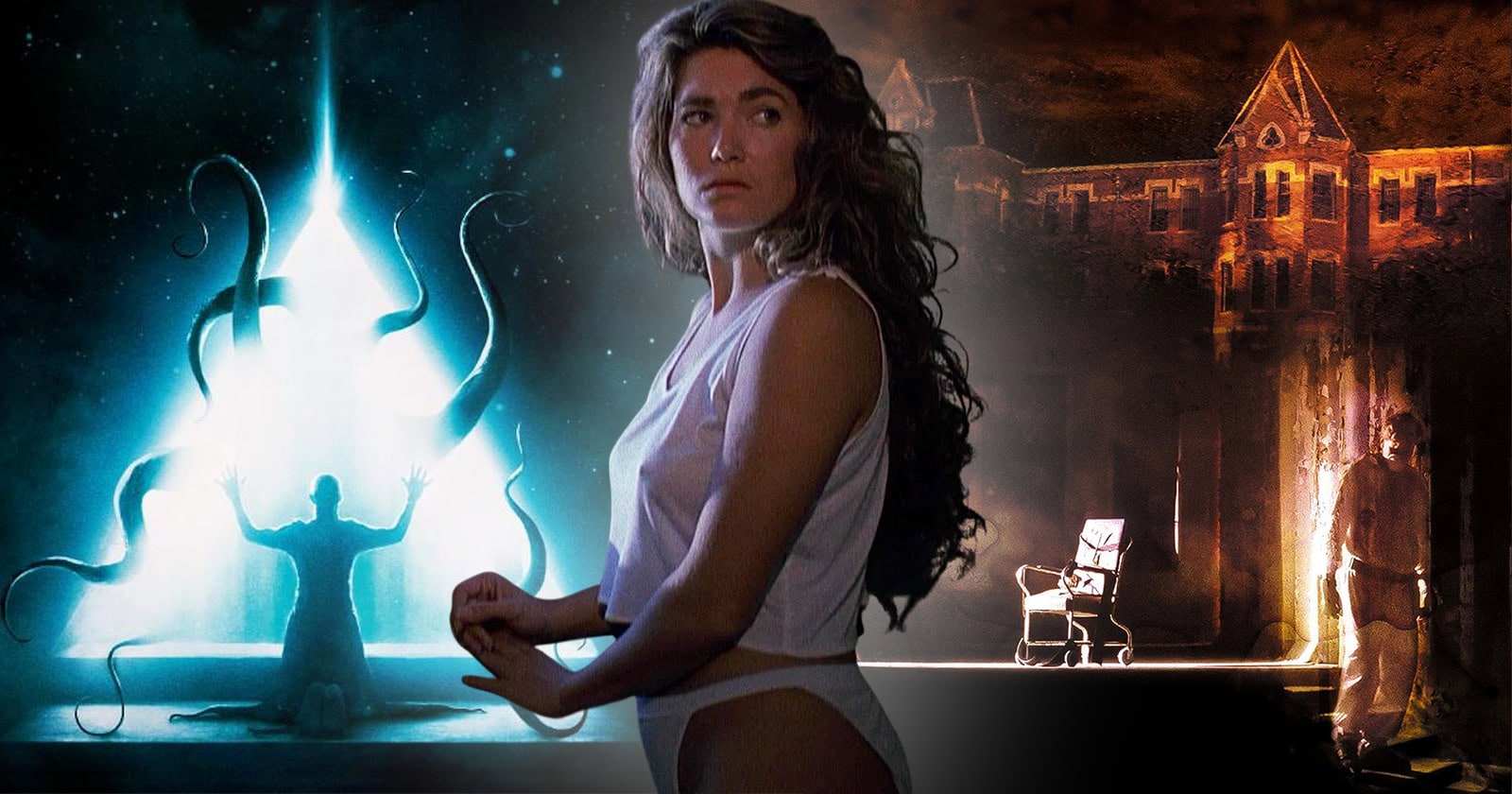
The narrative centers on the deranged Dr. Ramzi—played with scenery-chewing fervor by Danny Gochnauer—who performs unauthorized, unorthodox lobotomies on psychiatric patients in the basement. This cruelty prompts his colleague, Dr. Gerald Swan (Jeremy Slate), to shoot him. Decades later, Dr. Ramzi returns from the dead with glowing red eyes, tormenting an amnesiac protagonist known only as Jane Doe (Cheryl Lawson). Leonard structures the picture masterfully: it begins as a slow-burn psychological thriller built around Jane’s recurring nightmares before culminating in an uninhibited, zombie-centric splatterfest.
2. A Nightmare on Elm Street 3: Dream Warriors (1987)
Following the misdirection of Freddy’s Revenge, director Chuck Russell stepped up for his feature debut to course-correct the iconic franchise. By relocating the action to the Westin Hills Psychiatric Hospital, Russell successfully merged institutional confinement with the surreal, reality-bending terrors of Freddy Krueger (Robert Englund).
The screenplay shifts focus to a group of institutionalized teenagers—survivors of Freddy’s legacy, led by returning series hero Nancy Thompson (Heather Langenkamp)—who unite to weaponize their individual dream powers against the dream demon. Featuring iconic performances like Patricia Arquette in her feature debut as Kristen Parker, the film delivers both inventive, practical gore and empowering narrative turns, proving that a psychiatric ward can double as a training ground for supernatural warfare.
3. Halloween II (1981)
Taking over directorial duties from John Carpenter, Rick Rosenthal transitioned the suburban dread of 1978’s Halloween into the stark, fluorescent-lit corridors of Haddonfield Memorial Hospital. While lacking the atmospheric mastery of its predecessor, Halloween II compensates with high-stakes tension and creative kills, most notably a brutal dispatch involving a scalding hydrotherapy tub.
The film follows a heavily traumatized Laurie Strode (Jamie Lee Curtis) as she struggles to recover from the initial onslaught, only to find Michael Myers stalking the hospital’s labyrinthine halls. By narrowing the scope to a closed medical facility, Rosenthal manufactures pure claustrophobia, ultimately altering the franchise’s trajectory with the legendary sibling twist that linked Michael and Laurie permanently.
4. Visiting Hours (1982)
Fresh off his unforgettable performance in David Cronenberg’s Scanners, Canadian actor Michael Ironside cemented his status as one of cinema’s premier heavies in Jean-Claude Lord’s Visiting Hours. Ironside portrays Colt Hawker, a misogynistic serial killer targeting Deborah Ballin (Lee Grant), an outspoken feminist television journalist.
After surviving an initial attack at home, Deborah is hospitalized to recuperate, unaware that a relentless Hawker has tracked her to her medical sanctuary. Structured as a psychological cat-and-mouse thriller, Visiting Hours relies on raw tension and a chilling sense of predatory pursuit rather than cheap jump scares. Its unapologetically bleak tone and graphic violence against women earned it temporary infamy as a banned "video nasty," but today it stands as a masterclass in hospital-set home-invasion suspense.
5. Session 9 (2001)
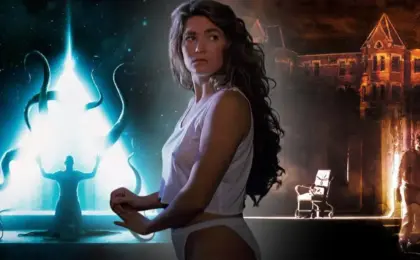
Brad Anderson’s Session 9 remains a masterclass in slow-burn psychological terror, largely due to its unprecedented shooting location: the real, abandoned Danvers State Mental Hospital in Massachusetts. Steeped in a disturbing history of unregulated shock treatments and missing patient cases, the decrepit asylum acts as a living, breathing antagonist.
The plot follows a cash-strapped asbestos abatement crew led by Gordon Fleming (Peter Mullan), who foolishly promises to clear the massive facility in a single week. As the crew members grapple with their own real-world financial and interpersonal stresses—including Phil (David Caruso)—they unearth audio-taped psychiatric therapy sessions. Anderson brilliantly blurs the line between psychological breakdown and supernatural possession, leaving viewers questioning whether the terror originates from the building’s haunted past or the human mind collapsing under pressure.

6. Gothika (2003)
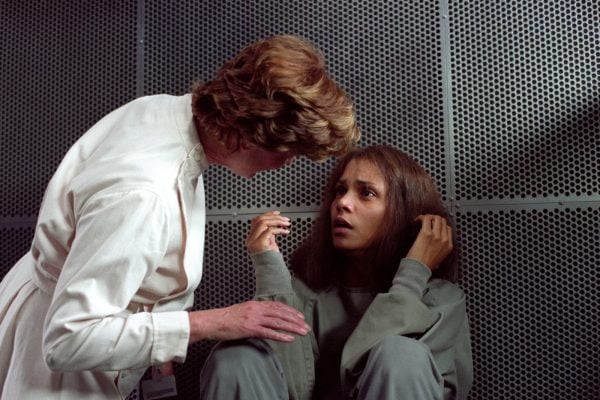
Directed by Mathieu Kassovitz, Gothika asks a terrifying question: What happens when a respected psychiatrist is accused of a brutal murder and imprisoned as a patient in the very facility where she practiced?
Halle Berry stars as Dr. Miranda Grey, who attempts to treat a delusional patient (Penelope Cruz) before a strange vehicular detour on a stormy night leaves her waking up in a maximum-security cell, accused of axing her husband. Supported by Robert Downey Jr. as her bewildered colleague Dr. Pete Graham, Berry anchors this moody, blue-tinted supernatural whodunit. Despite its convoluted plotting, the film makes effective use of its oppressive asylum backdrop to explore themes of gaslighting, memory loss, and descending sanity.
7. The Void (2016)
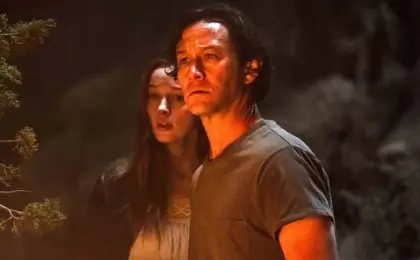
Co-directors Steven Kostanski and Jeremy Gillespie injected pure Lovecraftian cosmic horror into the subgenre with The Void. Throwing audiences in medias res with a violent opening, the film follows Deputy Sheriff Daniel Carter (Aaron Poole) as he rushes a bloodied man to an understaffed, remote hospital.
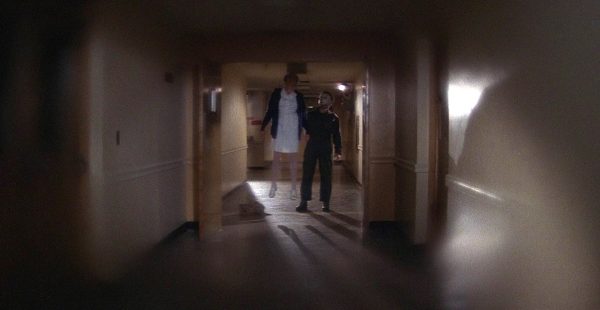
Trapped overnight, the staff and patients find themselves besieged by white-hooded cultists outside and grotesque, tentacled anatomical aberrations within. Relying heavily on crowdfunded, old-school practical effects and moody lighting, The Void pays homage to John Carpenter masterpieces like Assault on Precinct 13 and The Thing, delivering a visceral exercise in siege warfare and otherworldly dread.
8. Wrong Turn 4: Bloody Beginnings (2016 / 2011)
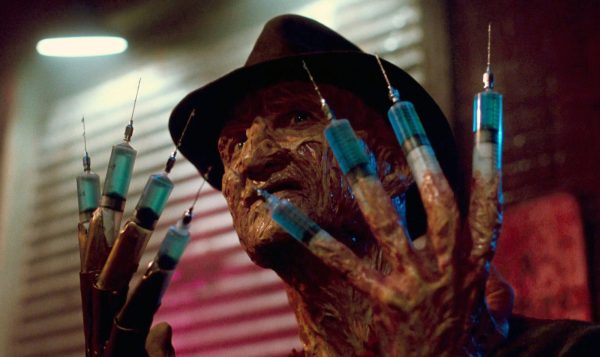
Moving away from the franchise’s typical backwoods landscapes, writer-director Declan O’Brien shifted the fourth installment of the Wrong Turn series to an abandoned winter sanatorium. When a group of university snowmobilers get stranded in a blizzard, they seek shelter in the sprawling asylum, completely unaware that it houses the series’ iconic, inbred cannibal brothers.
Functioning as a brutal prequel, Wrong Turn 4 wastes no time establishing the origins of the killers via an uncompromising opening massacre. The film keeps its pacing relentless, prioritizing practical gore over CGI effects and offering a high body count within the cavernous, freezing halls of the abandoned medical facility.
9. Yummy (2019)
Representing Belgium’s first foray into zombie cinema, Lars Damoiseaux’s Yummy combines hospital horror with high-octane splatter-comedy. The plot follows young couple Alison (Maaike Neuville) and Michael (Bart Hollanders), alongside Alison’s mother Sylvia (Annick Christiaens), traveling to an eccentric Eastern European clinic for a cosmetic breast-reduction procedure.
Clocking in at a brisk 88 minutes, Damoiseaux’s film quickly spirals out of control as an experimental rejuvenation procedure unleashes a virulent zombie outbreak. Embracing traditional, practical gore effects over digital tricks, Yummy succeeds both as a satire of bodily modification and as an unapologetically cynical, fast-paced gore-fest.
10. The Autopsy of Jane Doe (2016)
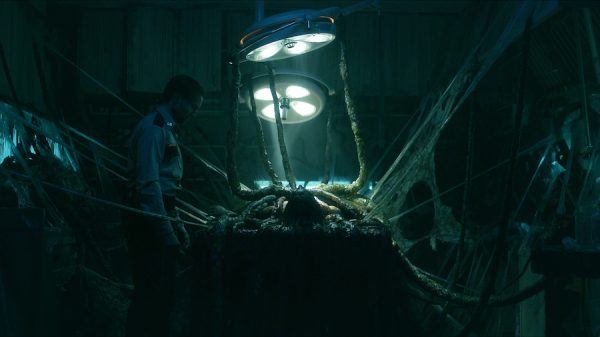
André Øvredal’s English-language debut takes the hospital horror subgenre down to the basement morgue. A father-and-son coroner team, Tommy (Brian Cox) and Austin (Emile Hirsch), receive the unidentified body of a young woman (Olwen Kelly) recovered from a bizarre multi-homicide scene.

As the coroners meticulously conduct the post-mortem exam, they uncover horrifying contradictions: an unblemished exterior paired with internally charred lungs and ancient carved runes lining her skin. The first half plays as an engrossing medical procedural before shifting into a claustrophobic supernatural nightmare. Øvredal uses the sterile, echoey autopsy suite to manufacture intense psychological terror, proving that death can be far more active than life.
Supporting Context & Metrics: The Anatomy of Clinical Fear
The enduring appeal of hospital horror is rooted in real-world psychology. According to cinematic analytics and horror genre studies, medical settings consistently rank among the top triggers for general audience anxiety. The reasons for this are systemic:
- Loss of Autonomy: Upon entering a hospital or asylum, patients surrender their clothes, personal effects, daily routines, and bodily agency to authority figures.
- The Uncanny Valley of Healing: Medical machinery, surgical tools, and antiseptics sit on a razor-thin boundary between saving lives and inflicting invasive trauma.
- Isolation and Confinement: Multi-story complexes, locked wards, and depopulated wings after visiting hours create natural mazes that prevent easy escape.
[ Institutional Setting ] ---> [ Loss of Patient Autonomy ] ---> [ Heightened Vulnerability ]
                                                                       |
[ Practical Gore & Practical Effects ] <--- [ Cinematic Weaponization ] <------+
Furthermore, independent and low-budget filmmakers historically favor single-location shoots—such as abandoned asylums or repurposed clinics—to maximize production value while containing overhead costs. This economic necessity has directly birthed some of the most creative practical effects showcases in horror history.
Official Statements and Industry Insights
Reflecting on the enduring legacy of these cinematic chambers of dread, horror historians and creators frequently point to the psychological weight carried by real-world medical architecture.
"When you strip away a person’s clothes, hand them a flimsy hospital gown, and lock the doors from the outside, you haven’t just admitted a patient—you’ve built a prisoner. Horror filmmakers understand that the ultimate fear isn’t just death; it’s being entirely helpless while someone in authority decides your fate."
— Dr. Aris Thorne, Professor of Film & Cultural Media Studies
Industry analysts note that while CGI has dominated mainstream blockbusters, hospital-set horror movies continue to drive appreciation for practical makeup effects—from The Void’s cosmic tentacles to Yummy’s surgical gore. The texture of latex, fake blood, and real physical props matches the tactile, clinical reality of the settings themselves, grounding the supernatural in visceral physicality.
Future Outlook: The Evolution of Medical Horror
As horror cinema continues to evolve into the mid-2020s and beyond, the clinical subgenre shows no signs of slowing down. Modern filmmakers are expanding the scope of medical dread beyond traditional psychiatric wards and morgues into contemporary nightmares: digital health surveillance, experimental biotechnology, corporate pharmaceutical conspiracies, and automated robotic surgeries gone rogue.
However, the classic tropes explored by Casey Chong—the mad doctor, the vengeful corpse, the trapped final girl, and the echoing, fluorescent-lit corridor—remain foundational. Whether streaming a forgotten 80s gem on platforms like Tubi or experiencing a high-concept supernatural autopsy in a modern theater, audiences continue to willingly check in, knowing full well that checking out alive is never guaranteed.





Belum ada komentar. Jadilah yang pertama berkomentar!