

Executive Overview
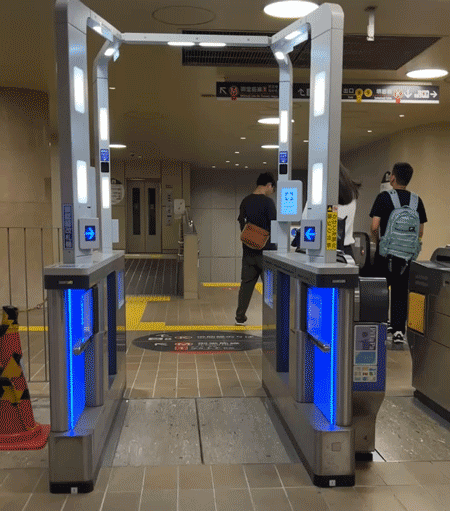
For decades, science fiction has painted a vivid picture of urban mass transit: automated, frictionless, and entirely biometric. From the cybernetic sprawl of Mamoru Oshii’s Ghost in the Shell to futuristic dystopian blockbusters, walking effortlessly through a luminous portal without fumbling for tickets or transit cards has remained an iconic hallmark of tomorrow. Today, that tomorrow is theoretically arriving at select transit hubs across Japan. Following pilot projects on Tokyo’s Tobu Tojo Line, the Osaka Metro has introduced its own high-tech iteration at key stations, including Dobutsuen-mae and Namba, under the banner of the "Face Pass" system.
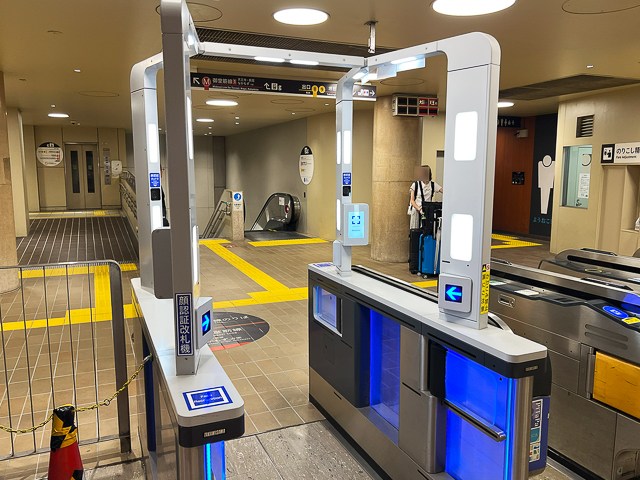
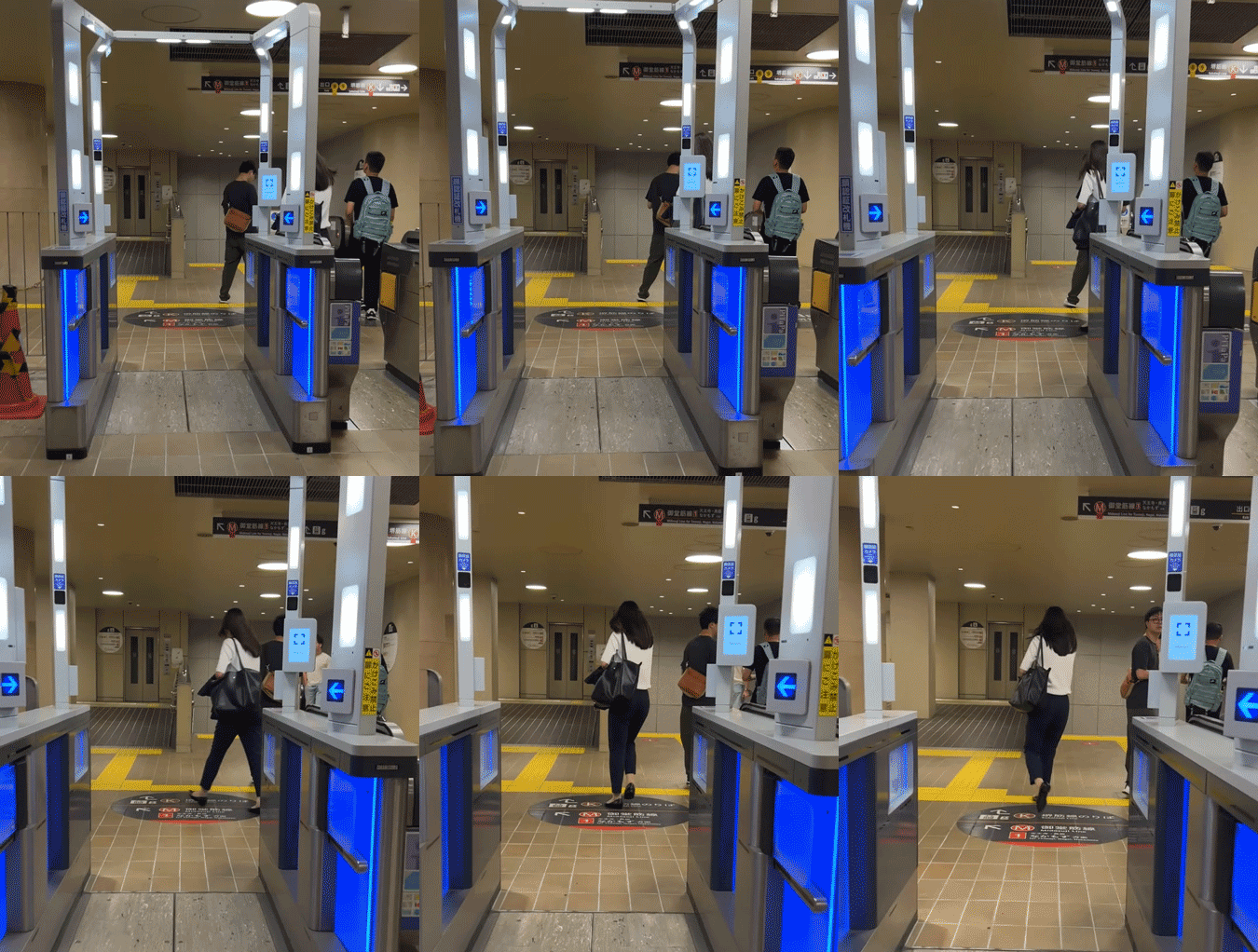
Designed to maximize passenger throughput, eliminate bottlenecks, and streamline the daily commute, these walk-through facial recognition ticket gates resemble airport security checkpoints outfitted with glowing indicators and aerodynamic acrylic barrier arms. Yet, when SoraNews24 staff writer Seiji Nakazawa encountered the infrastructure during a recent visit to Osaka, his high-end sci-fi expectations collided head-on with a surprisingly arduous reality.
What should have been a seamless, futuristic journey quickly devolved into an exhaustive 80-minute bureaucratic odyssey. Between registering for an eMETRO profile, downloading a dedicated mobile application, linking credit card details, purchasing specialized digital passes, and navigating frustrating technical glitches, Nakazawa’s experience underscored a glaring discrepancy. While the underlying biometric technology functions with lightning-fast precision for those who successfully configure it, the convoluted onboarding architecture creates a massive barrier to entry. Rather than serving as a bustling corridor of modern efficiency, these state-of-the-art gates currently stand largely deserted—functioning less as practical public utilities and more as cautionary monuments to premature technological integration.
Detailed Chronology: An 80-Minute Odyssey at Dobutsuen-mae Station
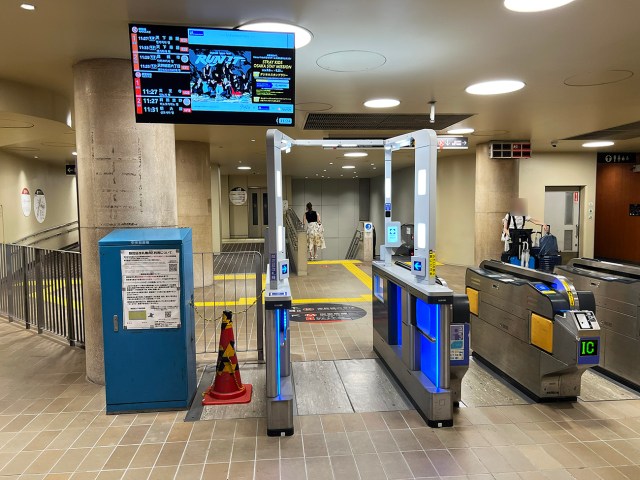
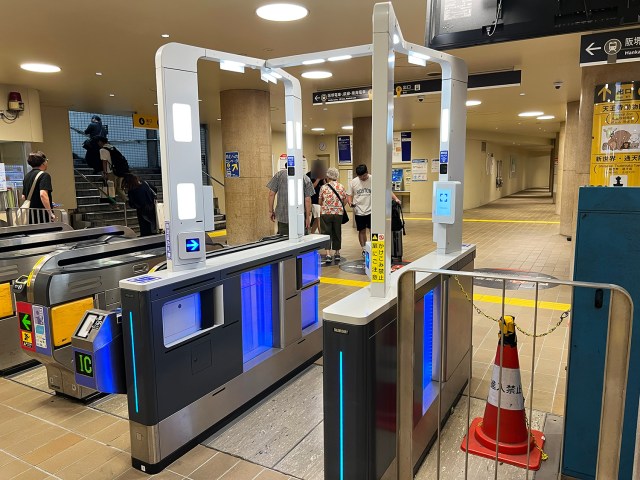
The investigation began at Osaka Metro’s Dobutsuen-mae Station, where Nakazawa’s attention was immediately captured by the installation’s distinctive appearance. Overhead sensor bars, bright LED guidance systems, and transparent, swinging sliding panels gave the portal an imposing, high-security aesthetic. However, the initial sense of wonder was tempered by immediate hesitation. Observing the gates, Nakazawa noticed an eerie absence of commuter traffic; despite the station’s regular flow of travelers, not a single person was utilizing the Face Pass corridor.
The Onboarding Labyrinth
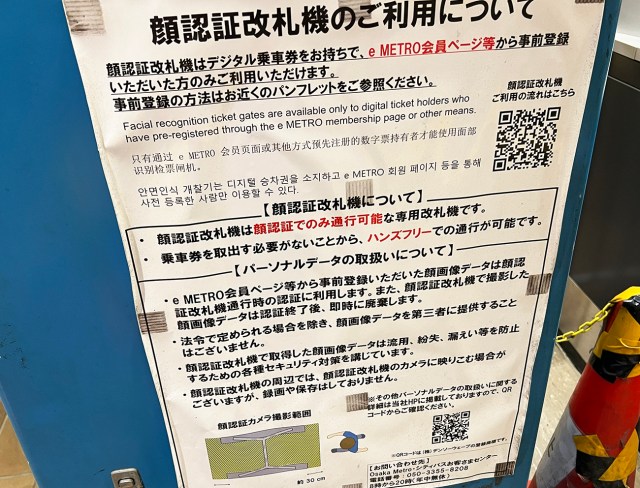
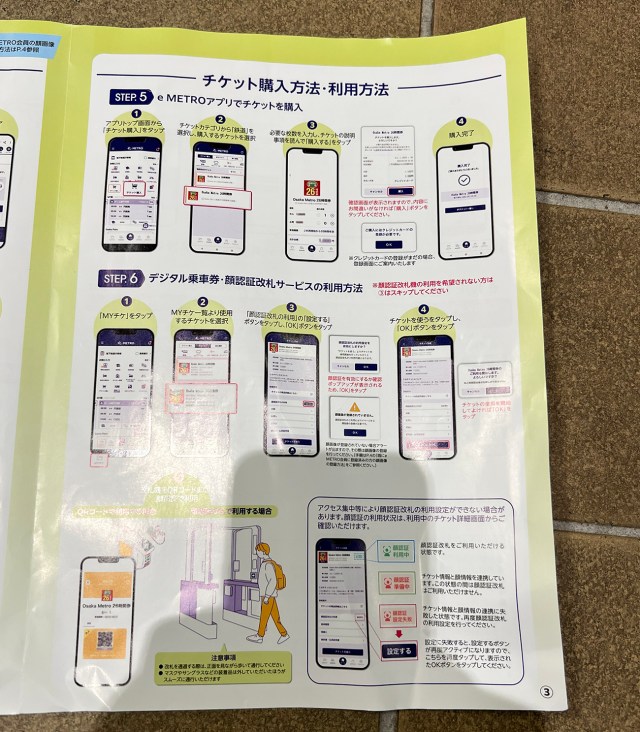
Intrigued by the lack of users, Nakazawa inspected the informational signage posted adjacent to the turnstiles. The root cause of the desolation quickly became clear. To pass through the biometric portal, commuters could not simply tap a standard transit IC card or scan a mobile QR code. Instead, the process mandated a multi-tiered digital registration.
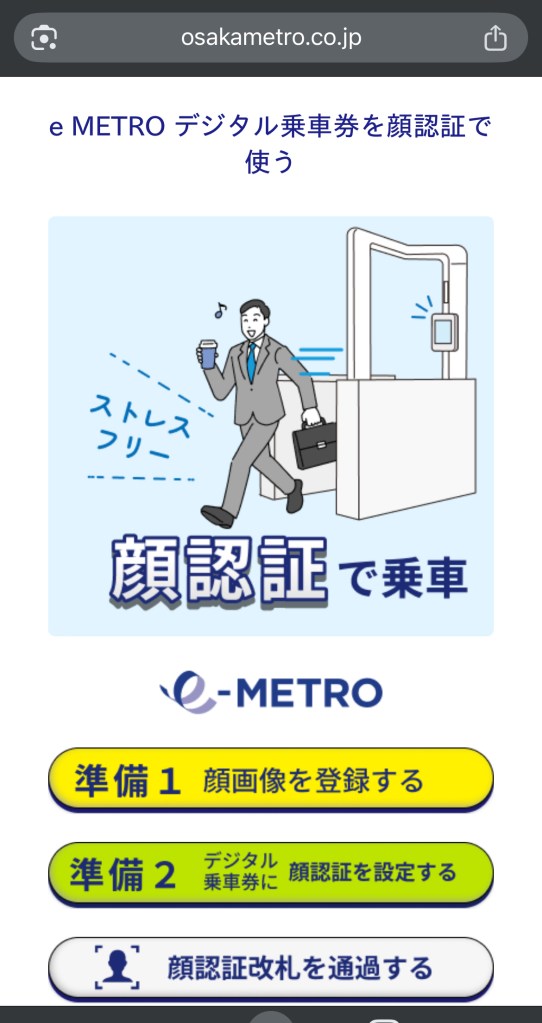
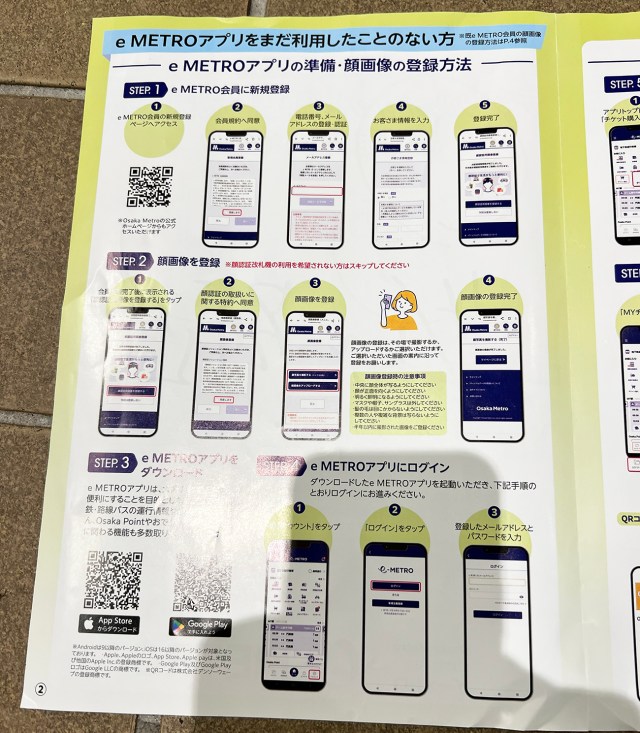
- eMETRO Membership: Users must first register as an online member of the Osaka Metro’s proprietary digital ecosystem, submitting personal identification data.
- Biometric Capture: Commuters are required to capture and upload a high-resolution facial image to their profile.
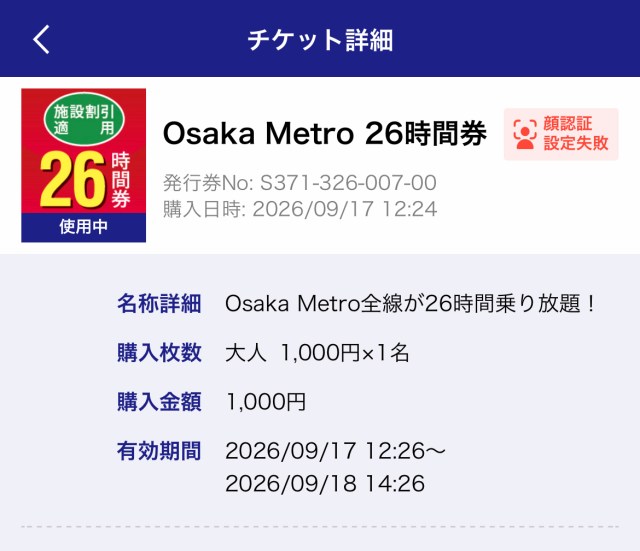
- Digital Ticket Binding: Unlike conventional pay-as-you-go transit cards, the facial recognition system does not interface with standard fare balances. Users must select, purchase, and link their facial profile to a specific promotional digital ticket product—such as the metro’s "26-Hour Unlimited Ride Pass," priced at 1,000 yen (approximately $6.34 USD).
- Financial Integration: Completing the ticket purchase necessitates registering a valid credit card directly within the application environment.
- Gate Enablement: Finally, users must manually toggle the "Use facial-recognition ticket gate" parameter within their digital ticket settings prior to arrival.
Realizing that navigating this dense procedural forest required professional assistance, Nakazawa approached the station attendant’s booth. However, the encounter revealed a critical operational blind spot: frontline railway personnel possessed little to no practical familiarity with the system. Upon hearing the inquiry, the station employee admitted uncertainty, remarked, "Facial recognition, huh? I’m not really sure about that," and proceeded to rummage through a back-office stash of printed literature. Handing over a generic instructional pamphlet, the attendant offered an apologetic smile, leaving Nakazawa to fend for himself in the digital wilderness.
The Trial and Tribulation
Undeterred by the lack of on-site support, Nakazawa pushed forward in the name of journalism. He installed the required eMETRO application, forged through the identity verification hurdles, registered his facial biometrics, added his payment details, purchased the 26-hour pass, and explicitly activated the facial-recognition gate setting.
With all preliminary requirements met, the moment of truth arrived. Approaching the barrier with high expectations, Nakazawa stepped into the scanning zone.
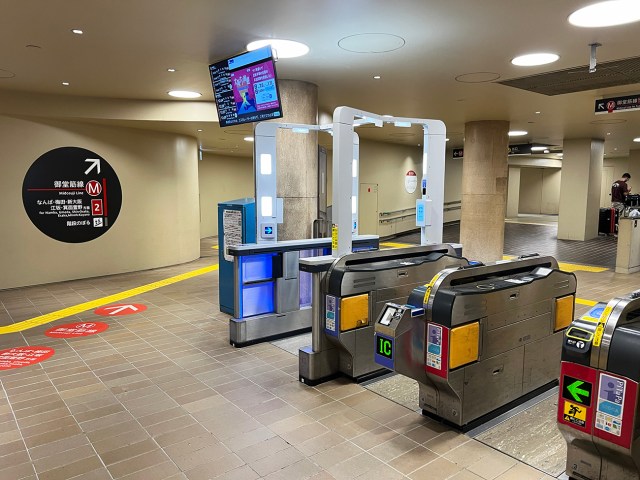
Instead of the smooth, opening glide of a cyberpunk dream, the system abruptly slammed the acrylic doors shut, flashing a bold red "X" across the digital display accompanied by a chilling system message: "Authentication failed."
Calming his rising frustration, Nakazawa re-examined the error logs. In the upper-right corner of his ticket interface, a stark red warning read: "Facial recognition setup failed." Reviewing the fine print on the physical pamphlet provided earlier—and noting identical warnings flashing on the gate’s terminal—he discovered a disclaimer noting that facial recognition may intermittently fail due to high network traffic or server-side constraints.
Assuming the glitch was temporary, Nakazawa waited, stepped back, and re-approached the portal. He repeated the process six distinct times, carefully pacing his attempts to allow for server cooldowns. Each attempt yielded the exact same result: total rejection. After meticulously cross-referencing timestamps on his documentation photos, Nakazawa realized he had spent an astonishing one hour and twenty minutes attempting to board a subway train using his own face. Exhausted, defeated, and running severely behind schedule, he abandoned the biometric experiment and used his standard mobile IC card at the adjacent, traditional turnstile.
Supporting Context & Metrics: The Friction of Biometric Integration
Nakazawa’s frustrating experience is not an isolated incident, but rather indicative of broader systemic friction facing automated transit initiatives across Japan. As railway operators strive to address labor shortages and modernize aging infrastructure, biometric gating systems have emerged as a primary focus for research and development.
The Technological Landscape
- Pioneering Trials: The current Osaka Metro rollout follows similar pilot programs launched by Tobu Railway on the Tobu Tojo Line in Tokyo in July of the same year.
- Operational Scope: In Osaka, the trial is restricted to high-traffic strategic nodes—specifically Dobutsuen-mae and Namba stations—where passenger density normally demands maximum fluidity.
- The Speed Paradox: Despite the painful onboarding hurdles, the technology does work under optimal conditions. During his ordeal, Nakazawa observed a seasoned commuter glide effortlessly through the Face Pass gate. Describing the event, he noted that the transit was "blink-and-you’ll-miss-it fast"—so instantaneous that a passenger could theoretically sprint through the portal without breaking stride.
Why Commuters Hesitate
The core conflict highlighted by the Dobutsuen-mae trial centers on utility versus convenience. While contactless IC cards (such as Suica, Pasmo, and Icoca) or smartphone-based NFC transit passes allow users to enter a station in fractions of a second without prior registration, facial recognition demands a heavy upfront investment of personal data and time.
Surveys regarding biometric data collection in public infrastructure consistently highlight several consumer hesitations:
- Privacy Concerns: Reluctance to store sensitive biometric markers (facial geometry) on third-party corporate or municipal cloud servers.
- Complex Onboarding: Fragmented registration processes that require downloading dedicated apps rather than integrating with established digital wallets (e.g., Apple Wallet or Google Pay).
- Inflexible Fare Structures: Forcing users to buy specialized unlimited-ride tourist or promotional passes rather than supporting standard pay-as-you-go commuter deductions.
Official Perspectives and Industry Insights
While the Osaka Metro has heavily promoted its eMETRO digital strategy as a cornerstone of its "Smart Station" vision, frontline execution reveals a disconnect between corporate ambition and operational reality.
Railway analysts note that introducing novel identification layers without adequate station-staff training creates an immediate bottleneck in customer service. When passengers encounter authentication errors, they naturally turn to station attendants for troubleshooting. If frontline personnel are equally unequipped to diagnose software synchronization failures or server-side latency issues, the resulting gridlock directly undermines the primary objective of automated gates: increasing passenger throughput.
Furthermore, industry observers point out that successful biometric deployments in international transport hubs—such as those tested in certain European and Chinese airports or metro lines—rely on seamless, opt-in registration kiosks embedded directly within the station environment, rather than forcing users to complete multi-step web browser and application configurations prior to arrival.
Future Outlook: Will Japan Embrace the Face Pass?
The long-term viability of walk-through facial recognition gates in Japanese urban transit remains at a critical crossroads. Nakazawa’s concluding assessment captures the sentiment of many modern commuters: until the underlying software ecosystem becomes radically more user-friendly, transparent, and frictionless, these high-tech portals will remain underutilized novelties.
At present, the Face Pass gates at Dobutsuen-mae and Namba stations stand less as functional transit solutions and more as showroom displays—futuristic sculptures taking up valuable concourse space while the vast majority of commuters stream past them to tap their reliable IC cards.
For the technology to transition from a frustrating gimmick into an everyday standard, several evolutionary steps must occur:
- App Consolidation: Integration into existing nationwide digital payment standards rather than requiring isolated, proprietary municipal apps.
- On-Site Kiosks: Implementation of rapid physical registration terminals directly at station entrances to eliminate off-site setup friction.
- Pay-As-You-Go Compatibility: Expanding facial binding to standard commuter passes and stored-fare balances rather than restricting the tech to specialized promotional tickets.
Until these systemic upgrades are realized, reporters like Seiji Nakazawa—and curious commuters alike—will likely keep their faces out of the scanners, choosing instead the quiet, reliable beep of a smartphone transit card.







Belum ada komentar. Jadilah yang pertama berkomentar!