

Executive Overview
In the ever-evolving landscape of Japanese craft beer innovation, few institutions rival Nagano-based Yo-Ho Brewing in sheer eccentricity and marketing panache. Renowned for popularizing playful labels like Yona Yona Ale, the brewery has long championed an ethos of drinking culture that prioritizes whimsy alongside quality. However, their latest product launch transcends mere branding novelty, wading directly into the realm of behavioral psychology and physiological health.
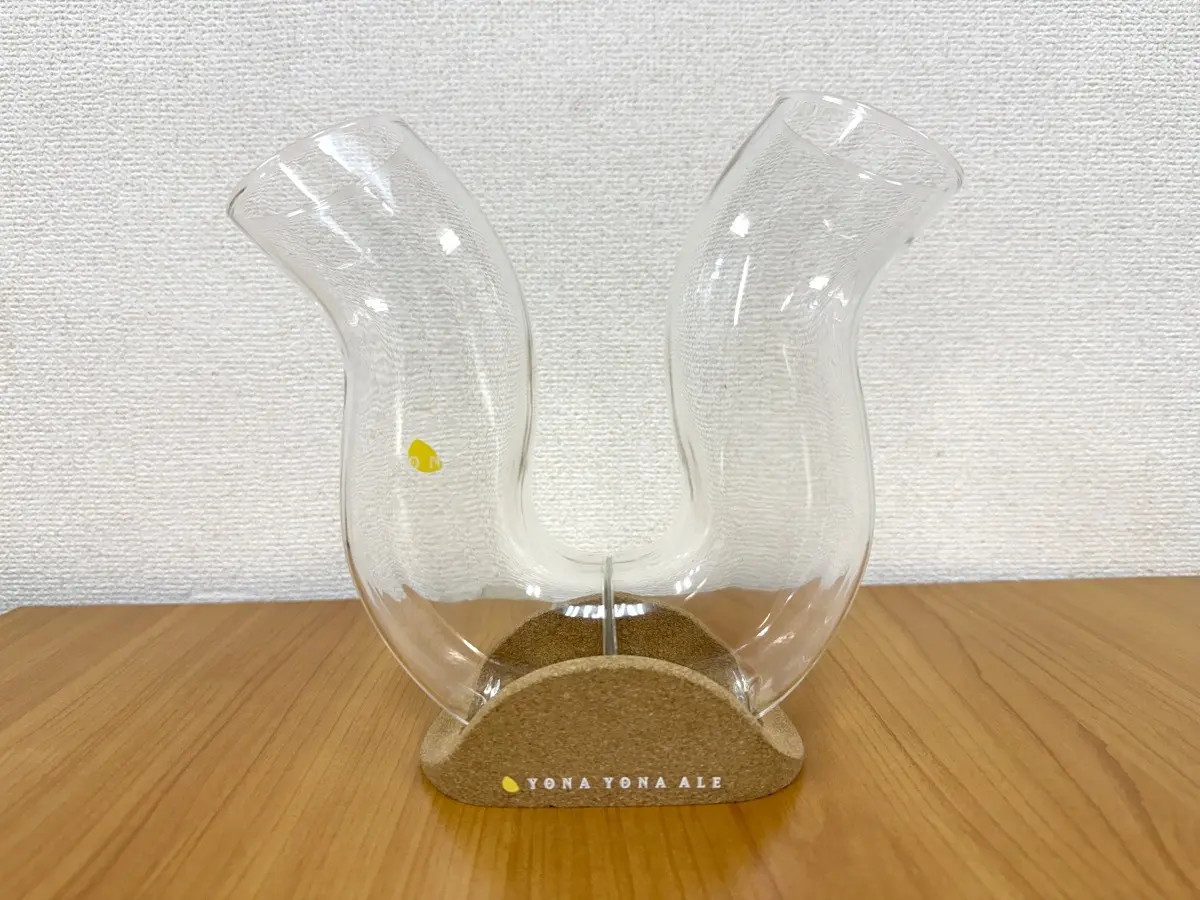
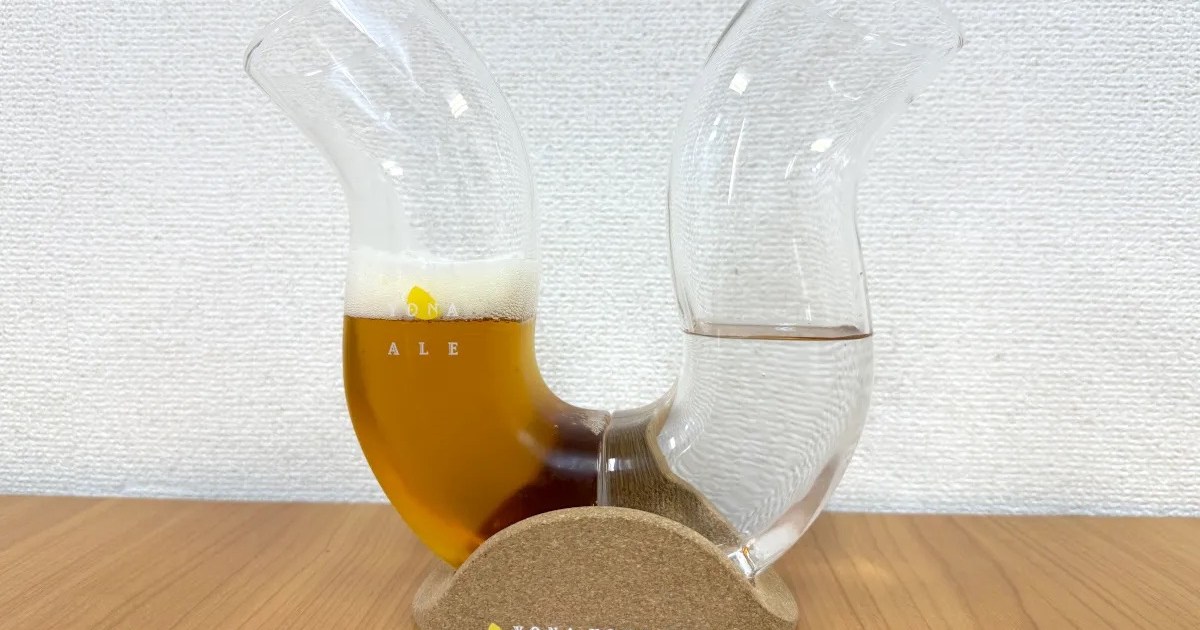
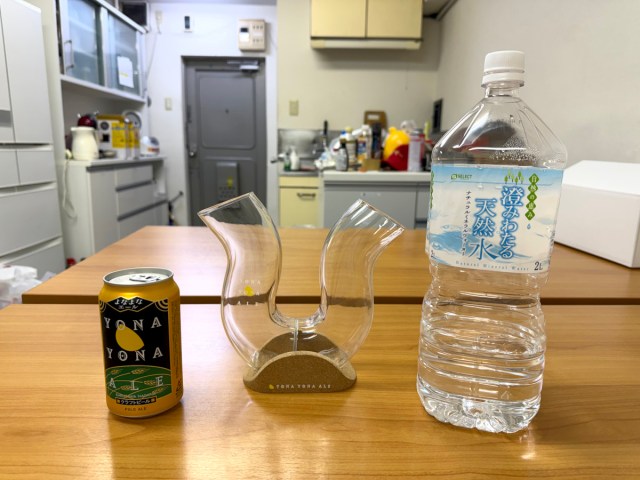
Enter the Furatsuku Beer Glass—commercially dubbed the "Wobbly Beer Glass"—a vessel engineered with a distinct, U-shaped dual-chamber architecture. The mechanics of the glass are deceptively simple yet brilliantly demanding: one side is filled with craft beer, while the companion chamber is filled with water. To keep the vessel standing upright on a flat surface, the consumer must drink from both sides in precise, calculated symmetry. If the liquid levels drift out of balance, the glass lists to one side, threatening to topple over.
Retailing at a formidable 13,750 yen (approximately $85.99 USD), this architectural marvel of glassware is not designed for the casual, mindless chugger. Instead, it is an aggressive behavioral nudge disguised as high-design tableware, explicitly created to enforce responsible drinking habits in a nation with a rich, albeit occasionally punishing, after-work drinking culture.
When a review sample finally landed on the desk of SoraNews24 reporter P.K. Sanjun courtesy of an industry insider at Yo-Ho Brewing, our newsroom seized the opportunity to conduct a rigorous, real-world investigative test of the apparatus. What followed was a surprisingly intense psychodrama—a narrative of high-anxiety sipping, physical contortion, and profound introspection regarding what it truly means to be a "sophisticated drinker." This comprehensive report details the anatomy of the Wobbly Glass experiment, the intersection of Japanese craft beer culture and hydration, and whether this 13,750-yen invention is a stroke of genius or an exercise in ergonomic torture.
Detailed Chronology: A Morning at the Desk with the Furatsuku Glass
The saga began with the arrival of an unassuming parcel at the SoraNews24 editorial office. Unboxed by veteran reporter P.K. Sanjun, the package revealed a piece of glassware that immediately arrested the attention of the entire newsroom. Emerging from its protective wrapping was a U-shaped vessel accompanied by a custom-molded stabilization stand designed for safe, secure storage when not in active use.
Phase 1: Unboxing and Static Equilibrium
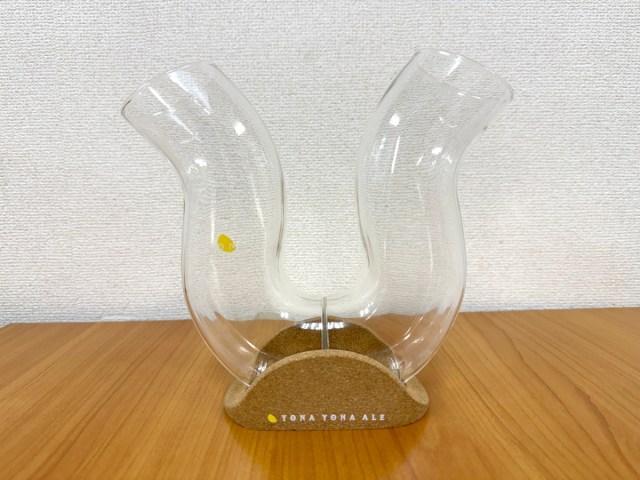
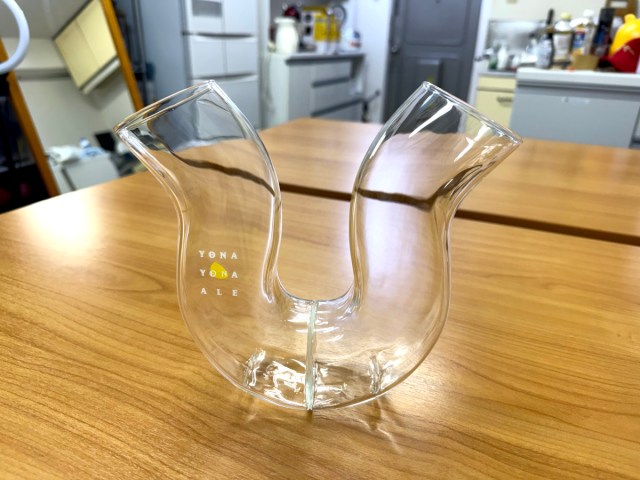
Before a single drop of liquid touched the glass, Sanjun placed the empty vessel gingerly upon his office desk. To the astonishment of the staff, the empty U-shaped glass balanced on its own center of gravity. The physical rule governing the apparatus was immediately clear: as long as the distribution of mass within the left and right chambers remained equal—in this case, zero—the glass would defy initial expectations and stand upright.
Excited by the prospect of elevating a routine afternoon beverage into an exercise in high-end sensory appreciation, Sanjun carried the glass to the office kitchenette. After a thorough cleansing, he prepared his testing materials: a chilled can of craft beer and a pitcher of pure, ambient-temperature water.
Phase 2: The Pour and the Panic
Placing the glass back into its stabilizing stand to prevent any catastrophic pre-pour accidents, Sanjun executed the delicate loading procedure. The left chamber received a generous pour of golden brew, capped with a modest, aromatic head of foam. The right chamber was subsequently filled with an equal volume of water, creating a striking visual contrast of amber and crystal clarity.
With the loading complete, the psychological burden of the experiment truly began. The commercial advertisement for the Furatsuku Glass depicted a serene, refined consumer casually alternating sips between ale and water in an effortless ballet of moderation. Reality, however, proved to be an entirely different beast.
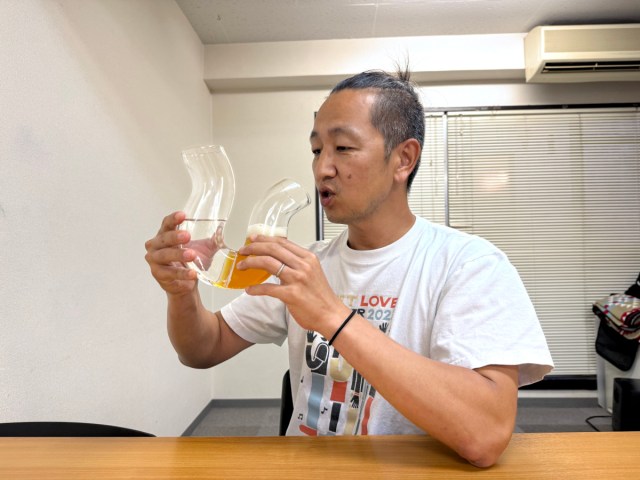
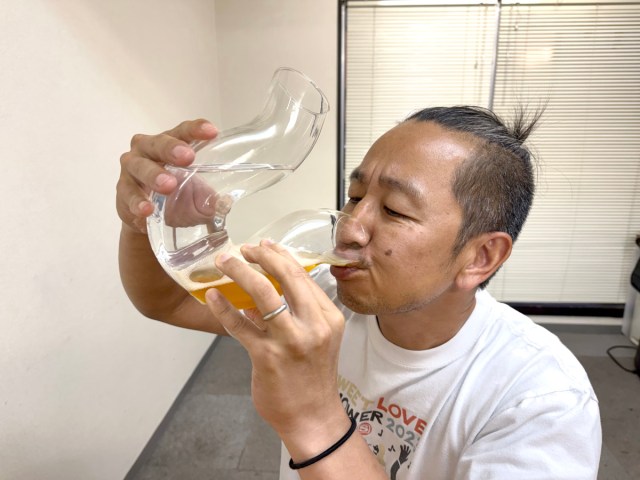
As Sanjun lifted the U-shaped apparatus to his lips, he immediately encountered severe ergonomic hurdles. Drinking from a bifurcated, dual-chamber glass requires a remarkably specific geometric alignment of the face, neck, and hands. Terrified of tipping the vessel and splashing water onto his forehead or ruining his work attire, Sanjun found himself stretching his cervical spine into unnatural, avian postures.
[Left Chamber: Beer]       [Right Chamber: Water]
                                /
                               /
                              /
            [U-Shaped Base] ---> Must remain balanced to stand upright!
Phase 3: The Psychological Toll of Conscientious Consumption
"Usually, when I open a beer, it’s to unwind and decompress from the stresses of reporting," Sanjun noted during the trial. "There was zero relaxation to be found here."
Rather than sinking comfortably into his chair, Sanjun remained locked in a state of high alert. His eyes darted constantly between the two liquid levels, monitoring the meniscus of the beer against the water line. Driven by an instinctive, subconscious fear of breaking a piece of glassware worth over 13,000 yen, he prolonged the holding phase, keeping the heavy glass suspended in his hand far longer than necessary. The apparatus had effectively hijacked his autonomic relaxation response, turning a moment of leisure into a high-stakes balancing act.
Phase 4: Reaching Equilibrium
Recognizing that he could not simply hold the glass indefinitely, Sanjun forced himself to execute alternating sips. He would take a draught of craft beer, pause, evaluate the weight distribution, and then lean over to sip an equivalent volume of water from the opposite side.
Finally, with a mixture of trepidation and resolve, he set the glass down on the desk.
Success.
The U-shaped vessel settled into a stable, albeit slightly listless, posture. It tipped fractionally toward the heavier chamber—an objective mathematical indictment revealing that Sanjun had, in fact, consumed significantly more beer than water. Struck by a sudden wave of digital-age guilt over his lax hydration habits, he dutifully retrieved the glass, finished off the remaining water, and carried the apparatus to the sink for cleanup.
Phase 5: The Post-Mortem and Cleaning Blues
At the basin, Sanjun confronted the final practical challenge of the Wobbly Glass: maintenance. Because of its narrow, folded U-shaped geometry, standard kitchen sponges proved largely ineffective at reaching the internal base of the chambers. He lamented the absence of a specialized, narrow-profile cleaning brush packaged with the product—a minor design oversight for an item commanding a luxury price point.
As the suds washed away, Sanjun engaged in deep philosophical reflection. Was the glass fundamentally flawed, or was the user simply inadequate to the task?
Supporting Context & Metrics: The Science of "Smart" Drinking
To fully understand why Yo-Ho Brewing invested capital and creative energy into developing a glass that actively bullies its user into drinking water, one must examine the broader socio-cultural context of alcohol consumption in Japan.
The Japanese Drinking Landscape
In Japan, workplace socialization (nomikai) and after-work drinking remain powerful cultural institutions for team bonding and corporate networking. However, public health campaigns have increasingly targeted binge drinking and the physiological tolls of dehydration associated with alcohol consumption. The traditional Japanese countermeasure to a heavy night of drinking is yawara-mizu—the intentional practice of alternating alcoholic drinks with glasses of water to maintain hydration, mitigate hangovers, and slow the pace of intoxication.
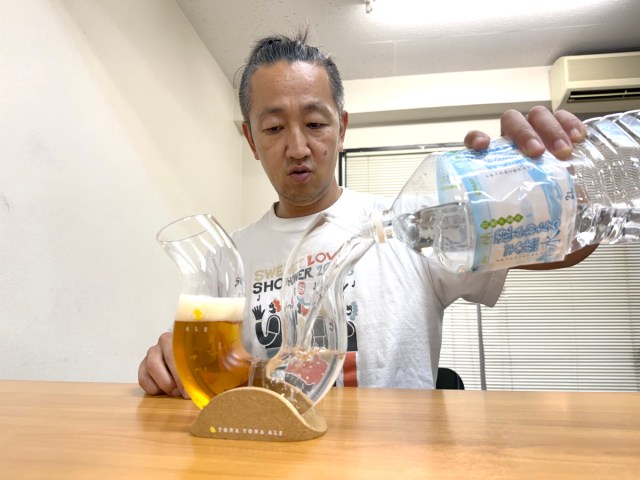
Despite the widespread cultural awareness of yawara-mizu, human willpower often buckles under the influence of alcohol. As inhibitions lower, the resolve to order a separate glass of water frequently vanishes. Yo-Ho Brewing’s Wobbly Glass bypasses psychological willpower entirely by introducing a mechanical dependency: you cannot set your drink down safely unless you have consumed water in tandem with your beer.
Comparative Pricing and Market Positioning
To contextualize the 13,750-yen ($85.99 USD) price tag, consider the standard economics of Japanese craft beer glassware:
| Glassware Type | Target Utility | Average Market Price (JPY) | Average Market Price (USD) |
|---|---|---|---|
| Standard Pint Glass | General serving | ¥1,000 – ¥2,000 | $6.50 – $13.00 |
| Artisanal/Hand-Blown Craft Glass | Enhanced aroma/mouthfeel | ¥3,000 – ¥6,000 | $20.00 – $40.00 |
| Yo-Ho Brewing Furatsuku Glass | Behavioral hydration & novelty | ¥13,750 | $85.99 |
At nearly $86, the Furatsuku Glass is positioned firmly as a luxury statement piece, a collector’s item for craft beer zealots, or a high-concept corporate gift rather than an everyday household staple.
Parallels in Global Drinking Culture
The anxiety experienced by P.K. Sanjun is not entirely unique in the annals of drinking paraphernalia. Across the globe, brewers and pub traditionalists have long invented ritualistic challenges to govern how we consume beer.
- Splitting the G (Guinness Tradition): In Ireland and the UK, drinkers of Guinness strive to consume enough of the pint in a single, uninterrupted gulp so that the liquid level rests precisely bisecting the capital ‘G’ in the embossed branding on the side of the glass.
- The Yard of Ale: Dating back to 17th-century England, the yard glass features a bulb at the bottom that traps air, creating a sudden, violent surge of liquid toward the end of the chug if not handled with expert rotational skill.
Compared to these traditional trials, the Wobbly Glass shifts the challenge from a test of speed or lung capacity to a test of micro-dosing discipline.
Official Statements and Industry Reception
Yo-Ho Brewing’s marketing division has framed the Furatsuku Glass not as a punitive device, but as an invitation to mindfulness. In promotional materials released alongside the product launch, representatives emphasized that modern craft beer consumption should be an intellectual and sensory journey, where pacing oneself enhances both the appreciation of complex flavor profiles and the long-term well-being of the consumer.
Public reception has been sharply divided into two distinct camps:
- The Casual Consumer: Largely intimidated by the price point and the perceived awkwardness of use, viewing it as an amusing internet curio rather than a practical kitchen tool.
- The Hardcore Craft Enthusiast & Experience Seeker: Embracing the glass as an elite party trick, a conversation starter at home dinner parties, and a tangible manifestation of the playful, rule-breaking corporate identity that Yo-Ho Brewing has cultivated for decades.
Where to Experience the Wobbly Glass
For those unwilling to commit the 13,750 yen required to purchase the vessel outright via the official Yona Yona Sato online store, Yo-Ho Brewing has partnered with its own branded hospitality venues to allow patrons to test drive the apparatus in a controlled environment.
The glass is currently featured as an active menu option for adventurous diners at the Yona Yona Beer Works Shintora-dori branch, located in the heart of Tokyo’s Minato ward.
Store Information & Operating Hours
- Establishment: Yona Yona Beer Works Shintora-dori Branch (よなよなビアワークス 新虎通り店)
- Address: Tokyo-to, Minato-ku, Shinbashi, 4-1-1 Shintora-dori CORE 2F
- Operating Hours:
- Weekdays: 11:30 AM – 2:00 PM (Last Order: 1:30 PM) | 5:00 PM – 11:00 PM (Last Order: 10:30 PM)
- Weekends & Public Holidays: 12:00 PM – 10:00 PM (Last Order: 9:30 PM)
- Official Website: yonayonabeerworks.com
Future Outlook: The Evolution of "Nudge Design" in Hospitality
As the hospitality sector looks toward 2027 and beyond, the intersection of behavioral economics and physical product design—frequently referred to as "nudge architecture"—is gaining substantial traction. Products like Yo-Ho Brewing’s Wobbly Glass point toward a fascinating future where consumer goods actively participate in regulating user behavior.
While P.K. Sanjun ultimately concluded that he may lack the stoic temperament required to be a truly "sophisticated" wobbly-glass user, his empirical trial revealed one undeniable truth: he consumed significantly more water during that single drinking session than he ever would have with a standard tumbler.
Whether the Furatsuku Glass becomes a permanent fixture in Japanese drinking culture or remains a brilliant, high-priced flash-in-the-pan remains to be seen. However, by forcing consumers to consciously reckon with their hydration levels while staring down the barrel of a potential table-top spill, Yo-Ho Brewing has successfully sparked a vital conversation about pacing, health, and mindfulness in the modern craft beer movement. For those brave enough to master its physics, the reward is not just a well-balanced glass, but a clearer head the morning after.






Belum ada komentar. Jadilah yang pertama berkomentar!