

Executive Overview
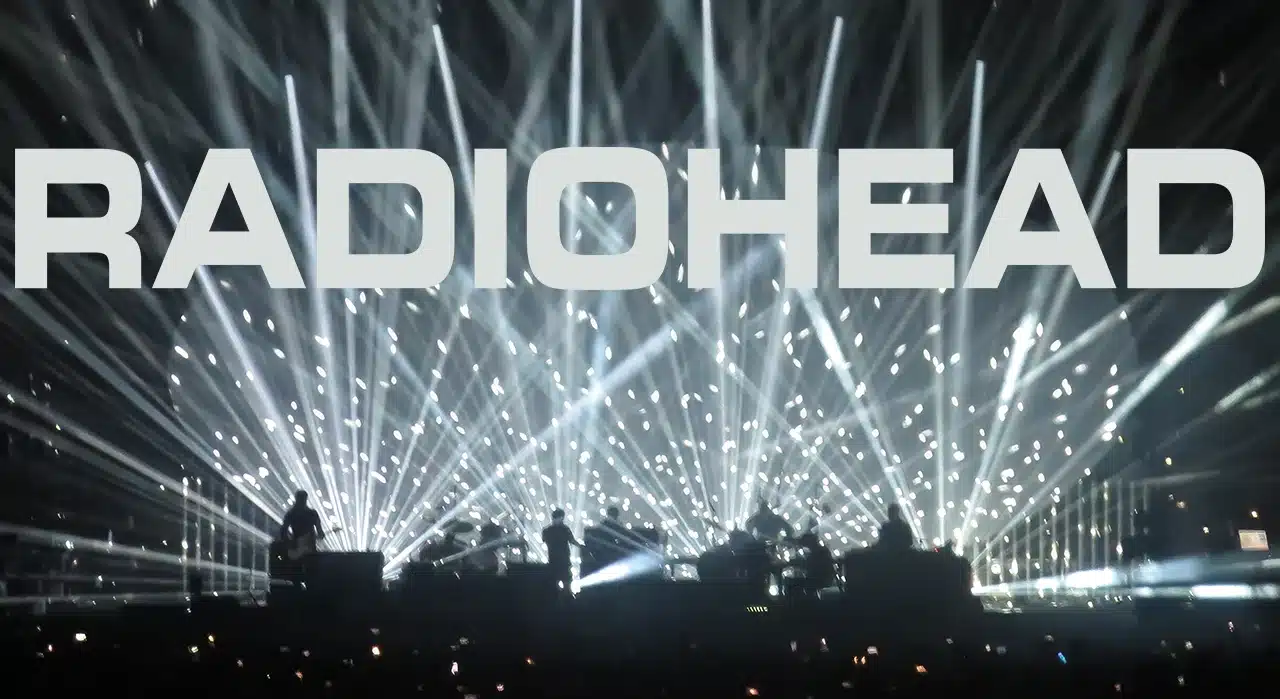
Few entities in the history of contemporary popular music have cultivated a critical and commercial legacy as enduring—and occasionally as polarizing—as Radiohead. Emerging from Abingdon, Oxfordshire, in 1985, the UK-based quintet comprises Thom Yorke (vocals, guitars, piano), Jonny Greenwood (guitars, keyboards, and a boundless array of sonic instrumentation), Ed O’Brien (guitars, vocals), Colin Greenwood (bass, synthesizers), and Phil Selway (drums, percussion).
For four decades, the band has systematically dismantled and reconstructed the paradigms of alternative rock, art rock, and electronic composition. Their trajectory is a masterclass in artistic autonomy. From the angst-ridden guitar pop of their early nineties origins to the icy, mechanical alienation of the millennium, and onward to organic, crowd-sourced distribution models, Radiohead has continually challenged industry standards.
This retrospective examines the band’s landmark compositions, tracing their evolution through the prism of their fifteen greatest recorded works. By dissecting their structural arrangements, thematic underpinnings, and historical contexts, we illuminate why Radiohead remains the defining architectural force of modern alternative music.
Detailed Chronology: From Abingdon to the Avant-Garde
The Genesis and the Breakthrough (1985–1993)
Radiohead’s foundational years were spent quietly honing their craft in Oxfordshire before capturing the global consciousness in 1992 with the release of "Creep." Serving as the lead single from their 1993 debut LP, Pablo Honey, the track encapsulated late-twentieth-century teenage alienation. Driven by its signature, aggressive guitar crunch and Yorke’s masterclass in vocal catharsis, "Creep" established the band as grunge-adjacent newcomers. However, it would take subsequent releases to reveal the true depth of their artistic ambition.
Refining the Alternative Blueprint (1995–1997)
If Pablo Honey announced their arrival, 1995’s The Bends cemented their technical proficiency, inspiring a generation of sonic imitators while showcasing a more expansive, melodic vulnerability. Yet, no contemporary critic or fan anticipated the seismic cultural shift of 1997’s OK Computer. An ambitious, eclectic, and impassioned masterwork, the album diagnosed the creeping anxieties of a digitized, pre-millennial world. It topped countless end-of-century retrospectives and instantly secured its status as a sacred text of modern rock.
The Electronic Reformation (2000–2003)
Faced with the impossible task of succeeding a modern classic, Radiohead executed one of the most radical pivots in recording history. They jettisoned their signature guitars in favor of modular synthesizers, drum machines, and unorthodox instrumentation, actively eschewing the commercial formulas that had made OK Computer a global triumph.
The resulting album, 2000’s Kid A, was as electrifying as its predecessor, sitting alongside it in the pantheon of modern masterpieces. Largely recorded during the same fertile sessions, 2001’s Amnesiac further explored these esoteric, jazz-inflected soundscapes. By 2003, the band synthesized their electronic explorations with their rock foundations on the dense, paranoid Hail to the Thief.
Independence and Modern Mastery (2007–2016)
In 2007, Radiohead revolutionized the music industry’s economic models by releasing In Rainbows as a pioneering "pay-what-you-will" digital download. Musically, the album offered an organic, warm counterbalance to their previous digital experiments.
The surprise deployment of their eighth studio LP, The King of Limbs, in 2011, once again upended distribution norms while generating a fervor no other contemporary act could replicate. This trajectory culminated in the widely acclaimed, richly orchestrated A Moon Shaped Pool in 2016, a testament to a band perpetually refining its emotional and technical palette.
Supporting Context & Metrics: The Top 15 Masterpieces Analyzed
To understand Radiohead’s enduring cultural footprint, one must examine the specific compositions that define their catalog. Below is the definitive ranking of their fifteen most vital recordings.
15. "Exit Music (For a Film)" (OK Computer)
An aching elegy, "Exit Music (For a Film)" mourns the collapse of emotional ambivalence, capturing a narrator who has finally cracked under terminal pressure. While Yorke’s lyrics leave the specific catalysts unstated, the song’s power lies in the character’s stark acknowledgement of an inescapable endgame. When Yorke delivers the closing lines—"We hope / That you choke"—the resulting despair carries a chilling, righteous weight.
14. "Jigsaw Falling Into Place" (In Rainbows)
"Jigsaw Falling Into Place" stands as the definitive sound of a band revitalized. Following the dense, labyrinthine production of Hail to the Thief, In Rainbows flows with the kinetic energy of a crystal-clear river. Yorke urges a lover to release their inhibitions before time runs out. The music itself feels liberated from gravity, culminating in a soaring midpoint vocal delivery that ranks among the least self-conscious, most exhilarating moments in the band’s history.
13. "There, There" (Hail to the Thief)
"Just ’cause you feel it / Doesn’t mean it’s there," offers Yorke in one of his rare moments of paradoxical comfort. "There, There" navigates a surrealist landscape of shadowy threats, reminding the listener that mortal danger is often self-generated. A vital live staple, the track opens with a formidable three-part tribal rhythm executed across the rhythm section. Standing as one of the most straightforward rock tracks of their post-Bends era, it demands to be played at maximum volume.
12. "All I Need" and "Reckoner" (In Rainbows) – Tie
These two compositions represent the chillier, downtempo side of In Rainbows while retaining an undeniable, head-bobbing groove. "All I Need" constructs an ethereal, showstopping sonic climax, whereas "Reckoner" finds Thom Yorke stepping effortlessly into the role of an R&B crooner. Both tracks pulse with intense, unrequited desire, proving that pristine composition can coexist with raw, beating hearts.
11. "Climbing Up the Walls" (OK Computer)
Plainly terrifying, "Climbing Up the Walls" places the listener squarely inside the fractured psyche of an obsessive stalker. Yorke’s promises—"Anywhere you turn / I’ll be there / Open up your skull / I’ll be there"—are chillingly realized. The track’s culminating primal scream is so visceral it feels capable of stripping paint from the walls, making it one of the most psychologically jarring compositions in their repertoire.
10. "Pyramid Song" (Amnesiac)
Few pieces in modern music mirror the otherworldly atmosphere of "Pyramid Song." Jonny Greenwood’s string orchestration signals his evolution into a visionary film composer. The song sways with a narcotic rhythm, mimicking the physical jolt of falling asleep upright. Weaving together mythology from Greek, Roman, and Egyptian traditions, Yorke conjures an evocative meditation on the afterlife that feels as comforting as a solitary swim on a warm summer evening.
9. "Fake Plastic Trees" (The Bends)
Despite Yorke’s early claims that the song was born of off-the-cuff humor or stream-of-consciousness writing, "Fake Plastic Trees" remains an emotionally devastating triumph. Driven by soaring vocals and a fragile, acoustic melody, it stands as the gold standard of the alternative pop ballad: vulnerable, heartfelt, and permanently primed for arena-wide illumination.
8. "Creep" (Pablo Honey)
It commands its place in the canon by sheer force of cultural ubiquity. "Creep" remains one of the few grunge-era anthems that sounds as urgent today as it did decades ago. From Yorke’s masterful vocal release in the bridge to the iconic, structural guitar crunch, the song successfully condenses adolescent alienation into four timeless minutes.
7. "Everything in Its Right Place" (Kid A)
When sequenced immediately following OK Computer, "Everything in Its Right Place" announced a radical stylistic departure. Eerie, cyclical, and mechanized, the track discarded analogue rock foundations in favor of synthetic pulses and manipulated vocals. Yet, beneath the digital processing, Yorke’s resonant passion proves unequivocally that Kid A was crafted by humans, for humans.
6. "Karma Police" (OK Computer)
Serving as the logical extension of the melodic pop-rock architecture laid down on The Bends, "Karma Police" elevates standard instrumentation (acoustic guitar and piano) into an exquisite masterwork. Masterfully paced, the track unfolds gradually before culminating in a breathless finale where Yorke wails, "For a minute there / I lost myself," leaving listeners utterly captivated.
5. "No Surprises" (OK Computer)
The first track recorded during the OK Computer sessions, "No Surprises" set an impossibly high standard for the album. Its fragile, understated instrumentation—featuring a gentle acoustic guitar and glockenspiel—belies the crushing despair at its core. The song paints a vivid picture of modern alienation, contrasting a narrator’s yearning for domestic simplicity against an inescapable, quiet devastation.
4. "Paranoid Android" (OK Computer)
Arguably the most compositionally ambitious track in the band’s history, "Paranoid Android" is a multi-suite epic that seamlessly traverses disparate sonic landscapes without losing momentum. Inspired structurally by the Beatles’ "Happiness Is a Warm Gun," the track required staggering technical ingenuity. It successfully welds together biting satire—exemplified by Yorke’s critique of the "kicking squealing Gucci little piggy"—with transcendent musicianship.
3. "Kid A" (Kid A)
Operating as the sonic blueprint for a dystopian future, the title track of their fourth LP is a fascinating paradox: it radiates a singular human warmth while remaining brilliantly alien. Yorke’s vocoder-filtered vocals render the lyrics an extraterrestrial dialect, yet the buoyant, forward-moving spirit of the rhythm needs no translation, pulling the listener inexorably into its orbit.
2. "Let Down" (OK Computer)
"Let down and hanging around / Crushed like a bug in the ground." While the lyrical refrain of "Let Down" focuses on utter defeat, the musical arrangement is aggressively triumphant. Majestic, cathartic, and bursting with yearning, the song builds to a breathless final crescendo. Featuring ingenious left-and-right channel counterpoint harmonies in its final ninety seconds, the track delivers a rush as euphoric as pure dopamine.
1. "Idioteque" (Kid A)
The undisputed pinnacle of Radiohead’s catalog, "Idioteque" is a musical incantation of pure dread and artistic brilliance. It represents the absolute synthesis of their electronic experiments with the immediate, visceral impact of classic rock songwriting. Built upon an indestructible rhythm and an irresistible groove, it stands as a generational masterpiece that seizes the heart, head, and hips simultaneously, refusing to let go.
Official Statements and Artistic Philosophy
Throughout their career, Radiohead members have consistently articulated a philosophy centered on creative discomfort. Speaking on the motivations behind the radical stylistic pivot from OK Computer to Kid A, Thom Yorke noted in archival interviews that repeating stylistic formulas was viewed internally as creative death.
"We were just paralyzed," Yorke remarked regarding the period following their 1997 world tour. "Every time I picked up a guitar, I just wrote the same rubbish. I had to stop."
Similarly, guitarist Jonny Greenwood has frequently emphasized that the band’s embrace of electronic equipment was not a rejection of rock music, but an expansion of their sonic vocabulary. "We wanted to use instruments that felt unfamiliar to us," Greenwood explained. "When you don’t fully know how to play something, you make mistakes, and in those mistakes, you find new music."
Future Outlook
As Radiohead moves into its fourth decade, the band’s members have increasingly focused on various side projects—most notably Thom Yorke and Jonny Greenwood’s work with The Smile, alongside individual film scoring and solo endeavors. Yet, the gravitational pull of Radiohead remains undeniable for both the creators and their global audience.
While official announcements regarding a new studio LP or extensive touring cycle remain deliberative, the band’s legacy is secure. They have fundamentally rewritten the rules of modern composition, distribution, and artistic integrity. Whether they choose to re-enter the studio together or allow their monumental catalog to stand as their final word, Radiohead has permanently altered the DNA of contemporary music, ensuring that their intricate architecture of modern anxiety will be studied for generations to come.









Belum ada komentar. Jadilah yang pertama berkomentar!