

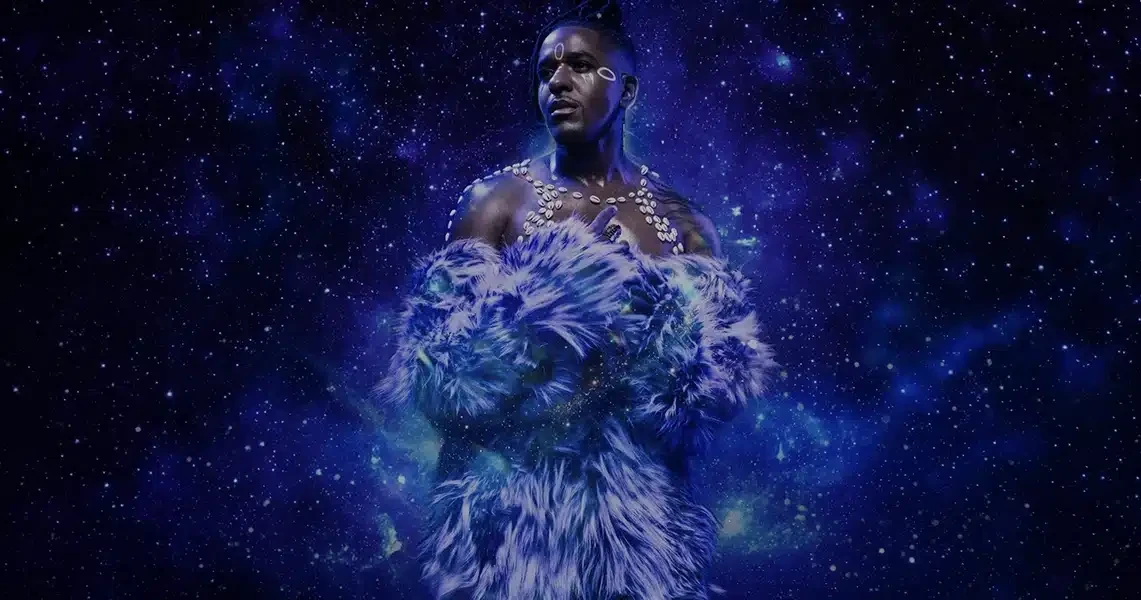
Executive Overview
On August 21, 2026, genre-defying artist and visionary Matthew David Benson—professionally known as Matt B—released his third and final installment of the landmark ALKEBULAN trilogy, titled ALKEBULAN III: The Water Remembers (Vitae Records). The album represents more than a commercial capstone; it serves as a profound, cross-continental meditation on ancestry, generational trauma, historical reclamation, and the enduring physical markers of the transatlantic slave trade.
Centering its thematic universe around the two immutable objects that defined the Middle Passage—the architectural door and the body of water—the record bridges continents, centuries, and musical vocabularies. The project opens with "At the End of the Door," born from Benson’s physical pilgrimage to the Door of No Return at Elmina Castle in Ghana, and closes with its title track, where a deep, electronically processed male voice personifies the Atlantic Ocean. In doing so, the record achieves a rare narrative feat: an artist searching for his historical origins ultimately yields the microphone to the sole eternal witness of that history.
This release follows an extraordinary trajectory that has seen Matt B transition from a Chicago church-choir youth to a viral sensation in Asia, a Billboard-charting trap-soul innovator, and, most notably, a historic Grammy Award winner. His previous record, ALKEBULAN II, made history by securing the 2025 Grammy Award for Best Global Music Album, a victory that simultaneously bestowed the 79-year-old Royal Philharmonic Orchestra its first-ever Grammy win.
ALKEBULAN III deepens this orchestral-Afrobeats synthesis, incorporating the legendary Abbey Road Studios sessions, traditional West African highlife, Amapiano rhythms, and the striking, visceral harmonies of the Kabusa Oriental Choir. Yet, the album is as notable for its cultural vulnerability—highlighted by Benson’s learned, imperfect Igbo phrasing—as it is for its grand symphonic scale. Operating at the intersection of high art, genealogical discovery, and a multi-platform media rollout that includes short films and docuseries, ALKEBULAN III asks hard questions about modern identity, corporate genealogy, and the price of artistic authenticity.
Detailed Chronology: From Chicago Choirs to the Shores of West Africa
The Early Years and Global Pivots
The journey of Matthew David Benson is defined by unexpected geographic and stylistic leaps. Raised in Chicago, Benson honed his vocal instrument singing in church alongside his two older brothers, an early collaboration that manifested in their teenage family vocal group, TriEnd. However, his breakthrough into the international music landscape did not follow the traditional North American route.
Instead, Benson initially cultivated a robust, dedicated audience across Asia. His single "Colour Blind" unexpectedly went viral in China, establishing his capacity to connect with listeners across stark cultural and linguistic boundaries. This global fluidity paved the way for his 2021 trap-soul record Eden, which successfully breached the Billboard charts and positioned him for mainstream international recognition. That momentum culminated in 2022 when his collaboration with Ugandan star Eddy Kenzo, "Gimme Love," earned a prestigious Grammy nomination.
The ALKEBULAN Genesis
The genesis of the ALKEBULAN trilogy began not with a grand musical design, but with a biological inquiry. In 2019, Benson took an AncestryDNA test, which initially informed him that his heritage was predominantly Nigerian—a broad designation that left the artist searching for deeper, more localized context.
Unfazed, he channeled this quest into music. The first volume, ALKEBULAN, dropped in 2023, followed swiftly by ALKEBULAN II in 2024. The second album proved to be a watershed moment in contemporary music history. By winning the 2025 Grammy Award for Best Global Music Album, it achieved an unprecedented milestone: integrating the time-honored traditions of the Royal Philharmonic Orchestra—an institution tracing its origins back nearly eight decades—into the global Afrobeats phenomenon for its first-ever Grammy victory.
The 2026 Pilgrimage and Recording Sessions
Buoyed by his Grammy success, Benson pursued genealogical truth with renewed vigor. Subsequent DNA profiling unveiled a specific, traceable bloodline connecting him directly to the Igbo people of Owerri, located in Imo State, Nigeria.
The summer of 2026 marked a whirlwind period of artistic creation and ancestral homecoming. In June 2026, Benson entered the historic Abbey Road Studios in London, spending two intense days recording symphonic arrangements with the Royal Philharmonic Orchestra. Immediately following the Abbey Road sessions, Benson, alongside his wife and manager Angela V. Benson, embarked on a transformative ten-day expedition to West Africa.
The pilgrimage carried profound emotional and spiritual weight:
- Ghana: The couple visited the Assin Manso Slave River—the historic site where captured Africans were bathed before facing the brutal march to the coastal slave castles—and participated in a sacred blessing ceremony.
- Nigeria: Benson’s homecoming was marked by deep communal integration. He was formally bestowed with the Igbo name Ikechukwu, honored with two distinct chieftaincy titles, and, most importantly, introduced to his living blood relatives in person for the first time.
This real-world immersion directly informed the creation of ALKEBULAN III, transforming the tracklist from a standard album into a continuous, cinematic suite.
Supporting Context & Metrics: Musical Architecture and Cultural Critique
Sonic Landscape: A Suite of Tradition and Innovation
Musically, ALKEBULAN III rejects standard pop structures, opting instead for a seamless, suite-like flow where orchestral interludes bleed into percussion-heavy anthems, defying neat radio-friendly resolutions.

- "Nothing Dey Pa" (featuring Skales): Serving as the album’s initial rhythmic anchor, the track pairs swaggering faith with Pidgin lyricism over classic Afrobeat shakers.
- "Iri Ji": Leans heavily into highlife guitar traditions, blending seamlessly with the bright, soaring high register of guest artist Boy Spyce to evoke a celebratory communal atmosphere.
- "Overboard": Represents the darkest emotional abyss of the record. Sung entirely in Igbo, it functions as a hypnotic chant and incantation, fortified by the massed vocal gravity of the Kabusa Oriental Choir.
- "My Mother’s Song": A transcendent cultural dialogue pairing Matt B with Malian icon Fatoumata Diawara. Diawara sings her contribution in Bambara; the juxtaposition of two distinct West African languages within a single prayerous framework carries a visceral emotional resonance that outstrips any orchestral arrangement.
- "Igirigi" (featuring Goya Menor): The most immediately accessible, Amapiano-adjacent track on the project, engineered for global dancefloors while retaining deep rhythmic roots.
The Choir as the Ultimate Instrument
While the inclusion of the Royal Philharmonic Orchestra provides sweeping symphonic majesty, the secret weapon of ALKEBULAN III is undoubtedly the Kabusa Oriental Choir. The choir executes traditional techniques that a classical European orchestra cannot replicate: precise call-and-response structures, piercing ululations, and the resonant, earth-bound weight of massed baritones.
When the orchestra and the choir unite—most notably on tracks like "Fertile Ground" and "Children of the Sun"—the album fully justifies its staggering artistic ambition. Occasionally, the sheer density of the mix—simultaneously featuring full orchestra, intricate percussion, a massed choir, and lead vocals—threatens to overwhelm the sonic field, testing the limits of audio production.
The Politics of Imperfection
A notable element of the album is Matt B’s vocal delivery in Igbo. His phrasing is imperfect; his pronunciation occasionally betrays the hard-won effort of an adult learner. In a lesser project, this might be critiqued as a technical shortcoming.
However, within the thematic framework of ALKEBULAN III, these linguistic imperfections serve as the most honest, resonant aspect of the record. Benson is singing in a native tongue that his ancestral lineage was forcibly stripped of by historical violence, attempting to reclaim it four centuries too late. Far from being a flaw, this audible friction between intent and ancestry captures the very essence of historical severance and the arduous road back to cultural literacy.
The Apparatus of Modern Art
Beyond the music, ALKEBULAN III exists as the centerpiece of an expansive multimedia apparatus. The project is simultaneously an album, a short film, a feature-length documentary, a docuseries, and a commercial rollout strategically tied to the multi-billion-dollar genealogy and DNA testing industry.
This dual nature invites necessary critical inquiry. Sincerity and content strategy are not inherently incompatible, but they occupy distinct spaces. At times, the vast scale of the corporate and media packaging threatens to overshadow the quiet intimacy of the songs. Yet, the work ultimately survives its own machinery: the music remains too deeply felt, and the conceptual framing—particularly its haunting, ocean-voiced conclusion—justifies the grand design.
Official Statements and Industry Reception
Industry analysts and cultural critics have pointed to ALKEBULAN III as a watershed moment for the globalization of Afrobeats and the expanding paradigm of cross-cultural artistic collaborations. Vitae Records has emphasized the album’s role as an educational and emotional bridge, designed to foster deeper conversations regarding identity, diaspora, and historical awareness.
While formal executive statements from Matt B and his management team have focused on the spiritual completion of the trilogy, behind-the-scenes accounts from the Abbey Road and West African recording sessions highlight a deeply personal motivation.
"This trilogy started as a question written on a lab report," industry insiders note of Benson’s evolving creative process. "By the time he stood at Elmina Castle and heard his new family call him Ikechukwu in Nigeria, the music was no longer just entertainment; it was an act of restoration."
Cultural institutions in both Ghana and Nigeria have similarly lauded the project for driving international tourism and cultural reflection toward historical sites like Elmina Castle and Assin Manso, positioning the album as a vital cultural touchstone for Black diaspora communities worldwide.
Future Outlook: The Legacy of the ALKEBULAN Trilogy
With the release of ALKEBULAN III: The Water Remembers, Matt B completes one of the most conceptually daring trilogies in modern popular music. By leveraging his unprecedented Grammy success to fund physical pilgrimages, collaborate with premier classical institutions, and center traditional African choirs, he has established a new benchmark for what global music can achieve.
Looking forward, the legacy of this project will likely extend far beyond streaming metrics and award season accolades. The accompanying documentary and docuseries, slated for wider distribution in late 2026 and 2027, promise to deepen the public discourse surrounding genetic ancestry tracing, the emotional realities of the African diaspora, and the responsibilities of artists working at the intersection of commerce and heritage.
Matt B set out to locate his name, his lineage, and his musical identity. Through an intricate web of symphonic Afrobeats, choral mastery, and deeply personal vulnerability, ALKEBULAN III proves that even when history attempts to wash away the past, the water remembers.







Belum ada komentar. Jadilah yang pertama berkomentar!