Japan’s culinary landscape is defined by its deep reverence for regional terroir, where geography, climate, and centuries of inherited craftsmanship converge to create items of profound gastronomic significance. Among the triad of the nation’s foundational noodle staples—ramen, udon, and soba—buckwheat noodles hold a position of quiet, meditative prestige. While industrialized urban centers mass-produce quick-service variations, true connoisseurs look toward Japan’s premier soba-producing sanctuaries: Shinshu in Nagano Prefecture, Izumo in Shimane Prefecture, and the rugged terrain of Iwate Prefecture.
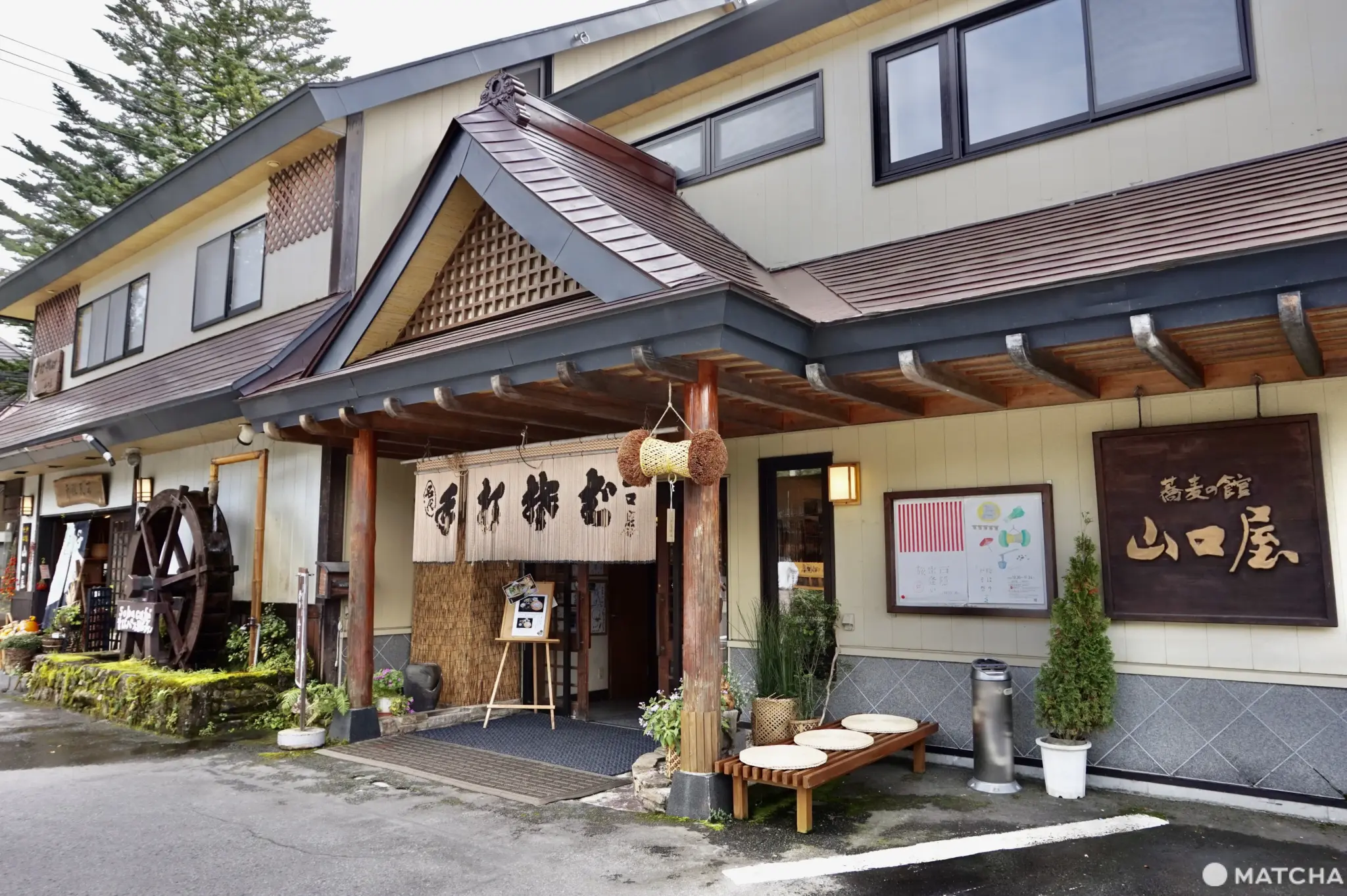
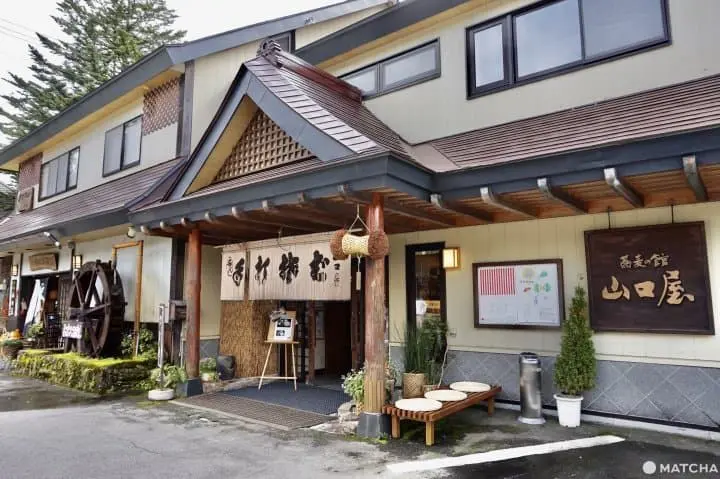
Nestled deep within the mist-shrouded, mountainous enclave of Togakushi—historically celebrated as a legendary sanctuary of the Togakushi-ryu ninja school—lies a family-run culinary institution that has spent generations perfecting its craft: Togakushi Soba Yamaguchiya.
This investigative and culinary report examines Yamaguchiya not merely as a roadside eatery, but as a vital cultural touchstone in the preservation of Shinshu soba heritage. By evaluating the rigorous agricultural requirements of high-altitude buckwheat cultivation, the exacting mechanics of hand-rolled noodle preparation, and the distinct innovation of its proprietary dual-dipping sauces—featuring a signature regional walnut paste—this article explores why Yamaguchiya remains an unassailable gold standard for gastronomic travelers navigating Nagano Prefecture.
Detailed Chronology: The Journey to Togakushi Soba Mastery
To understand the excellence plated at Yamaguchiya, one must retrace the historical and geographical trajectory that brings raw mountain buckwheat to the dining table. The narrative of Togakushi soba is inextricably linked to the physical topography of Nagano Prefecture.
The Geographical Genesis
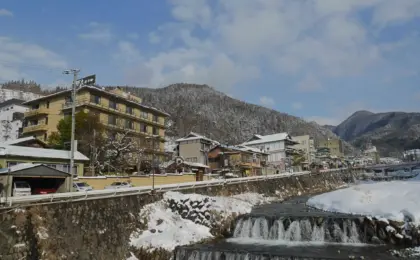
Located approximately a one-hour drive northwest of central Nagano City, the district of Togakushi sits at a significantly higher elevation, embraced by pristine alpine peaks and fed entirely by pure, mineral-rich mountain snowmelt. This specific climatic profile—characterized by dramatic diurnal temperature fluctuations and well-drained volcanic soils—creates ideal conditions for cultivating high-grade buckwheat (soba-ko). Unlike lowland crops that mature rapidly, Togakushi buckwheat develops a concentrated starch profile and deep, earthy aromatic qualities.
Historically, Togakushi’s remote mountainous isolation forced early settlers and monastic communities to rely on indigenous grains. Over centuries, these communities refined the milling and preparation of buckwheat into an exacting culinary science. The region’s association with itinerant monks and legendary ninja clans further shaped its culinary evolution, prioritizing portable, nutrient-dense, and energy-sustaining meals.
At Yamaguchiya, the production of soba is treated as a near-sacred ritual rather than a mechanical kitchen task. The chronological process of creating a single bowl of Togakushi Soba follows strict traditional guidelines:
Sourcing and Milling: Whole buckwheat kernels are sourced exclusively from high-altitude local farms. They are meticulously inspected before being ground into fine flour using traditional stone mills, a slow process that prevents frictional heat from degrading the delicate aromatic compounds of the grain.
Kneading (Nedari and Hone-zuki): The flour is combined with pristine mountain spring water. Master artisans knead the dough by hand, applying precise palm pressure to develop a cohesive gluten structure without sacrificing the crumbly, delicate nature of pure buckwheat.
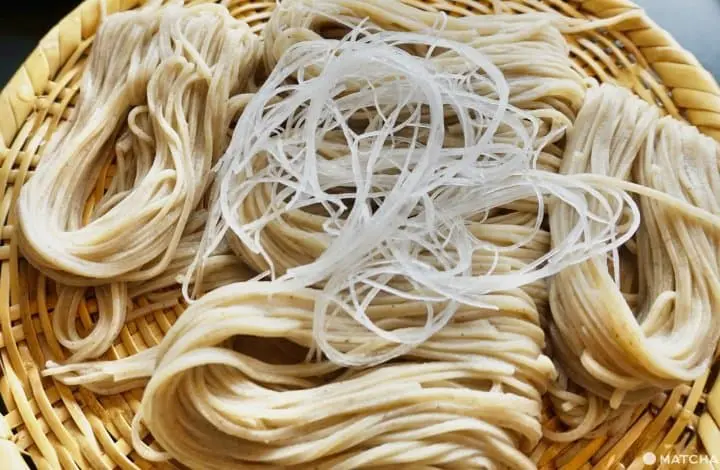
Rolling and Cutting: The dough is rolled out into an impeccably even sheet before being hand-cut into uniform strands. Unlike the sharp-edged, flat noodles common in Tokyo-style Edomae soba, Togakushi soba undergoes a specialized pressing process. This forms noodles with a smooth, slightly rounded cross-section and a distinctively compact, springy texture.
Boiling and Shocking: The cut noodles are plunged into rapidly boiling water for a rigorously timed duration, then immediately shocked in ice-cold, mineral-rich spring water to arrest the cooking process and seal in their characteristic chew (koshi).
Supporting Context & Metrics: The Anatomy of the Yamaguchiya Experience
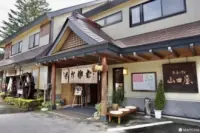
A visit to Yamaguchiya is defined by an uncompromising commitment to volume, quality, and sensory immersion. Located just a short stroll from the renowned Togakushi Ninja Museum, the historic restaurant functions as both a cultural museum of taste and a bustling dining hall for travelers and locals alike.
The Flagship Offering: The Togakushi Ninja Soba Set
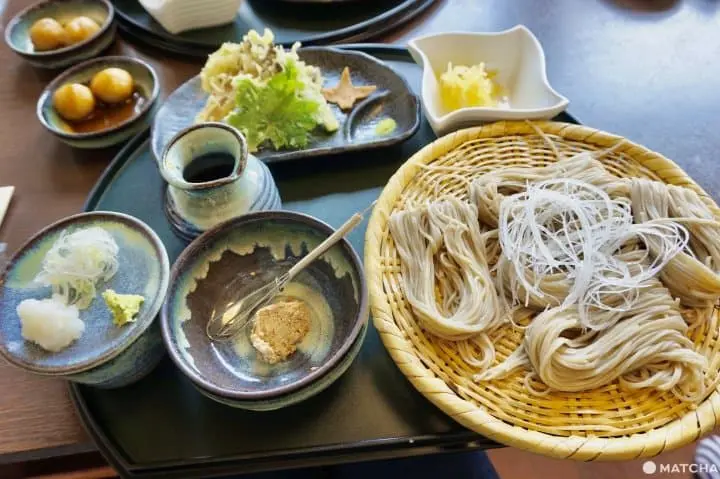
Priced at an accessible 1,680 yen, Yamaguchiya’s signature set meal stands as a masterclass in culinary value. Upon ordering, diners are presented with an expansive tray that redefines expectations for regional dining:
The Soba Portions: The noodles are served in five distinct, beautifully arranged bundles (known locally as bocchi-mori, referencing the traditional presentation style where noodles are bundled to resemble the shape of bamboo grass leaves). The portion is remarkably generous, ensuring that even the most voracious appetites leave fully satiated.
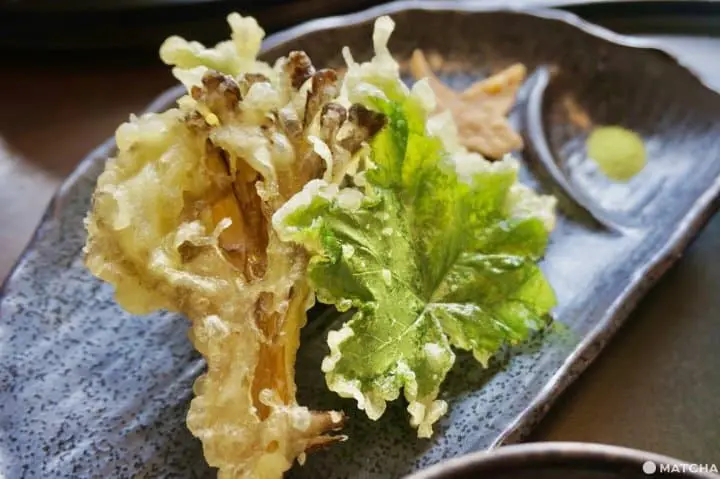
Wild Vegetable Tempura (Sansai Tempura): Accompanying the noodles is a seasonal assortment of freshly battered and crisply fried wild mountain vegetables harvested from the surrounding forests. The bitterness of the mountain greens cuts cleanly through the richness of the frying oil, providing an ideal textural contrast to the soft, chewy noodles.
Accompaniments: The set is rounded out with refreshing, house-made local pickles and a savory appetizer designed to prime the palate.
The Dual-Sauce Innovation
While standard Japanese soba culture typically relies on a single, soy sauce-based broth (tsuyu), Yamaguchiya elevates the dining experience by offering a dual-dipping system that highlights a defining regional characteristic of Togakushi cuisine.
Traditional Soy-Based Tsuyu: A clean, deeply savory blend of aged shoyu, mirin, and dashi made from high-grade bonito and kelp. It provides a sharp, traditional anchor for the earthy flavor of the buckwheat.
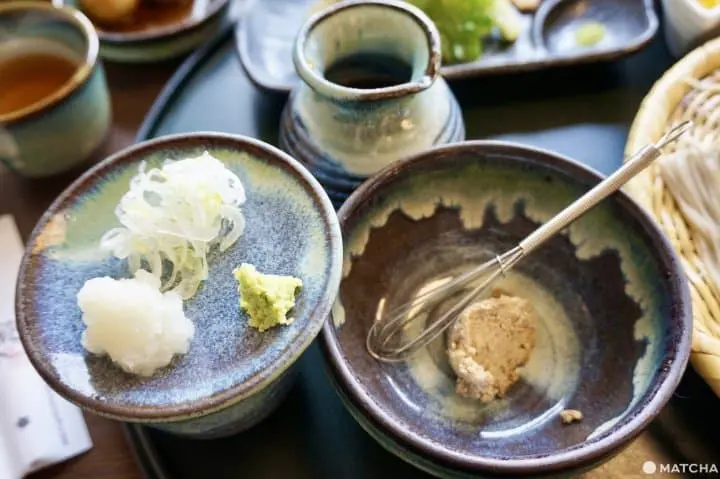
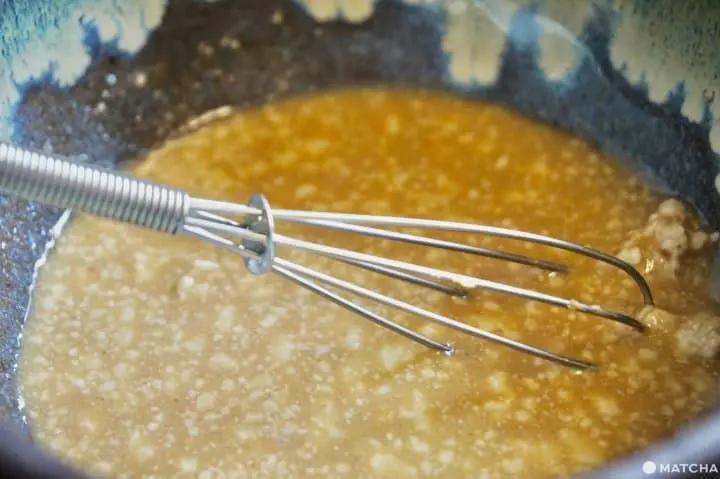
The Proprietary Walnut Sauce (Kurumi-dare): The undisputed crown jewel of the meal. This local specialty blends a velvety, freshly ground paste of rich walnuts with a specialized savory broth. The resulting sauce offers a velvety mouthfeel and a subtle, refreshing sweetness that coats the noodles evenly, introducing a nutty dimension that completely transforms the tasting profile.
Both sauces can be customized according to personal preference using traditional condiments provided at the table: freshly grated wasabi, pungent grated daikon radish, and finely chopped green onions.
The Ritual of Sobayu
True to authentic Japanese culinary etiquette, the meal does not conclude with the final bite of noodles. As diners finish their dipping sauces, staff deliver sobayu—the piping-hot, starchy water in which the soba noodles were boiled. Patrons pour this viscous, mineral-rich liquid directly into their remaining dipping bowls (particularly the walnut sauce), creating a warm, deeply comforting soup. This final step captures residual flavors and nutrients, providing a soothing, aromatic digestif to cap off the meal.
Sweet Conclusions: Local Apple Ice Cream
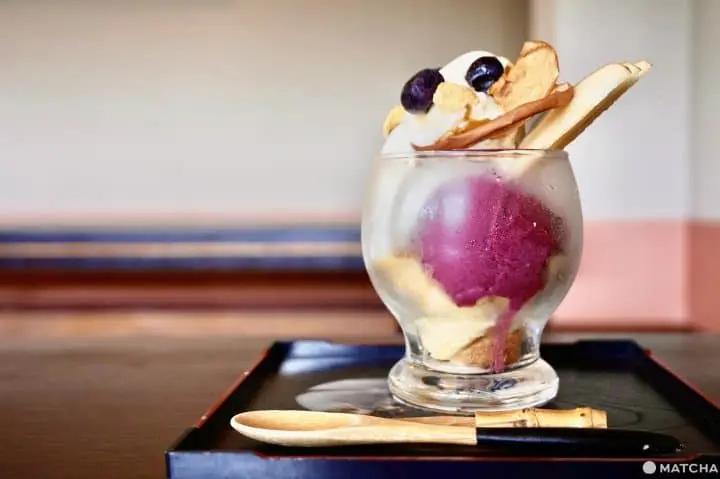
For those with room for dessert, Yamaguchiya offers a celebrated house-made apple ice cream. Harnessing the world-famous crisp sweetness of Nagano-grown apples, this refreshing sweet provides a bright, fruity punctuation mark to a meal rich in earthy, savory tones.
Official Statements and Cultural Significance
Industry experts and cultural preservationists frequently cite establishments like Yamaguchiya as essential guardians of Japan’s intangible culinary heritage.
In a statement regarding regional Japanese gastronomy, food historian Dr. Kenjiro Takahashi noted:
"The regional soba of Japan—exemplified by Shinshu, Izumo, and Wanko styles—are not merely meals; they are historical archives encoded in flavor. Places like Togakushi Soba Yamaguchiya demonstrate how isolated topography forced communities to innovate, turning simple mountain buckwheat into an art form that modern industrial food systems can never replicate."
Local tourism boards in Nagano City emphasize the symbiotic relationship between historical tourism and culinary preservation in Togakushi:
"Togakushi is internationally famous for its ninja heritage, ancient shrines, and towering cedar avenues. However, no pilgrimage to this sacred mountain village is complete without experiencing the craftsmanship of our local soba artisans. Yamaguchiya bridges the gap between historical exploration and sensory immersion, offering travelers a literal taste of our mountain’s history."
Future Outlook: Preserving Tradition in a Modernizing World
As global culinary tourism shifts toward authenticity, hyper-local sourcing, and sustainable dining, institutions like Togakushi Soba Yamaguchiya are uniquely positioned for enduring relevance. However, the preservation of traditional hand-rolled soba faces distinct contemporary challenges.
Challenges Facing Artisanal Soba
Agricultural Succession: The cultivation of high-altitude buckwheat is physically demanding, and Japan’s aging rural demographic poses a long-term threat to the consistent supply of premium regional grains.
Labor-Intensive Craftsmanship: The rigorous physical demands of stone-milling, hand-kneading, and precise cutting mean that training the next generation of master soba artisans (soba-shokunin) requires years of dedicated mentorship.
Strategic Adaptations for the Future
To safeguard its legacy while welcoming an increasingly international clientele, Yamaguchiya and the broader Togakushi soba community are implementing forward-looking initiatives:
Digital Integration and Multilingual Accessibility: Enhancing digital navigation, contactless payment methods, and multilingual menu translations to seamlessly guide international tourists through regional dining etiquette.
Sustainable Farming Partnerships: Strengthening direct-supply agreements with local Nagano agricultural co-ops to ensure fair compensation for farmers and guarantee an uninterrupted supply of heirloom buckwheat varieties.
Educational Culinary Tourism: Expanding efforts to educate diners on the nuances of soba appreciation—from understanding buckwheat extraction rates to mastering the proper consumption of sobayu—transforming a simple lunch into an engaging cultural workshop.
Completing the Soba Pilgrimage
For the dedicated global foodie, completing Japan’s grand soba pilgrimage remains a lifetime ambition. With Togakushi (Nagano) and Izumo (Shimane) firmly checked off the itinerary, travelers need only venture north to Iwate Prefecture to experience traditional Wanko Soba and complete the legendary "Three Great Soba" capitals of Japan.
Until then, a bowl of Ninja Soba at Yamaguchiya stands as an unrivaled monument to the flavors of the Japanese Alps—a harmonious blend of history, topography, and uncompromising culinary dedication.
Restaurant Information
Name: Togakushi Soba Yamaguchiya
Address: 3423 Togakushi, Nagano City, Nagano Prefecture 381-4101, Japan
Proximity: Short walking distance from the Togakushi Ninja Museum
Signature Dish: Togakushi Ninja Soba Set (1,680 JPY)







Belum ada komentar. Jadilah yang pertama berkomentar!