

Executive Overview
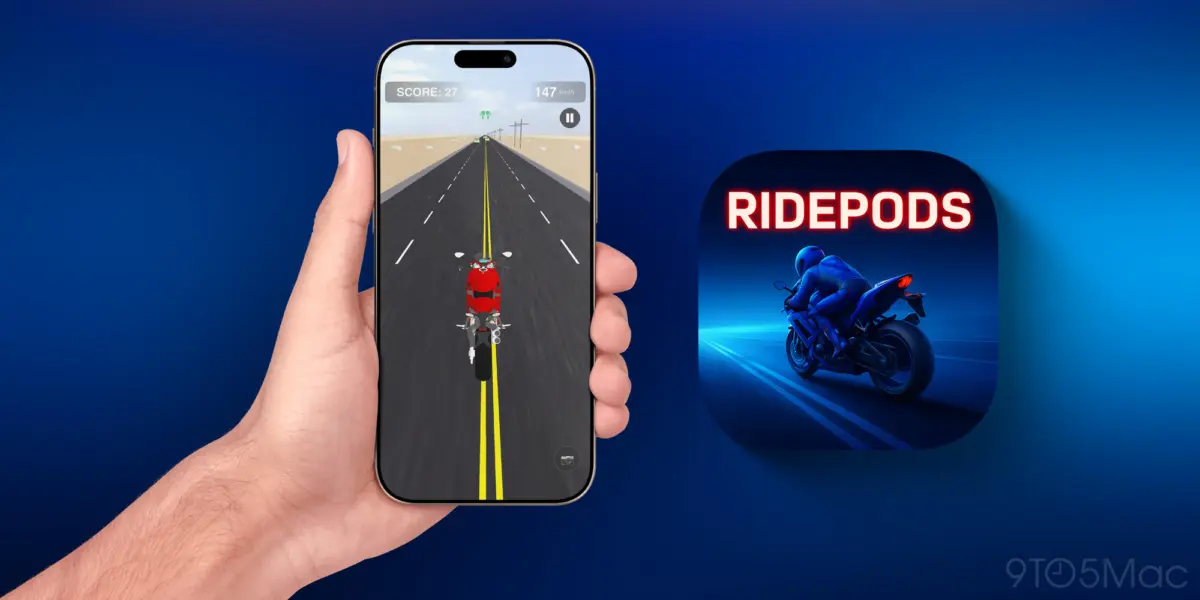
The landscape of mobile gaming has long been defined by traditional inputs: on-screen virtual thumbsticks, external Bluetooth controllers, and the occasional touch-gesture interface. However, a clever new title on the Apple App Store is pushing the boundaries of spatial computing and accessory utility in an unexpected direction. RidePods, a novel racing game developed for iOS, transforms Apple’s ubiquitous wireless earbuds—the AirPods—into sophisticated motion-tracking game controllers.
By leveraging the built-in gyroscope and accelerometer arrays historically reserved for immersive audio experiences like Spatial Audio with dynamic head tracking, RidePods enables players to steer a virtual motorcycle completely hands-free. Rather than tapping a screen or clutching an external gamepad, users simply tilt and turn their heads to navigate tight corners and high-speed tracks.
While the concept of motion-controlled gaming is hardly new—having been pioneered decades ago by Nintendo’s Wii Remote and expanded through virtual reality headsets—its integration into standard consumer audio accessories represents a fascinating design paradigm shift. This development not only highlights the untapped computational and hardware potential hiding inside everyday consumer electronics, but it also raises intriguing questions about the future of human-computer interaction (HCI) in mobile ecosystems. As software developers increasingly look for novel ways to exploit Apple’s proprietary sensor suites, RidePods serves as both a quirky, entertaining novelty and a compelling proof-of-concept for the next generation of ambient, hands-free gaming interfaces.
Detailed Chronology: From Spatial Audio to Spatial Gaming
To understand the significance of RidePods, one must first examine the evolutionary timeline of Apple’s AirPods and the hardware milestones that made such a unique software application possible.
The Hardware Foundation
When Apple first introduced AirPods Pro in late 2019, the inclusion of an internal accelerometer and gyroscope designed explicitly for dynamic head tracking was framed entirely around audio consumption. The feature, later integrated across a wider swath of the AirPods lineup—including standard AirPods (third-generation and newer) and AirPods Max—was engineered to anchor multi-channel sound fields to a user’s physical environment. When you turned your head to the left, the audio channels dynamically shifted to maintain the illusion that a virtual home theater speaker system was fixed in front of you in physical space.
Over the subsequent software update cycles, Apple gradually opened up various aspects of its hardware ecosystem to third-party developers, though direct access to raw head-tracking data for non-audio purposes remained relatively niche. For years, developers utilized standard iOS motion APIs via the iPhone or iPad accelerometer, leaving wearable peripherals largely out of the controller equation.
The Genesis of RidePods
The conceptual leap from spatial listening to spatial gaming culminated with the sudden release of RidePods on the iOS App Store. First brought to widespread public attention by The Verge, the game immediately captured the tech community’s imagination by bypassing conventional control schemes entirely.
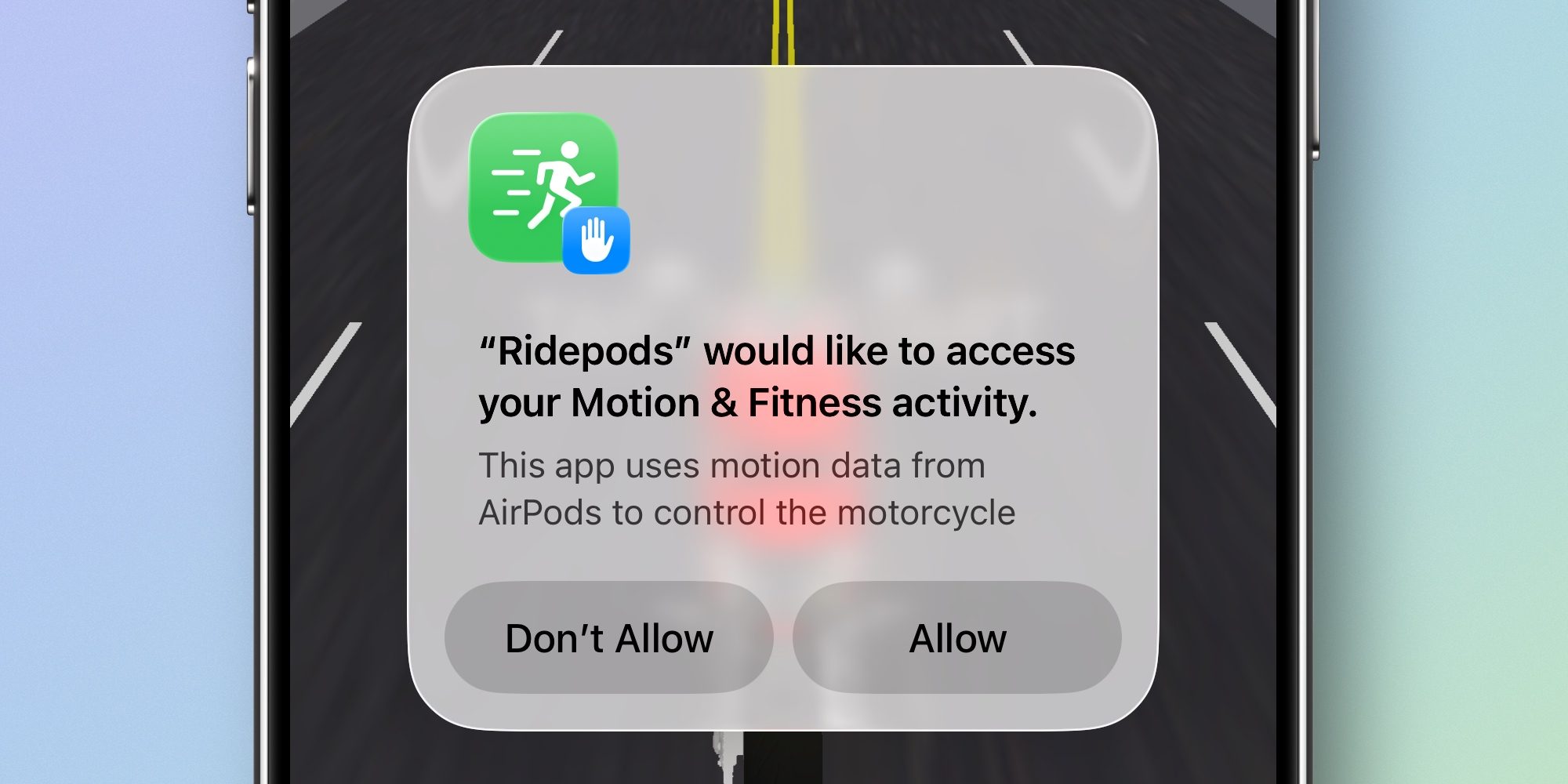
Rather than requiring players to awkwardly reach up and tap the stem or capacitive touch sensors of their AirPods—an interaction model that would quickly induce hand fatigue and disrupt the immersive visual experience—RidePods leans entirely into head-based steering telemetry. The application interfaces directly with the connected AirPods, continuously reading the spatial orientation data emitted by the earbuds’ internal inertial measurement units (IMUs).
As the player launches a race, their physical head movements are translated in real-time into directional steering commands for an on-screen motorcycle. A tilt of the head to the left sends the bike banking into a left-hand turn, while a corresponding rightward tilt navigates the opposite direction. Initial hands-on reviews from early adopters and tech journalists have universally praised the mechanic for its intuitive, plug-and-play nature, noting that setup requires little more than sliding the earbuds into your ears and launching the application.
Supporting Context & Metrics: The Anatomy of Head-Tracking Peripherals
To fully appreciate the engineering feat behind RidePods, it is vital to analyze the technical specifications, compatibility matrices, and physiological implications of using audio wearables as input devices.
Hardware Compatibility and Sensor Architecture
Not all AirPods are created equal when it comes to spatial computing capabilities. The head-tracking feature set required to run RidePods effectively depends on the presence of advanced spatial audio hardware embedded within specific models. Based on Apple’s ecosystem guidelines, compatible devices include:
- AirPods Pro (1st and 2nd generations)
- AirPods (3rd generation)
- AirPods 4 (active noise cancellation and standard variants)
- AirPods Max
These devices rely on custom-designed low-latency Bluetooth pipelines and onboard silicon (such as the H1 and H2 chips) to process directional movement locally before transmitting spatial telemetry back to the host iOS device. This localized processing is crucial; it minimizes input lag, ensuring that the delay between a user tilting their head and the motorcycle reacting on screen is imperceptible—a vital requirement for high-speed racing games where split-second decisions dictate success.
Ergonomics, Latency, and Physiological Considerations
While the technical novelty of using AirPods as a steering wheel is undeniable, evaluating the long-term viability of this control scheme requires a pragmatic look at human ergonomics.
Playing a video game by violently shifting your cervical spine back and forth presents distinct ergonomic challenges. As early reviewers noted, while RidePods is brilliantly entertaining for short, bite-sized gaming sessions, the prospect of marathon gaming using purely cervical motion is physically exhausting. Unlike a handheld gamepad or a touchscreen controller, which isolates physical exertion to the fingers and thumbs, head-tracking forces the user’s neck muscles to bear the ergonomic load of the control inputs.
Furthermore, motion sickness is an inherent variable in any immersive spatial experience. When visual cues on a display indicate high-speed turns while the inner ear senses bodily motion incongruent with real-world vestibular feedback, mild sensory dissonance can occur. However, because RidePods relies on an external display (the iPhone or iPad screen) rather than a closed-circuit virtual reality headset, the severity of simulator sickness is substantially mitigated for the vast majority of users.

Official Statements and Industry Reception
The release of RidePods has sparked broader discussions across the developer community and tech journalism circles regarding the untapped potential of ambient sensor integration within mobile accessories.
Industry analysts have pointed out that Apple’s hardware ecosystem contains a treasure trove of underutilized sensors. While consumer awareness is generally locked into the primary function of a device—such as noise cancellation for headphones or step-counting for smartwatches—third-party developers have historically been the catalysts for unlocking secondary, emergent use cases.
While Apple itself has not issued a formal press statement specifically endorsing RidePods, the company’s ongoing provision of developer APIs for CoreMotion and spatial audio frameworks signals tacit support for creative experimentation within the App Store guidelines. Software engineers and UI/UX designers have taken to platforms like X (formerly Twitter) and developer forums to debate whether head-tracking could—or should—be expanded into other app categories, ranging from hands-free accessibility options for users with limited motor function to productivity tools that allow document scrolling via subtle head gestures.
Early consumer reception on the App Store has been overwhelmingly positive, characterized by curiosity and amusement. Users frequently cite the game as a stellar party trick or a fun, free diversion that demonstrates the responsive nature of modern wireless audio hardware.
Future Outlook: Where Do Hands-Free Gaming and Wearables Go From Here?
As mobile hardware continues to converge with spatial computing standards—accelerated heavily by the ecosystem momentum surrounding the Apple Vision Pro and comparable mixed-reality hardware—the boundaries separating "audio accessories," "input devices," and "gaming controllers" are blurring rapidly.

The Horizon of Ambient Computing
RidePods may currently occupy a niche space as a standalone novelty racing title, but it hints at a broader architectural shift in ambient computing. We are entering an era where everyday accessories are expected to possess multimodal capabilities. An earbud is no longer merely a speaker that delivers sound into your ear canal; it is a discrete IoT node packed with high-precision gyroscopes, proximity sensors, microphones, and local processing units.
Potential Applications Beyond Racing Games
Looking forward, the underlying technology showcased in RidePods opens up fascinating avenues for software design:
- Accessibility and Inclusive Design: For individuals with upper-limb mobility impairments, leveraging head-tracking sensors built into standard consumer electronics could provide an accessible, low-cost alternative to expensive specialized adaptive gaming controllers.
- Fitness and Exergaming: Combining spatial audio cues with head-movement tracking could revolutionize casual fitness apps, encouraging users to engage in neck-stretching, balance, and coordination exercises gamified through their daily carry tech.
- Immersive Audio-Visual Entertainment: Future interactive fiction and narrative games might use subtle head gestures—nodding to agree, shaking your head to refuse—to drive dialogue choices without requiring the player to look away from the action or touch a screen.
Conclusion
RidePods demonstrates that innovation in mobile gaming does not always require massive hardware overhauls or expensive, purpose-built peripherals. Sometimes, it simply requires an imaginative developer looking at an existing piece of hardware—like a pair of AirPods—and asking: "What else can this do?" As the App Store continues to evolve in the age of spatial computing, expect to see more creators push the boundaries of how we interact with the technology we wear every single day.









Belum ada komentar. Jadilah yang pertama berkomentar!