Stephen King needs very little introduction to anyone living on planet Earth who possesses access to modern communication technologies. With a vast, prolific output of novels and short stories stretching back to the 1970s, King stands as one of the defining popular storytellers of our age. While his bibliography contains a few expected duds—an inevitable byproduct of a career spanning twice the length of some of his critics’ lives—when he hits his stride, few living horror and suspense authors can match him (with the possible exception of Clive Barker at his absolute best, though that remains a chalk-and-cheese stylistic contrast).
What makes King a master craftsman is that even for readers who do not naturally gravitate toward horror or suspense, his deep characterization, rich world-building, and innate ability to write a gripping sentence draw audiences in regardless. As one of the most heavily adapted novelists of the past fifty years, the cinematic quality of King’s works varies wildly. Many of his finest novels—including Needful Things, Salem’s Lot, It, The Dark Tower series, and The Stand—have historically received inferior or compressed adaptations on screen.
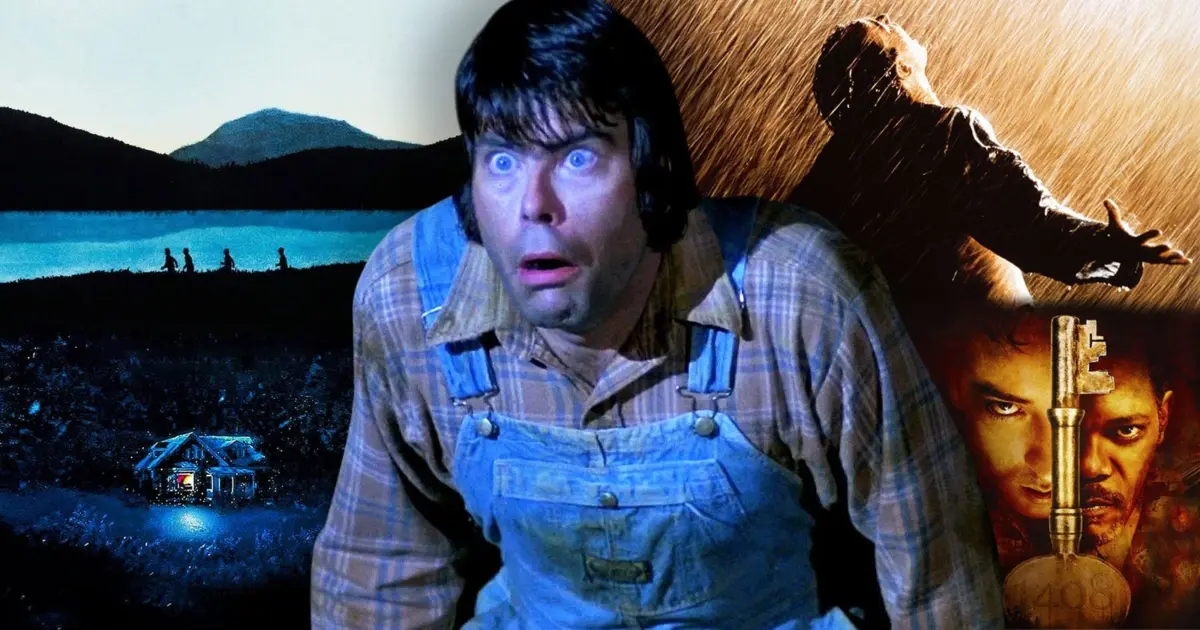
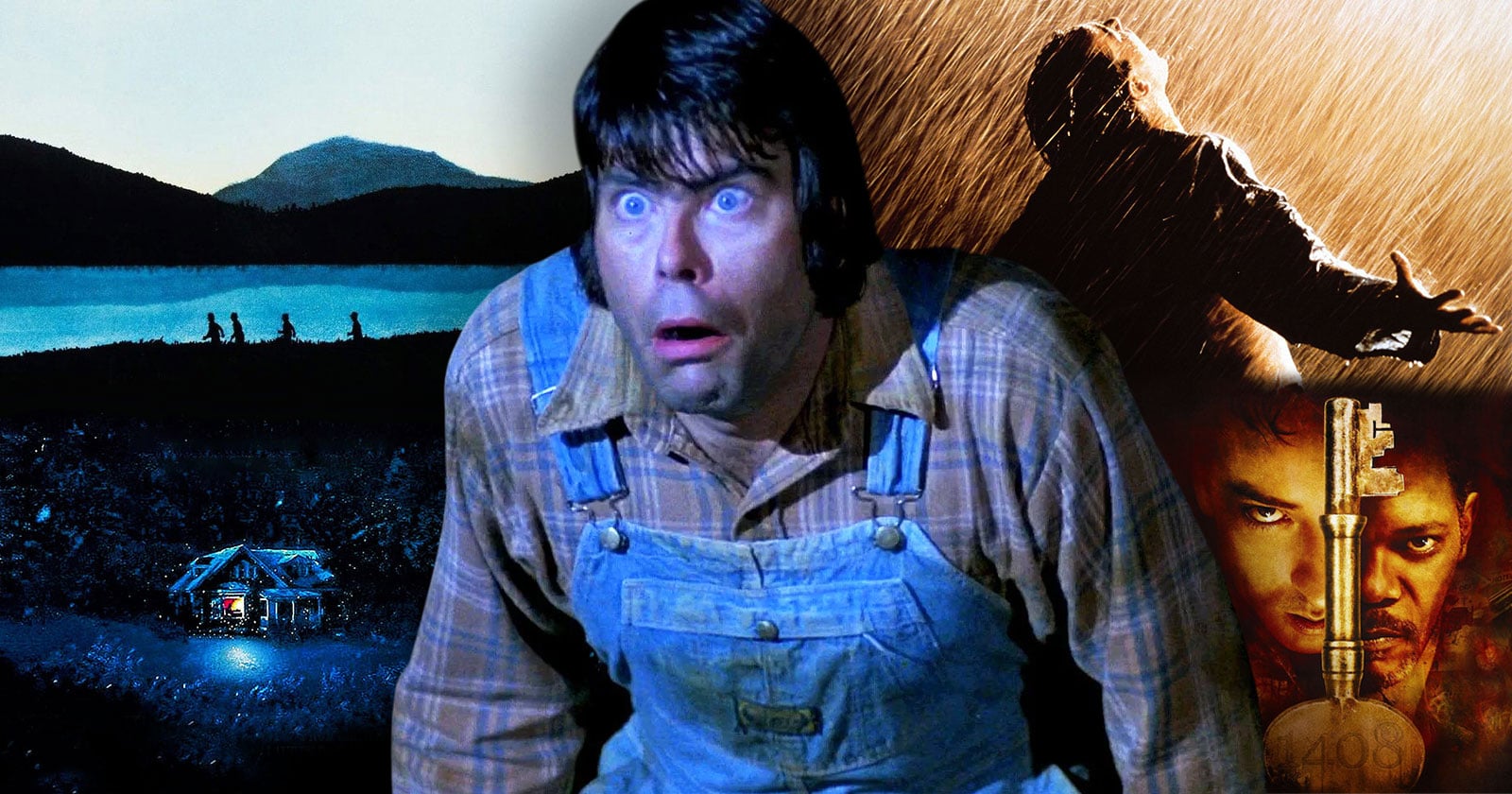
However, this evaluation celebrates the triumphs of cinematic translation. For every lacklustre Stephen King adaptation, there are others that not only stand shoulder-to-shoulder with their source material but occasionally surpass it. Here is the definitive ranking of the top ten Stephen King screen adaptations ever produced.
Detailed Chronology
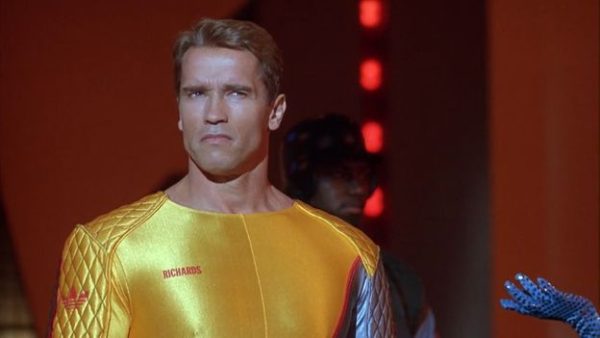
10. The Running Man (1987)
Though Stephen King is primarily associated with horror and fantasy, The Running Man—adapted from his 1982 novel written under the pseudonym Richard Bachman (a persona King created to explore darker themes he feared his mainstream readership might reject)—stands as an accomplished dystopian thriller.
Set in the distant, futuristic year of 2019, the narrative unfolds in an America transformed into a totalitarian state, utterly obsessed with a Battle Royale-style game show where prisoners run for their freedom while dodging executioners. Framed prisoner Ben Richards (Arnold Schwarzenegger) uses the broadcast to escape, clashing with sadistic host Damon Killian (Richard Dawson).
While the film is a very loose adaptation that morphs the source material into a prime Arnold action romp, underneath its bombast lies an economically paced, intelligent sci-fi thriller. With public executions creeping closer to reality in modern discourse, the film feels increasingly prophetic. Featuring an eclectic cast—Arnie, Richard Dawson, Mick Fleetwood, Jesse Ventura, Jim Brown, and Yaphet Kotto—it represents a style of gritty action filmmaking Hollywood has largely forgotten.
David Cronenberg’s The Dead Zone is an offbeat thriller leaning heavily into science fiction, following Johnny Smith (Christopher Walken), who awakens from a five-year coma only to find his girlfriend Sarah (Brooke Adams) married and moved on.
Amid his heartbreak, Johnny discovers he possesses psychometry: the ability to glean visions of a person’s future through physical touch. When he shakes the hand of aspiring politician Greg Stillson (Martin Sheen), Johnny foresees a nuclear holocaust triggered by Stillson’s future presidency, leaving him with the moral burden of assassination.
Echoing corrupt-system thrillers like The Parallax View and Marathon Man through an EC Comics lens, Walken and Sheen deliver powerhouse performances, making this a quintessential paranoid conspiracy thriller.
8. The Mist (2007) & 11/22/63 (2016)
These two distinct projects share a spot for going slightly under the radar when discussing successful King adaptations.
Based on a 1980 novella and directed by Frank Darabont—a filmmaker with an innate feel for King—The Mist traps supermarket patrons in Bridgton, Maine, as a predatory, Lovecraftian fog rolls into town. Blending King’s epic scale (The Stand) with George A. Romero’s claustrophobia (Dawn of the Dead), the film explores religious fundamentalism through Mrs. Carmody (Marcia Gay Hayden), one of King’s most chilling villains.
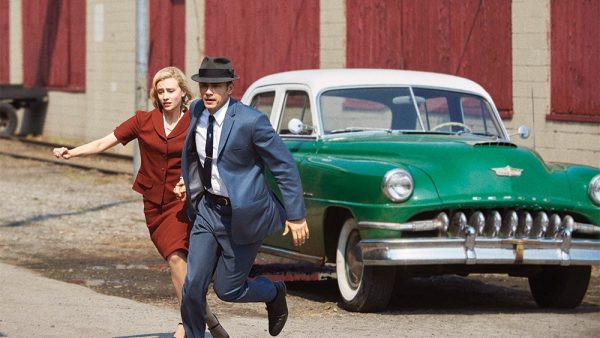
Conversely, 11/22/63 dives into alternative history. High school teacher Jake Epping (James Franco) is tasked by dying diner owner Al (Chris Cooper) with using a time portal to prevent the assassination of John F. Kennedy. Part political thriller and part fish-out-of-water sci-fi adventure, it showcases King’s remarkable narrative versatility.
7. Dolores Claiborne (1995)
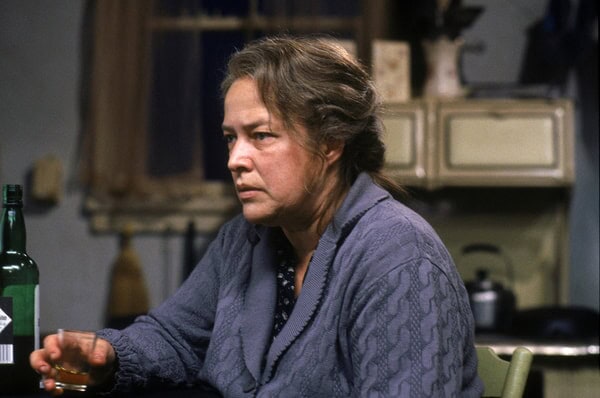
Dolores Claiborne revels in the unreliable narrator trope. Urban journalist Selena St. George (Jennifer Jason Leigh) returns to her small-town roots to assist her estranged mother, Dolores (Kathy Bates), a domestic servant accused of murdering her wealthy, elderly employer (Judy Parfitt).
Anchored by Tony Gilroy’s intelligent script and director Taylor Hackford’s lush, autumnal color palette, the film effortlessly bridges murder-mystery, gothic romance, and psychological thriller. Bates and Leigh deliver masterclasses in acting, resulting in one of King’s most deeply human cinematic protagonists.
6. Carrie (1976)
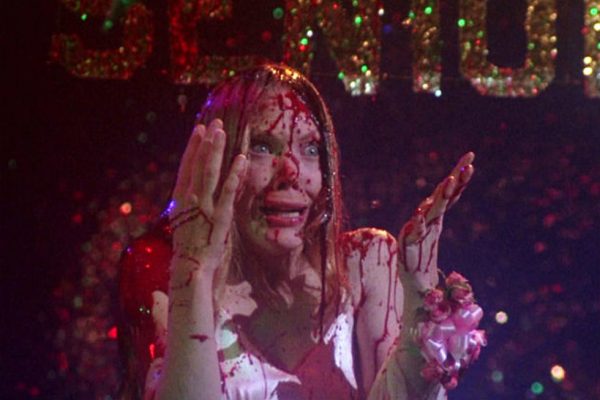
Based on King’s 1974 debut novel, Brian De Palma’s Carrie remains a towering achievement of 1970s American cinema. Chronileing telekinetic outcast Carrie White (Sissy Spacek) under the abusive thumb of her religious fanatic mother (Piper Laurie), the film uses a hyper-localized setting to explore universal themes of bullying and abuse. The tragic prom climax remains an indelible piece of cinematic history, anchored by Spacek, Laurie, and a young John Travolta.
5. Stand By Me (1986)
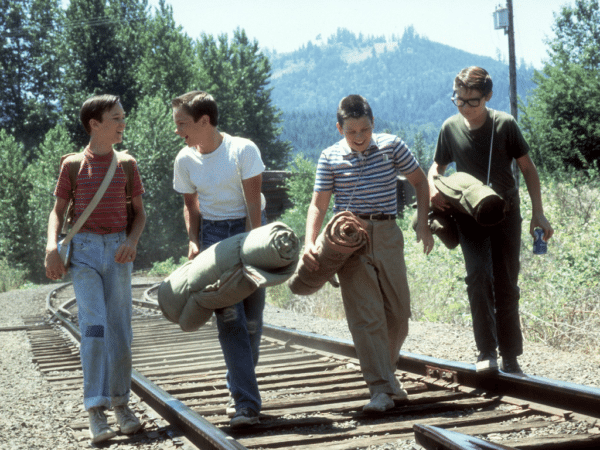
Adapted from the 1982 novella The Body, Rob Reiner’s Stand By Me is a timeless coming-of-age masterwork. Following writer Gordie LaChance (Richard Dreyfuss) as he reflects on a childhood journey with friends (played by Wil Wheaton, River Phoenix, Corey Feldman, and Jerry O’Connell) to find a missing body in Castle Rock, the film effortlessly balances humor, sweetness, and tragedy. Reportedly King’s personal favorite adaptation of his work, its emotional resonance remains universal.
4. The Shining (1980)
Though Stephen King famously despises Stanley Kubrick’s psychological horror masterpiece, The Shining proves that a faithful adaptation is not a prerequisite for greatness. Jack Nicholson’s descent into madness as winter caretaker Jack Torrance at the isolated Overlook Hotel is a masterclass in slow-burn terror. Kubrick’s pioneering use of long tracking shots and wide-angle lenses creates an atmosphere of pervasive dread that has permanently embedded itself in popular culture.
3. Misery (1990)
A claustrophobic two-hander between James Caan’s trapped novelist Paul Sheldon and Kathy Bates’ terrifyingly devoted "Number One Fan" Annie Wilkes, Misery is a triumph of single-location tension. Directed by Rob Reiner and scripted by William Goldman, Bates’ Oscar-winning performance as Wilkes grounds the horror in a chilling, all-too-realistic human depravity.
2. 1408 (2007)
Mikael Håfström’s 1408 is a criminally underrated gem. Paranormal debunker Mike Enslin (John Cusack) ignores the chilling warnings of hotel manager Gerald Olin (Samuel L. Jackson) and spends a night in the notoriously haunted room 1408 of The Dolphin hotel. The film successfully captures King’s sardonic humor and razor-sharp psychological terror, offering a masterclass in modern supernatural suspense.
1. The Shawshank Redemption (1994)
To call The Shawshank Redemption a modern classic is an understatement. Frank Darabont’s adaptation of Rita Hayworth and The Shawshank Redemption follows banker Andy Dufresne (Tim Robbins) through a wrongful double life sentence at Shawshank penitentiary, where he forms a profound bond with contraband smuggler Red (Morgan Freeman).
Bolstered by Thomas Newman’s moving score and Roger Deakins’ naturalistic cinematography, the film stands as cinema’s ultimate eulogization of hope and the indomitable human spirit. Despite bombing at the box office initially, word-of-mouth and cultural ubiquity have rightly crowned it one of the greatest films ever made.
Supporting Context & Metrics
The cinematic footprint of Stephen King’s bibliography is statistically unprecedented. Across film and television, over 80 productions have been derived from his works since Brianjel’s Carrie premiered in 1976. Financially, King-based films have grossed well over $4 billion worldwide, with box office heavyweights like Warner Bros.’ It (2017) crossing the $700 million threshold alone to become the highest-grossing horror film of all time.
Critical reception, however, follows a distinct bimodal distribution: while theatrical releases directed by auteurs (Kubrick, Darabont, Reiner) routinely capture Academy Award nominations and cultural longevity, low-budget television miniseries often suffer from compressed pacing and diminished production values.
Official Statements
Filmmakers and creators have frequently spoken on the unique challenges of translating King’s sprawling prose to the screen:
"The hardest part of adapting Stephen King isn’t capturing the monsters or the blood; it’s capturing the internal geography of his characters. On the page, you live inside their minds for hundreds of pages. On screen, you have two hours to make the audience feel that history."
— Frank Darabont, Director (The Shawshank Redemption, The Mist)
Conversely, Stephen King himself has maintained a famously pragmatic—and occasionally critical—viewpoint regarding auteur interpretations:
"I’ve always looked at books and movies like a pair of shoes. Sometimes they fit, sometimes they pinch, and sometimes they’re a completely different color. Kubrick made a film that people remember, but it wasn’t the book I wrote."
— Stephen King, on Stanley Kubrick’s The Shining
Future Outlook
As Hollywood continues its relentless pursuit of pre-established intellectual property, Stephen King’s literary universe shows zero signs of slowing down. Upcoming projects, including high-profile television series adaptations, feature film reboots, and deep dives into his sprawling Dark Tower mythology, ensure that the master of macabre will dominate pop culture well into the next decade.
Whether future filmmakers can replicate the lightning-in-a-bottle brilliance of Darabont, Reiner, or Cronenberg remains to be seen, but one reality is immutable: as long as humanity harbors fears, phobias, and a desire for compelling storytelling, Stephen King’s worlds will continue to haunt and illuminate our screens.









Belum ada komentar. Jadilah yang pertama berkomentar!