

Executive Overview
In the contemporary global cinematic landscape, it is a paradox as enduring as it is troubling that the most formally daring and intellectually rigorous films frequently emerge from environments marked by acute cultural repression. When art is suffocated by political dogmatism and institutional gatekeeping, filmmakers often find themselves galvanized, transforming constraint into a profound aesthetic tool.
India’s contemporary independent film scene offers a striking case study in this phenomenon. Despite operating within an increasingly hostile climate characterized by stringent state censorship, ideological litmus tests, and institutional sidelining, the nation’s underground and arthouse sectors are experiencing an unprecedented creative renaissance. Over the past two years alone, a wave of uncompromising features has challenged the homogenizing narrative of state-sanctioned entertainment.
Leading this vanguard is Payal Kapadia’s critically acclaimed All We Imagine as Light (2024)—which faced bureaucratic neglect from the Film Federation of India for supposedly being a "European film made in India," or, more accurately, for refusing to pander to the ruling party’s narrow cultural agenda. Joining it is a robust slate of provocative releases: Karan Kandhari’s acerbic comedy Sister Midnight (2024), Sandhya Suri’s unflinching thriller Santosh (2024), Rohan Kanawade’s tender romance Cactus Pears (2025), and the eagerly anticipated debut feature by Anuparna Roy, Songs of Forgotten Trees (2025).
Yet, this cinematic flowering carries a bitter irony. While these works garner prestigious accolades and enthusiastic receptions at international festivals across the West, they are systematically denied a proper platform within their own country. Plagued by encounters with the Central Board of Film Certification (CBFC)—India’s state-run censor board—and targeted last-minute cancellations at domestic showcases, these films are effectively exiled from the audiences they directly interrogate.
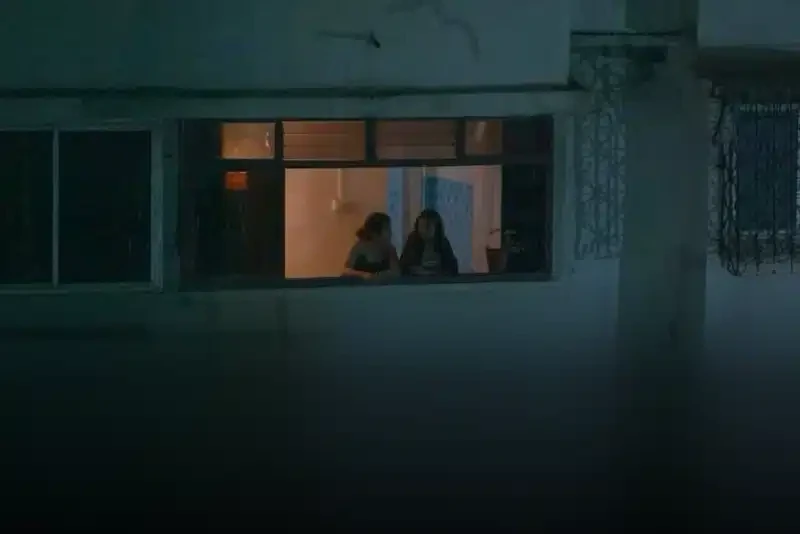
Against this backdrop of suppression and creative resilience, Songs of Forgotten Trees arrives as a vital document of modern urban alienation. Bolstered by the executive producing credit of renowned auteur Anurag Kashyap, Roy’s 77-minute feature maps the interior and exterior claustrophobia of two women navigating the monolithic indifference of contemporary Mumbai. Through a stark visual grammar, a disciplined 4:3 aspect ratio, and an unflinching look at female solidarity under patriarchy, the film captures both the promise and the perils of India’s current independent cinema wave.
Detailed Chronology: The Rise of India’s Counter-Cinema Wave
To understand the cultural weight of Songs of Forgotten Trees, one must trace the recent timeline of institutional friction and artistic defiance that has defined the Indian independent circuit from 2022 to 2025.
2022: The Regional Precedent of Joyland and Domestic Anxiety
The plight of Indian independent cinema cannot be viewed in isolation; it shares a harrowing lineage with its South Asian neighbors. In late 2022, Saim Sadiq’s masterwork Joyland faced an outright ban in Pakistan upon its domestic release. The censorship battle ignited regional anxieties about the creeping erosion of artistic freedom. Indian intellectuals and political commentators, notably Shashi Tharoor, issued stark warnings against the trajectory of India sliding toward a "Hindu Pakistan"—a prescient fear as state-backed moral policing began infiltrating cultural institutions with increasing frequency.
2024: The Breakthrough of Radicals and Institutional Backlash
The year 2024 proved to be a watershed moment for Indian indie cinema, characterized by international triumph matched step-for-step by domestic marginalization.
- Payal Kapadia’s All We Imagine as Light captured global imagination, winning the Grand Prix at the Cannes Film Festival. However, its historic achievement was met with administrative coldness by the Film Federation of India, which failed to adequately promote or back the film for the Academy Awards, dismissing its transnational funding and universal humanist ethos as un-Indian.
- Karan Kandhari’s Sister Midnight and Sandhya Suri’s Santosh premiered to critical acclaim abroad, tackling dark subjects ranging from marital disillusionment in grim urban chawls to systemic police corruption and harrowing caste violence.
- However, the domestic toll became starkly evident when Sandhya Suri’s Santosh was pulled at the eleventh hour from the PK Rosy Film Festival in Tamil Nadu. The festival, organized by acclaimed filmmaker Pa Ranjith, is dedicated to showcasing rare and radical cinema. Named in honor of PK Rosy—a pioneering Malayali Dalit actress who faced violent retribution from upper-caste men in the 1920s for daring to act, let alone portray an upper-caste woman—the festival’s censorship underscored the perilous intersection of caste hegemony and state control in modern India.
2025: Songs of Forgotten Trees and the Battle for the Screen
Entering this volatile ecosystem, Anuparna Roy’s Songs of Forgotten Trees bridges the gap between grassroots arthouse production and mainstream visibility, largely due to the protective industry weight of executive producer Anurag Kashyap. Sharing thematic DNA with Kapadia’s work—a young female debut director, an unvarnished Mumbai setting, and a dual-character study of urban alienation—Roy’s film faces the inevitable crucible of CBFC scrutiny.
Unlike Santosh, which explicitly confronts the brutal realities of caste discrimination, Songs of Forgotten Trees deliberately pivots away from direct systemic critique, focusing instead on the hyper-specific, gendered experience of female survival within a suffocating patriarchy. This calculated narrative choice may well aid its survival through the treacherous waters of domestic distribution, yet it raises urgent questions about the compromises independent filmmakers must make to secure even a fraction of cinematic space in their homeland.
Supporting Context & Metrics: Economics, Aesthetics, and Urban Isolation
Production Realities and Financial Sacrifice
The making of Songs of Forgotten Trees is as much a testament to individual economic endurance as it is to artistic vision. Director Anuparna Roy spent six years working as an IT sales executive—the very profession embodied by one of her film’s protagonists, Lisa—systematically saving her corporate salary to self-fund the production.
This DIY ethos places Roy squarely within the tradition of contemporary global indie filmmaking, where creators bypass traditional studio gatekeepers by leveraging personal capital. Yet, this financial precarity also dictates the film’s physical scale. With a bare 77-minute runtime, the film operates more as a concentrated sketch of modern life than an exhaustive sociological epic.
The Interiorized Metropolis: Work, Cyberspace, and Spatial Control
The film’s narrative engine is driven by two women cohabitating in a Mumbai flat:
- Thooya (whose name is pronounced thoo-waa), an aspiring actress and sex worker whose bedside table features John Rawls’ foundational 1971 political philosophy text, A Theory of Justice. Her fluency in English—a prized cultural currency in urban India—separates her from the destitute sex workers of red-light districts like Kamathipura or Budhwar Peth.
- Lisa, an IT sales executive sharing the space, who serves as a proxy for the modern white-collar corporate drone.
Roy uses this domestic interior to reflect broader macroeconomic shifts in urban India. Fueled by grueling Work-From-Home (WFH) cultures—famously championed by tech elites like Infosys founder Narayana Murthy, who advocated for a staggering 72-hour workweek—white-collar employees find their physical worlds reduced to the four walls of their apartments. For these workers, the city is no longer experienced through tactile engagement, but through the digital ether of smartphones and laptops. Lisa’s poignant, unfulfilled yearning to physically visit Mumbai and touch its sea represents the tragedy of a hyper-connected, yet fundamentally isolated, digital generation.
Aesthetic Choice: Rejecting the Bollywood Spectacle
In constructing this world, Roy deliberately dismantles the colorful, riotous fantasy of Mumbai long peddled by mainstream Bollywood. Instead, she presents an anonymous, eerie metropolis composed of repeating stained high-rise architecture and endless rows of nameless human beings stacked into concrete blocks.
This artistic choice echoes Aimé Césaire’s concept of "disembodied universalism"—a condition where community is systematically replaced by anonymity, and genuine connection gives way to profound loneliness. Early Indian communist theorists once envisioned massive industrial cities like Mumbai as crucibles for a caste-less, religion-less proletariat capable of revolutionary consciousness. Songs of Forgotten Trees presents the grim antithesis: a fragmented populace living in hyper-dense proximity while remaining utterly divorced from one another.
Visually, Roy rejects the sleek sterility of modern digital cinematography and the dreamlike lyricism of Payal Kapadia’s Mumbai. Utilizing a classic 4:3 aspect ratio paired with a minimalistic, one-shot approach to scene coverage, Roy imbues her fiction with an unflinching documentary-like realism. The muted color palette strips away romanticism, forcing the viewer to confront the stark, unvarnished rhythms of female survival in an indifferent city.
Official Statements & Industry Perspectives
The friction between independent creators and state oversight has elicited strong responses from filmmakers, cultural theorists, and industry veterans alike. While official bodies maintain that the Central Board of Film Certification operates within the constitutional framework of public morality and social harmony, independent voices argue that the apparatus has devolved into an instrument of political censorship.
Industry heavyweight Anurag Kashyap, whose involvement as executive producer on Songs of Forgotten Trees provides a vital shield against total obscurity, has frequently voiced frustration over the systemic hurdles placed before non-conformist cinema. In recent industry panels, Kashyap noted:
"When a film is penalized not for its technical merit or its cinematic daring, but for the questions it forces a society to ask about itself, we are no longer talking about regulation. We are talking about fear. The state is afraid of the mirror that independent cinema holds up to its face."
Cultural critics have similarly pointed out the hypocrisy of state cultural bodies celebrating international film festival victories while quietly hamstringing domestic theatrical runs. An independent memorandum released by a collective of Mumbai-based documentary and narrative filmmakers in late 2024 emphasized:
"The international acclaim garnered by films like All We Imagine as Light and Santosh proves that the global appetite for authentic Indian stories is at an all-time high. Yet, domestic censorship and institutional neglect threaten to turn these cinematic triumphs into exiles in their own land. A nation’s cultural vitality cannot survive when its most honest storytellers are treated as security threats."
Future Outlook: The Horizon of Indian Arthouse Cinema
As Songs of Forgotten Trees prepares for its broader exposure, its trajectory will serve as a barometer for the health and viability of Indian independent cinema. The film’s deliberate avoidance of incendiary political talking points—sidestepping direct critiques of caste or state policy in favor of a microscopic focus on female isolation—may successfully navigate the treacherous waters of the CBFC, proving that subtle resistance can sometimes slip past the censors where frontal assaults fail.
However, fundamental structural challenges remain on the horizon:
- The Distribution Bottleneck: Until independent theaters, alternative screening spaces, and non-state-funded distribution networks expand across India’s Tier-1 and Tier-2 cities, homegrown arthouse cinema will remain dependent on Western festivals and niche streaming platforms to find its audience.
- Aesthetic Maturation: As observed in critiques of the wider indie movement, while contemporary Indian films are radical within their local context, they occasionally risk losing their edge when viewed on the global stage. The challenge for upcoming filmmakers like Anuparna Roy will be to push beyond thematic freshness into formal innovations that challenge the very boundaries of world cinema.
- The Resilience of the Storyteller: Despite state suppression, economic precarity, and institutional gatekeeping, the relentless drive of a new generation of filmmakers—backed by veterans willing to lend their capital and credibility—ensures that the subterranean currents of Indian storytelling will continue to surface.
Songs of Forgotten Trees may leave lingering questions about the completeness of its narrative arc and the depth of its exploration within its brief 77 minutes, but its very existence is an act of defiance. It stands as proof that as long as concrete high-rises stack lonely souls in the heart of anonymous metropolises, and as long as patriarchy and repression attempt to silence the marginalized, independent cinema will find a way to speak.







Belum ada komentar. Jadilah yang pertama berkomentar!