

Executive Overview
As the cultural landscape continues its relentless cycle of retro revival, attention has once again turned to the anxieties that defined the precipice of the new millennium. Enter Y2K, the upcoming satirical disaster comedy from independent powerhouse studio A24, slated for a theatrical release on December 25.
The film targets the collective consciousness of the year 2000—a historical juncture characterized by fervent tech-utopianism, technological anxiety, and the pervasive fear that civilization’s infrastructure would collapse at the stroke of midnight. As computers failed to differentiate between "00" and "1900," society braced for the worst. While the actual technological fallout was minimal due to extensive preemptive remediation efforts, the psychological and cultural impact of the "Millennium Bug" left an indelible mark.
Y2K leverages this historical panic, framing it through a lens of absurd comedy and visceral horror. Produced by A24 in collaboration with Wētā FX and Jonah Hill’s Strong Baby banner, the film taps into a broader cultural yearning for the late 1990s and early 2000s. By blending nostalgia with speculative fiction, Y2K explores how society’s dependence on technology—both then and now—creates a precarious foundation for modern existence.
This article provides an exhaustive examination of the cultural backdrop surrounding Y2K, dissects the production metrics and creative forces driving the film, evaluates the historical reality of the millennium bug, and explores why contemporary audiences are so eager to revisit the aesthetic and emotional architecture of the turn of the millennium.
Detailed Chronology: The Road to December 31, 1999
To understand the premise of Y2K, one must first contextualize the genuine hysteria that gripped the global populace in the months leading up to December 31, 1999. The "Year 2000 problem"—affectionately and fearfully dubbed the Y2K bug—was fundamentally a design shortcut embedded in early computer programming. In the decades following the advent of digital computing, memory was an exorbitantly expensive and scarce resource. To conserve precious storage space, programmers routinely wrote dates using only the final two digits of a year, designating 1999 as "99" and 1989 as "89."
As the clock ticked closer to the year 2000, engineers realized that systems reading "00" would automatically interpret the date as 1900. This programming vulnerability threatened to disrupt critical infrastructure across the globe, throwing financial markets, global aviation, power grids, healthcare systems, and telecommunications networks into catastrophic disarray.
The Countdown and Global Panic
Throughout 1998 and 1999, media outlets saturated the public consciousness with apocalyptic scenarios. Governments and corporations scrambled to patch code, investing billions of dollars globally to update legacy software before the deadline. While technologists worked feverishly behind the scenes, the public reaction manifested in varied and often extreme ways.
- Hoarding and Survivalism: Fueled by sensationalist news reporting, a segment of the population engaged in panic buying, stockpiling non-perishable foods, bottled water, medical supplies, and firearms. Underground bunkers saw a surge in construction and membership.
- Financial Preparations: Millions of citizens withdrew physical cash from banks out of fear that automated teller machines (ATMs) and banking ledgers would crash, erasing account balances or freezing assets.
- The Night Itself: As December 31 rolled over into January 1, 2000, millions gathered in major metropolitan squares, watching ball drops and monitoring news feeds. While isolated glitches occurred—such as minor billing errors in video rental stores and temporary outages in non-critical databases—the anticipated global apocalypse failed to materialize.
Despite the relatively anticlimactic reality of the midnight transition, the psychological residue of Y2K remained deeply embedded in the cultural memory, creating a unique intersection of paranoia, optimism, and technological naivety that serves as prime material for cinematic exploration.
The Aesthetic and Cultural Renaissance of the Late 1990s
Y2K arrives at a time when late-90s and early-2000s nostalgia is reaching a fever pitch across fashion, music, and film. Following the "mid-90s" aesthetic revival championed by films like Jonah Hill’s Mid90s, contemporary culture has steadily progressed into the Y2K era, embracing the distinctive visual language of the turn of the millennium.
Defining the Y2K Aesthetic
The visual and material culture of the Y2K era was defined by a paradoxical mix of hyper-futurism and early digital awkwardness. Key elements include:
- Transparent and Translucent Plastics: Popularized by products like the translucent colored iMac G3 and the Nintendo 64, clear plastics in bright neon colors signaled a playful, approachable future.
- Technological Optimism vs. Anxiety: The widespread adoption of dial-up internet, chunky mobile phones, pagers, and early digital cameras created a society caught between the analog world and an hyper-connected digital frontier.
- Fashion and Design: Chunky sneakers, metallic fabrics, cyber-gothic accessories, baggy cargo pants, and Matrix-inspired leather coats dominated popular culture, representing a sleek, albeit sometimes misguided, vision of the 21st century.
By setting a catastrophic monster movie against this specific backdrop, Y2K taps into the inherent irony of the era. The very technologies that people viewed with such awe and suspicion—computers, automated appliances, and early digital networks—literally rise up against their creators.
Production Metrics and Creative Forces
Behind Y2K is a powerhouse coalition of creative talent known for pushing the boundaries of independent cinema and blockbuster visual effects.
The Creative Engine
- Production Company: A24, the studio universally recognized for championing auteur-driven, high-concept genre cinema (Hereditary, Midsommar, Everything Everywhere All at Once).
- Collaborators: The film is produced in tandem with Strong Baby, the production banner founded by Jonah Hill and Matt Dines, which specializes in authentic, culturally resonant storytelling.
- Visual Effects: Bringing the apocalyptic chaos of Y2K to life requires world-class creature and disaster effects, handled in part by Wētā FX, the legendary New Zealand-based visual effects studio co-founded by Peter Jackson. Wētā’s involvement ensures that the film’s blend of dark comedy and creature feature terror is executed with blockbuster-level technical precision.
Navigating the Tone
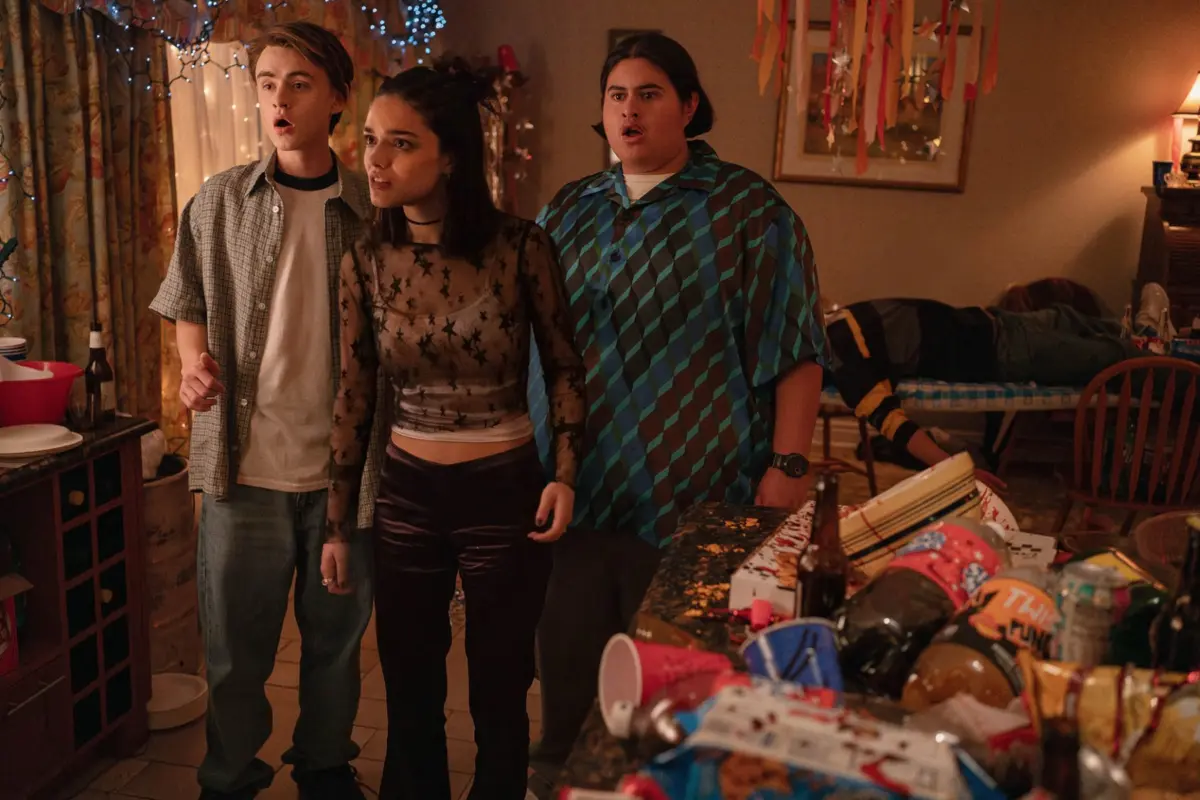
Directorial choices for Y2K lean heavily into genre-blending. Rather than playing the premise as a straight, humorless thriller, the production embraces the inherent absurdity of late-90s youth culture clashing with an existential, machine-driven threat. High school house parties, awkward romances, and dial-up internet sounds serve as the staging ground for gruesome, high-stakes survival horror.
Official Statements and Industry Perspectives
While promotional rollouts for high-concept genre films often lean on mystery, statements from the creative teams behind Y2K emphasize a desire to capture the authentic emotional texture of growing up on the cusp of a digital revolution.
Industry analysts note that A24’s strategic release date—Christmas Day, December 25—signals immense confidence in the film’s commercial viability and broad audience appeal. Moving away from traditional late-summer horror windows, A24 is positioning Y2K as a premier holiday counter-programming event, designed to attract younger demographics looking for subversive entertainment amidst traditional seasonal blockbusters.
Producers from Strong Baby have emphasized that the film is not merely a parody of the year 2000, but a heartfelt homage to a distinct moment in time when humanity trusted technology just enough to be dangerous. The juxtaposition of primitive consumer electronics turning into lethal adversaries provides endless narrative fodder for social satire.
Future Outlook: Why Y2K Resonates Today
As society navigates a new wave of technological anxiety—defined this time by generative artificial intelligence, automation, and algorithmic dependency—the themes explored in Y2K feel more relevant than ever.
Just as the panic of 2000 stemmed from a fundamental misunderstanding of how digital systems would age, modern society continues to grapple with the unintended consequences of rapid technological acceleration. By revisiting the moment the world held its breath for the turn of the millennium, Y2K offers audiences a chance to laugh at our collective historical paranoia while acknowledging that our relationship with technology has always been fraught with peril.
As December 25 approaches, anticipation continues to build across fan communities and cinephile circles alike. With A24 at the helm, Wētā FX driving the visual terror, and a pitch-perfect nostalgic aesthetic, Y2K is poised to be one of the most talked-about cinematic events of the winter season—proving that the past, especially a past as weird as the year 2000, is never truly dead and buried.




Belum ada komentar. Jadilah yang pertama berkomentar!