

Executive Overview
The landscape of mobile gaming hardware has undergone a structural pivot. As the traditional gaming smartphone market faces a noticeable contraction, hardware manufacturers are redirecting their engineering efforts toward high-performance compact tablets. Combining larger thermal envelopes, superior display real estate, and enhanced ergonomic flexibility, the compact Android gaming tablet segment has emerged as the premier playground for mobile hardware innovation.
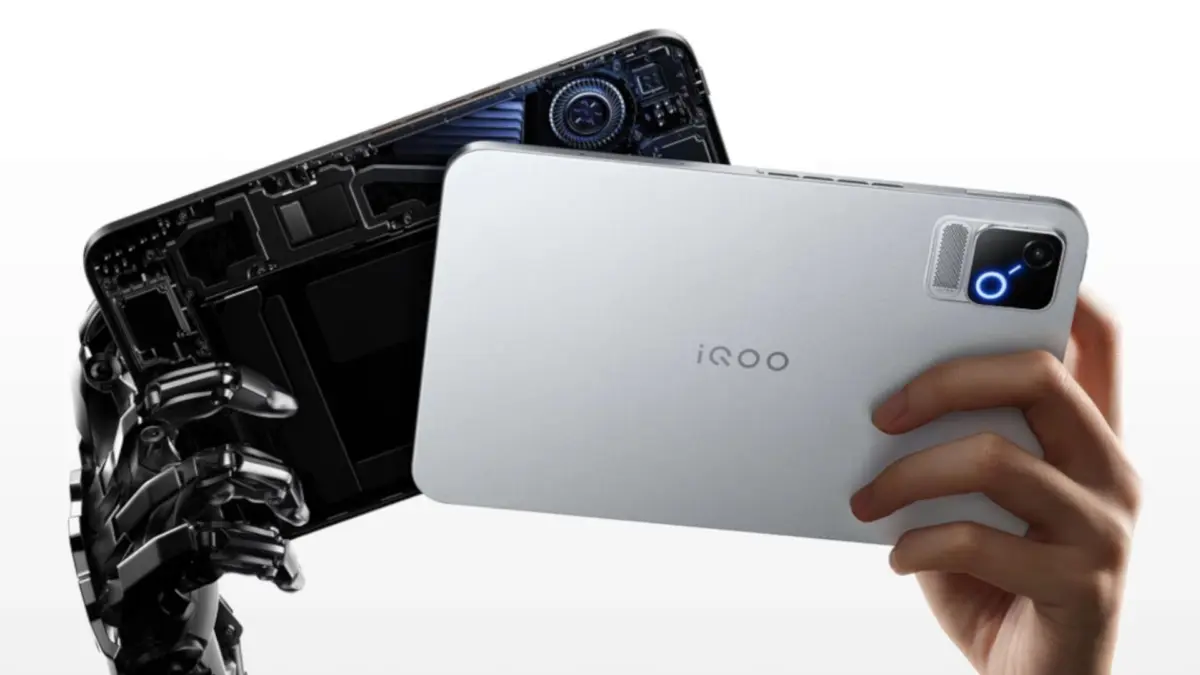
Joining high-profile market entrants such as the REDMAGIC Astra 2 and the Lenovo Legion Tab Gen 5, Vivo’s performance-focused sub-brand iQOO has officially teased its upcoming flag-bearer: the iQOO Pad Ultra. Announced through a series of official promotional reveals in China ahead of its full launch, the iQOO Pad Ultra is positioned as a direct challenge to current market leaders, touting specs that push the boundaries of display brightness, panel refresh rates, and input responsiveness.
Featuring an 8.8-inch 165Hz OLED panel capable of reaching a peak brightness of 4,500 nits, an integrated active cooling fan within an all-metal unibody chassis, and an unprecedented 5,000Hz instantaneous touch sampling rate, the Pad Ultra represents a significant leap in mobile gaming specs. However, despite its impressive spec sheet, international consumers face a familiar challenge: initial availability appears restricted to the Chinese domestic market, leaving global release timelines and final pricing structures uncertain.
Detailed Chronology
The rollout of details regarding the iQOO Pad Ultra follows a calculated marketing cadence characteristic of major consumer electronics launches in the region.
+-------------------------------------------------------------------+
|                     iQOO Pad Ultra Timeline                       |
+-------------------------------------------------------------------+
|  Early September: Industry Rumors & Regulatory Leakings           |
|         │                                                         |
|         ▼                                                         |
|  Mid-September: Initial Teasers via Sina Weibo                     |
|         │                                                         |
|         ▼                                                         |
|  Late September: Detailed Display & Thermal Spec Disclosures      |
|         │                                                         |
|         ▼                                                         |
|  September 29: Official Domestic Launch & Pricing Event (China)   |
+-------------------------------------------------------------------+- Early September: Speculation begins mounting across supply chain channels regarding iQOO’s development of a small-form-factor gaming slate designed to directly rival recent releases from RedMagic and Lenovo.
- Mid-September: iQOO initiates its teaser campaign across social media platform Sina Weibo. Initial posts confirm the device’s branding as the "iQOO Pad Ultra," signaling a new tier above its standard Pad and Pad Pro lineups.
- Late September: A cascade of promotional assets published by iQOO and reported by tech outlets detailing key hardware specifications. These revelations showcase the tablet’s active cooling architecture, display capabilities, touch responsiveness, and first-party controller accessories.
- September 29: The scheduled official launch event in China, where final hardware configurations, chipset details, memory variants, retail pricing, and domestic availability are slated for full disclosure.
Supporting Context & Technical Metrics
To understand the positioning of the iQOO Pad Ultra, one must examine the device through four critical engineering pillars: display technology, input responsiveness, thermal management, and peripheral integration.
+-----------------------------------------------------------------------+
|                    Hardware Comparison Highlights                     |
+--------------------------+-----------------------+--------------------+
| Metric                   | iQOO Pad Ultra        | Industry Average   |
+--------------------------+-----------------------+--------------------+
| Peak Display Brightness  | 4,500 Nits            | 1,000 - 1,600 Nits |
| Touch Sampling (Inst.)   | 5,000 Hz              | 480 - 1,000 Hz     |
| Refresh Rate             | 165 Hz                | 120 - 144 Hz       |
| Screen-to-Body Ratio     | 93.3%                 | 85 - 88%           |
+--------------------------+-----------------------+--------------------+
1. Display Engineering: Setting New Luminance & Speed Benchmarks
The center of the iQOO Pad Ultra’s appeal lies in its 8.8-inch display panel. While many competitors rely on IPS LCD panels to control production costs and mitigate thermal output, iQOO has selected an advanced OLED matrix.
- Dynamic Luminance: The screen features a reported peak brightness of 4,500 nits. While peak brightness figures are typically measured across localized High Dynamic Range (HDR) windows rather than sustained full-screen illumination, a 4,500-nit threshold ensures high outdoor legibility and dynamic contrast ratios for specular highlights during intense gameplay.
- Motion Clarity: Operating at a 165Hz refresh rate, the display renders fluid motion at high frame rates, reducing motion blur and display persistence—a crucial factor for fast-paced titles such as competitive first-person shooters and battle royales.
- Screen Real Estate: Achieving a 93.3% screen-to-body ratio, iQOO has minimized bezel thickness without compromising structural integrity or creating points for accidental palm input, striking a balance between immersion and handheld ergonomics.
2. Input Latency: Breaking the 5,000Hz Threshold
In competitive mobile gaming, input lag can be the deciding factor between a victory and a loss. The iQOO Pad Ultra introduces a 5,000Hz instantaneous touch sampling rate, setting a new standard for tablet input speeds.
Input Processing Pipeline:
[Touch Event] ──► [5000Hz Sampling Layer] ──► [Sub-Millisecond Processing] ──► [In-Game Action]
By polling touch inputs up to 5,000 times per second during instantaneous touch triggers, the panel significantly reduces the millisecond delay between a user’s physical input and the software processing layer. This elevated sampling rate surpasses the figures found on dedicated gaming phones and competing slates like the REDMAGIC Astra 2 and Lenovo Legion Tab Gen 5, offering precise trajectory tracking for aim-heavy titles.
3. Thermal Management & Active Cooling Architecture
High-performance processors operating in constrained form factors inevitably face thermal throttling unless heat is actively removed from the system. To address this, iQOO has engineered an active thermal dissipation system into the Pad Ultra.
- Integrated Active Cooling Fan: Moving away from purely passive vapor chamber solutions, the Pad Ultra integrates a miniature internal cooling fan. This active forced-air cooling system channels heat away from the central Processing Unit (SoC) and battery assembly, maintaining higher sustained clock speeds without aggressive CPU throttling during long gaming sessions.
- All-Metal Unibody Construction: Surrounding the internal components is an engineered metal chassis that doubles as a structural heatsink. The metallic backplate facilitates continuous thermal transfer, preventing localized hot spots on the chassis while offering structural rigidity under stress.
4. Modular Peripheral Ecosystem
Acknowledging that touchscreens are not ideal for all game genres, iQOO revealed a dedicated first-party controller accessory specifically designed for the Pad Ultra.

    +---------------------------------------------------------------+
    |  [ Left Controller ] ===== [ iQOO Pad Ultra ] ===== [ Right ]  |
    +---------------------------------------------------------------+
                             (Direct Docking/Mount)
The accessory mounts directly onto the sides of the 8.8-inch frame, transforming the tablet into a dedicated handheld console. Featuring dual analog thumbsticks, tactile D-pads, and physical shoulder triggers, the accessory bridges the gap between traditional console mechanics and Android gaming. This physical input integration aims to rival dedicated handheld consoles like the Steam Deck, ASUS ROG Ally, and Nintendo Switch, leveraging the slate’s high-end display and raw processing power.
Official Statements and Brand Strategy
While full executive speeches are reserved for the official September 29 launch event, iQOO’s promotional materials on Sina Weibo reveal a strategic shift in brand strategy:
"The iQOO Pad Ultra is designed to eliminate the historic compromises associated with mobile display technology and thermal performance. By merging high-frequency OLED engineering with active thermal management, we are establishing a new performance benchmark for compact gaming slates."
— Translated synthesized commentary from iQOO marketing communications.
Industry analysts note that iQOO’s adoption of the "Ultra" suffix for this device highlights an expansion of its hardware hierarchy. Traditionally focused on high-value flagship smartphones, iQOO’s shift toward a premium tier of specialized gaming tablets reflects broader market realities: mobile gamers are demanding larger displays, higher thermal tolerances, and dedicated control accessories that traditional phone form factors simply cannot accommodate.
Future Outlook & Market Dynamics
The Shift from Gaming Phones to Mini Tablets
The introduction of the iQOO Pad Ultra highlights a broader shift in the mobile gaming landscape. Between 2020 and 2024, specialized gaming phones enjoyed steady growth. However, by late 2025 and into 2026, consumer interest shifted toward compact gaming tablets.
Market Transition Trend (2022–2026):
  Gaming Smartphones ───────────────► Decreasing Market Share
  Compact Gaming Tablets (8-9") ────► Rapid Market Expansion
Several factors drive this transition:
- Thermal Headroom: The larger surface area of an 8-to-9-inch tablet dissipates heat much more effectively than a compact smartphone, allowing SoCs to run at peak performance for extended periods.
- Display Real Estate: Modern mobile esports titles require complex heads-up displays (HUDs) and multi-finger control layouts ("claw" grips), which can feel cramped on standard smartphone screens.
- Battery Capacity: Larger chassis accommodate higher-capacity dual-cell battery designs, supporting high-brightness displays and active fan cooling systems without drastically shortening battery life.
The Global Availability Catch
Despite its impressive technical specifications, the primary uncertainty surrounding the iQOO Pad Ultra remains its geographic footprint. Historically, Vivo and its iQOO sub-brand have restricted many of their highest-spec performance devices to domestic Chinese release schedules or select regional markets across South Asia.
- Software and Regulatory Hurdles: Releasing an active-cooled tablet globally requires navigating regional regulatory certifications (such as FCC and CE compliance), localizing custom Android skins (Funtouch OS vs. OriginOS), and securing wide-ranging wireless certifications.
- Pricing Expectations: Industry insiders anticipate the Pad Ultra will command a premium price tag within China. Should iQOO choose to export the device to Western markets, import tariffs, distribution logistics, and local tax compliance could raise the price further, placing it in direct competition with high-end non-gaming slates like Apple’s iPad Mini and Samsung’s Galaxy Tab S series.
Competitive Landscape Context
If the iQOO Pad Ultra launches globally, it will face a competitive field:
- REDMAGIC Astra 2: Focuses heavily on extreme gamer aesthetics and customizable software triggers.
- Lenovo Legion Tab Gen 5: Known for clean software design and integration into Lenovo’s broader PC ecosystem.
- Apple iPad Mini: Remains a strong contender in raw processing power via Apple Silicon, though limited by standard 60Hz display refresh rates and passive thermal designs.
If iQOO can deliver the Pad Ultra with international software support at a competitive price point, its display, active thermal cooling, and low touch latency could set a new standard for performance in the compact Android gaming market. Detailed pricing configurations and global rollout plans are expected to be officially announced following the domestic launch event in China.








Belum ada komentar. Jadilah yang pertama berkomentar!