

Executive Overview
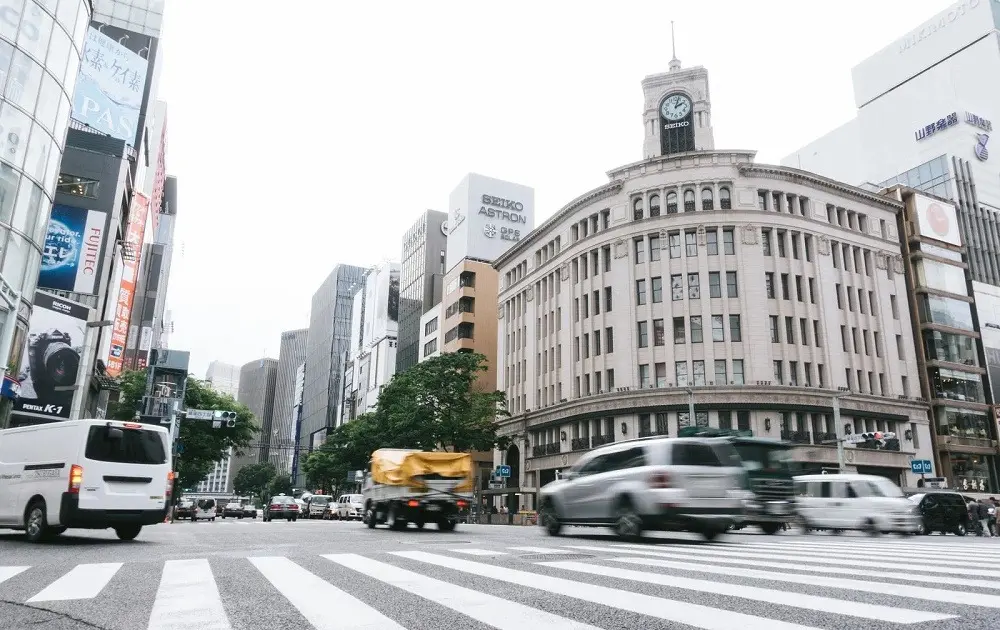
As tourism to Japan reaches historic post-pandemic highs, an unexpected cultural flashpoint has emerged on the polished stone pavements of Tokyo’s premier luxury district. Ginza—globally renowned for housing the flagship storefronts of haute couture powerhouses, exquisite art galleries, and multi-story department stores—has found itself at the center of a growing social debate.
The core issue is seemingly simple, yet deeply symbolic: an increasing number of foreign tourists are choosing to sit, squat, and occasionally dine directly on the sidewalks, curbs, and decorative planters of Ginza’s main boulevards.
While public sitting may seem innocuous in many Western and Asian metropolitan centers, in Japan, such behavior is widely perceived as slovenly, inconsiderate, and culturally dissonant. The phenomenon has inadvertently resurrected memories of the late 1990s countercultural "jibetarian" movement—a portmanteau of jibeta (ground) and bejitarian (vegetarian)—when rebellious teenagers famously sat on Tokyo’s streets. However, unlike the rebellious youth of decades past, today’s sidewalk occupants are international travelers navigating the physical exhaustion of high-volume tourism in a city notoriously sparse on public seating.
This in-depth report explores the cultural friction between foreign visitors and local residents, examines the systemic infrastructure challenges of Tokyo’s urban design, and analyzes the broader implications of balancing mass tourism with hyper-polite Japanese public etiquette.
Detailed Chronology & Emergence of the Issue
The Changing Face of Tokyo’s Retail Capital
For decades, Ginza has functioned as the gold standard of urban sophistication in Japan. Characterized by wide pedestrian promenades during weekend hokokusha tengoku (pedestrian paradise) closures, immaculate streets, and an air of refined elegance, the district relies heavily on a shared unspoken contract among visitors: maintain the dignity of the space.
However, as international travel has rebounded aggressively, the demographic makeup of Ginza’s foot traffic has shifted dramatically. Alongside affluent shoppers carrying designer bags, the district now hosts a massive influx of budget-conscious and long-haul tourists. These travelers often spend hours exploring the vast metropolis on foot, leading to severe physical fatigue.
The modern sidewalk-seating trend first began drawing local ire through viral street-interview videos and news segments, most notably an ANNnewsCH broadcast that captured tourists parked directly on the curbs of Ginza’s central shopping strip. When questioned by reporters, tourists offered pragmatic defenses. A tourist from Malaysia explained that his feet were simply aching after an hour of continuous walking. Another traveler, a woman from Kosovo, admitted she assumed sitting on the curb was permissible because the street was closed to vehicular traffic on the weekend—though she quickly reconsidered upon learning local norms.
The Breakdown of Unspoken Social Codes
In Japan, public behavior is largely regulated not by hard legal statutes, but by a powerful, consensus-driven social framework known as meiwaku (causing trouble or annoyance to others).
When tourists plop down on the ground to rest, eat packed lunches, or check their smartphones, it triggers multiple layers of cultural unease among residents:
- Aesthetic Degradation: Ginza’s brand identity is built on high-class immaculate presentation. Sidewalk loungers clash sharply with this image.
- Hygiene Concerns: Local critics frequently point out that ground-level grime picked up on clothing and trousers is subsequently transferred onto pristine public transit seats and restaurant upholstery.
- The Shift from "Is it possible?" to "Is it okay?": Social media commentators in Japan have sharply criticized what they perceive as a transactional mindset among modern tourists—one that prioritizes personal physical convenience over collective spatial harmony.
Supporting Context & Metrics: The "Jibetarian" Echo and Urban Infrastructure
The Ghost of the "Jibetarian"
To fully understand the visceral reaction of Tokyoites to the current sidewalk situation, one must look back nearly three decades. In the late 1990s, Japan experienced a youth subculture phenomenon characterized by teenagers sitting or squatting in large groups on urban sidewalks, particularly around major transit hubs like Shibuya and Shinjuku.
Dubbed "jibetarians" by the domestic media, these youths used ground-sitting as a form of passive rebellion against conventional societal pressures. Yet, by the early 2000s, the trend had entirely fizzled out. Japanese society collectively determined that sitting on concrete lacked aesthetic appeal, and the practice vanished from mainstream Japanese behavior.
The reappearance of sidewalk lounging—this time driven by foreign tourists rather than rebellious domestic teenagers—has therefore struck a uniquely sensitive nerve, serving as an unwelcome reminder of a bygone era of public degradation.
The Infrastructure Dilemma: Where Are the Benches?
A crucial element fueling the current controversy is a structural deficiency embedded deep within Tokyo’s urban design: the severe scarcity of public benches.
Unlike European capitals like Paris, London, or Vienna, which heavily feature park benches, public squares, and street furniture, Tokyo’s commercial districts are intentionally designed to maximize pedestrian flow and retail frontage. Planners have historically omitted public benches for several practical, albeit controversial, reasons:
- Crowd Management: Benches create bottlenecks in ultra-dense pedestrian environments.
- Vagrancy and Sanitation: Urban planners worry that permanent seating invites loitering, sleeping rough, and the accumulation of discarded waste.
- The Economic Alternative: Tokyo boasts an abundance of cafes, coffeehouses, and convenience store eat-in spaces. However, these options come at a financial cost. In upscale districts like Ginza, cafes are often operating at full capacity, and their menu prices can be prohibitive for budget-conscious travelers.
While many local netizens express sympathy for tired tourists—noting that the city genuinely lacks adequate resting infrastructure—the prevailing counter-argument remains resolute: millions of domestic visitors manage to navigate Ginza daily without resorting to sitting on the pavement.
Official Statements and Public Sentiment
While the sight of tourists lounging on high-end curbs has dominated morning talk shows and online forums, legal frameworks present a nuanced picture.
Legal Realities vs. Cultural Expectations
Under current municipal ordinances in the Chuo Ward (where Ginza is located), sitting on a sidewalk is not strictly illegal, provided the individual does not obstruct building entrances, block emergency exits, or impede the safe flow of pedestrian traffic.
However, Japanese authorities and cultural experts repeatedly emphasize that legality is a low bar in Japanese society. The true measure of civilized public conduct lies in considerate coexistence.
Voices from the Public Sphere
Online reactions collected from major Japanese news aggregators (such as Yahoo! Japan and Teleasa News) highlight a spectrum of frustration, resignation, and constructive critique:
"It will only be a matter of time before Ginza begins to mirror the chaotic, unregulated energy of Shinjuku’s seedier alleys."
"Sitting directly on the pavement soils your clothes, which means that urban grime is inevitably transferred directly onto train seats and restaurant chairs later in the day."
"There are plenty of establishments designed for sitting, but visitors simply do not want to spend the money required to use them."
"Instead of asking themselves, ‘Is this culturally acceptable?’ tourists are simply asking, ‘Can my body fit in this space?’ If the answer is yes, they proceed without a second thought."
Conversely, urban planners and sympathetic residents have noted that city governments must shoulder some responsibility. Without proactive investments in smart urban rest areas or multilingual educational campaigns, friction between international visitors and local residents will only intensify.
Future Outlook: Managing the Over-Tourism Friction Point
As Japan continues to break tourism records—welcoming tens of millions of international guests annually—the Ginza sidewalk debate serves as a bellwether for larger systemic challenges facing the nation’s tourism strategy.
1. The Need for Multilingual Etiquette Outreach
Similar to the proactive anti-littering and public drinking campaigns launched by Shibuya Ward ahead of Halloween, commercial districts across Tokyo may need to deploy clear, friendly, and multilingual signage. Educating visitors about cultural nuances regarding public posture can preemptively bridge the gap between tourist expectations and local sensibilities.
2. Innovative Urban Infrastructure Solutions
Urban designers in Tokyo are increasingly pressured to rethink public spaces. Rather than traditional benches that risk attracting unwanted loitering, future city planning may incorporate modular, high-turnover resting zones, smart benches with time limits, or designated tourist rest pavilions equipped with digital maps and hydration stations.
3. Fostering Mutual Respect
Ultimately, resolving the "pavement paradigm" requires a two-way street of understanding. For travelers, adopting the local mindset of omotenashi (hospitality) and spatial mindfulness means recognizing that public spaces in Japan function as shared cultural living rooms. For residents and local governments, acknowledging the physical realities of global travel—and providing the necessary infrastructure to support it—will be vital in ensuring that Tokyo remains both a welcoming global destination and a city of immaculate pride.








Belum ada komentar. Jadilah yang pertama berkomentar!