


Executive Overview
The video game industry has weathered many paradigm shifts—from the pixelated dawn of the arcade era to the explosive democratization of indie development brought on by digital distribution platforms. Yet, few trends have experienced the exponential, surreal expansion currently overtaking Steam’s storefront: the proliferation of idle and incremental games. What began in 2013 as a niche subculture of self-aware web browser jokes—exemplified by the hypnotic, exponential dopamine loops of Cookie Clicker and Candy Box—has metastasized into a commercial titan.
Today, the statistics are staggering. According to platform tracking metrics via SteamDB, the sheer volume of idler releases has skyrocketed. In 2020, a modest 100 idler-tagged games debuted on Steam. By 2024, that figure climbed to 647, surged to 1,033 the following year, and is on track to smash previous records with 1,811 releases already logged, alongside over a thousand titles currently marked as "Coming Soon" or "TBA."
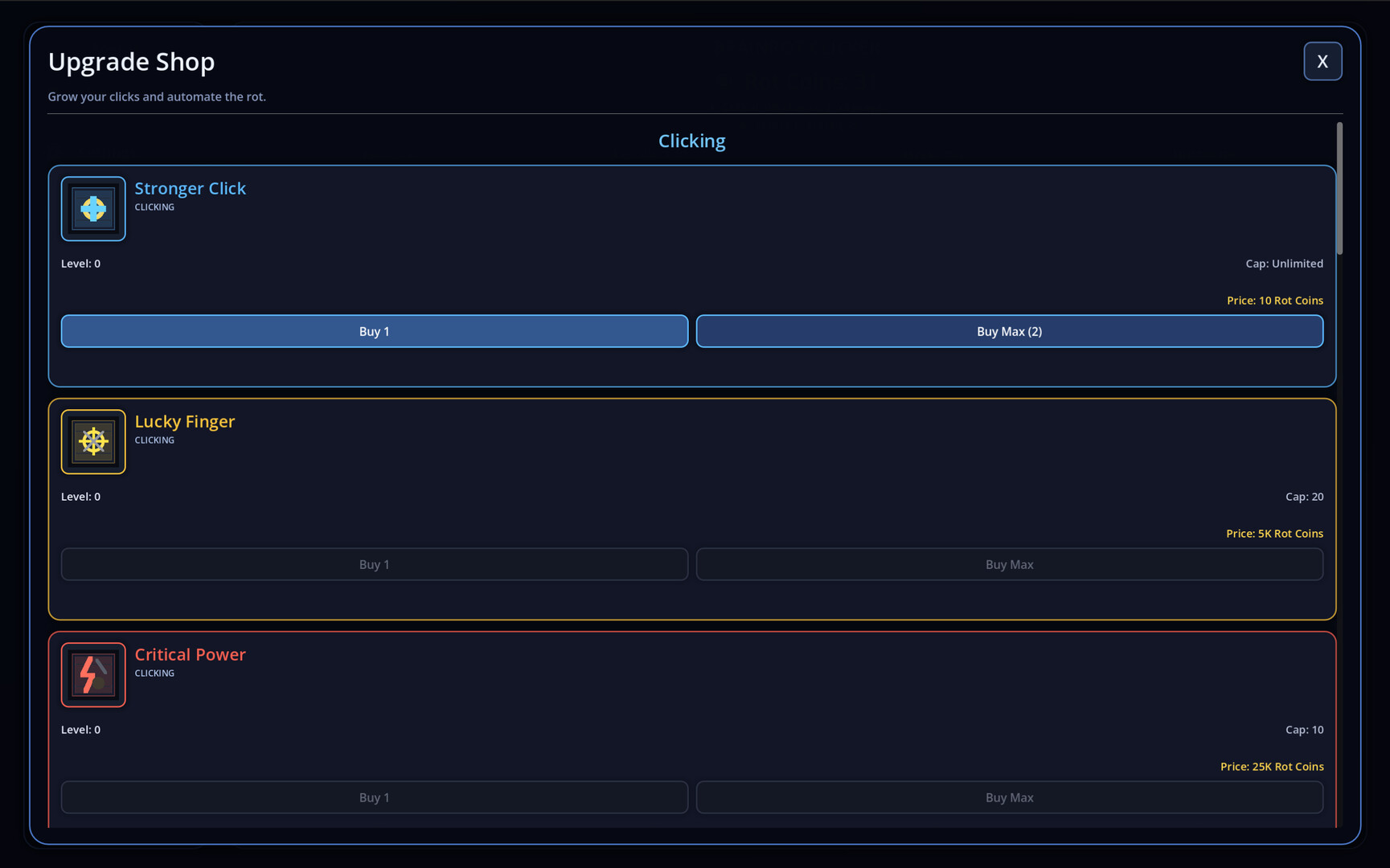
Beneath this massive gold rush, however, lies a systemic transformation. The modern landscape of incremental gaming is increasingly defined by automation and mass-production. Bolstered by the widespread accessibility of generative artificial intelligence, thousands of identical, low-effort "numbers-go-up" applications are flooding the market. Characterized by uninspired dark-blue user interfaces, copy-pasted UI layouts, and explicit AI content disclosures, this wave of "idler slop" has fundamentally altered the economics and curation challenges of PC gaming’s largest digital marketplace.
Detailed Chronology: From Browser Parody to Steam Hegemony
To understand how the modern idler ecosystem reached this saturation point, one must trace its roots back to an era when clicking digital cookies felt like an ironic subversion of traditional role-playing game mechanics.

2013: The Genesis of the Incremental Loop
When Cookie Clicker and Candy Box debuted in rapid succession in 2013, they were largely received as whimsical commentaries on the absurdity of modern gaming compulsions. While Ian Bogost’s earlier Cow Clicker served as a razor-sharp academic satire of Facebook-era microtransaction monetization, Cookie Clicker walked a fascinating line between parody and sincerity. Players clicked a singular, high-definition cookie to generate currency, subsequently reinvesting those yields into autonomous production structures—grandmas, farms, and time machines—that maximized output efficiency.
What started as an amusing diversion quickly evolved into a cultural phenomenon. Office workers, internet forum dwellers, and tech journalists alike found themselves helplessly staring at rising exponents, tracking passive income gains over hours and days. It was meaningless, transparently repetitive, and utterly addictive.
The Mid-2010s to 2020s: Commercialization and Platform Migration
As web browsers phased out legacy technologies like Adobe Flash and HTML5 standards matured, developers realized these hypnotic loops possessed serious commercial viability. Incremental games transitioned from free-to-play browser curiosities to polished standalone products on platforms like Steam. Titles such as Clicker Heroes and AdVenture Capitalist proved that micro-economies driven by exponential math could capture sustained player retention and monetize effectively through cosmetic DLCs and optional microtransactions.
The AI Inflection Point (2023–Present)
The true catalyst for the current deluge, however, arrived with the mainstreaming of generative AI tools. As large language models and text-to-image generators became frictionless and commercially viable, the barrier to entry for game development effectively evaporated.

By the mid-2020s, developers realized that creating an idle game required very little underlying programming complexity—the core logic is fundamentally mathematical, revolving around tickers, variables, and passive accumulation loops. By utilizing generative AI to bootstrap visual assets, write basic narrative text, and map out uniform user interfaces, single creators or automated asset-flipping operations could output dozens of titles a week. Steam became the primary vector for this automated gold rush, resulting in the chaotic, unstructured data surge witnessed today.
Supporting Context & Metrics: Analyzing the Steam Idler Boom
The sheer scale of the idle game market on Steam reveals a structural shift in how games are conceived, published, and consumed. An examination of current database metrics highlights both the commercial outliers and the sheer gravity of low-effort titles dominating the queue.
The Macro View: SteamDB Data
- 2020: 100 idler-tagged releases.
- 2024: 647 idler-tagged releases.
- Following Year: 1,033 idler-tagged releases.
- Current Year-to-Date: 1,811 idler-tagged releases (with 1,119 titles listed as "Coming Soon" and 380 marked as "TBA").
This extraordinary trajectory illustrates an ecosystem growing at a rate entirely disproportionate to organic human development capacity.
The Good, the Bad, and the AI-Assisted
Amidst the deluge, distinct tiers have emerged within the genre. On one end of the spectrum reside boutique passion projects that utilize the idler framework to tell genuine stories or experiment with mechanics. Next Reign: Kingdom, for instance, stands out through meticulous handmade pixel art, atmospheric soundscapes, and surprising strategic depth. Similarly, We Need More Humans! introduces a darkly comedic, high-concept premise centered around mastering the art of alien abduction, paired with a distinct visual identity. Even titles like Zad Archery, despite adopting a more generic artistic blueprint, manage to resonate with audiences, commanding nearly 700 "Mostly Positive" user reviews.
On the other end of the spectrum sit massive platform anomalies—games like Bongo Cat (boasting concurrent player counts exceeding 135,000) and Task Bar Hero—which lean into desktop integration and hyper-casual engagement.
However, these successful titles are statistical outliers. Below them lies an endless ocean of titles that rely heavily on AI disclosures. A side-by-side analysis of user interfaces from games such as Brainrot Clicker, Path of the Idle Cultivator, Nexus: Quantum Industries, and Vespera reveals an uncanny valley of game design. Across disparate developers and themed concepts, these games consistently gravitate toward identical dark-blue color palettes, cramped textual hierarchies, and sterile modular UI components.
A glance at their official Steam AI disclosures confirms the underlying methodology:
- Vespera: Employs "AI-generated images and other AI-made components."
- Nexus: Quantum Industries: Notes that "some assets were created using AI. I’m not an artist lol."
- Brainrot Clicker: Acknowledges "some pre-generated visual assets, written content, and development-related creative work."
- Path of the Idle Cultivator: Utilizes AI tools "for UI and some translations."
Weekly Revenue and Market Context
The broader PC gaming marketplace continues to grapple with these algorithmic anomalies alongside traditional heavyweights. Recent Steam revenue tracking highlights the peculiar juxtaposition of high-budget releases and niche indie shifts:

| Rank | Game | Category / Status |
|---|---|---|
| 1 | Star Wars Zero Company | Strategy RPG / Bestseller (amidst reported studio furloughs) |
| 2 | Counter-Strike 2 | Competitive Shooter / Platform Staple |
| 3 | How to Fish | Indie / Deep Cut |
| 4 | Dota 2 | MOBA / Platform Staple |
| 5 | Apex Legends | Battle Royale |
| 6 | NBA 2K27 | Sports Simulation |
| 7 | Crimson Desert Enhanced | Action RPG |
| 8 | Dead by Daylight | Asymmetrical Horror |
| 9 | EA Sports FC 27 | Sports Simulation |
| 10 | Wardogs | Action / Tactical |
The commercial triumph of titles like Star Wars Zero Company—developed by Bit Reactor in the style of XCOM—contrasts sharply with the precarious reality of modern development, highlighted by reports that the studio furloughed roughly 80 percent of its workforce shortly after launch. Meanwhile, premium single-player blockbusters like The Blood of Dawnwalker shattered expectations by clearing one million units within three days across all platforms, while smaller expansions, such as the Elden Ring Tarnished Pack, faced severe community backlash over perceived value propositions relative to their $5 price tags.
Official Statements and Industry Industry Reception
The systemic influx of generative AI content and low-friction asset flips has forced platform holders, developers, and industry veterans to reassess how digital storefonts are managed. While Valve’s updated distribution policies permit AI-generated content provided developers accurately disclose its usage, the sheer volume of uniform submissions has severely strained discoverability algorithms.
Independent creators caught in the idler gold rush express a mixture of exhaustion and dark amusement. As noted by the developer of Nexus: Quantum Industries, the reliance on automated assets is often an economic necessity for solo programmers lacking traditional artistic training. Yet, when multiplied across thousands of daily submissions, this democratization effect creates a severe signal-to-noise ratio problem.
Industry analysts note that platforms like Steam risk falling victim to "Goodhart’s Law"—when a measure becomes a target, it ceases to be a good measure. Because Steam’s visibility algorithms rely heavily on release frequency, recent activity tags, and basic user engagement metrics, automated asset-flipping operations can game the system with minimal overhead, generating marginal revenue through bundle sales, card-farming bots, and low-cost achievement hunters.

Future Outlook: Navigating the Sea of "Brainrot"
As we look toward the horizon of the PC gaming landscape, the trajectory of the idler genre offers a fascinating case study in technological saturation. What was once celebrated as an innovative exploration of behavioral psychology and minimalist design has been streamlined into an automated factory of digital noise.
Several developments will likely shape the coming years:
- Algorithmic Filtering and Curation: Platform holders will face mounting pressure to introduce more sophisticated discovery filters that allow users to screen out or explicitly hide AI-heavy or asset-flipped projects. Without intervention, storefront fatigue threatens to alienate casual browsers.
- The Counter-Movement of Human Craft: Just as the explosion of generative text and imagery has sparked a renewed cultural appreciation for tangible, human-crafted art, indie developers focusing on the idler genre will likely lean heavily into artisanal, highly stylized, and mechanically deep experiences to separate themselves from the algorithmic sea of dark-blue user interfaces.
- The Maturation of Incremental Mechanics: The underlying mathematics of incremental games remain genuinely compelling. True innovators will continue to extract those psychological loops and embed them within unexpected genres—merging idler progression with deckbuilders, survival sims, and narrative-driven RPGs—leaving pure, unadulterated "clicker slop" behind as a relic of the early AI boom.
If a time traveler had visited the offices of 2013 browser-game pioneers and explained that their ironic jokes about clicking digital cookies would eventually herald an era of thousands of automated, AI-generated "numbers-go-up" apps flooding the premier PC marketplace, the initial reaction would undoubtedly be disbelief. Yet, given a few moments to observe the relentless, compounding mechanics of human industry and technological acceleration, the inevitability of it all becomes starkly clear.








Belum ada komentar. Jadilah yang pertama berkomentar!