

Executive Overview
For nearly a decade, the StarCraft universe has existed primarily as a legacy monument in the annals of PC gaming history. Aside from the 2017 release of StarCraft: Remastered and the steady, quiet maintenance of StarCraft II, Blizzard Entertainment’s seminal real-time strategy (RTS) franchise has remained dormant. The last true mainline entry, StarCraft II, debuted all the way back in 2010. Yet, as the gaming industry marches toward BlizzCon 2026—scheduled for September 12–13—a constellation of peculiar digital breadcrumbs, industry reports, and strategic corporate movements suggests that the iconic sci-fi IP is finally shaking off its cryo-sleep.
Speculation reached a fever pitch following a flurry of activity: an explosive report out of South Korea regarding prospective intellectual property development deals, unexpected and atmospheric glitches on the official StarCraft web portal, a glaringly mysterious one-hour vacancy on the main stage schedule, and recent digital rewards tied directly to StarCraft II. While the community remains deeply divided over whether Blizzard is plotting a triumphant return to its RTS roots or pivoting toward a mass-market shooter, one thing is certain: the anticipation surrounding StarCraft has not felt this electric since the days of Legacy of the Void.
This comprehensive report examines the mounting evidence, analyzes the corporate motives behind a potential revival, and explores what BlizzCon 2026 might hold for fans of the Koprulu Sector.
Detailed Chronology: How the Rumor Mill Ignited
The current wave of StarCraft speculation did not materialize overnight; rather, it has been stoked by a series of deliberate leaks, strategic schedule anomalies, and digital artifacts that have set community forums ablaze.
The Korean Reports and the Nexon Connection
The spark that lit the fire came earlier in September, when South Korea’s prestigious publication Chosun published a stunning report. According to the outlet, South Korean gaming giant Nexon—renowned for massive multiplayer titles and live-service operations—was reportedly nearing a finalized agreement to develop a new game leveraging the StarCraft IP.
Given StarCraft’s status as a cultural touchstone in South Korea, where professional esports found its foundational footing in PC bangs across Seoul, the report naturally sent shockwaves through the local and international gaming communities. However, the report quickly faced scrutiny from analytical spaces like the StarCraft subreddit. Chosun originally pointed toward the project being a potential StarCraft 3, a prospect that clashed with earlier, more plausible industry whispers suggesting a StarCraft spin-off shooter. Furthermore, concerns were raised regarding Nexon’s corporate posture, specifically CEO Junghun Lee’s public defense of generative artificial intelligence in game development and aggressive microtransaction models.
Despite these community anxieties, the timing of the report proved uncanny, landing just days before the doors of BlizzCon 2026 were set to open.
The Glitching Portal and the Schedule Gap
If the foreign press reports provided the smoke, Blizzard’s own digital infrastructure provided the fire. Early this morning, visitors to the official StarCraft website noticed jarring, intentional anomalies. High-resolution imagery began twitching, background text flickered erratically, and the portal simulated a classic "loss of signal" transmission. In the modern era of video game marketing, these types of deliberate interface breakdowns are rarely accidental; they serve as classic atmospheric teasers designed to herald a major announcement.
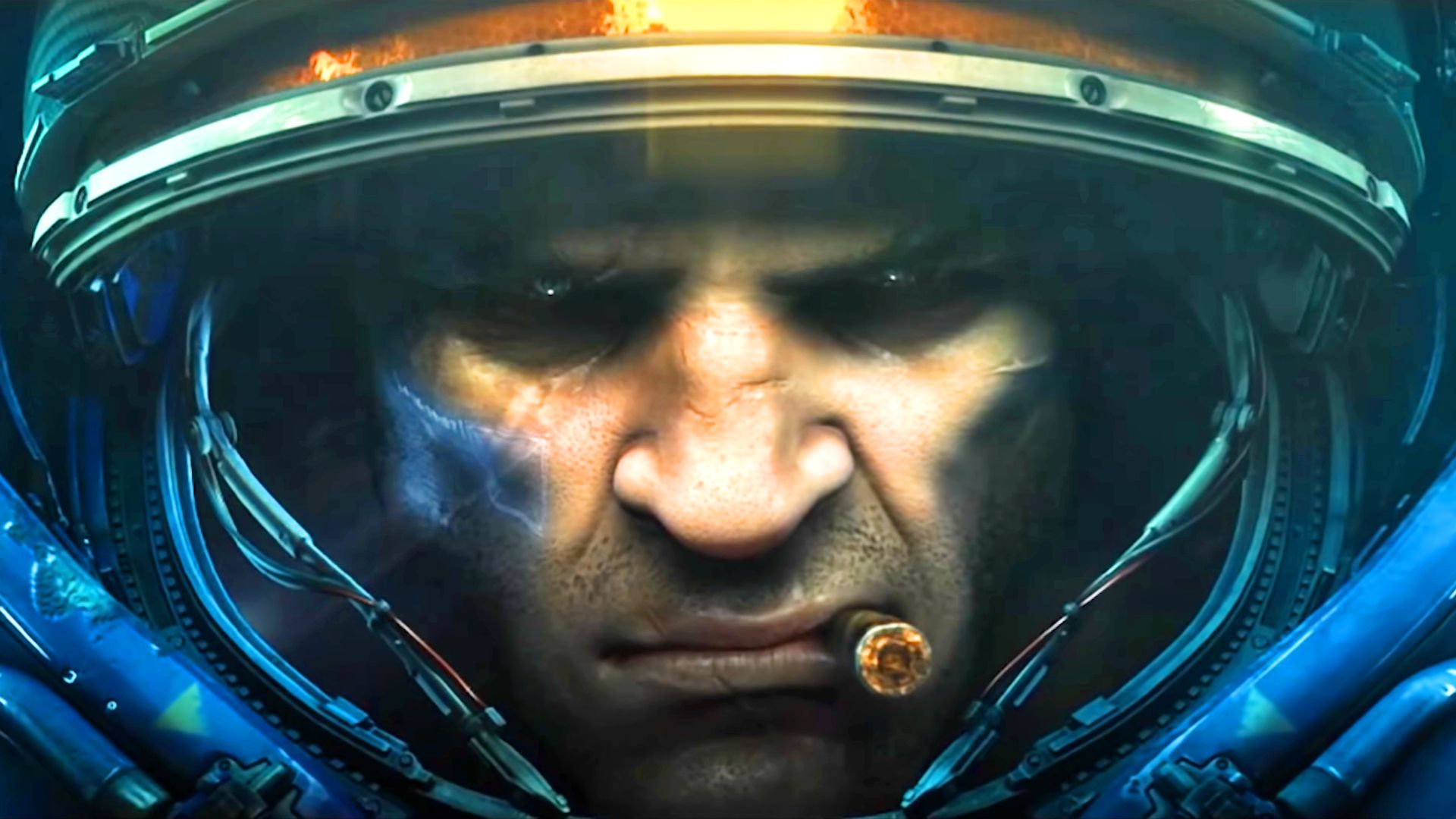
Simultaneously, eagle-eyed users on the World of Warcraft and StarCraft subreddits dissected the newly published BlizzCon 2026 main stage schedule. Among the packed timeline of developer panels, esports tournaments, and community events sits an unexplained, roughly one-hour gap early on the first day of the convention. While skeptics note that sixty minutes could theoretically be filled by any number of administrative briefings, the overwhelming consensus across enthusiast forums points toward a tentpole franchise reveal—fitting neatly into a standard keynote announcement window.
Digital Goodies and Patch Notes
Further compounding the mounting circumstantial evidence, Blizzard’s recent handling of its existing catalog has pointed directly toward the franchise. Not only has the studio continued to push unexpected patches and maintenance updates to StarCraft II—six years after active development officially concluded—but the digital goodie bundle for BlizzCon 2026 includes a 15-day co-op XP boost for Commander progression in StarCraft II. While historically a minor perk, in the hyper-analyzed ecosystem of Blizzard fandom, such inclusions are routinely interpreted as onboarding maneuvers designed to funnel returning players back into the franchise ecosystem ahead of a major reveal.
Supporting Context & Metrics: The Strategic Imperative Behind a Revival
To understand why Microsoft and Blizzard might pull the trigger on a StarCraft revival now, one must evaluate the current economic and structural realities of the modern AAA gaming market.
The Shooter Paradigm vs. RTS Purism
The central debate dividing the community is the exact nature of the rumored project. For purists, the dream is StarCraft 3—a traditional, high-budget RTS that pushes the boundaries of modern PC hardware, featuring deep base-building, intricate micro-management, and a sweeping cinematic campaign.
However, industry observers point out that Microsoft’s post-acquisition strategy under leadership like Phil Spencer has increasingly leaned toward titles with massive, mainstream monetization and player-retention potential. Traditional RTS is widely viewed within boardrooms as a niche genre—critically beloved, but notoriously difficult to scale for the broad casual audience demanded by modern live-service budgets.
This financial calculus aligns heavily with ongoing reports regarding Blizzard’s internal initiatives. In 2024, reports surfaced that Blizzard was "incubating" an internal StarCraft shooter under the guidance of former Far Cry director Dan Hay—marking the studio’s third historical attempt at turning the universe into a first- or third-person action game. LinkedIn profiles confirm that Hay remains at Blizzard, suggesting his project is still active. Additionally, earlier this year, Blizzard posted job listings seeking a "lead designer of innovation" for an open-world shooter powered by Unreal Engine.
If a new StarCraft title is unveiled at BlizzCon 2026, the weight of the evidence heavily favors an action-oriented spin-off—such as an open-world shooter—rather than a classical RTS sequel.
The Risk Calculus for Microsoft
Microsoft’s recent history has been characterized by intense risk aversion. The tech giant has faced harsh scrutiny following high-profile project cancellations, including the shelving of Blizzard’s long-in-development survival game and the outright cancellation of an unannounced MMO at ZeniMax Studios, alongside thousands of industry layoffs.
Within this austere climate, greenlighting a traditional StarCraft 3 RTS carries immense financial risk relative to its potential audience size. Conversely, an action shooter leveraging a globally recognized tier-one intellectual property fits neatly into Microsoft’s broader portfolio goals. Yet, counter-arguments persist: an authentic StarCraft 3 would instantly generate an unprecedented wave of goodwill and consumer confidence among core PC gamers, a demographic that Microsoft has actively courted for decades.
Official Statements and Industry Intelligence
As of press time, official channels remain tightly locked down. Major corporate entities have mastered the art of pre-convention silence, allowing organic viral marketing—such as the aforementioned website glitches and schedule gaps—to do the heavy lifting.
When queried regarding the validity of the Nexon development reports and the internal status of Dan Hay’s rumored shooter initiative, representatives for Blizzard Entertainment declined to comment on unannounced projects. Similarly, inquiries directed to Nexon regarding potential IP acquisitions went unanswered.
However, insider tracking of the BlizzCon 2026 floor maps reveals an intriguing logistical detail: while a schedule block exists for the opening ceremonies and keynote presentations, a dedicated physical playable demo space for StarCraft has not been explicitly carved out on the public convention floor layout. This suggests that if a new project is formally announced during the opening keynote, it may still be deep in production, serving as a cinematic "teaser" announcement rather than an immediate hands-on experience for attendees.
Future Outlook: What to Expect at BlizzCon 2026
As the countdown to September 12 ticks away, the global gaming community stands at a crossroads of anticipation and skepticism. BlizzCon 2026 represents the ultimate litmus test for how Microsoft intends to manage Blizzard’s legendary vault of intellectual properties now that the dust of the historic acquisition has settled.
Whether the marquee reveal turns out to be the long-awaited StarCraft 3, a daring open-world tactical shooter developed internally, or an outsourced partnership with South Korea’s Nexon, the psychological impact on the fanbase is undeniable. The Koprulu Sector, dormant for over a decade, is once again the center of the industry’s attention.
The opening ceremonies of BlizzCon 2026 kick off sharply at 10:30 AM PT / 1:30 PM ET on September 12. Until the first keynote slide drops and the iconic cinematic strains of terran, zerg, and protoss themes fill the auditorium, the ghost in the machine remains silent. Rest assured, further updates will follow as breaking news develops directly from the convention floor.




Belum ada komentar. Jadilah yang pertama berkomentar!